
A golf slice is a shot that curves hard from left to right for a right-handed player, and the opposite way for a left-handed player. Many golfers hit a slice. It makes the ball go off target and often shortens the shot length. This post will help you stop slicing your golf ball. We will look at why it happens and how to fix it.
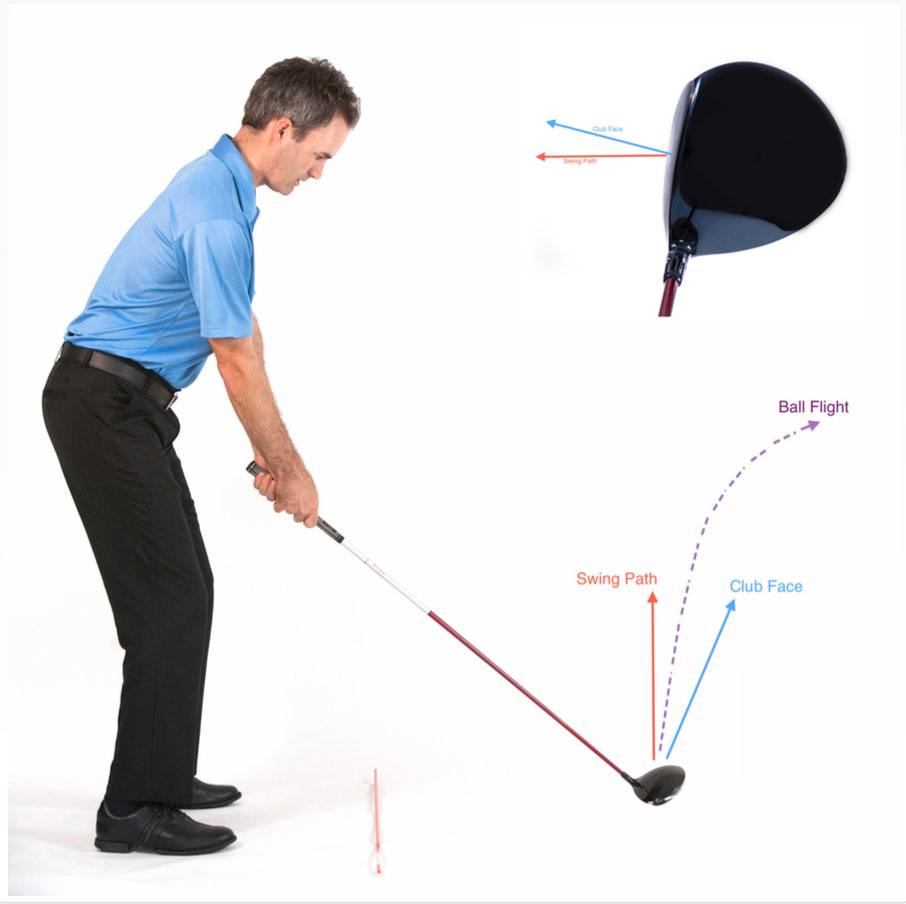
Image Source: about-golf.org
What a Slice Means in Golf
When you hit a golf shot, the ball goes where the club face points at impact. How the ball spins comes from how the club moves through impact compared to where the face is pointing. A slice happens because the club face is open compared to the swing path. Open means the face points right of the path for a right-handed player. The ball starts a little left or straight, then curves hard right. This shot shape costs you distance and control. Fixing a golf slice is a big goal for many golfers.
Seeing Why Your Golf Ball Slices
There is a main cause of golf slice for most players. It comes from two things working together. These are the path the club travels on and the way the club face points at impact. Think of it like this:
- Club Path: This is the direction the club head moves as it hits the ball.
- Club Face: This is where the club face points at the moment of impact position golf swing.
For a slice, the club usually moves on an out to in swing path golf. This means it comes from outside the target line and cuts across it towards the inside. At the same time, the club face is open. It points right of this out-to-in path. The mix of an out-to-in path and an open club face makes the ball slice hard right.
Figuring Out the Causes of a Slice
Let’s look closer at the parts of your golf swing mechanics slice.
The Path:
Many slicers swing the club from outside the target line to inside. Picture the target line as a straight line pointing at your goal. If your club head comes from outside this line and moves across it to the left (for a righty), that’s an out-to-in path.
Why does this happen?
* Starting the downswing with the upper body: The shoulders turn too soon. This pulls the club across the line.
* Standing too close to the ball: This can force the swing path outwards.
* Trying to hit the ball too hard: This can make you swing fast and pull the club across.
* A poor backswing: If the backswing is too steep or outside, the downswing often follows this path.
This out-to-in path alone would usually make the ball start left and curve more left (a pull or a pull hook). But a slice needs the club face part too.
The Club Face:
The club face angle at impact is very important. For a slice, the club face is open compared to the swing path. It often points to the right of the target line.
Why is the club face open?
* A weak grip: The hands are turned too far to the left on the grip (for a righty). This makes it hard to close the club face naturally.
* Not rotating the hands/forearms: During the swing, the hands should turn over. This squaring action closes the club face. If you don’t do this, the face stays open.
* Wrist position at impact: If the lead wrist is cupped (bent back), the club face will likely be open.
* Too much body rotation: If the body turns too fast, it can leave the arms and club behind. This makes the club face open at impact.
* Trying to ‘steer’ the ball: Some players try to guide the club head. This stops the hands from releasing properly and closing the face.
So, the cause of golf slice is usually the mix of an out to in swing path golf and an open club face golf at the impact position golf swing. To stop slicing golf ball, you need to change one or both of these things.
Spotting Your Slice Problems
Before you can fix your slice, you need to know why you slice. Is it mostly your path? Or your club face? Or both?
- Watch the ball flight:
- Does the ball start left and curve right? This often means your path is out-to-in and your face is open to the path.
- Does the ball start straight or a little right and curve more right? This could mean your path is closer to the target line (or even a little in-to-out), but your face is very open to the target line.
- Use technology: A launch monitor can show your swing path and club face angle numbers. This is the best way to know for sure.
- Record your swing: Film your swing from behind and from the side. Look at your path and how the club face looks at impact.
Most slicers have the classic out-to-in path with an open face to that path. We will focus on fixing that common cause.
Ways to Stop Slicing Your Golf Ball
Fixing a golf slice takes practice. You need to change old habits. There are many things you can work on. Here is a step-by-step way to make changes. This is your golf slice cure plan.
Step 1: Check Your Grip
A weak grip is a big reason for an open club face golf. A strong grip helps the club face close naturally.
- For a right-handed player:
- Hold the club out in front of you.
- Put your left hand on the grip first. You should see two to three knuckles on your left hand when you look down. The ‘V’ shape made by your left thumb and forefinger should point towards your right shoulder.
- Put your right hand on the grip below the left. The ‘V’ made by your right thumb and forefinger should point between your right shoulder and chin.
- The palms of your hands should be roughly facing each other.
- For a left-handed player: Do the opposite.
A stronger grip makes it easier to rotate your hands through impact. This helps square the club face. This small change can make a big difference in your golf swing mechanics slice. Practice holding the club this way until it feels normal.
Step 2: Fix Your Setup
How you stand to the ball matters a lot for your swing path.
- Stance: Stand a bit further from the ball than you do now. This gives your arms more room to swing from the inside.
- Ball Position: Move the ball slightly forward in your stance. For an iron, play it just forward of the center. For a driver, play it off the heel of your lead foot. This gives the club more time to close as it reaches the ball.
- Aiming: Slicers often aim left of the target without knowing it. This is because they see the ball curve right and try to aim left to make up for it. But this makes their out-to-in path worse! Check your alignment carefully. Aim your body parallel to the target line. Some players even suggest aiming your body a little to the right of the target while aiming the club face at the target. This encourages an in-to-out path.
Step 3: Change Your Swing Path (Out to In to In to Out)
Moving the club on an out to in swing path golf is a main slice cause. You want to change this to an in-to-out path. This means the club comes from inside the target line and moves outwards as it hits the ball.
How to feel an in-to-out path:
- Think about the backswing: Take the club back more to the inside. Feel like your hands stay close to your body.
- Start the downswing with the lower body: Let your hips turn first. This keeps your upper body quiet and helps the club drop down on a better path.
- Feel like you swing out to right field: For a righty, imagine hitting the ball towards the right side of the field, not pulling it across. This helps get the club moving outwards.
Here is a golf slice drill to help your path:
The Towel Drill:
* Place a towel or headcover under your right armpit (for a righty).
* Keep it there during your swing.
* This helps connect your arm to your body. It makes it harder to swing the club outside on the downswing.
* If you swing out-to-in, the towel might fall out too soon. Keep it there until after impact.
The Gate Drill:
* Place two alignment sticks (or old clubs) on the ground.
* Put one stick just outside the ball and slightly forward.
* Put the other stick just inside the ball and slightly behind.
* They make a ‘gate’ for your club head to swing through.
* Practice slow swings, then faster ones, making sure your club head passes through the gate.
* If you hit the outside stick, your path is out-to-in. If you hit the inside stick, your path is too far in-to-out (which is okay for a draw, but fix the slice first!).
Work on these drills to change that out to in swing path golf. Remember, changing your path takes many swings to feel right.
Step 4: Control Your Club Face (Open to Square)
The open club face golf at impact is the other main part of the slice problem. You want the club face to be square to your path, or even a little closed compared to your path to hit a draw.
How to square the club face:
- Use the strong grip: We talked about this already. It’s the first step.
- Learn to release the club: This means letting your hands and forearms rotate through impact. The back of your lead hand should point towards the target after impact. The club face should turn over.
- Don’t ‘chicken wing’: This is when your lead arm bends sharply after impact. It stops the face from closing. Keep your arms straight and wide past the ball.
- Think about hitting through the ball: Don’t stop at the ball. Swing past it. This helps your hands release fully.
Here is a golf slice drill to help square the face:
The L to L Drill:
* Make small swings where you swing back only until your lead arm is parallel to the ground and the club shaft makes an ‘L’ shape with your arm.
* Swing through to where your trail arm is parallel to the ground and the shaft makes another ‘L’ shape.
* Focus on letting your forearms rotate through impact.
* Watch how the club face turns over. It should point more towards the ground after the ball is gone. This drill helps you feel the closing action of the club face.
The Towel On Club Face Drill (Slow Motion):
* Put a small towel or headcover on the face of your club.
* Hold it there with your fingers on the back of the club.
* Make slow swings, trying to keep the towel on the face as long as possible through impact.
* This drill makes you slow down and feel the club face. It helps you understand how to keep it stable or how it might be open. (Note: This drill is more for awareness than fixing, use L to L to fix).
Work on these drills to get better control of your club face golf.
Step 5: Put It All Together
Once you have practiced the path and face drills separately, you need to combine them.
- Start with half swings: Focus on a good grip, a slightly more in-to-out path, and feeling the hands release to square the face.
- Watch the ball flight: Is it straighter? Is it drawing (starting right and curving left)? A draw is the opposite of a slice (draw vs slice golf). If you start hitting a draw, you have likely fixed the slice and maybe gone a little too far the other way. This is good! It means you have changed the slice movement.
- Gradually increase speed: As you get more comfortable, swing faster. Keep focusing on the feelings from the drills.
- Use alignment sticks: Set up sticks to check your path and your body aim.
Remember the impact position golf swing. What is the club face doing? Where is the path going? Fixing your slice is about changing these two things at that exact moment the club meets the ball.
Understanding Draw vs Slice Golf
Let’s quickly look at draw vs slice golf.
- Slice: Ball curves hard from left to right (for a righty). Cause: Out-to-in path with an open club face relative to path.
- Draw: Ball curves gently from right to left (for a righty). Cause: In-to-out path with a club face that is slightly closed relative to the path, but still open to the target.
Hitting a draw is often the goal for golfers fixing a slice. A draw usually goes further than a slice because the ball has less side spin. When you can hit a draw, it means you have changed the main things that caused your slice (out-to-in path and open face).
Keeping Your Slice Fix
Fixing a golf slice is not a one-time thing. Your old habits can come back.
- Practice regularly: Hit balls on the driving range often. Use your drills.
- Video yourself: Keep filming your swing from time to time. See if the old path or open face is coming back.
- Check your grip: Make sure your grip stays strong enough.
- Pay attention to your setup: Check your ball position and how you are aimed.
- Don’t try to kill the ball: Swinging too hard often brings back the slice. Make smooth swings.
The golf slice cure is a process. Be patient with yourself. Some days will be better than others. Focus on the feelings of the new swing. Focus on the golf swing mechanics slice that cause the problem and work on changing them.
Common Mistakes When Trying to Stop Slicing Golf Ball
- Aiming Left: As mentioned, this is the worst thing you can do. It makes your path even more out-to-in.
- Trying Only One Fix: The slice is usually two problems (path and face). You need to work on both.
- Not Checking Grip: A weak grip makes everything harder. Fix this first.
- Swinging Too Fast: Try to fix the movement slowly before adding speed.
- Getting Upset: Everyone slices sometimes! Stay calm and work on your drills.
More Drills for Your Golf Slice Cure
Here are a few more golf slice drill ideas:
The “Hit the Inside Quarter of the Ball” Drill:
* When you set up to the ball, imagine the ball is divided into four parts.
* Think about hitting the back inside quarter of the ball (the part closest to you and behind the center).
* This thought helps promote an in-to-out swing path and hitting the ball more from the inside.
The Pump Drill:
* Swing to the top of your backswing.
* Stop.
* Lower your hands and the club a little bit, as if ‘pumping’ the club downwards. Keep your wrists set.
* This helps get the club onto a better, shallower path from the inside.
* Swing through to impact.
* Do this without a ball at first, then try hitting balls after a few ‘pumps’.
The Closed Stance Drill:
* Set up for your shot but aim your feet and body a little to the right of the target (for a righty). Keep your club face aimed at the target.
* Hit balls from this stance.
* This makes it easier to swing the club on an in-to-out path. It gives you the feeling of hitting the ball and swinging out towards the right.
* Don’t aim way right. Just a little bit is enough.
These golf slice drill ideas give you more ways to feel the right movements. Mix them into your practice time.
Impact Position Golf Swing: What It Should Feel Like
Let’s think again about the impact position golf swing. This is the moment of truth.
- Body: Your lower body should be turning towards the target. Your upper body should be a little less open than your lower body. Your weight should be moving onto your lead side.
- Hands: Your hands should be slightly ahead of the club head. Your lead wrist should be flat, not cupped. Your trail wrist should still have some bend in it.
- Club Face: The club face should be square to your swing path (or slightly closed to the path for a draw). If you are working on an in-to-out path, the face should be pointing straight at the target or even a little left of the target at impact to match the path and produce a slight draw.
- Path: The club should be moving slightly from inside the target line to outside the target line.
Getting to this position means all the work you did on your grip, setup, path, and face control came together. If your impact position golf swing looks and feels like this, you will stop slicing golf ball.
The Journey to a Straight Shot or Draw
Moving from a slice to a straight shot or a draw takes time. It’s a change in your golf swing mechanics slice.
- Phase 1: Fixing the major slice: Your main goal is to stop the hard curve. You might hit some shots that go left, or even hook (curve left hard). This is okay! It means you are changing the club face action.
- Phase 2: Controlling the curve: Now that you are not slicing, you might be hooking or pulling. This means you need to fine-tune the club face relative to the path. If you hook, your face is too closed to your path. If you pull (starts left, goes straight), your path is too out-to-in even with a square face.
- Phase 3: Hitting it straight or a controlled draw: This is the goal. Your path is slightly in-to-out, and your face is square to slightly closed relative to that path. The ball starts slightly right (for a righty) and curves gently back to the target or flies straight.
The key is understanding the relationship between path and face angle at the impact position golf swing. The ball starts close to where the club face points. The ball curves away from the swing path.
- Face pointing right, path going left = Slice (starts right, curves left) – Correction: Face pointing right, path going left = Slice (starts right, curves left) is wrong. Ball starts direction of face, curves away from path. Face open to path = slice.
-
Let’s rephrase for simplicity and accuracy based on modern ball flight laws:
- Ball starts where the club face points (roughly 80% of the start direction).
- Ball curves away from the swing path direction (roughly 80% of the curve direction).
-
Slice Example (Righty): Path is out-to-in (leftwards of target). Face is open to the path (pointing right of the path).
- If face points right of target, and path is left of target -> Ball starts right, curves left (hook). This is not a slice.
-
Correct Slice Explanation (Righty):
- Path is out-to-in (moves left across the ball).
- Club face is open relative to the path (face points right of the direction the club is moving).
- Ball usually starts left or straight (because face is pointing left or straight of the target or maybe slightly right).
- Ball curves hard right (because path is out-to-in / leftwards).
- This is the classic slice. Example: Path is 5 degrees left (out-to-in). Face is 0 degrees (square to target). Face is 5 degrees open to the path. Ball starts straight, curves hard right.
- Example 2: Path is 5 degrees left (out-to-in). Face is 3 degrees left (slightly closed to target). Face is 2 degrees open to the path. Ball starts left, curves hard right.
- Example 3: Path is 5 degrees left (out-to-in). Face is 3 degrees right (slightly open to target). Face is 8 degrees open to the path. Ball starts right, curves very hard right.
The core slice problem is having the club face point right of the direction the club is moving through impact, while the club is moving left across the ball (out-to-in path).
Your golf slice cure aims to get the path closer to the target line (or slightly right of it for a draw) and get the club face square to that path (or slightly closed to it for a draw).
Staying Motivated
Changing your swing is not easy. There will be times when you feel like you are not getting better.
- Celebrate small wins: Did you hit one shot straighter? That’s great!
- Focus on the process: Don’t just look at the result (where the ball went). Think about what you were working on (grip, path, face). Did you try the right movement?
- Be patient: It took time to learn to slice. It will take time to unlearn it.
- Get help: A golf pro can quickly see what you are doing. They can give you the right drill for your swing. This can save you a lot of time and effort.
Remember, stop slicing golf ball will lower your scores and make golf more fun. It’s worth the work.
Common Questions About Fixing a Slice
Can I fix a slice without changing my grip?
Fixing a golf slice is much harder with a weak grip. A strong or neutral grip makes it easier to control the club face and stop it from being open. It is one of the most important first steps in a golf slice cure. While some can fix path without grip, it’s less likely to be a lasting fix.
How long does it take to fix a slice?
It depends on the golfer. Some can see improvement in a few range sessions. For others, it takes weeks or months of practice. It depends on how strong the bad habits are and how much you practice the right things. Be patient.
Will fixing my slice make me hit the ball further?
Yes! A slice adds a lot of side spin. This spin costs you distance. When you hit the ball straighter or with a draw, the spin is less. The ball will fly further and roll out more. Fixing your golf swing mechanics slice almost always leads to more distance.
What if I start hooking the ball after working on my slice?
Hitting a hook means you have likely fixed the open club face problem and maybe overdone the release. Or your path is now too far in-to-out and the face is square to the target. This is actually good! It means you have changed the type of spin on the ball. Now you just need to fine-tune the club face angle relative to your swing path at the impact position golf swing. A hook is easier to fix than a slice because getting the club face to close is the harder part for most.
Do I need new clubs?
New clubs can help if your current clubs are not right for you (e.g., wrong shaft flex). But new clubs will NOT automatically fix a slice. The slice comes from your golf swing mechanics slice. Fix the swing first.
Should I use a slice correction golf ball or tee?
These products might help the ball fly straighter if you still slice. But they don’t fix why you slice. They don’t help your swing mechanics. It is better to work on your swing itself for a real golf slice cure.
Conclusion
Hitting a slice is a common problem in golf, but it’s one you can fix. The main cause of golf slice is usually an out to in swing path golf paired with an open club face golf at the impact position golf swing. By checking and changing your grip, setup, swing path, and club face control, you can stop slicing golf ball. Use the drills provided as your golf slice drill practice plan. Be patient and practice often. Fixing your golf slice will make the game more rewarding and lead to better scores. Good luck!