
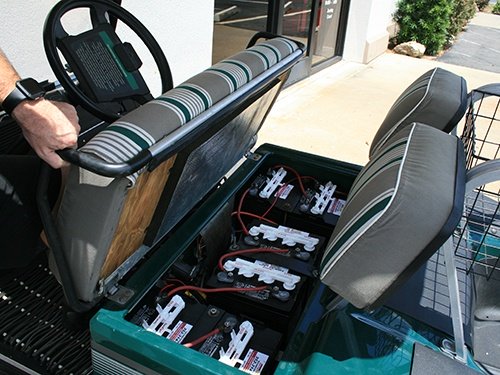
Image Source: jsgolfcarts.com
Your Ultimate Guide: How Much Are Batteries For A Golf Cart?
How much are golf cart batteries? The cost for golf cart batteries changes a lot. Most people spend between $800 to $2,500 for a full set. This is the average golf cart battery price. A key part of the golf cart battery replacement cost depends on the type of battery you pick. For example, deep cycle golf cart battery cost, often lead-acid, can be lower. They range from $100 to $200 per battery. But you need many of them. The lithium golf cart battery price is higher, from $800 to $2,000 for one battery. But often you only need one or two. For a 36 volt golf cart battery pack price, you might pay $600 to $1,500. For a 48 volt golf cart battery replacement, expect to pay $800 to $2,000. The golf cart battery life expectancy is 3-6 years for lead-acid and 5-10+ years for lithium. Best golf cart battery brands include Trojan, US Battery, and Crown for lead-acid. RoyPow and Allied are top for lithium. Trojan golf cart batteries cost typically ranges from $150 to $250 per battery. The Club Car golf cart battery price will use these same brands, so the cost is similar. It depends on the voltage system of your Club Car.
What Changes Battery Costs?
Many things affect how much you pay for golf cart batteries. Knowing these things helps you pick the right ones. It also helps you save money.
Battery Type Matters a Lot
The kind of battery is the biggest price factor.
* Lead-acid batteries cost less at first. They are older tech. But they need more care. You also replace them more often.
* Lithium batteries cost more upfront. But they last longer. They need almost no care. They can save you money over time.
Voltage System Plays a Part
Golf carts use different voltage systems. Common ones are 36-volt and 48-volt. Some heavy-duty carts use 72-volt.
* A 36-volt system usually needs six 6-volt batteries.
* A 48-volt system usually needs six 8-volt batteries. Or four 12-volt batteries.
* More batteries mean a higher total cost.
Amp-Hours (Ah) Show Power
Amp-hours (Ah) tell you how much power a battery stores. It shows how long your cart can run.
* Higher Ah ratings mean more run time.
* Higher Ah ratings also mean a higher price. Think about how far you drive your cart.
Battery Brand Changes Price
Some brands are known for quality. They might cost more. But they often last longer. They can also work better. We will look at top brands later.
Installation Adds to Cost
You can put in new batteries yourself. Or you can pay a pro to do it.
* DIY installation saves money on labor. But it takes time. You need the right tools.
* Professional installation costs more. It is easier. A pro knows how to do it right. This can prevent problems.
Warranty Offers Peace of Mind
A good warranty protects your money. Longer warranties often come with higher prices. But they give you safety. If a battery fails too soon, the company replaces it.
Fathoming Battery Types
There are two main types of golf cart batteries. Each has its own cost and features.
Lead-Acid Batteries: The Common Pick
Lead-acid batteries are very common. They have been around for a long time. They come in a few kinds.
Flooded Lead-Acid (FLA) Batteries
These are the most common lead-acid type. They are also called “wet cell” batteries.
* How they work: They have liquid acid inside. This acid needs refilling with distilled water. This is part of the care.
* Cost: The deep cycle golf cart battery cost for FLA is usually the lowest. You might pay $100 to $200 per battery. A full pack for a 48-volt cart could be $600 to $1,200.
* Pros:
* Low upfront cost.
* Easy to find.
* Can handle deep discharges well.
* Cons:
* Need regular water checks.
* Can spill acid.
* Give off gas when charging.
* Heavier than other types.
* Shorter life (3-6 years).
* Slow charging time.
* Care: You must add distilled water often. Keep the battery tops clean. Make sure the charger works right.
Absorbed Glass Mat (AGM) Batteries
AGM batteries are a step up from FLAs.
* How they work: The acid is held in glass mats. This means no liquid acid.
* Cost: AGM batteries cost more than FLAs. They might be $200 to $300 per battery. A pack can be $1,200 to $1,800.
* Pros:
* Do not need water refills.
* Do not spill.
* Charge faster than FLAs.
* Work well in cold weather.
* Last a bit longer than FLAs (4-7 years).
* Cons:
* Higher price than FLAs.
* Sensitive to overcharging.
* Still heavy.
Gel Cell Batteries
Gel batteries are less common for golf carts.
* How they work: The acid is in a gel form. This makes them spill-proof.
* Cost: They are often the most costly lead-acid option. Expect $250 to $400 per battery. A pack might be $1,500 to $2,400.
* Pros:
* No maintenance.
* Spill-proof.
* Very good in hot weather.
* Good vibration resistance.
* Cons:
* Higher price.
* Charge slower than AGM or FLA.
* Can be damaged by fast charging.
* Less power output than FLA or AGM.
Lithium-Ion Batteries: The Modern Choice
Lithium-ion batteries are newer for golf carts. They are gaining popularity fast.
* How they work: They use lithium compounds. This makes them lighter and more powerful.
* Cost: The lithium golf cart battery price is higher at first. A single lithium battery often costs $800 to $2,000. But you might only need one or two. A full lithium setup for a 48-volt cart could be $1,500 to $4,000.
* Pros:
* Much lighter weight. This can make your cart faster or go farther.
* No maintenance needed.
* Charge very fast (often 2-3 hours).
* Last a very long time (8-10+ years).
* Consistent power until empty. No slowing down.
* More efficient charging.
* Many come with a long warranty.
* Cons:
* High upfront cost.
* May need a new charger.
* Can be sensitive to very cold temps if not made for them.
Here is a table to help compare:
| Feature | Flooded Lead-Acid (FLA) | AGM Lead-Acid | Lithium-Ion (LiFePO4) |
|---|---|---|---|
| Cost per Battery | $100 – $200 | $200 – $300 | $800 – $2,000 |
| Pack Cost (48V) | $600 – $1,200 (6x 8V) | $1,200 – $1,800 (6x 8V) | $1,500 – $4,000 (1 or 2 bat) |
| Life Expectancy | 3-6 years | 4-7 years | 8-10+ years (often 10 years) |
| Maintenance | High (water refills, cleaning) | Low (cleaning) | None |
| Weight | Very Heavy | Heavy | Very Light |
| Charging Time | Slow (8-10 hours) | Medium (4-6 hours) | Fast (2-4 hours) |
| Power Output | Decreases with charge | Decreases with charge | Steady until empty |
| Safety | Gasses, acid spills | Sealed, safer | Very safe (BMS) |
| Warranty | 1-2 years | 1-3 years | 5-10 years |
Deciphering Voltage Systems and Costs
The voltage of your golf cart tells you what kind of battery pack you need. It also affects the total cost.
36 Volt Golf Cart Battery Pack Price
Many older or smaller golf carts run on 36 volts.
* Setup: A 36-volt system usually uses six 6-volt deep cycle batteries. These are often lead-acid.
* Cost: The 36 volt golf cart battery pack price generally ranges from $600 to $1,500 for lead-acid. This means each 6-volt battery is about $100 to $250.
* Lithium Option: You can convert a 36-volt cart to lithium. This might use one 36V lithium battery. Or it could use a small pack of 12V lithium batteries. The cost would be higher, from $1,000 to $2,500.
48 Volt Golf Cart Battery Replacement
Most modern golf carts use a 48-volt system. This includes many Club Car, EZ-GO, and Yamaha models.
* Setup: A 48-volt system needs six 8-volt lead-acid batteries. Or it can use four 12-volt lead-acid batteries. Some carts use eight 6-volt batteries.
* Cost: For a 48 volt golf cart battery replacement with lead-acid, expect to pay $800 to $2,000. This makes each 8-volt battery about $130 to $330. Or each 12-volt battery $200 to $500.
* Lithium Option: A 48-volt lithium setup is popular. It often uses one 48V lithium battery. This costs more at first, from $1,500 to $4,000. But it often works better and lasts longer.
72 Volt Golf Cart Systems
Some carts, often high-performance or newer models, use 72 volts.
* Setup: These usually need six 12-volt batteries. Or a special 72V lithium pack.
* Cost: A 72-volt system will cost more. Lead-acid options can be $1,200 to $3,000. Lithium options can be $2,500 to $5,000+. These are for carts that need more power or speed.
Maximizing Golf Cart Battery Life
Your golf cart battery life expectancy depends on how you use and care for your batteries. Most lead-acid batteries last 3-6 years. Lithium batteries can last 8-10 years or more. You can make them last longer with good care.
For Lead-Acid Batteries:
- Charge Often: Charge your batteries after every use. Do not let them sit empty. Deep discharges shorten life.
- Add Water: Check water levels monthly for FLA batteries. Add distilled water if needed. Fill to cover the plates.
- Clean Terminals: Keep battery tops and terminals clean. Use a wire brush for corrosion.
- Proper Charging: Use a charger meant for your battery type and voltage. Avoid overcharging or undercharging.
- Store Right: If you store your cart for months, fully charge batteries. Then use a “float” charger. Or charge them once a month. Keep them in a cool, dry place.
- Avoid Extreme Temps: Very hot or very cold weather can hurt batteries. Try to keep your cart in a mild place.
For Lithium-Ion Batteries:
- No Maintenance: Lithium batteries need no water or cleaning. This is a huge plus.
- Smart Charging: Use the charger that came with your lithium battery. It is made for it.
- Charge Level: For long storage, keep lithium batteries at 50-70% charge. Check your battery’s manual for exact advice.
- They Last: With no work, they still last much longer than lead-acid.
By following these tips, you can make your golf cart batteries last longer. This saves you money in the long run.
Best Golf Cart Battery Brands
Choosing the right brand matters for quality and price. Some brands are well-known for golf cart batteries.
Top Lead-Acid Battery Brands
These brands make deep cycle batteries that work well in golf carts.
* Trojan: This is a very popular and trusted brand. Many people say Trojan golf cart batteries are the best for lead-acid. They offer good performance and life. The Trojan golf cart batteries cost usually falls in the $150-$250 per battery range. This is for 6V, 8V, or 12V models. They are often used in Club Car golf carts.
* US Battery: This brand is also very good. They are often compared to Trojan. They offer strong, long-lasting power. Prices are similar to Trojan.
* Crown Battery: Crown batteries are known for being tough. They are a good choice for heavy use. Their prices are also competitive.
* Exide: A global brand with many battery types. They make golf cart batteries that offer good value.
* Fullriver: Known for their sealed AGM and Gel options. Good for those wanting less maintenance.
Top Lithium-Ion Battery Brands
The market for lithium golf cart batteries is growing. Many brands are making great products.
* RoyPow: A very popular choice for lithium upgrades. They offer complete kits with a new charger. They are known for easy install.
* Allied Battery: Another leader in lithium golf cart batteries. They offer different sizes and voltages. They have good warranties.
* Relion: Relion makes high-quality lithium batteries for many uses. Their golf cart batteries are top-notch.
* BigBattery: Offers powerful lithium battery solutions. They are known for high capacity options.
* ECO BATTERY: Known for its range of lithium options. They offer easy drop-in replacements.
Club Car Golf Cart Battery Price
When you look at the Club Car golf cart battery price, you are often looking at these same top brands. Club Car itself does not make the batteries. They use batteries from Trojan, US Battery, or other major suppliers. So, the cost will be what these brands charge for their 6-volt, 8-volt, or 12-volt batteries, based on your Club Car’s voltage system. If you upgrade a Club Car to lithium, the cost will be similar to any other brand.
Calculating Your Battery Replacement Cost
The total golf cart battery replacement cost involves more than just the batteries. You need to think about parts and labor.
Do It Yourself (DIY) Vs. Professional Install
- DIY Cost: If you put the batteries in yourself, you save on labor. You only pay for the batteries and any tools or parts you need. This could be battery acid filler, a terminal cleaning brush, or new cables.
- Estimated DIY Cost: $600 – $2,500 (for lead-acid) or $1,500 – $4,000 (for lithium).
- Professional Installation Cost: Hiring someone adds to the total. This can be a golf cart dealer or a mechanic.
- Labor Cost: Expect to pay $100 to $300 for labor. This depends on where you live and how complex the job is.
- Estimated Professional Cost: $700 – $2,800 (for lead-acid) or $1,600 – $4,300 (for lithium).
Hidden Costs and Upgrades
Sometimes, you need more than just new batteries.
* Cables: Old battery cables might be worn. New cables ensure good power flow. They can cost $50-$150 for a full set.
* Battery Tray: The tray holding your batteries might be rusty. A new one could be needed. This is often around $50-$100.
* Charger Upgrade: If you switch from lead-acid to lithium, you will need a new charger. A lithium charger is different. It often comes with the lithium battery kit. If not, a new charger can cost $150-$400.
* Battery Boxes: Sometimes, new, safer battery boxes are a good idea. They protect the batteries and cart.
* Watering System: For lead-acid, an automatic watering system can be a good add-on. It makes maintenance easier. It costs $100-$200.
Average Battery Pack Price Summary
Here is a general look at the average golf cart battery price for a full pack:
| Battery Type | Voltage System | Average Pack Price (Lead-Acid) | Average Pack Price (Lithium-Ion) |
|---|---|---|---|
| Deep Cycle | 36-Volt (6x 6V) | $600 – $1,500 | $1,000 – $2,500 |
| Deep Cycle | 48-Volt (6x 8V or 4x 12V) | $800 – $2,000 | $1,500 – $4,000 |
| Deep Cycle | 72-Volt (6x 12V) | $1,200 – $3,000 | $2,500 – $5,000+ |
Prices shown are general estimates. They can change based on brand, region, and time of year.
When to Replace Your Golf Cart Batteries
It’s important to know when your batteries are dying. This helps you plan for replacement.
Signs Your Batteries Are Failing
- Less Run Time: Your cart does not go as far as it used to. This is the clearest sign.
- Slower Speed: The cart feels sluggish. It may go slower, especially uphill.
- Longer Charge Times: Batteries take much longer to charge. Or they don’t seem to get a full charge.
- Swollen Batteries: The battery cases look puffed up. This is a bad sign. It means they are overheating.
- Corrosion: Too much corrosion on battery terminals. This can show a problem inside.
- Old Age: If your lead-acid batteries are 5+ years old, they are likely nearing the end.
- Low Voltage: After charging, if a single battery or the whole pack shows low voltage. You need a voltmeter to check this.
- Strange Smell: A rotten egg smell means a battery is gassing too much. This is very bad.
If you see these signs, it’s time to think about new batteries. Waiting too long can leave you stranded.
Grasping the Investment
Choosing new golf cart batteries is an important choice. It affects your cart’s performance. It also affects how much money you spend over time.
Lead-Acid: Lower Upfront, More Work
Lead-acid batteries are good if you want to spend less now. But remember they need more care. You will likely replace them sooner. This means more cost later. They are heavier and charge slower.
Lithium: Higher Upfront, Less Work
Lithium batteries cost more at first. But they last much longer. They need no care. They are lighter. They charge fast. Over many years, lithium might save you money. This is due to longer life and less work.
Thinking About Your Needs
- How often do you use your cart? If daily, lithium’s fast charge and long life are great. If only once a month, lead-acid might be fine.
- How far do you drive? Longer trips mean you need more capacity. Or a fast-charging lithium battery.
- Do you want to do maintenance? If not, lithium is the clear winner.
- What is your budget right now? Your cash flow might decide the type of battery you choose.
No matter your choice, buying good quality batteries from a trusted brand is smart. This helps make sure your golf cart runs well for years.
Frequently Asked Questions (FAQ)
Q: Can I mix old and new golf cart batteries?
A: No, you should never mix old and new batteries. This can hurt the new batteries. It also hurts the old ones. Always replace all batteries at once.
Q: Do I need a special charger for lithium golf cart batteries?
A: Yes. You must use a charger made for lithium batteries. Lead-acid chargers can damage lithium batteries. Many lithium battery kits come with a new charger.
Q: How do I know if my golf cart is 36V or 48V?
A: Count the large battery holes. If you have six 6-volt batteries, it’s 36V. If you have six 8-volt batteries or four 12-volt batteries, it’s 48V. You can also check the charger or the cart’s spec plate.
Q: Are used golf cart batteries worth buying?
A: Usually, no. Used batteries often have little life left. They might fail soon. It’s better to buy new ones for peace of mind and long life.
Q: How long does it take to replace golf cart batteries?
A: If you know what you’re doing, it can take 1-2 hours for lead-acid batteries. Lithium installs can be faster. If you pay a pro, they can do it quickly.
Q: What is the best way to dispose of old golf cart batteries?
A: Lead-acid batteries are dangerous. They must be recycled. Most battery stores or golf cart shops take old batteries. They often give you a small credit for them. Lithium batteries also need special recycling. Do not throw them in the trash.
Q: Can I use car batteries in a golf cart?
A: No. Car batteries are “starting” batteries. They give a burst of power for a short time. Golf cart batteries are “deep cycle.” They give power slowly over a long time. Using car batteries will damage them fast.