
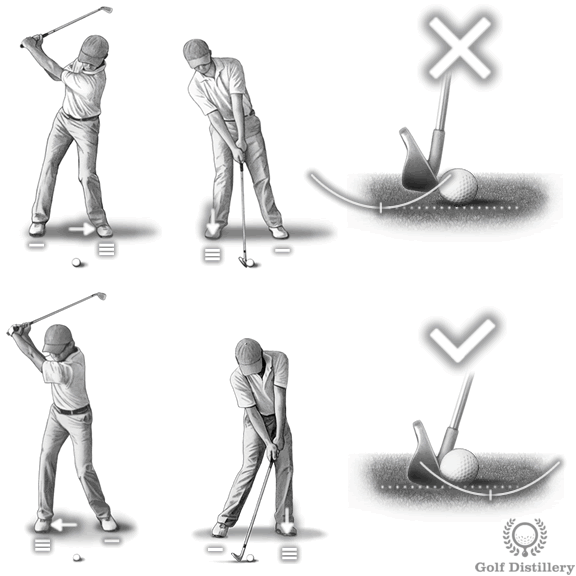
Image Source: www.golfdistillery.com
Why Do I Top The Ball In Golf? Uncover The Real Reasons.
Do you hit the top of your golf ball? You are not alone. Many golfers face this problem. When you top the ball, your club hits its very top part. This makes the ball go low. It travels only a short way. It often stays on the ground. This happens because your swing path is too high. Your club moves up too soon. You might lift your body. You may stand tall too fast. Or you could lose your balance. All these stop you from hitting down on the ball. You need to hit down to make the ball fly well.
Grasping Topping: What It Is
Topping the golf ball means your club head strikes the upper part of the ball. This makes the ball fly very low. It might even just roll along the ground. It is a common mistake. It can be very frustrating.
A good golf shot is different. Your club hits the ball first. Then it hits the ground. This makes a small divot. This shows you hit down on the ball. This helps the ball go up. It gives it good spin. When you top the ball, you do not hit the ground. You just hit the top of the ball. This leads to thin golf shots. Sometimes you end up hitting off leading edge golf. This means the thin front part of your club hits the ball. Both are bad ways to hit. They cause poor shots.
Main Causes of Topping: Golf Swing Causes Topping
Many things in your swing can cause you to top the ball. Let us look at the main reasons. Fixing these will help your game.
Lifting Up in Golf Swing
One big reason for topping is lifting up. This means your body moves up during the downswing. Your head rises. Your shoulders go up. Your hips get higher. This makes your club move up too. It stops you from hitting down on the ball.
Why We Lift Up
- Trying to Lift the Ball: Many golfers try to “help” the ball get into the air. They think they need to lift it. But the club’s design lifts the ball for you. You do not need to scoop it up.
- Poor Balance: If you are not steady, you might lift up. You might lose your balance. Your body tries to stand up to regain balance.
- Not Turning Enough: When you do not turn your body well, you lift. You use your arms to try to make up for it. This makes you stand up.
How Lifting Up Causes Topping
When you lift up, your body gets taller. The club also rises. It moves above the ball. So, instead of hitting the middle of the ball, it hits the top. This makes a weak, low shot.
Early Extension Golf
Early extension golf is another big cause. It happens when your hips move towards the ball. They do this during your downswing. Your rear end comes off the target line. Your spine angle also changes. You go from bent over to standing up.
What Early Extension Looks Like
Imagine you set up to the ball. Your spine has an angle. Your hips are back. As you swing down, your hips should turn. They should not move towards the ball. If they do, you are “early extending.” This often goes with loss of posture golf.
Why Early Extension Happens
- Lack of Hip Turn: You do not turn your hips enough. Your body tries to make room for your arms. It does this by moving your hips forward.
- Trying to Power the Ball: You might think moving your hips forward adds power. It often takes power away. It makes you stand up.
- Weak Core Muscles: A weak core makes it hard to keep your angles. Your body seeks stability by standing up.
How Early Extension Leads to Topping
When you early extend, your body straightens up. This pulls your club up and out. The club head moves higher. It ends up hitting the top of the ball. It can also cause a weak, pushed shot.
Loss of Posture Golf
Loss of posture golf means you do not keep your body angles. You start your swing bent over the ball. You have a certain spine angle. You have knee flex. If these angles change too much, you lose posture. You might stand up too much. You might slump too much. Both are bad.
Common Posture Problems
- Standing Up Too Much: This is a big reason for topping. Your body straightens up. Your club path rises.
- Losing Bend: You lose the bend at your hips. Your torso becomes more upright.
- Slumping: You might slump over. This can also cause problems, but lifting up is more common for topping.
Why Posture is Lost
- Bad Setup: You might start with poor posture. You are too hunched. Or too upright.
- Weak Core: A strong core helps hold your body angles. A weak core lets them break down.
- Lack of Awareness: You might not know you are losing your posture. You need to feel the right angles.
How Loss of Posture Causes Topping
When you lose your posture by standing up, your club also moves up. It cannot hit the ball squarely. It hits the top. This creates those frustrating thin or topped shots.
Not Hitting Down: The Downward Strike Golf Principle
A great golf shot needs a downward strike golf. This means the club head is moving down as it hits the ball. It hits the ball first. Then it hits the ground. This creates a divot after the ball. This is how you compress the golf ball.
What is Compressing the Ball?
Compressing the ball means you squeeze it against the club face. This happens when you hit down on the ball. The ball slightly flattens. Then it springs off the face with high speed. This gives you power and spin. It makes the ball fly far and high.
Why Topping Prevents a Downward Strike
When you top the ball, your club is moving up. It is not moving down. So, you cannot hit the ball first. You cannot hit the ground after the ball. You cannot compress the ball. The ball just pops up a little, or skids. This is the opposite of a good strike.
Setup Mistakes
Your setup is how you stand to the ball. It is very important. Small setup mistakes can lead to big swing problems. They can cause topping.
- Ball Position: If the ball is too far forward in your stance (closer to your front foot), you might hit up on it. This is good for a driver. It is bad for irons. For irons, the ball should be slightly ahead of center.
- Standing Too Far Away or Too Close: If you stand too far from the ball, you might reach. This makes you stand up more. If you stand too close, you might feel cramped. This can also make you lift up.
- Weight Distribution: If too much weight stays on your back foot, you might try to lift the ball. This stops a good turn and downward strike.
Poor Weight Shift
A good golf swing moves weight. You shift weight to your back foot on the backswing. Then you shift it to your front foot on the downswing. If you do not shift your weight well, you can top the ball.
- Staying on the Back Foot: If your weight stays on your back foot (right foot for a right-handed golfer), your body cannot turn through the shot. You will likely try to lift the ball with your arms. This makes your club move up.
- Not Turning Fully: A poor weight shift means a poor body turn. This makes it hard to get the club on the right path. It can lead to topping.
Looking Up Too Soon (Peeking)
This is a very common problem. It is also called “peeking.” You lift your head to watch the ball too early. You do this before you hit the ball. Your body often follows your head. If your head goes up, your body also rises. This causes you to lift up. It changes your swing path. It makes you hit the top of the ball. Try to keep your head down. Focus on the spot where the ball was. Keep your head there until after impact.
Too Much Hand Action / Wrist Scooping
Some golfers try to scoop the ball into the air. They use their hands and wrists too much. They try to flick the ball up. This is called “wrist scooping.” This opens the club face. It makes the club move up. It stops you from hitting down on the ball. This is bad for how to compress the golf ball. A good swing has firm wrists at impact. They are not scooping.
Deciphering the Correct Golf Impact Position
A good impact position is key to great shots. It is how your body and club look when you hit the ball. This is the proper golf impact position. It is the opposite of what happens when you top the ball.
Key Elements of a Good Impact
- Hands Ahead: Your hands should be slightly ahead of the club head. For a right-handed golfer, your left hand should be closer to the target than the club head. This helps you hit down. It helps you compress the ball.
- Weight Forward: Most of your weight should be on your front foot. This helps you turn through the ball. It helps you hit down.
- Body Slightly Open: Your hips and shoulders should be slightly open to the target. This means they are pointing a little left of the target (for a right-handed golfer). This shows you are turning through the ball.
- Maintaining Posture: Your spine angle should be close to what it was at address. You should not be standing up. You should not be slumping down.
- Downward Strike: The club should be moving down as it hits the ball. This creates a divot after the ball. This is downward strike golf. This is how you compress the golf ball.
When you achieve this position, you hit the ball first. Then you hit the turf. This is the secret to good shots. It makes the ball fly high. It gives it good spin. It makes it go far.
Effective Golf Topping Drills: Fix Your Topping
Many drills can help you stop topping. These golf topping drills focus on different parts of your swing. Try them on the driving range.
Drills for Lifting Up and Early Extension
These drills help you stay down and turn better. They fix lifting up in golf swing and early extension golf.
- The Chair Drill:
- Set up to the ball. Put a chair right behind your rear end. Make sure your butt touches the chair.
- Swing back. Keep your butt touching the chair.
- As you swing down and through, your butt should stay near the chair. It should not move away from it. It should not move towards the ball.
- This helps you turn your hips. It stops them from moving forward. It keeps your spine angle.
- Head Against the Wall Drill:
- Stand with your head lightly touching a wall. Take your normal golf stance.
- Make some practice swings. Try to keep your head touching the wall. Do not let it lift or move forward.
- This helps you maintain your head height. It stops lifting up in golf swing.
- Hit the Tee/Target After the Ball:
- Place a tee about 1 inch after the ball.
- Focus on hitting the ball, then hitting the tee out of the ground.
- This forces a downward strike golf. It makes you swing through the ball. It helps you hit down, not up.
Drills for Proper Impact and Downward Strike
These drills help you learn how to compress the golf ball. They help you achieve a downward strike golf.
- The Divot Drill:
- Place a line of balls on the ground.
- Hit each ball. Try to make a small divot after the ball.
- If your divot is before the ball, you are hitting too early. If you do not make a divot, you are topping.
- This drill trains your club to hit down. It teaches you to hit the ball first.
- The Quarter Drill:
- Put a quarter (or small coin) about 1 inch in front of your ball.
- Your goal is to hit the ball, then move the quarter with your club.
- This drill makes you focus on a descending blow. It helps you hit down and through.
- Brush the Turf Drill (No Ball):
- Take practice swings without a ball. Focus on brushing the turf gently. Your club sole should touch the ground at the bottom of your swing arc.
- This helps you feel where the bottom of your swing is. It teaches you where to hit the ground.
Drills for Weight Shift
A good weight shift helps you hit down. It helps you make a strong turn.
- The Step Drill:
- Start with your feet together.
- As you take the club back, step your lead foot (left foot for right-handed) forward. This helps you feel the weight shift to your back foot.
- As you start your downswing, step your trail foot (right foot for right-handed) towards the target. This helps you feel the weight shift to your front foot.
- This drill exaggerates the weight shift. It helps you feel the proper movement.
- The Pump Drill:
- Swing the club to the top of your backswing.
- From the top, make two “pumping” motions down to impact. Do not hit the ball. Just stop short.
- Then, make a full swing.
- This helps you feel the proper downswing sequence. It helps you shift your weight forward. It helps you start the club down.
Drills for Wrist Scooping
These drills help you keep your wrists firm. They stop you from scooping.
- Impact Bag Drill:
- Get an impact bag (a special bag for hitting).
- Set it up where a golf ball would be.
- Swing down and hit the bag. Focus on hitting it with your hands ahead of the club face.
- This trains the proper golf impact position. It stops wrist scooping. It makes your wrists firm.
- Hold the Finish Drill:
- Make your swing. Try to hold your finish position for three seconds.
- This helps you keep your balance. It stops you from looking up too soon. It helps you complete your swing.
Other Helpful Tips to Stop Topping
Beyond specific drills, these general tips can help your golf game. They help you stop topping.
- Check Your Setup Often:
- Always check your ball position. Is it right for the club you are using?
- Are you standing too far or too close?
- Is your posture good? Are you bent at the hips?
- A good setup is the start of a good swing.
- Focus on Rhythm and Balance:
- Golf is about smooth moves, not brute force.
- Find a good rhythm for your swing.
- Stay balanced throughout your swing. From start to finish, be stable. This helps prevent lifting up in golf swing and loss of posture golf.
- Use Shorter Clubs First:
- Start practicing with shorter clubs. Use a pitching wedge or 7-iron.
- These clubs are easier to hit. They help you get the feel of a good strike.
- Once you hit these well, move to longer clubs.
- Get a Lesson:
- A golf pro can watch your swing. They can quickly spot your problems.
- They can give you specific drills for your swing.
- A few lessons can make a huge difference.
- Practice Good Posture:
- Work on core strength. A strong core helps you keep your posture.
- Practice standing tall. Learn to bend at your hips, not your waist.
- Good posture is key to stopping early extension golf and loss of posture golf.
- Slow Down Your Swing:
- Many golfers swing too fast. They think faster means farther.
- A controlled swing is better. It helps you keep your form. It helps you hit the ball in the sweet spot.
- Try swinging at 70-80% of your power. Focus on good contact.
FAQs About Topping the Golf Ball
Here are answers to common questions about topping.
Is topping the same as a thin shot?
Yes, they are very similar. A topped shot is often a very thin shot. It means you hit the ball too high on its face. A thin shot means you hit too high on the ball. You might hit the leading edge of the club. Both result in a low, weak shot. They do not get good height or distance.
Can a bad club cause topping?
It is very rare for a club to cause topping directly. Topping is almost always a swing fault. However, a club that is too long or too short for you can make it harder. A bad fit might make you change your posture. This can make topping more likely. Getting fitted for clubs can help. But fix your swing first.
How can I stop hitting off the leading edge?
Hitting off leading edge golf is a form of topping. To stop it, you need to hit the ball with the center of the club face. This means focusing on a downward strike golf. Try the divot drill or the quarter drill. Make sure your hands are ahead of the club at impact. Focus on compressing the ball. This will help you hit the sweet spot.
Does ball position matter for topping?
Yes, ball position matters a lot. If the ball is too far forward in your stance for an iron shot, you might hit up on it. This leads to topping. For irons, place the ball slightly ahead of the center of your stance. For a driver, it is okay to have the ball further forward. You want to hit up on a driver.
Can I fix topping on my own?
Yes, you can fix topping on your own. Use the drills mentioned above. Practice them often. Film your swing if you can. Watch it to see what you are doing. But getting a lesson from a golf pro is the fastest way to fix it. They can see what you cannot. They give you the right fixes.
Conclusion: Hit Better Shots
Topping the golf ball is a very common problem. But it is one you can fix. It comes from problems in your swing. These include lifting up in golf swing, early extension golf, and loss of posture golf. You need to learn how to compress the golf ball. This means a downward strike golf. You also need a proper golf impact position.
Use the golf topping drills often. Practice at the range. Pay attention to your setup. Focus on your posture. Try to keep your head steady. Work on your balance and rhythm. Be patient with yourself. It takes time to change old habits. With effort, you will stop hitting thin golf shots. You will stop hitting off leading edge golf. You will start hitting solid, powerful shots. Your golf game will get much better. Enjoy the game!