
For a golf simulator, a ceiling height of at least 9 feet is often the minimum. However, the ideal height is closer to 10 feet or more. This allows enough room for a full golf swing, especially with a driver. A tall golfer simulator height will require more space. Your specific needs depend on your height, your swing, and the golf clubs you plan to use. You need enough vertical room for your club to clear the ceiling at the top of your backswing.
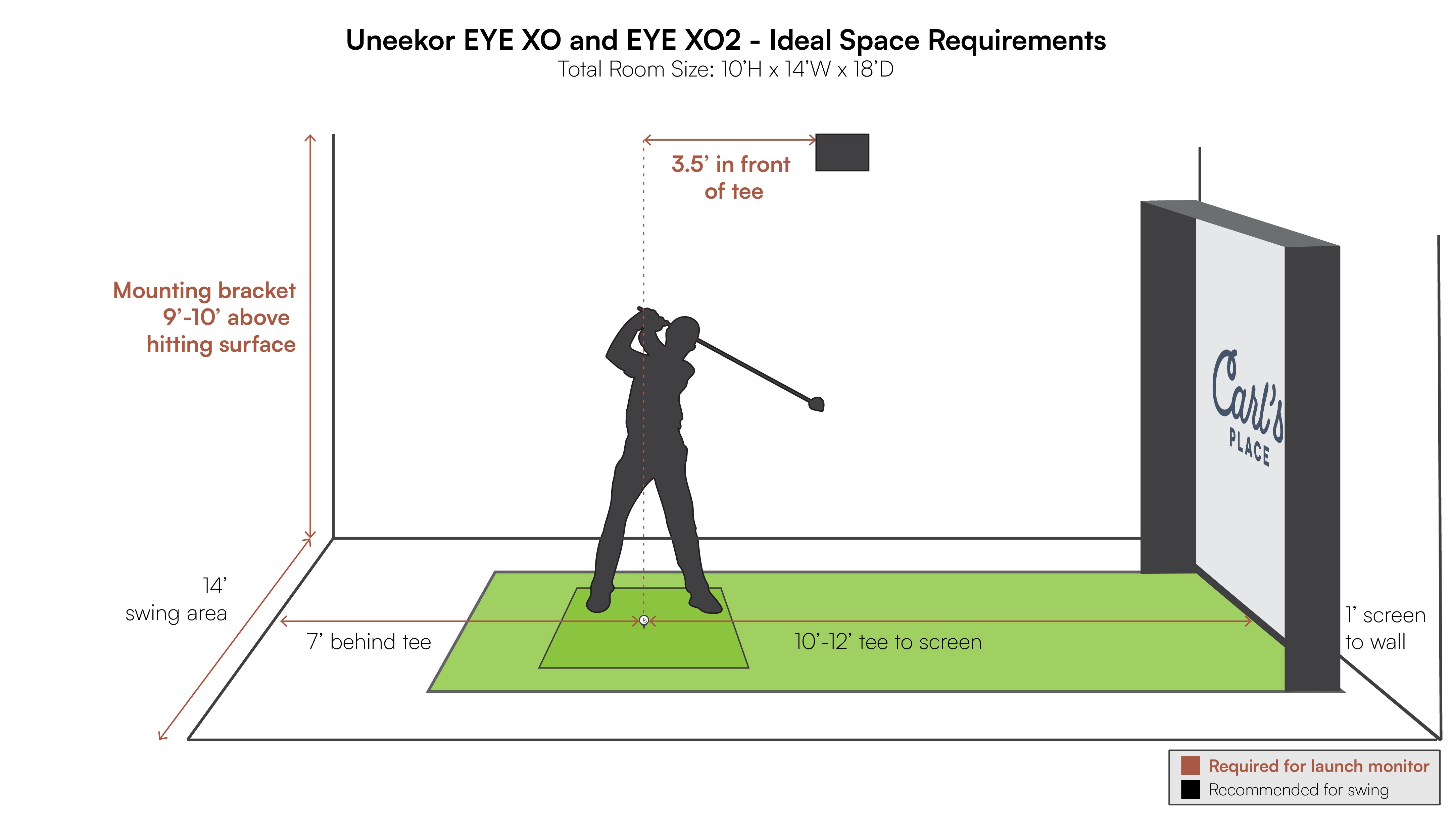
Image Source: hubspot.carlofet.com
Grasping Ceiling Height Needs
The ceiling height is the most important part of your golf simulator room dimensions. Too low, and you cannot swing your club freely. This can cause frustration or even damage. The goal is to swing without hitting the ceiling. This holds true for all clubs, especially your driver.
Minimum Ceiling Height: What You Need
What is the lowest ceiling height for a golf simulator? The absolute minimum golf simulator ceiling height is usually 9 feet. This works for many people. But it can still feel tight, especially for taller players or those with a long swing.
A 9-foot ceiling allows most average-height golfers to swing shorter clubs like wedges and irons. For a driver, it can be a problem. The driver is the longest club. Its swing path goes highest. If you are 6 feet tall or taller, 9 feet might not be enough. You risk hitting the ceiling or changing your swing. This is not good for improving your game.
Why 9 Feet Can Be Tight
- Driver Swing Clearance Height: The driver needs the most room. Your club goes high on the backswing. It also goes high on the follow-through. A low ceiling can stop your natural swing.
- Golfer’s Height: A tall golfer simulator height is a real concern. If you are 6’2″ or taller, a 9-foot ceiling is very risky. You might find yourself hitting the ceiling. Or you might have to adjust your swing. Neither is good for practice.
- Safety: Hitting the ceiling can damage your club. It can also damage your room. It is much safer to have enough space.
Recommended Ceiling Height: Ideal Space
The recommended golf simulator ceiling height is 10 feet or more. This height gives you plenty of room. It makes your indoor golf simulator space feel open. You can swing all your clubs, including the driver, with ease.
Benefits of a 10-Foot Ceiling or More
- Full Swings: A 10-foot ceiling lets most golfers swing freely. You won’t hit the ceiling. You won’t worry about it. This means you can focus on your golf swing.
- Comfort: More height makes the space feel larger. It feels less cramped. This makes for a better playing experience.
- Future-Proofing: If you or a friend grows taller, a higher ceiling is better. If you sell your home, a space ready for a simulator adds value.
- Equipment Placement: Higher ceilings give you more options for placing things. This includes projectors and overhead launch monitors.
Beyond Height: Full Room Dimensions
While height is very important, golf simulator room dimensions include width and length too. These all work together to create a good indoor golf simulator space.
Width Needs
You need enough width for your swing and for safety. The minimum width for a simulator is about 10 feet. This lets you swing on both sides of your body. It also keeps you from hitting walls.
- Swing Clearance: Your club swings around you. You need space on both your backswing and follow-through.
- Safety Zone: Keep some empty space around the hitting area. This is for safety. It protects you and your equipment.
- Left-Handed and Right-Handed Players: If both left-handed and right-handed players will use the simulator, you need more width. Or you need to be able to move the hitting mat.
Length Needs
Length is about distance from the hitting mat to the screen. It also includes space behind the golfer.
- Hitting Mat to Screen: This distance is usually 10 to 15 feet. It depends on your launch monitor. Some need more space to read the ball.
- Space Behind Golfer: You need about 3 to 5 feet behind the golfer. This is for safety. It also gives you room to move around.
- Total Length: A good total length is 15 to 20 feet. This gives you room for everything.
Golf Simulator Bay Dimensions
A golf simulator bay is the setup area. It includes the screen, frame, and side netting. These bays often have standard sizes.
| Dimension Type | Minimum (Feet) | Recommended (Feet) |
|---|---|---|
| Ceiling Height | 9 | 10+ |
| Width | 10 | 12+ |
| Length | 15 | 18+ |
These are general guidelines. Always measure your space carefully. Then compare it to the needs of your chosen simulator.
Setting Up Your Home Golf Simulator
Many things go into a home golf simulator setup. The room’s size is a key one. Before you buy anything, measure your space.
Steps to Measure and Plan
- Measure Height: Use a tape measure. Go from the floor to the lowest part of your ceiling. Note any pipes, lights, or beams. These will lower the usable height.
- Measure Width: Measure from wall to wall. Consider any doors or windows.
- Measure Length: Measure from one wall to the opposite wall.
- Note Obstacles: Look for anything that sticks out. This includes heating vents, lights, or shelves. These can affect your setup.
- Plan Swing Path: Stand in your room. Take a few practice swings with your driver. See if you feel cramped. Check if you hit anything. This helps you see if the space works.
Safety First
Safety is very important for your home golf simulator setup. Make sure you have enough room. This protects you, your clubs, and your home. Always have extra room, not just the bare minimum.
Components and Their Impact on Height
Each part of your golf simulator has its own space needs.
Impact Screen Height Requirements
The impact screen is where you hit the ball. It needs to be tall enough to catch all your shots.
- Floor to Top: The screen should be as tall as your ceiling allows. This gives you the biggest target. It also stops shots from going over the top.
- Floor to Bottom: The screen usually starts a few inches above the floor. This protects the bottom edge. It also allows for a small gap if needed.
- Standard Sizes: Impact screens come in many sizes. Common heights are 8 feet or 9 feet. Make sure your ceiling is at least this tall plus some room for the frame.
Projector Placement
Your projector shows the golf course on the screen. Its placement depends on its type.
- Short Throw Projectors: These can sit very close to the screen. Often, they are above and slightly in front of the golfer. This is common. They need a high enough ceiling to mount them safely. They also need to be out of the swing path.
- Long Throw Projectors: These sit farther back. They are often behind the golfer. This can be simpler for ceiling height. But they need more room length.
- Mounting Height: The projector mount needs to be high enough. It must be out of the way of your swing. It also needs to be high enough to project clearly onto the screen.
Launch Monitors
Launch monitors track your ball and club data. They come in different types.
- Overhead Launch Monitors: These mount on the ceiling. They need enough height to see the ball and club clearly. They also need to be out of your swing path. Examples include Foresight GCQuad or Trackman. They need 10 to 12 feet of clear height. Some even more. This type directly affects your ceiling height.
- Floor-Based Launch Monitors: These sit on the ground. They are either beside the hitting mat or behind it. Examples include SkyTrak or Mevo+. They do not need extra ceiling height. But they do need specific distances to the ball and screen. This makes them good for low ceiling golf simulator setups.
Solutions for Low Ceiling Golf Simulator Setups
What if your ceiling is lower than 9 feet? A low ceiling golf simulator can still be possible. But you might have to make some choices.
Compromises for Lower Ceilings (Under 9 Feet)
- No Driver or Woods: The driver needs the most height. If your ceiling is too low, you might only be able to use irons and wedges. This means no long drives. It might be okay if you only want to work on short game.
- Adjust Your Swing: This is not ideal. But some golfers might adjust their swing. They might flatten their backswing to avoid hitting the ceiling. This is bad for your real game. It can cause bad habits.
- Dig a Pit: In some cases, people dig a pit in the floor. This lowers the golfer. This is a big job. It is not common.
- Portable Simulator: If you cannot build a fixed setup, a portable one might work. You can set it up in a space with a higher ceiling, like a garage. Then pack it away.
Equipment Choices for Small Spaces
- Floor-Based Launch Monitors: As mentioned, these are good for low ceilings. They don’t need to be mounted overhead.
- Smaller Impact Screens: You might need a custom screen size. It might not fill the whole wall.
- Short Throw Projectors: Mount them high and close to the screen. This saves space.
- Limited Club Set: You might only use irons and wedges. This means you do not need as much height.
Considering Tall Golfer Simulator Height
If you are a tall golfer, extra ceiling height is a must. A few inches can make a big difference.
- Measure Your Own Swing: The best way to know is to take a slow practice swing. Stand in your space with your driver. Have someone measure the highest point of your club. Add a few inches for comfort and safety.
- Impact on Backswing: Taller golfers often have a more upright swing plane. This means the club goes higher at the top of the backswing.
- Comfort and Confidence: Knowing you have enough room lets you swing freely. This builds confidence. You will get more out of your practice.
Pre-Installation Checklist
Before you buy parts for your golf simulator bay dimensions, run through this list.
- Accurate Measurements: Measure ceiling height, width, and length. Measure twice.
- Obstacle Check: Look for anything hanging down. This includes lights, beams, or vents. These reduce your usable height.
- Power Outlets: Do you have enough power outlets? Where are they?
- Flooring: Is your floor flat? Will it handle a hitting mat?
- Lighting: Good lighting helps with visibility. It also helps some launch monitors work better.
- Noise Control: Golf swings can be loud. Consider insulation if noise is an issue.
- HVAC: Will your room be comfortable in all seasons?
Fathoming the Ideal Setup
The right ceiling height is crucial. It changes how you use your golf simulator. It impacts your safety and enjoyment. Aim for the recommended golf simulator ceiling height of 10 feet or more. If you must go lower, plan carefully. Understand the compromises.
A good indoor golf simulator space allows you to swing freely. It should feel comfortable. It should help you improve your golf game. Do your research. Measure your space. Plan carefully. Then, enjoy your new golf haven.
Frequently Asked Questions (FAQ)
Q1: What is the absolute lowest ceiling height I can have for a golf simulator?
A1: The absolute minimum golf simulator ceiling height is usually 9 feet. However, this is tight for many golfers, especially when using a driver. Taller golfers or those with more upright swings will find it too low.
Q2: Can I install a golf simulator in a room with an 8-foot ceiling?
A2: It is very difficult to have a full golf simulator setup with an 8-foot ceiling. You would likely be limited to putting and chipping. You might not be able to swing any irons or woods without hitting the ceiling. It is generally not recommended for a full simulation experience.
Q3: How much space do I need behind the golfer?
A3: For safety and comfort, you should have at least 3 to 5 feet of space behind the golfer. This allows for your backswing and also gives you room to move around the hitting area.
Q4: Does my height affect the required ceiling height?
A4: Yes, absolutely. A tall golfer simulator height will require more ceiling space. A general rule is to add 1 to 2 feet to your own height to estimate the highest point of your driver swing. Then add a few inches for safety. For example, a 6-foot-tall golfer might need 10 to 11 feet of clearance.
Q5: What are the main golf simulator room dimensions I need to consider besides height?
A5: Besides ceiling height, you need to consider width and length. A minimum width of 10 feet is good for swinging comfortably. A minimum length of 15 feet allows for the hitting mat, screen, and space behind the golfer. More space is always better for an optimal indoor golf simulator space.
Q6: Do different launch monitors need different ceiling heights?
A6: Yes. Overhead launch monitors (like GCQuad or Trackman) mount on the ceiling. They need specific heights for accurate readings and to be out of your swing path. This usually means a ceiling of 10 feet or more. Floor-based launch monitors (like SkyTrak or Mevo+) sit on the ground, so they do not add to your ceiling height needs.
Q7: How important is the impact screen height?
A7: Impact screen height requirements are important for catching all shots. Your screen should be as tall as your usable ceiling height allows. This reduces the chance of a ball flying over or under the screen. A good rule of thumb is to have the screen fill most of the available vertical space.