
Stop Backfires: Why Is My Golf Cart Backfiring & Solutions
Why is my golf cart backfiring, and can a golf cart backfire? Yes, a golf cart can backfire, and it usually happens when fuel burns outside the engine’s cylinders. This often means there’s a problem with the fuel, air, or ignition system. A backfire sounds like a loud pop or bang. It shows something is wrong with how your golf cart’s engine works. Finding the cause quickly helps keep your cart running well and avoids bigger problems. This guide will help you find out why your golf cart backfires and how to fix it.
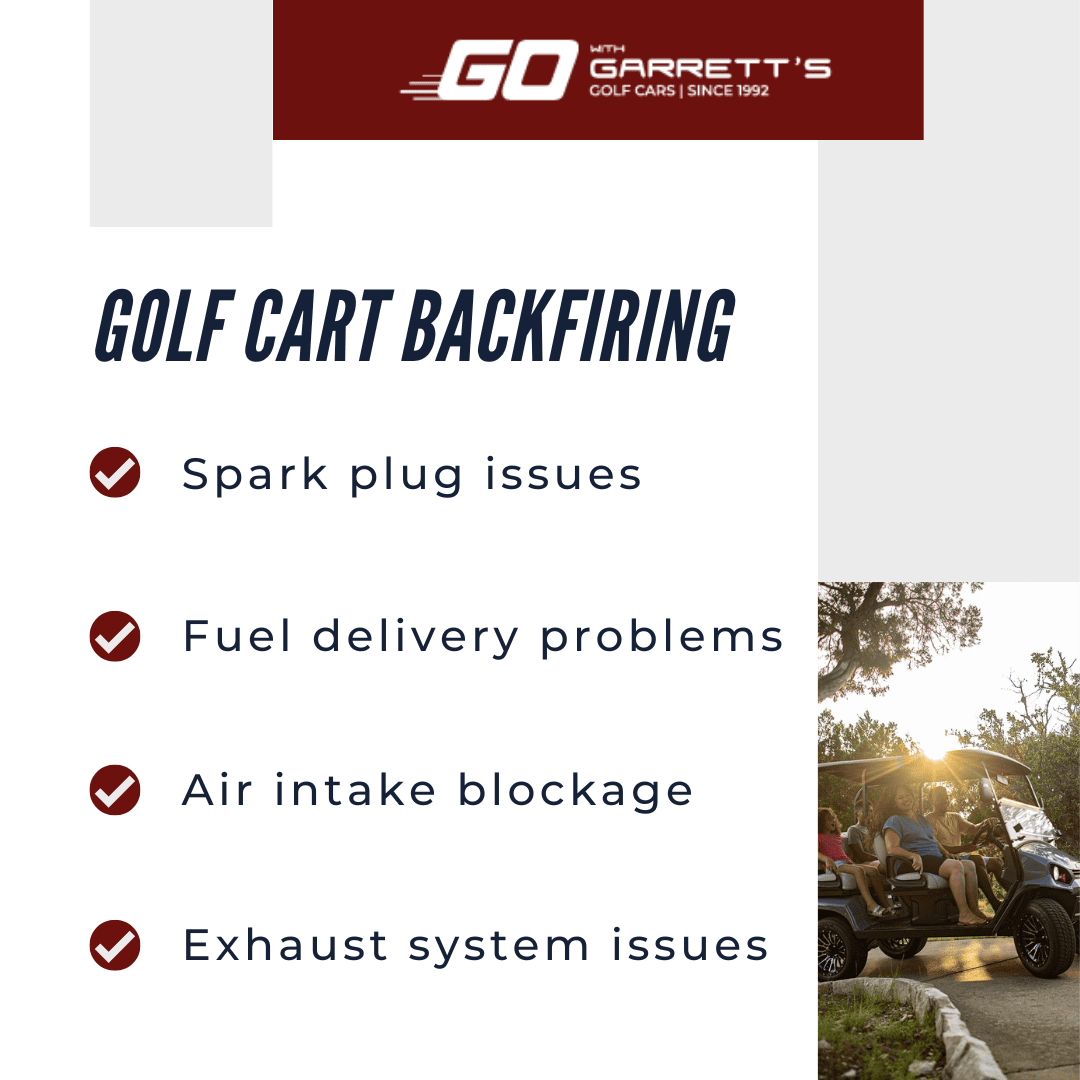
Image Source: www.gowithgarretts.com
Decoding Golf Cart Backfires
What is a backfire? A backfire is a small explosion. It happens when fuel lights up outside the engine’s main burning space. This can be in the intake system or, more often, in the exhaust system. This sound is loud and can be startling.
Why do golf carts backfire? Golf carts backfire when the mix of air and fuel is not right. Or, the spark that lights the fuel happens at the wrong time. This makes unburnt fuel go into the exhaust. When this hot fuel meets oxygen, it explodes. This is the backfire you hear. It can point to many small issues that need fixing.
The Engine’s Role: Golf Cart Engine Misfires
When your golf cart engine misfires, it means one of the cylinders is not firing correctly. This can be a major cause of backfiring. A misfire sends unburnt fuel into the exhaust pipe. There, it can ignite and cause a backfire. Misfires often come from issues with spark, fuel, or air.
The spark needs to be strong and at the right time. The fuel needs to be clean and in the right amount. The air needs to flow freely. If any of these are off, your engine might misfire. This leads to loud pops from the exhaust.
Fuel System Faults
The fuel system delivers gas to your engine. Problems here are very common reasons for backfires. The engine needs a perfect mix of fuel and air. If this mix is off, the engine will not run well. It might even backfire.
Lean Fuel Golf Cart
What does lean fuel mean? A lean fuel mix has too much air for the amount of fuel. Think of it as stretching a small amount of gas across too much air. When the mix is too lean, the engine runs hot. It can struggle to start. It might also backfire. This often happens as the cart slows down or when you let off the gas.
Causes of Lean Fuel:
- Clogged Fuel Filter Golf Cart: Your fuel filter cleans the gas before it reaches the engine. If it gets clogged, not enough fuel can get through. This makes the fuel mix lean. A clogged filter is a very common cause of lean conditions and backfires.
- What to look for: The cart might run fine at low speeds. But it might lose power or backfire when you press the gas pedal hard.
- Simple fix: Replace the fuel filter. This is a cheap and easy repair.
- Dirty Carburetor: The carburetor mixes fuel and air. Tiny passages inside it can get clogged with dirt or old fuel. This stops fuel from flowing well.
- What to look for: Engine struggles, rough idling, backfiring.
- Simple fix: Clean the carburetor. You might need a carburetor cleaner spray or a full rebuild kit.
- Vacuum Leaks: A vacuum leak is like a tiny hole where extra air gets into the engine. This extra air makes the fuel mix lean. Leaks can happen in hoses or around engine gaskets.
- What to look for: A hissing sound near the engine. The engine might run poorly.
- Simple fix: Find the leak and seal it. This might mean tightening a clamp or replacing a hose.
- Low Fuel Pressure: Some golf carts have a fuel pump. If the pump is weak, it might not send enough fuel. This also causes a lean mix.
- What to look for: Engine struggles, especially when going uphill.
- Simple fix: Check the fuel pump. You might need to replace it.
Rich Fuel Golf Cart
What does rich fuel mean? A rich fuel mix has too much fuel for the amount of air. This is the opposite of lean. It means there’s too much gas and not enough air. A rich mix makes the engine run rough. It can also cause black smoke from the exhaust. Unburnt fuel can go into the exhaust and backfire.
Causes of Rich Fuel:
- Clogged Air Filter: The air filter cleans the air going into the engine. If it’s dirty or clogged, not enough air gets in. This makes the fuel mix rich.
- What to look for: Black smoke from the exhaust, bad fuel economy, engine struggles.
- Simple fix: Clean or replace the air filter. This is an easy check.
- Stuck Choke: The choke helps start a cold engine by making the mix rich. If it gets stuck in the “on” position, the engine always runs rich.
- What to look for: Engine runs rough even when warm, smells like gas.
- Simple fix: Check the choke cable and mechanism. Make sure it moves freely.
- Flooding: Too much fuel can flood the engine. This means there’s just too much gas. This can happen if the float in the carburetor sticks.
- What to look for: Strong gas smell, engine won’t start, or starts and then dies.
- Simple fix: Turn off the gas supply. Let the engine sit for a while. Try starting it again with the gas pedal pressed down.
- Too High Fuel Pressure: If your fuel pump sends too much fuel, it can make the mix too rich.
- What to look for: Similar to other rich conditions, strong gas smell.
- Simple fix: Check the fuel pressure regulator if your cart has one. Otherwise, the pump might be the issue.
Carburetor Adjustment Golf Cart
Proper carburetor adjustment golf cart is vital for your golf cart to run right. The carburetor has screws to set the air and fuel mix. If these screws are not set correctly, the engine will run either too lean or too rich. Both of these can cause backfiring.
- How it causes backfiring: If the carburetor sends too little fuel (lean), the engine might misfire. Unburnt fuel goes into the exhaust. If it sends too much fuel (rich), the engine also misfires. Again, unburnt fuel goes to the exhaust. Both lead to backfires.
- Simple fix: Adjusting the carburetor often involves turning a pilot screw (air/fuel mix) and an idle speed screw. This takes a bit of feel. It’s often best done by someone who knows how. Tiny turns can make a big difference. Always check your cart’s manual for specific instructions.
Ignition System Glitches
The ignition system makes the spark that lights the fuel. If this spark is weak or comes at the wrong time, the fuel might not burn completely. This can lead to backfiring.
Bad Spark Plugs Backfire
Spark plugs create the spark that ignites the fuel-air mix. If they are old, dirty, or damaged, they cannot make a strong spark. This causes a misfire. When the fuel doesn’t burn in the cylinder, it gets pushed into the exhaust. There, it can ignite and cause a backfire.
- What to look for:
- The engine might run rough.
- It might be hard to start.
- You may feel a loss of power.
- Visually inspect the plugs: they might be black, oily, or have a broken tip.
- Simple fix: Replace bad spark plugs. Make sure the new plugs have the right gap. Check your cart’s manual for the correct gap size. This is a very common fix for backfiring.
Golf Cart Ignition Timing
Golf cart ignition timing is about when the spark plug fires. It needs to fire at the exact right moment. This is when the piston is in the correct position. If the timing is off, the spark might happen too early or too late. Both can cause problems.
- Too early (advanced timing): The spark happens before the piston is fully ready. This can cause a “pinging” sound. It can also send fire out the intake, or backfire through the carburetor.
- Too late (retarded timing): The spark happens too late. The fuel doesn’t burn fully in the cylinder. This pushes unburnt fuel into the exhaust. There, it ignites and causes a backfire.
- What to look for: The engine might feel sluggish. It might run hot. Loud backfires are common.
- Simple fix: Adjusting ignition timing needs special tools. You usually need a timing light. This is often a job for a mechanic. But knowing it’s a possible cause helps you tell your mechanic what to look for.
Other Ignition Parts:
- Bad Ignition Coil: The coil makes high voltage for the spark plugs. If it’s faulty, the spark can be weak or missing. This causes misfires and backfires.
- Faulty CDI Box: The CDI (Capacitor Discharge Ignition) box controls when the spark happens. If it goes bad, the timing can be off. This leads to misfires and backfires.
- Loose Wires: Wires connecting the spark plugs, coil, or CDI can come loose. This stops the spark from reaching the plug. Always check all electrical connections for tightness.
Exhaust System Problems
The exhaust system carries burnt gases away from the engine. Problems here can trap unburnt fuel or let fresh air in. Both can cause backfires.
Golf Cart Exhaust Leaks
Golf cart exhaust leaks mean there are holes or cracks in the exhaust pipe or muffler. They can also be from loose connections. Hot, unburnt fuel gases leave the engine. They travel down the exhaust pipe. If there’s a leak, fresh air can get pulled into the pipe. This oxygen mixes with the hot, unburnt fuel. When they meet, they ignite, causing a backfire.
- What to look for:
- A loud popping or hissing sound from under the cart.
- A smell of exhaust fumes.
- Dark spots or soot around pipes or connections.
- Simple fix:
- Tighten any loose clamps or bolts on the exhaust system.
- Use exhaust repair paste or wrap for small holes.
- For bigger leaks, the pipe or muffler might need to be replaced. Fixing these leaks is key to stopping backfires.
Clogged Exhaust Pipe or Muffler:
A clogged exhaust can trap gases. This makes it hard for the engine to breathe. It also can cause unburnt fuel to build up. When it finally escapes, it can ignite.
* What to look for: Loss of power, engine running hot, black smoke.
* Simple fix: Remove any blockages. Sometimes, the muffler needs to be replaced.
Valve System Issues
The valves in your engine control the flow of air in and exhaust out. If they are not working right, the engine won’t run smoothly. This can cause backfiring.
Golf Cart Valve Issues
Golf cart valve issues are serious. Valves open and close to let air in and exhaust out. They must open and close at the right time. If they are not set correctly, or if they are worn, they can cause problems.
- Improperly adjusted valves: Valves need a small gap to work right. This gap is called “valve clearance.”
- Too tight: If the gap is too small, the valve might not close all the way. This lets gas escape when it should be sealed. It causes low compression. Unburnt fuel can escape into the exhaust.
- Too loose: If the gap is too big, the valve opens too late or closes too early. This also affects engine breathing. It can cause misfires.
- Worn or burnt valves: Over time, valves can wear down. They might not seal well anymore. A burnt valve is one that has been damaged by heat. This often happens if the engine runs too lean. A valve that does not seal properly will cause low compression. This leads to misfires and backfires.
- What to look for:
- Engine loses power.
- It might be hard to start.
- You might hear a ticking sound from the engine.
- Backfiring, especially when slowing down.
- Simple fix:
- Adjusting valve clearance: This needs special tools. It means setting the small gap for each valve. This is a job for a skilled person or a mechanic.
- Replacing valves: If valves are worn or burnt, they must be replaced. This is a major engine repair. It means taking the engine apart.
Summary of Valve Problems: If your valves are not working right, your engine will not have good compression. This means the fuel won’t burn completely. This unburnt fuel then goes into the exhaust and can explode, causing a backfire. It’s a key check when other common fixes don’t work.
General Golf Cart Troubleshooting Guide
When your golf cart backfires, it can feel overwhelming. But you can follow some steps to find the problem. This troubleshooting guide helps you check the most common causes.
Step-by-Step Checks:
-
Listen and Observe:
- When does the backfire happen? (On startup, when letting off the gas, under load?)
- Does it happen often or just sometimes?
- Do you smell gas or see smoke?
-
Check Spark Plugs:
- Carefully remove the spark plug(s).
- Look at them: Are they dirty, black, wet, or white?
- Are the tips damaged?
- Is the gap correct? (Check your manual for the right gap.)
- Action: Clean or replace plugs. Adjust gap.
-
Inspect Air Filter:
- Open the air filter housing.
- Is the filter very dirty or clogged with debris?
- Action: Clean or replace the air filter.
-
Examine Fuel Filter and Fuel Lines:
- Locate the fuel filter. Is it dirty?
- Are the fuel lines cracked or leaking?
- Action: Replace the fuel filter. Check lines for leaks. If you see a leak, fix it.
-
Check for Exhaust Leaks:
- Start the cart. Listen for hissing sounds around the exhaust pipe or muffler.
- Look for dark spots or soot.
- Action: Tighten clamps. Use exhaust sealer. Replace damaged parts.
-
Assess Fuel Quality:
- When was the last time you put gas in? Is the gas old (more than 3-4 weeks)?
- Does the gas smell bad or look dark?
- Action: If old, drain the tank and put in fresh gas.
-
Consider Carburetor (Advanced):
- If the above steps don’t work, the carburetor might need cleaning or adjustment.
- This is often best done by someone with experience.
- Action: Clean the carburetor or adjust its screws carefully.
-
Ignition Timing and Valves (Professional Help):
- If you’ve checked everything else, problems with ignition timing or valves are likely.
- These need special tools and skills.
- Action: Call a golf cart mechanic.
Table: Common Backfire Causes & Quick Checks
This table lists common backfire reasons. It shows how to quickly check each one. It also gives simple fixes.
| Cause | Quick Check | What to Look For | Simple Fix |
|---|---|---|---|
| Spark Plugs | Remove and inspect | Fouled, worn, wrong gap | Clean or replace, adjust gap |
| Fuel Filter | Find it, check for dirt | Dirt, rust inside filter | Replace the fuel filter |
| Air Filter | Open housing, check filter | Clogged with dirt or leaves | Clean or replace the air filter |
| Carburetor (basic) | Look for leaks, listen for suction | Dirt, fuel leaks, bad smell | Clean outside, adjust air/fuel screw (small turns) |
| Ignition Timing | Needs a timing light (pro tool) | Spark not aligned with engine marks | Adjust timing (professional job) |
| Exhaust Leaks | Listen for hissing, feel for air | Cracks, loose connections | Tighten, seal, replace parts |
| Valve Clearance | Needs feeler gauges (pro tool) | Too tight or too loose | Adjust valves (professional job) |
| Lean Fuel Mix | Check fuel filter, look for vacuum leaks | Engine runs hot, cart loses power | Fix leaks, replace filter, clean carburetor |
| Rich Fuel Mix | Check air filter, choke, fuel level | Black smoke, gas smell, engine runs rough | Clean air filter, free up choke, check float |
| Old/Bad Fuel | Smell fuel in tank | Smells sour, looks dark | Drain tank, add fresh fuel |
Prevention is Key: Keeping Your Cart Running Smooth
Regular care is the best way to stop backfires and other problems. A well-kept golf cart will run better and last longer. Follow these tips to keep your cart in top shape.
1. Regular Tune-Ups:
* Why: Just like a car, your golf cart needs regular checks. This helps catch small problems before they become big ones.
* What to do: Have a professional look at your cart at least once a year. They will check all major systems.
2. Fresh Fuel and Fuel Stabilizer:
* Why: Old gas can turn bad. It can clog your fuel lines and carburetor. This causes misfires and backfires.
* What to do:
* Always use fresh, good quality fuel.
* If your cart sits for more than a month, add a fuel stabilizer to the gas tank. This keeps the fuel fresh.
3. Clean Air Filter:
* Why: A dirty air filter blocks air. This makes the fuel mix too rich. It can cause black smoke and backfires.
* What to do: Check your air filter every few months. Clean or replace it if it looks dirty. This is an easy and cheap fix.
4. Spark Plug Care:
* Why: Spark plugs wear out. They can get dirty or lose their proper gap. This causes weak sparks and misfires.
* What to do: Check spark plugs every 6 months or 100 hours of use. Replace them if they are worn or dirty. Make sure the gap is correct.
5. Check All Hoses and Lines:
* Why: Hoses can crack. Clamps can loosen. This can cause fuel leaks or air leaks. Both lead to engine problems.
* What to do: Look over all fuel lines, vacuum hoses, and exhaust connections often. Tighten any loose clamps. Replace any cracked or damaged hoses.
6. Listen to Your Cart:
* Why: Your golf cart often tells you when something is wrong.
* What to do: Pay attention to new sounds, smells, or how the cart feels when you drive it. A backfire is a loud warning sign.
By following these simple steps, you can greatly reduce the chance of your golf cart backfiring. You will also keep it running smoothly for many years.
Conclusion
A backfiring golf cart can be annoying, but it’s often a sign of a fixable problem. Most backfires come from issues with your cart’s fuel, air, or ignition systems. Common causes include dirty spark plugs, clogged fuel or air filters, carburetor issues, or exhaust leaks. Even bad gas or incorrect engine timing can cause it.
By checking these key areas, you can often find the cause. Start with the easiest checks first, like spark plugs and filters. For more complex issues, like ignition timing or valve problems, it’s best to get help from a professional golf cart mechanic.
Regular care is your best friend. Simple maintenance like using fresh fuel, changing filters, and checking spark plugs will keep your cart running well. This helps prevent backfires and makes sure your golf cart is ready for your next ride. Knowing these tips helps you enjoy your golf cart more and worry less.
Frequently Asked Questions (FAQ)
Q1: Is backfiring bad for a golf cart engine?
Yes, backfiring can be bad. While an occasional small backfire might not cause instant damage, frequent or loud backfires can harm your engine. They can damage exhaust components, muffler, or even valves over time. It also means your engine is not running right.
Q2: How do I adjust the carburetor on my golf cart to stop backfiring?
Adjusting the carburetor can help stop backfiring. Most golf cart carburetors have an idle mix screw (air/fuel) and an idle speed screw. To adjust, warm up the engine. Then, slowly turn the idle mix screw in or out until the engine runs smoothly without backfiring. Make very small turns (1/8 turn at a time). For precise adjustments, or if unsure, check your cart’s manual or ask a mechanic.
Q3: Can old gas cause a golf cart to backfire?
Yes, old gas can definitely cause a golf cart to backfire. Over time, gasoline breaks down and can leave sticky residues. This old, stale fuel does not burn well. It can also clog fuel lines and the carburetor. This causes misfires and sends unburnt fuel to the exhaust, leading to backfires. Always use fresh fuel, especially if your cart sits for a while.
Q4: What does a backfire sound like?
A backfire sounds like a loud, sudden pop or bang. It can be like a firecracker going off. It often comes from the exhaust pipe. Sometimes, it can sound like a smaller, duller thump if it’s less severe.
Q5: How often should I change golf cart spark plugs?
You should generally check your golf cart spark plugs every 6 months or after about 100 hours of use. If they look dirty, worn, or have a wrong gap, you should replace them. Many manufacturers suggest replacing them at least once a year, or every 100-200 hours, depending on your cart’s model and use. This helps prevent golf cart engine misfires and backfires.