
A bogey in golf means you took one more shot than the set number for that hole. For example, if a hole should take 4 shots (par 4), a bogey means you took 5 shots. The term “bogey” comes from an old song and a golfing trend in the late 1800s. It points to a time when golfers aimed to beat an imagined “Colonel Bogey,” a perfect player. This ties into the very beginning of golf scoring ideas.
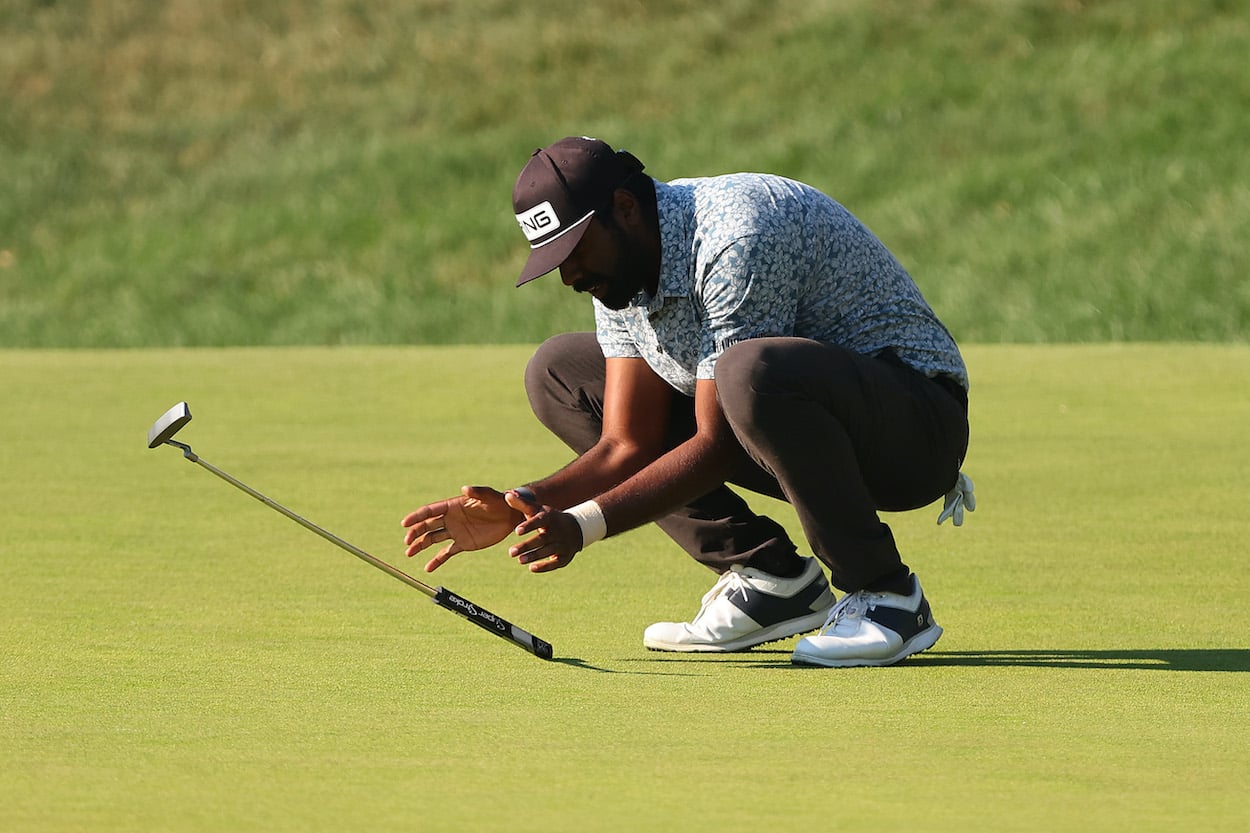
Image Source: www.sportscasting.com
Grasping the Genesis of Golf’s Scoring System
Golf, as we know it, began in Scotland. For a long time, players just played match play. This meant they played against each other hole by hole. The player who won more holes won the match. There was no real system for total scores over a whole course. People just wanted to beat their friend.
But as golf grew, players wanted a new way to measure their skill. They wanted to see how well they played against the course itself. This led to the idea of a “standard” score for each hole. This was the start of what we now call “par.”
The “Ground Score” and “The Bogey Man”
Before “par,” there was the “ground score.” This was the number of shots a good player was expected to take on each hole. In the late 1800s, this idea was still new. Golf clubs would set their own “ground score” for each hole. This was often based on what a very good local player might do.
Around 1890, a new song became very popular in Britain. It was called “The Bogey Man.” It was about a scary figure. The song’s chorus was: “Oh, he’s a demon, he’s a fright, He’ll get you if you don’t look out! He’s the Bogey Man!”
This song was a hit. People loved it. At the same time, golf was getting more rules and a better scoring system.
The Birth of “Colonel Bogey”
The true origin of golf bogey comes from this song and the golf courses. In 1890, a player named Dr. Thomas Browne was at the Great Yarmouth Golf Club. He was talking about the “ground score” with a friend. His friend said, “This player is a regular ‘Bogey Man’.”
This simple comment stuck. It linked the popular song’s invisible, unbeatable character to the ideal score on a golf course. The idea was that the “Bogey Man” was the perfect player. He would always get the “ground score.” If you matched his score, you were playing great. If you beat him, even better.
The term caught on quickly. Golfers started saying they were playing against “The Bogey Man.” Later, the name changed slightly to “Colonel Bogey.” This made the unseen perfect player seem more like a proper, army-like figure. It gave him more authority.
The “Colonel Bogey March”
The “Colonel Bogey” idea grew even more famous with a new song. In 1914, Lieutenant F.J. Ricketts wrote “Colonel Bogey March.” This march became hugely popular. It was even whistled in the movie “The Bridge on the River Kwai.” This song helped make “Colonel Bogey” a household name. This firm connection of the Colonel Bogey golf term with the popular song made the golf scoring term stick.
So, for many years, a “bogey” was the target score for each hole. It was what a good golfer should aim for. If you got a “bogey,” you played well.
The Trajectory of Golf Scoring Terms
The history of bogey score shows a big change in how we think about golf scores. At first, “bogey” was the ideal. It was the score you wanted to get. But then, the idea of “par” came along.
From Bogey to Par
The word “par” comes from banking. It means “equal value.” In golf, it came to mean the score an expert player should get on a hole. This score was often lower than the “bogey” score.
Golf course designers and rule-makers started to set “par” for each hole based on length and difficulty. A par 3 hole should take 3 shots for an expert. A par 4 should take 4 shots, and so on. This new “par” was a tougher standard than the old “bogey.”
When “par” became the standard, what happened to “bogey”? It changed meaning. If “par” was the expert’s score, then taking one more shot than par became a “bogey.” This is how one over par meaning became linked to the word.
Let’s look at how the scores shifted:
| Early 1900s Golf Scoring (Bogey as Target) | Modern Golf Scoring (Par as Target) |
|---|---|
| Bogey: Ideal score for the hole. | Par: Ideal score for the hole. |
| Birdie: One shot better than bogey. | Birdie: One shot better than par. |
| Eagle: Two shots better than bogey. | Eagle: Two shots better than par. |
| Double Bogey: One shot worse than bogey. | Bogey: One shot worse than par. |
This table shows the shift. What was once a good score (bogey) became a slightly less good score (one over par). This change happened slowly over the early 1900s.
Deciphering Golf Scoring Rules: A Historical View
The shift from “bogey” as the target to “par” as the target shows a key part of golf scoring rules history. Early golf rules were simple. They mostly focused on match play. As stroke play grew, the need for clear scoring terms grew too.
The First Steps in Standardizing Scores
The early golf scoring system was not very formal. Clubs set their own “ground scores.” There was no single rule book. This meant a “bogey” score at one club might be different from a “bogey” at another.
The Royal and Ancient Golf Club of St Andrews (R&A) and the United States Golf Association (USGA) slowly worked to make rules the same everywhere. They started to define terms like “par,” “bogey,” “birdie,” and “eagle.” This made it easier for golfers to compare scores no matter where they played.
The R&A was a big part of making “par” the main standard. They felt “par” was a more exact measure of a hole’s difficulty. It was less about an imagined player and more about the hole’s physical makeup.
How “Par” Took Over
“Par” was based on specific distances.
* Par 3: up to 250 yards
* Par 4: 251 to 475 yards
* Par 5: 476 yards and up
These distances were set for men’s golf. Women’s par distances are a bit shorter. This exactness made “par” more modern and scientific than the older “bogey” standard. As golf grew around the world, “par” became the universal language of scoring.
Golf Terminology Explained: Beyond Bogey
Knowing what is a bogey in golf is just one part of understanding golf scores. Golf has many unique terms. Let’s look at some other common ones and their meaning of golf scores.
- Ace (or Hole-in-One): You hit the ball directly into the hole from the tee. This is the best score possible on a hole.
- Albatross (or Double Eagle): You finish a hole in three shots under par. This is usually on a par 5 hole (you get it in 2 shots). It is very rare.
- Eagle: You finish a hole in two shots under par. For example, getting a 2 on a par 4, or a 3 on a par 5.
- Birdie: You finish a hole in one shot under par. For example, getting a 3 on a par 4.
- Par: You finish a hole in the expected number of shots. For example, getting a 4 on a par 4.
- Bogey: You finish a hole in one shot over par. For example, getting a 5 on a par 4.
- Double Bogey: You finish a hole in two shots over par. For example, getting a 6 on a par 4.
- Triple Bogey: You finish a hole in three shots over par. For example, getting a 7 on a par 4.
- Quadruple Bogey (and worse): You finish a hole in four or more shots over par.
These terms help golfers track their game. They also help them talk about their rounds. Every golfer knows what a “birdie” feels like and what a “double bogey” feels like.
The Etymology of Golf Scoring Terms
The etymology golf scoring terms reveals some interesting facts.
* Par: From Latin “par,” meaning “equal.” Used in finance since the 16th century to mean “equal value.” Applied to golf around 1890.
* Bogey: As discussed, from “The Bogey Man” song and the idea of an imaginary, unbeatable player around 1890.
* Birdie: Said to come from an American golfer, Ab Smith, in 1899. After a great shot, he said it was a “bird of a shot.” This meant it was wonderful. The term stuck for one under par.
* Eagle: A bigger, more impressive bird than a birdie. So, two under par became an “eagle.”
* Albatross: An even bigger, rarer bird. So, three under par became an “albatross.”
These terms show a playful side of golf. They help make the game’s language fun and memorable.
A Closer Look at How Scores Are Counted
When you play golf, you keep track of your strokes on each hole. At the end of the round, you add up all your strokes. This gives you your gross score. Then, if you have a handicap, you subtract it from your gross score to get your net score.
Example Scorecard
Let’s look at a simple example of a golf scorecard to see how scores are recorded and how a bogey fits in.
| Hole | Par | My Score | Relation to Par | Term |
|---|---|---|---|---|
| 1 | 4 | 5 | +1 | Bogey |
| 2 | 3 | 3 | E (Even) | Par |
| 3 | 5 | 4 | -1 | Birdie |
| 4 | 4 | 6 | +2 | Double Bogey |
| 5 | 3 | 2 | -1 | Birdie |
In this example, on Hole 1, the player took 5 shots on a Par 4 hole. This is one over par, so it’s a bogey. On Hole 4, the player took 6 shots on a Par 4 hole. This is two over par, a double bogey.
Why Bogeys Matter
A bogey is a common score for many golfers. It means you made a small mistake on the hole. Maybe you missed a short putt or hit a bad shot. But a bogey is not a terrible score. It shows you are trying to play well. For many amateur golfers, making bogeys is a good goal. It means they are playing steadily. It is much better than making very high scores on many holes.
Interpreting Golf Scores and Their Significance
The meaning of golf scores goes beyond just the number of strokes. Each score tells a story about how you played that hole.
- Birdie/Eagle/Albatross: These show great skill. You played the hole almost perfectly, or you made a great recovery.
- Par: You played the hole as it was designed. You kept your ball in play and made the expected putts. This is a very good score for most golfers.
- Bogey: You made a small error. Maybe you were in the rough, or you took an extra putt. It’s a score that keeps your round moving without too much damage.
- Double Bogey/Triple Bogey/Worse: These scores mean you had a tough time on the hole. You might have lost a ball, hit several bad shots, or struggled on the green.
For a long time, golf was just about beating your opponent. But with the rise of “par” and “bogey,” golfers could now compete against the course itself. This made golf more personal. You could try to beat your own best score.
The shift in the meaning of “bogey” from being a good score to being “one over par” shows how golf grew up. It went from a more casual game to one with precise standards. This precision helps golfers around the world play by the same rules and compare their skills fairly.
The game keeps evolving. Technology changes. Golf courses change. But the core terms, like “bogey,” stay. They are a link to the past of this great sport. They remind us of the history and the fun of playing golf.
Frequently Asked Questions (FAQ)
Here are some common questions about the term “bogey” in golf.
Q1: What does “bogey” mean in golf today?
A1: Today, a “bogey” means you took one more shot than the set number for that hole (par). For example, if a hole is a par 4 and you take 5 shots, that’s a bogey.
Q2: Why is it called a “bogey”? Where did the term come from?
A2: The term “bogey” comes from a popular British song from the late 1800s called “The Bogey Man.” Golfers used the song’s imaginary, unbeatable character to describe the perfect score they aimed for on a hole. This ideal player became known as “Colonel Bogey.” Over time, as “par” became the new ideal score, “bogey” shifted to mean one shot over par.
Q3: Was “bogey” always a bad score in golf?
A3: No, in the early days of golf scoring (late 1800s to early 1900s), a “bogey” was actually the target score for a good player. It was seen as a good achievement. It was what good local players were expected to shoot on a hole.
Q4: What’s the difference between “bogey” and “par”?
A4: “Par” is the number of shots an expert player is expected to take on a hole. It’s the standard. “Bogey” is one shot more than par. For example, if a hole is a par 4, getting a 4 is “par.” Getting a 5 is a “bogey.”
Q5: Are there terms for scores worse than a bogey?
A5: Yes. If you take two shots over par, it’s a “double bogey.” Three shots over par is a “triple bogey.” And so on (quadruple bogey, etc.).
Q6: What is the “Colonel Bogey March”?
A6: The “Colonel Bogey March” is a famous British march tune written in 1914 by Lieutenant F.J. Ricketts. It became linked to the golf term “Colonel Bogey” and helped make the name very well-known. It was even famously whistled in the movie “The Bridge on the River Kwai.”
Q7: How did golf scoring terms like “birdie” and “eagle” get their names?
A7: “Birdie” likely came from an American golfer who called a good shot a “bird of a shot” (meaning excellent). “Eagle” and “Albatross” followed the bird theme, using bigger, more impressive birds for even better scores (two and three shots under par, respectively).
Q8: Does the meaning of “bogey” vary by country?
A8: No. Thanks to the global rules set by the R&A and USGA, the meaning of “bogey” (and all other golf scores) is the same all over the world. A bogey means one over par everywhere.
The journey of the golf “bogey” from a perfect target to a common error score tells a great story. It shows how golf, like all sports, has changed and grown over time. It makes the game’s rich history even more fun to learn about.