
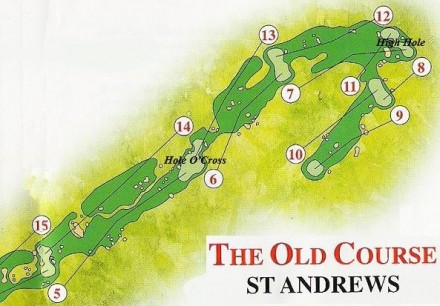
Image Source: www.scottishgolfhistory.org
Why Do Golf Courses Have 18 Holes? The History Revealed.
Many people ask, “Why do golf courses have 18 holes?” The simple answer points to Scotland, the true home of golf. The famous Old Course at St. Andrews made 18 holes the standard. This change happened a long time ago, in 1764. Before this, golf courses had different numbers of holes. Sometimes they had 5 holes, sometimes 12, or even 20. But St. Andrews, a very important place in golf history, decided on 18 holes. This decision then shaped golf courses all over the world. It is a key part of the origin of 18 holes golf.
Tracing Golf’s Very Early Days
Golf did not start with 18 holes. Its beginnings were much simpler. Early golf was played on natural land, often by the sea. These areas were called ‘links’. People would hit a ball from one spot to another. They used whatever natural features were there. There were no set rules for how many holes a course should have.
The First Golf Games
Golf began in Scotland many centuries ago. People hit stones or balls with sticks. They played in open fields or on bumpy dunes. These early players made up their own holes. They might use a rabbit hole or a small dip in the ground.
The game was very informal. There were no greenkeepers. There were no fancy clubhouses. Just people, sticks, and a ball. They played for fun, or sometimes for small bets. The number of holes varied greatly. One day, a course might have 7 holes. The next day, it might have 11. It all depended on the land and the players. This early play shows how simple golf was in its start.
Varying Hole Counts
Before the 18-hole standard, courses had all sorts of layouts. Some famous early courses were short. For example, Leith Links, another old golf course near Edinburgh, had 5 holes. These 5 holes were played three times. This made for a 15-hole round. Other courses had different numbers. There was no single rule.
This variety was normal. It was part of the early golf course design. Golfers used the land as it was. They did not change it much. They found the best spots for holes. These spots were often natural hollows or bumps. They kept the game simple and close to nature.
St. Andrews: The Birthplace of the Standard
The Old Course at St. Andrews is often called the “Home of Golf.” Its history is deeply tied to why golf courses have 18 holes. This course was not always 18 holes. Its journey to this number is a key part of golf’s story.
Initial Layout of St. Andrews
In its very early days, the Old Course at St. Andrews was much bigger. It had 12 holes. Players would play these holes out and back. This meant they played the same holes twice. Once on the way out, and once on the way back in. This made for a round of 22 holes in total.
The course was long. It stretched along the coast. The holes were simple. They were often just flags stuck in the ground. The land was natural. It was a true links course. This early setup shows how golf courses grew over time.
The Pivotal Year: 1764
The year 1764 is very important in golf history. The Society of St. Andrews Golfers made a big change. They looked at their 12-hole course. They noticed that some holes were very short. They decided to combine some of these short holes.
They turned 4 short holes into 2 longer holes. This reduced the total number of holes. The course now had 10 holes. But players still played these holes out and back. This meant 10 holes out and 10 holes back. So, a full round became 20 holes. This was a step closer to the number we know today. This was a big moment for the St Andrews golf course history.
The Final Step: 18 Holes Established
Soon after, another change happened at St. Andrews. The golfers realized that 20 holes was still a bit much. They decided to remove one more hole. They did this by combining two more holes into one. This left them with 9 holes out and 9 holes back.
So, in the end, the course had 11 holes in total. But golfers played these 11 holes in a special way. They played 9 going out. Then they played 9 coming back. This made a total of 18 holes for a full round. This system made the game better. It was not too short, not too long. This was the moment the origin of 18 holes golf was truly cemented. It set the stage for the standard golf course layout.
The Reasons Behind the 18-Hole Choice
Why did 18 holes become the chosen number? It was not a random pick. Several factors played a role. These factors made the 18-hole round a good fit for the game.
Practicality and Length
An 18-hole round offered a good balance. It was long enough to test skills. It was not so long that it took all day. For many people, playing 18 holes took a reasonable amount of time. It fit well into a day’s activities. This made the game more accessible.
It also made for a good physical challenge. Walking 18 holes is a fair distance. It gives enough exercise. But it does not wear out the player too much. This practical aspect was key to its success.
Variety in Play
The 18-hole setup at St. Andrews offered great variety. Each hole was different. Some were long. Some were short. Some had tricky bunkers. Some had wide fairways. This variety kept the game interesting. Players faced new challenges on each hole.
A course with only a few holes played many times might get boring. 18 unique holes provided a richer experience. This variety allowed for more strategic play. It made the game more exciting for golfers. This was a major historical reason for 18 holes.
The “Whiskey” Anecdote (Less Likely, but Fun)
There is a popular story about the 18-hole number. It says that a bottle of whiskey had 18 shots. And a golfer would take one shot after each hole. So, by the end of 18 holes, the bottle would be empty. This is a fun story. But it is very unlikely to be true.
The real reasons are about the game itself. They are about the course and how it was played. The story about whiskey is a myth. But it shows how much people love golf history. And how they look for simple answers.
How 18 Holes Became the Standard
Once St. Andrews adopted the 18-hole model, it did not instantly become the global standard. But its influence grew steadily. Over time, other clubs followed suit. This was a slow but sure process.
The Influence of St. Andrews’ Prestige
St. Andrews was (and still is) a very important place in golf. It was seen as the home of the game. Its rules and traditions were respected. When St. Andrews made a change, others paid attention.
New golf clubs looked to St. Andrews for guidance. They wanted to build courses like the famous Old Course. They wanted to play by similar rules. This made the 18-hole layout popular. It was like saying, “If it’s good enough for St. Andrews, it’s good enough for us.” This strong influence helped why 18 holes became standard.
The Royal and Ancient Golf Club’s Role
The Society of St. Andrews Golfers later became the Royal and Ancient Golf Club of St. Andrews (R&A). The R&A became the leading authority in golf rules. They were the lawmakers of the game. When they made the 18-hole rule formal, it gained even more power.
Other clubs and societies adopted the R&A’s rules. This included the 18-hole standard. As golf spread, so did this rule. It made playing golf more uniform. Golfers could travel to different courses. And they would know what to expect. This spread of rules is part of the evolution of golf rules.
The Spread of Golf in the 19th Century
In the 1800s, golf began to spread more widely. It moved from Scotland to England. Then it went to America and other parts of the world. As new courses were built, they often copied the St. Andrews model. They wanted to offer the same great game.
Building an 18-hole course became the norm. It was what people expected. It was the accepted way to play golf. This period was key for the standard golf course layout to take hold. Golf courses became places with a defined number of holes.
Key Figures and Their Impact on Course Design
No discussion of golf course design is complete without mentioning key people. These pioneers helped shape the game. They played a huge role in how courses look today.
Old Tom Morris: A Legend’s Touch
One of the most famous figures is Old Tom Morris. He was a true legend of golf. He was a champion golfer. He was also a club maker, a greenkeeper, and a course designer. His work at St. Andrews was very important. He was the greenkeeper there for many years.
Morris helped improve the Old Course. He made changes that made it better for play. He also helped design many other courses. His influence was huge. He set a standard for what a golf course should be. His designs were often 18 holes, following the St. Andrews model. This shows the direct Old Tom Morris influence on golf course architecture.
Morris’s approach to design was natural. He used the land’s features. He built courses that challenged golfers. He made sure the courses were fair. His work helped shape traditional golf course architecture. He taught others how to design courses. His legacy lives on in courses all over the world.
The Era of Course Architects
As golf grew, so did the need for proper course design. People like Old Tom Morris showed the way. Soon, more people became full-time golf course architects. They used the 18-hole model as their base. They built courses that fit this layout.
These architects often tried to bring the spirit of St. Andrews to their new designs. They used the land wisely. They created holes that were fun and challenging. They helped cement the 18-hole standard even further.
The Evolution of Golf Course Length and Design
As golf equipment improved, so did the game. Balls flew farther. Clubs became more powerful. This led to changes in golf course design. The 18-hole layout proved flexible enough to adapt.
Early Equipment and Shorter Courses
In the early days, golf balls were made of leather filled with feathers. These “featheries” did not fly very far. Clubs were simple wooden tools. Because of this, courses were shorter. Holes were not as long as they are today. The game was more about precision than raw power.
The 18-hole model worked well for these shorter games. It allowed for a good flow of play. It provided enough walking distance. This early period was key to the golf course length history.
The Gutta-Percha Ball and Beyond
In the mid-1800s, the gutta-percha ball came along. This ball was much cheaper to make. It also flew farther. This changed golf forever. Golfers could hit the ball greater distances.
This meant courses needed to get longer. Architects began to design longer holes. They also added more hazards. The 18-hole framework was still perfect. It could handle longer holes and still offer variety. It showed how flexible the 18-hole design was. It adapted as equipment changed.
Modern Golf Course Architecture
Today, golf course architecture is a complex field. Designers use advanced tools and knowledge. But the core idea of 18 holes remains. Even with super-fast balls and powerful clubs, the 18-hole round is still the standard.
Modern courses often focus on strategy. They use bunkers, water hazards, and tricky greens. They try to keep the game interesting for all skill levels. The 18-hole layout provides enough space for this variety. It allows for a front nine and a back nine. Each half can have its own feel. This keeps the game exciting.
Why 18 Holes Remains the Standard Today
The 18-hole golf course is deeply ingrained in golf’s culture. It is not just a number. It is a tradition. It is part of the game’s identity.
Tradition and History
Golf is a sport that values its past. The historical reasons for 18 holes are strong. The link to St. Andrews is powerful. It reminds golfers of the game’s roots. Changing the number of holes now would be like changing a core part of the game. It is simply not something people want to do.
Many golf fans love the history. They enjoy knowing that they play the same number of holes as the legends of old. This sense of tradition is a big part of golf’s appeal.
Tournament Formats and Scorekeeping
All major golf tournaments use the 18-hole format. The Masters, The Open, the U.S. Open – they all play 18 holes per round. This consistency makes it easy to compare scores. It makes it easy to follow the game.
Scorekeeping is also based on 18 holes. Each hole has a par. The total par for a course is often around 72 (4 rounds of 18 holes). This system works very well. It is easy to understand. It has been used for a long time. It would be hard to change it now.
Player Expectations
Golfers expect to play 18 holes. When they book a tee time, they expect to play a full round. New players learn about the 18-hole structure from the start. It is what they see on TV. It is what they hear about.
This expectation makes it hard for other numbers of holes to become popular. While there are 9-hole courses, they are often seen as “half” a course. Or as a quick option. The full, true golf experience is seen as 18 holes. This is why 18 holes became standard and remains so.
Grasping the Course Layout
Most golf courses have a standard flow. They usually start near the clubhouse. The first nine holes go “out.” The back nine holes come “in.” This design harks back to St. Andrews.
The “Out and Back” Design
The St. Andrews Old Course uses an “out and back” design. The first 9 holes go away from the clubhouse. The last 9 holes come back towards it. This layout makes sense. It means golfers finish near where they started.
This design became popular. Many golf courses adopted it. It makes for a good flow of play. It also allows for strategic planning for the full 18 holes. This “out and back” concept is a key part of traditional golf course architecture.
Par-3, Par-4, and Par-5 Holes
Within the 18 holes, there is a mix of different types of holes.
* Par-3 holes: These are short holes. Players should ideally get the ball in the hole in 3 shots.
* Par-4 holes: These are medium-length holes. Players should ideally get the ball in the hole in 4 shots.
* Par-5 holes: These are long holes. Players should ideally get the ball in the hole in 5 shots.
This mix adds to the variety of the 18-hole course. It tests different skills. It makes the game more dynamic. A typical 18-hole course might have four par-3s, ten par-4s, and four par-5s. This adds up to a total par of 72 for the course.
Here is a simple example of a typical 18-hole par distribution:
| Hole Type | Number of Holes | Par for Each | Total Par |
|---|---|---|---|
| Par-3 | 4 | 3 | 12 |
| Par-4 | 10 | 4 | 40 |
| Par-5 | 4 | 5 | 20 |
| Total | 18 | 72 |
This structure provides a good balance. It allows for a full test of a golfer’s abilities.
Interpreting the Future of Golf Course Design
The 18-hole standard is here to stay. But golf courses are always changing. They adapt to new challenges.
Sustainability and Shorter Rounds
Today, there is a growing interest in sustainability. Golf courses use a lot of water and land. Designers are thinking about how to make courses more eco-friendly. Some new designs might focus on being greener.
There is also a push for faster golf. Not everyone has time for a full 4-hour round. Some courses are adding shorter loops. These might be 6-hole or 12-hole options. But they are still part of a larger 18-hole layout. The 18-hole model remains the core.
Preserving the Heritage
Even with changes, the spirit of the 18-hole course remains. Designers want to build courses that are fun and challenging. They also want to honor golf’s rich past. The evolution of golf rules and golf course length history show how flexible the game has been.
The 18-hole course is more than just a number of holes. It is a symbol. It stands for the game’s journey from humble beginnings to a global sport. It is a tribute to the wisdom of early golfers at St. Andrews.
Frequently Asked Questions
How long does it take to play 18 holes of golf?
Playing 18 holes of golf usually takes about 4 to 4.5 hours for a group of four players. For two players, it might take around 3 to 3.5 hours. This time can change based on how busy the course is or how fast players move.
Are there any golf courses with more or fewer than 18 holes?
Yes, there are. Many courses have 9 holes. These are great for a quick round or for beginners. Some private courses or training facilities might have fewer holes. There are also “executive” or “pitch and putt” courses with shorter holes. But 18 holes is the standard for most full-sized courses and professional play.
Did the number of holes ever change after 18 was set?
Once 18 holes became the standard, it stayed that way for full courses. The R&A formalized it, and it became a global rule. While courses might add a practice hole or shorten some for local play, the official competitive format for golf always uses 18 holes.
Why is St. Andrews so important to golf history?
St. Andrews is important for many reasons. It is home to the Old Course, where the 18-hole standard began. It also houses the Royal and Ancient Golf Club, which long governed the rules of golf worldwide. Its history, traditions, and famous course make it the spiritual home of golf.
Who was Old Tom Morris, and what was his impact?
Old Tom Morris was a Scottish golf pioneer. He was a champion player, a club maker, a ball maker, and a greenkeeper. He worked at St. Andrews for many years. He also designed many other golf courses. His influence helped shape modern golf course architecture and cemented the 18-hole layout as the norm. He is one of the most important figures in golf’s history.