
Imagine capturing a tiny bird perched on a faraway branch with stunning clarity, or smoothly zooming in on a performer on stage without losing focus. That’s the magic a great zoom lens unlocks for your Sony camera. But if you’ve ever browsed the shelves or online stores, you know that picking the *perfect* Sony zoom lens can feel like navigating a maze. So many numbers, so many types – it’s easy to get lost and wonder if you’re making the right choice for your photography dreams.
This is where we come in. We understand the frustration of wanting to capture those special moments but feeling overwhelmed by the technical jargon and endless possibilities. Choosing the wrong lens can mean blurry shots, missed opportunities, and a dent in your wallet. But don’t worry, we’re here to make it simple.
In this post, we’ll break down what makes a Sony zoom lens tick. You’ll learn what all those numbers mean and how to match a lens to exactly what you want to shoot. By the end, you’ll feel confident and ready to choose a Sony zoom lens that will help you tell your stories, one amazing photo at a time.
Top Sony Zoom Lens Recommendations

- Supreme lightweight portability that makes telephoto shooting fun
- Uncompromising image quality with 15 elements in 10 groups that lets you focus on creativity
- Up-close shooting performance (31.5" / 1:9.4 Wide & 59.1" / 1:5.1 Tele)
- Moisture-Resistant Construction

- Outstanding g lens resolution throughout the Zoom range
- 5x ED (extra-low dispersion) glass elements Reduces flare & ghosting
- Direct drive Supersonic Wave Motor for fast, quiet, precise focus
- Aspherical lens element dramatically reduces spherical aberration
- Nano AR coating suppresses Reflections, flare and ghosting


- The FE 70-200mm F2.8 GM OSS delivers superb Image quality throughout the zoom range at all focusing distances with two aspherical elements and one XA (extreme aspherical) element to ensure high resolution throughout the image area. Two ED (extra-low dispersion) glass elements, two Super ED glass elements and one ED aspherical element to minimize chromatic aberration while Sony’s Nano AR (anti-reflective) Coating II subdues flare and ghosting. For additional reach, high-performance 1.4x and 2x teleconverters are available (sold separately)..Angle of View (APS-C) : 23゚- 8゚6, Maximum Magnification ratio (x) : 0.3
- Four of Sony’s original XD (Extreme Dynamic) Linear Motors deliver high thrust efficiency that boosts AF speed by up to 4x compared to the previous model for fast, precise continuous autofocus and tracking for stills and movies. AF tracking while zooming is improved by approx. 30% which greatly increase chances of getting the shot even with subjects moving rapidly towards the lens.
- Designed with movie magic in mind and the latest lens technology to reduce focus breathing, focus shift when zooming and axis shift when zooming. The XD Linear Motors and a new aperture drive unit contribute to quiet operation and independent control rings for focus, zoom and iris, with a click on/off switch for the aperture ring, make this lens ideal for movie shooting. Sony’s Linear Response MF feature ensures responsive and repeatable direct manual focus control.
- This lens offers outstanding optical quality and autofocus in the world’s lightest* 70-200mm F2.8 zoom lens. XD Linear Motors and magnesium alloy barrel components result in an overall weight of just 2.3 lb. (1045 grams); approx. 29% lighter than the previous model. Advanced design improves balance, while a constant barrel length further contributes to easy, agile handling.

- The full force of Sony’s latest lens technology brings stunning G Master resolution and exquisite bokeh together in the world’s lightest2 Full Frame F2.8 constant aperture Standard Zoom lens. With significantly evolved AF performance, the FE 24-70mm F2.8 GM OSS II can deliver the full potential of today’s advanced still and movie cameras..Zoom system : Manual. Angle of View (35mm) : 84°-34°. Angle of View (APS-C) : 61°-23°.
- Excellent contrast at high spatial frequencies means superb resolution even at F2.8. Two high-precision XA (extreme aspherical) elements, two ED (Extra-low dispersion) glass elements, two Super ED glass elements, and a floating focus mechanism control aberration, realize sharp, clear images at all zoom and aperture settings.
- This lens is the smallest and lightest F2.8 24-70mm zoom in its class2. It weighs just 24.6 oz (695 g), over 20% less than the previous model. It is 16 mm shorter, and overall volume has been reduced by approximately 18%. Excellent mobility makes it a great choice for professional or enthusiast still or movie use in a wide range of situations.
- Four of Sony’s original XD (extreme dynamic) Linear Motors, a floating focus mechanism, and advanced lens control achieve fast, precise and quiet AF with excellent tracking. Shoot at up to 30 frames per second3 or up to 4K 120p with a compatible camera body. A new aperture unit also contributes to high speed, enabling full AF tracking performance with the aperture stopped down4.
- Advanced lens design reduces focus breathing, focus shift and axial shift when zooming. Image and angle of view shifts are minimized for smooth movie imagery. XD Linear Motors and a new aperture unit contribute to quiet, low-vibration operation. The breathing compensation function provided in compatible α series bodies is also supported5
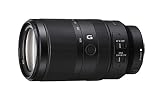
- Telephoto zoom with outstanding corner-to-corner G lens resolution
- Lightweight (22oz.) remarkably Easy to handle 5x super-telephoto zoom
- 70-350Mm (105-525mm full-frame equiv.) super-telephoto zoom
- Xd linear motor for fast, precise, quiet AF and tracking
- Optical SteadyShot image stabilization

- Wide zoom range (82 - 315mm 35mm equivalent) ideal for sports or nature;Aperture blades : 7
- Internal focusing for smooth, quiet operation - perfect for video capture.Direct manual focus with non-rotating focus ring during AF: ideal for precise, comfortable manual focus adjustments
- Optical Steady Shot image stabilization for stable video capture and low light performance
- Minimum Focus Distance - 3.28 ft, Maximum Magnification ratio - 0.23x
- Angle of view (on APS-C) 28.2° - 7.8°

- World’s first high-speed standard zoom lens for APS-C cameras with the focal length range of 17-70mm 4.1x zoom ratio
- Outstanding optical performance with 16 elements in 12 groups featuring two GM (Glass Molded Aspherical) lens -elements and one hybrid aspherical lens element
- Upgraded VC effective in combination with Sony APS-C mirrorless cameras, leveraging AI for video shooting
- Close focusing capability with MOD of just 7.5” at 17mm / 15.4" at 70mm
- Moisture-Resistant Construction and Fluorine Coating

- SONY EMOUNT LENS: 35mm full frame format, instant auto / manual focus selection, focus hold button. The minimum focus distance is 0.38 meters.Image stabilizer : Not support. AF Motor : Direct Drive Super Sonic wave Motor (DDSSM).
- NATURAL, LIFELIKE IMAGERY: ED and Super ED glass elements deliver breathtaking texture and detail
- REDUCED ABERRATION: Two aspherical elements and an extremely precise XA element maximize resolution
- 9 BLADE APERTURE: SEL2470GM lenses have a 9 blade circular aperture for a gorgeous book effect
- NANO AR COATING: Allows for accurate light transmission to improve clarity, contrast and quality
Choosing Your Perfect Sony Zoom Lens
Picking the right Sony zoom lens can make a big difference in your photos and videos. A zoom lens lets you change how much you see without moving your feet! This guide will help you understand what to look for.
Key Features to Look For
1. Zoom Range
This tells you how wide or how zoomed-in your lens can get. A wide zoom range, like 24-70mm, is super useful for many situations. It’s great for landscapes and portraits. A longer zoom range, like 70-200mm, is perfect for faraway subjects, like wildlife or sports.
2. Aperture (f-stop)
The aperture controls how much light enters the lens. A wider aperture (smaller f-number, like f/2.8) lets in more light. This is good for low-light photos and makes backgrounds blurry, which looks nice. A smaller aperture (larger f-number, like f/5.6) lets in less light. It keeps more of your picture sharp.
3. Image Stabilization (IS)
Image stabilization helps reduce blurry photos caused by shaky hands. Most Sony zoom lenses have this built-in. It’s a lifesaver when you’re shooting without a tripod or in low light.
4. Autofocus Motor
A fast and quiet autofocus motor is important. It helps your lens focus quickly and smoothly. This is especially helpful for shooting moving subjects or recording videos.
Important Materials
Sony uses good quality materials for their lenses. You’ll often find:
- Glass Elements: Special coatings on the glass reduce glare and improve color.
- Lens Barrel: Usually made of durable plastic or metal. Metal barrels feel sturdier.
- Weather Sealing: Some higher-end lenses have seals to keep out dust and moisture. This is great for outdoor shooting.
Factors That Improve or Reduce Quality
What Makes a Lens Great:
- Sharpness: A sharp lens makes your pictures clear and detailed.
- Color Rendition: Good lenses show colors accurately and pleasingly.
- Low Distortion: This means straight lines in your photo don’t look bent.
- Minimal Aberrations: These are visual flaws like color fringing (purple or green edges).
What Can Make Quality Lower:
- Cheap Glass: Low-quality glass can lead to blurry images.
- Poor Construction: A lens that feels flimsy might not last long.
- No Weather Sealing: If you shoot in rain or dust, a non-sealed lens can be a problem.
User Experience and Use Cases
Sony zoom lenses are made for different kinds of photographers.
- Everyday Shooters: A versatile zoom lens like a 24-70mm is perfect for travel, family events, and general photography.
- Nature and Wildlife Photographers: These users need longer zoom lenses (100-400mm or more) to capture animals from a distance.
- Sports Photographers: Fast autofocus and long zoom ranges are essential here.
- Videographers: Smooth zooming and quiet autofocus are key for video.
- Portrait Photographers: Lenses with wide apertures (like f/1.8 or f/2.8) create beautiful background blur for portraits.
Think about what you love to photograph most. This will guide you to the best Sony zoom lens for your needs.
Frequently Asked Questions (FAQ)
Q: What is the best Sony zoom lens for beginners?
A: A good all-around zoom lens with a decent zoom range, like a 24-70mm or a 18-55mm kit lens if you’re just starting with an APS-C camera, is usually a great choice. These lenses are versatile and let you try different types of photography.
Q: Should I get a prime lens or a zoom lens?
A: Prime lenses have a fixed focal length (they don’t zoom) and often have wider apertures, making them great for low light and sharp images. Zoom lenses offer flexibility to change your view without moving. Many photographers use both!
Q: What does “constant aperture” mean on a zoom lens?
A: A constant aperture zoom lens, like an f/2.8, keeps that same wide aperture throughout its entire zoom range. This means you get consistent performance in low light and depth of field control no matter how much you zoom.
Q: Is image stabilization really necessary?
A: Image stabilization is very helpful, especially if you often shoot handheld or in low light. It helps prevent blurry photos. Many Sony lenses come with it built-in.
Q: How do I clean my Sony zoom lens?
A: Use a soft lens brush to remove dust. Then, use a microfiber cloth and a lens cleaning solution. Gently wipe the lens in a circular motion. Never use harsh chemicals or rough cloths.
Q: What is the difference between a full-frame lens and an APS-C lens?
A: Full-frame lenses are designed for cameras with larger sensors, while APS-C lenses are for cameras with smaller sensors. You can often use full-frame lenses on APS-C cameras, but they will appear more “zoomed in.”
Q: How important is the lens mount for Sony cameras?
A: Very important! Sony cameras use specific lens mounts (like E-mount for mirrorless). You must buy a lens with the correct mount for your camera to work.
Q: Can I use third-party zoom lenses on my Sony camera?
A: Yes, brands like Sigma and Tamron make excellent zoom lenses for Sony cameras with E-mount. They can offer great value and performance.
Q: What does “optical quality” refer to in a lens review?
A: Optical quality means how well the lens performs in terms of sharpness, color, contrast, and how few visual flaws it has, like distortion or chromatic aberration.
Q: How much should I expect to spend on a good Sony zoom lens?
A: Prices vary a lot! Basic kit zoom lenses can be a few hundred dollars. High-end professional zoom lenses with constant wide apertures and advanced features can cost $1,000 to $3,000 or more.