
Ever wondered why some cookies taste just right, while others fall a little flat? The secret ingredient might not be the chocolate chips or the vanilla extract. It could be the salt!
Salt is a tiny powerhouse in baking. It does more than just make things taste salty; it controls yeast, strengthens dough, and balances sweetness. But walk down the salt aisle, and you face a mountain of choices: fine table salt, flaky sea salt, coarse kosher salt. Which one truly belongs in your next batch of brownies or bread? Choosing the wrong one can mess up your recipe’s texture and flavor balance.
This post cuts through the confusion. We will explore the main types of salt used in the kitchen and explain exactly what each one brings to your baked goods. You will learn how to swap salts easily and confidently choose the best option for cakes, breads, and everything in between.
Top Salt To Bake With Recommendations

- THE SECRET’S IN THE SALT - Redmond Real Salt, an unrefined ancient sea salt packed with 60+ trace minerals that support health, enhance flavor, and deliver the clean, balanced minerals your body craves—just the way nature intended.
- MINED IN THE USA - Real Salt comes from an ancient seabed in Redmond, Utah —making it one of the few naturally pink salts in the U.S. It’s a pure, clean, and local alternative to imported salts like Himalayan, Celtic, Tibetan, Malaysian, French, Hawaiian, Irish, and Marine Sea Salts.
- REAL SALT TASTE TEST - There’s a reason people fall in love at first taste. Real Salt is unlike any salt on earth—subtly sweet, never bitter, and naturally delicious. Try Real Salt, then taste any other salt. You’ll instantly understand why we say “The Secret’s in the Salt.”
- UNPROCESSED & ADDITIVE-FREE - Unlike white table salt that’s heat-processed and stripped of minerals, Real Salt stays exactly as nature made it—unrefined, unbleached, and free from additives or anti-caking agents.
- PROTECTED FROM POLLUTANTS - Sealed beneath layers of volcanic ash for millions of years, Real Salt comes from an ancient seabed that formed long before modern pollution existed. Unlike most sea salts exposed to today’s oceans and microplastics, Real Salt has remained protected underground.

- All-Purpose; Morton Table Salt is a fine salt with a consistent grain size, making it tailored for any use, from cooking and baking to refilling shakers
- Iconic Rounds Packaging: No pantry is complete without our iconic cooking salt rounds. Elevate your kitchen aesthetic with a touch of nostalgia
- User-Friendly Design: Pouring fine salt is a breeze with our easy-to-use classic spout
- Resistant to Caking: Morton Table Salt doesn’t cake together when exposed to moisture, so even when it’s raining outside, Morton Salt Rounds will always pour
- Iodized: This salt supplies Iodide, a necessary nutrient that supports thyroid function


- On Your Table For Generations: Morton Salt has been a household staple since 1848
- All-Purpose Salt For All Seasons: No pun intended. Whether it’s your next dinner party or a night in, this Morton sea salt dispenser has it covered
- Just A Pinch: That’s all it takes for this cooking salt. Take your meal to the next level with Morton
- Texture Tailored For You: Our sea salt for cooking features fine-textured salt crystals that dissolve quickly to blend easy, perfect for marinades, soups, sauces and dressings
- From the Sea to Your Kitchen: Made by nature, this shaker is packaged by Morton Salt and will eventually make its way to your kitchen for your next meal

- Resistant to Caking: Morton Table Salt doesn’t cake together when exposed to moisture so even when it's raining outside, Morton Salt Rounds will always pour
- User-Friendly Design: Pouring cooking salt is a breeze with our easy-to-use classic pour spout dispenser
- Trusted Quality: Since 1848 with over of 175 years of salt expertise, we make sure only the best salt crystals reach your plate and salt shakers; we have been improving lives & enhancing every day moments at home and at work
- Iconic Rounds Packaging: No pantry is complete without our iconic salt rounds; Elevate your kitchen aesthetic with a touch of nostalgia
- Non-Iodized: Morton Plain Table Salt does not contain iodine
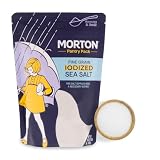
- Iodized: This fine sea salt for cooking supplies Iodide, a necessary nutrient that supports thyroid function
- Scoop & Seal: Mortons Salt lets you effortlessly measure what you need, then reseal for fresh, pantry-ready convenience
- For All Seasons: No pun intended. Whether it’s your next dinner party or a night in, Morton cooking salt has it covered
- Texture Tailored For You: Our fine textured Morton Sea Salt crystals dissolve quickly to blend easily, perfect for marinades, soups, sauces and dressings.
- On Your Table For Generations: Morton has been a household table salt staple since 1848

- Bursting with Naturally Occurring Minerals: Finely ground sea salt, hand-harvested to retain trace minerals while preserving the ocean’s moisture. Unrefined & free from additives, it delivers clean, balanced flavor for cooking & finishing
- Perfect for Daily Cooking: Ideal for baking, seasoning, and finishing dishes, this culinary salt dissolves evenly and enhances flavor without overpowering recipes. A dependable kitchen essential for home chefs
- 3rd Party Lab Tested for Purity: Sustainably harvested from coastal salt beds and GMP certified for quality and safety. This natural sea salt is verified for consistency and clean sourcing to meet high production standards
- Soft Gourmet Texture: Fine grain crystals blend smoothly into recipes and beverages, offering even distribution and exquisite taste. A premium alternative to standard table salt for elevated everyday preparation
- Foundational Pantry Staple: Mineral sea salt crafted for consistent flavor across meals. Ideal for meal prep, family dinners, and professional kitchens seeking gourmet seasoning without chemical processing

- Perfect for any occasion – A portable flavor pair that’s easy to take with you
- Shaker set includes two convientiently sized individual iodized salt shakers
- At Morton Salt, we make sure only the best salt crystals reach your plate, so every dish you create will be as flavorful as you intend
- This salt supplies Iodide, a necessary nutrient that supports thyroid function
Choosing the Best Salt for Your Baking Adventures
Baking is an art, and the right ingredients make all the difference. Salt is a small but mighty player in your baking. It does more than just add flavor. It helps control yeast, strengthens gluten, and balances sweetness. Picking the right salt ensures your cookies are crisp and your bread rises perfectly.
Key Features to Look For
When you buy salt for baking, check these things first.
- **Grain Size:** This is super important. Fine salt dissolves quickly and mixes evenly into batters and doughs. Coarse salt might not mix completely, leaving salty pockets.
- **Purity:** Look for pure salt. This means it mostly contains sodium chloride without many extra additives.
- **Iodine Content:** Some salts are iodized (have added iodine). While fine for cooking, some bakers prefer non-iodized salt for a cleaner taste in delicate pastries.
Important Materials and Types of Salt
Salt comes from different places, which affects its taste and texture.
The main ingredient is always sodium chloride, but where it comes from matters.
- **Table Salt (Fine Grain):** This is the most common. It dissolves fast. It often contains an anti-caking agent, so be careful when measuring.
- **Kosher Salt:** This salt has larger, flatter flakes. It is easy to pinch and sprinkle. It’s a favorite among many bakers because it dissolves well enough but is easy to control.
- **Sea Salt:** This salt comes from evaporated seawater. It often has trace minerals, which can add a subtle depth of flavor. Fine sea salt works best for mixing into doughs.
Factors That Improve or Reduce Quality
What makes one salt better than another for your cake?
Quality Enhancers:
Purity improves quality. Salt that has been minimally processed often retains better structure and flavor.
- **No Added Ingredients:** Salt without anti-caking agents or extra fillers generally provides a cleaner taste.
- **Consistent Texture:** Uniform grain size means you measure accurately every time.
Quality Reducers:
Certain things can make salt less ideal for baking.
- **Too Much Iodine:** In high amounts, iodine can sometimes leave a slightly metallic or bitter aftertaste in very sweet items like frosting.
- **Uneven Grain Size:** If you use very coarse salt in a quick bread recipe, you might get streaks of saltiness.
User Experience and Use Cases
How you use the salt changes which type you should buy.
Different baking tasks need different salts.
- **Bread Making:** Kosher salt is excellent here. Bakers often use it to control the yeast activity and develop the dough structure.
- **Delicate Pastries and Cakes:** Use fine sea salt or pure table salt. These blend completely, ensuring every bite tastes balanced.
- **Finishing Salt:** If you sprinkle salt on top of chocolate chip cookies or pretzels before baking, use flaky sea salt. Its crunch and slow melt provide a wonderful final burst of flavor.
10 Frequently Asked Questions About Baking Salt
Q: Can I use regular table salt instead of kosher salt?
A: Yes, you can, but you must adjust the amount. Table salt is denser, so you need less of it to get the same salty flavor as kosher salt.
Q: Does the brand of salt really matter for baking?
A: The brand matters less than the *type* of salt. Focus on the grain size and purity more than the name on the box.
Q: Why is salt important in bread dough?
A: Salt slows down the yeast so the bread does not rise too fast. It also makes the gluten stronger, which gives the bread a better texture.
Q: Should I buy iodized or non-iodized salt for baking?
A: Many professional bakers prefer non-iodized salt. This choice helps avoid any potential metallic taste in light-colored or sweet baked goods.
Q: Is expensive sea salt worth the extra cost for cookies?
A: If you use it as a finishing salt (sprinkled on top), yes, it adds a nice texture. For mixing into the dough, a cheaper, fine salt works just as well.
Q: How do I measure salt accurately if the grains are different sizes?
A: Always measure salt by weight using a kitchen scale if possible. If you must use volume (cups or spoons), always use the same type of salt for consistency.
Q: What happens if I forget to add salt to a cake recipe?
A: The cake will taste overly sweet. The flavor profile will seem flat, and the texture might be slightly weaker because the gluten won’t be as strong.
Q: Can I use pink Himalayan salt for all my baking?
A: You can. Himalayan salt is a type of sea salt. Use the fine grind for mixing and the larger crystals for finishing touches.
Q: Does salt expire when used for baking?
A: Pure salt does not expire. However, if it sits for many years, it might absorb moisture or odors from your pantry, which can slightly change its quality.
Q: What is the best salt for making homemade pretzels?
A: Coarse pretzel salt or very coarse kosher salt is best for topping pretzels. These large grains stay on the surface and provide that classic salty crunch.