
A golf cart battery voltage check tells you much about its state. It shows how much power your battery has. It also helps you find problems early. Knowing how to test your 8V golf cart battery health is key. It keeps your cart running well. This guide will show you deep cycle battery testing methods. You will learn to test your 8-volt golf cart batteries like a pro.
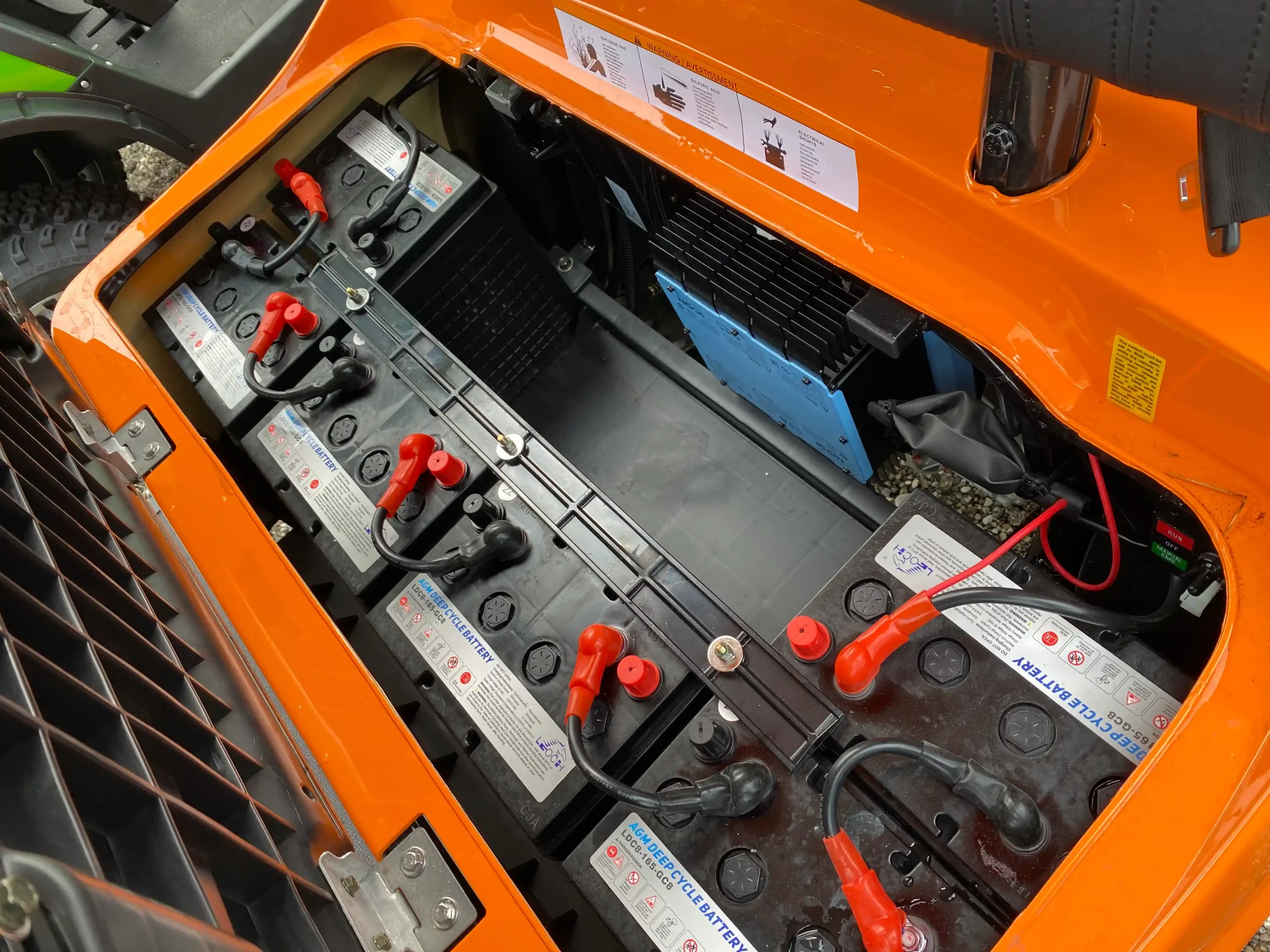
Image Source: hartvillegolfcarts.com
Why Check Your 8 Volt Golf Cart Batteries?
Regular checks on your golf cart batteries are vital. They help you find issues before they become big problems. Good battery care saves you money. It keeps your cart ready to go. Ignoring battery health can lead to less power. Your cart might slow down. It might not go as far. In the worst case, your batteries could die fast. This means you need to buy new ones sooner.
Testing your batteries often does many good things:
- Finds problems early: You can fix small issues before they get worse.
- Boosts performance: Your cart will run strong and fast.
- Makes batteries last longer: Proper care extends their life.
- Saves money: You avoid buying new batteries too soon.
- Keeps you safe: Bad batteries can be risky.
Gathering Your Tools for Battery Testing
To test your 8-volt golf cart batteries, you need a few tools. These tools help you get correct readings. Make sure you have them all before you start.
Required Testing Tools:
- Digital Multimeter: This tool measures voltage. It is how you check the golf cart battery voltage check. Get one that reads DC volts.
- Battery Hydrometer: This tool checks specific gravity 8 volt battery levels. It tells you about the acid strength in each cell.
- Battery Load Tester: This tool checks how your battery works under pressure. It is important for a load test 8V golf cart battery.
- Wire Brush: Use this to clean battery terminals.
- Battery Terminal Puller: This helps remove stuck cables.
- Socket Wrench Set: For loosening and tightening battery cables.
- Baking Soda and Water Mix: For cleaning corrosion.
- Battery Terminal Protector Spray: To prevent future corrosion.
- Clean Cloths or Rags: For wiping and cleaning.
- Distilled Water: For topping up battery cells, if needed.
Important Safety Gear:
Safety is always first. Batteries hold strong acid. They can also create gasses. Wear the right safety gear. This will protect you from harm.
- Safety Glasses or Face Shield: Protect your eyes from acid splashes.
- Rubber Gloves: Protect your hands from acid.
- Old Clothes: Acid can damage clothes.
- Closed-Toe Shoes: Protect your feet.
- Fire Extinguisher (ABC type): Keep one nearby in case of a spark or fire.
Prioritizing Safety When Testing Batteries
Working with golf cart batteries needs care. They contain strong acid. They also give off gas when charging. This gas can explode. Always put safety first.
Key Safety Rules:
- Work in a well-aired space: This helps gas escape.
- Turn off the golf cart: Make sure it is off and the key is out.
- Wear safety gear: Always use safety glasses and gloves.
- Keep sparks away: Do not smoke near batteries. Do not use tools that can make sparks.
- Remove jewelry: Metal jewelry can cause a short circuit. This can lead to burns.
- Clean up spills fast: Use baking soda and water to clean acid spills.
- Do not overfill cells: Only add distilled water when needed.
- Disconnect the charger: Before testing, make sure the charger is off and unplugged.
The Initial Golf Cart Battery Voltage Check
The first step in checking 8V golf cart battery health is a voltage test. This tells you the overall power. It also shows the power of each battery. You will use a digital multimeter for this. This step helps identify if your golf cart battery charge level is low.
Preparing for the Voltage Test:
- Fully charge your batteries: For the best results, charge your golf cart for at least 8-12 hours. Do this before testing. This gives you a true reading of their full potential.
- Let batteries rest: After charging, let the batteries rest for 12-24 hours. This is important. It lets the voltage settle. This is called “surface charge” removal. If you test right after charging, the voltage might look higher than it really is.
- Clean terminals: Use a wire brush to clean any dirt or corrosion from battery terminals. Clean connections give better readings.
How to Use a Multimeter on 8 Volt Golf Cart Batteries:
- Set your multimeter: Turn the dial to DC Volts (V DC or V with a straight line and dots). Set it to a range slightly above your battery’s voltage. For 8V batteries, a 20V DC range is usually good.
- Connect probes:
- Attach the red probe to the positive (+) terminal of the battery.
- Attach the black probe to the negative (-) terminal of the battery.
- Make sure probes touch only the metal terminals. Avoid touching other metal parts.
- Read the display: The number on the multimeter screen is the voltage. Write it down.
Interpreting Voltage Readings:
A fully charged 8-volt deep cycle battery should read around 8.49 volts after resting. This is a key part of the golf cart battery voltage check.
Table: Resting Voltage for an 8-Volt Battery
| Charge Level | Resting Voltage | Notes |
|---|---|---|
| 100% | 8.49 V | Fully charged and rested. |
| 75% | 8.32 V | Good charge. |
| 50% | 8.16 V | Half charge. Needs charging soon. |
| 25% | 8.00 V | Low charge. Charge immediately. |
| 0% | 7.90 V | Fully discharged. Bad for battery life. |
- Overall Pack Voltage: First, test the voltage of the whole battery pack. If you have six 8-volt batteries, your total pack voltage should be 48 volts. (6 batteries x 8 volts/battery = 48 volts). A fully charged 48V pack should read around 50.94 volts after resting.
- Individual Battery Voltage: After checking the pack, test each 8-volt battery. A low reading on one battery often means a problem. It might be a bad cell. It might mean the battery needs charging.
Assessing 8V Golf Cart Battery Health with Specific Gravity
Voltage checks are good. But they don’t tell the whole story. To truly know your 8V golf cart battery health, you need to check specific gravity. This test measures the density of the electrolyte (acid and water mix) in each cell. It tells you the acid strength. This is one of the best deep cycle battery testing methods.
What is Specific Gravity 8 Volt Battery?
The electrolyte in a battery changes as the battery charges and discharges. When a battery charges, the acid becomes stronger. When it discharges, the acid becomes weaker. A hydrometer measures this strength. A strong acid means a healthy cell. A weak acid means a problem cell or a low charge.
How to Use a Hydrometer:
- Safety first: Wear your safety glasses and rubber gloves.
- Remove cell caps: Carefully take off the caps from each cell of each battery.
- Insert hydrometer: Squeeze the bulb of the hydrometer. Place the tube into a cell. Release the bulb slowly. This draws electrolyte into the hydrometer.
- Read the float: The float inside the hydrometer will rise. Read the number where the electrolyte surface meets the float. Make sure you read at eye level.
- Record readings: Write down the specific gravity for each cell. Each 8-volt battery has four cells. So, you will have four readings per 8-volt battery.
- Return electrolyte: Squeeze the bulb to put the electrolyte back into the cell.
- Clean hydrometer: Rinse the hydrometer with clean water after each use. This stops acid buildup.
- Repeat for all cells: Do this for every cell in every battery.
Interpreting Specific Gravity Readings:
For a fully charged 8-volt battery, the specific gravity readings should be uniform. They should be around 1.265 to 1.275 at 80°F (27°C). If the temperature is different, you might need to adjust the reading. Most hydrometers come with a temperature chart.
Table: Specific Gravity Readings and Battery Health
| Specific Gravity | Charge Level | Health Notes |
|---|---|---|
| 1.265 – 1.275 | 100% | Fully charged, healthy cell. |
| 1.230 – 1.245 | 75% | Good charge. |
| 1.190 – 1.205 | 50% | Needs charge. |
| 1.150 – 1.165 | 25% | Very low charge. Charge right away. |
| Below 1.150 | 0% | Completely discharged. Risk of damage. |
Identifying Bad 8 Volt Golf Cart Battery Cell:
The specific gravity test is the best way to find a bad cell. Look for these signs:
- Big difference in readings: If one cell has a specific gravity reading much lower than the others (0.050 or more), it’s likely a bad cell. For example, if three cells read 1.270 and one reads 1.190, that last cell is weak or dead.
- Very low reading: A cell reading below 1.150 when other cells are higher means it’s almost dead.
- No change after charging: If a cell’s specific gravity does not rise after a full charge, it is likely a bad cell.
A bad cell will pull down the performance of the whole battery. It might even pull down the whole battery pack.
The Power of a Load Test 8V Golf Cart Battery
Voltage and specific gravity tell you about a battery at rest. A load test 8V golf cart battery tells you how it performs under stress. This test puts a heavy drain on the battery. It checks if the battery can hold its voltage when working hard. This is one of the more advanced deep cycle battery testing methods.
What is a Load Test?
A load test checks a battery’s ability to supply power. It applies a sudden, strong electrical demand. This is like when your golf cart starts moving fast or goes uphill. If a battery is weak, its voltage will drop sharply during a load test.
Why a Load Test is Important:
- Finds hidden weaknesses: A battery might show good voltage at rest. But it might fail when put to work. A load test finds these hidden flaws.
- Shows real-world performance: It shows how well your batteries will work when you are actually driving the cart.
- Confirms bad batteries: If voltage and specific gravity tests hint at a bad battery, a load test can confirm it.
How to Perform a Load Test:
You will need a battery load tester. These testers have two big clamps. They also have a gauge.
- Safety first: Wear all your safety gear. Make sure the cart is off.
- Connect tester:
- Connect the red clamp of the load tester to the positive (+) terminal of one 8-volt battery.
- Connect the black clamp to the negative (-) terminal of the same 8-volt battery.
- Test one battery at a time. Do not test the whole pack at once unless your tester is made for it.
- Apply the load: Follow your load tester’s instructions. Usually, you push a button or lever for 10-15 seconds. Do not hold it longer. This can damage the battery.
- Read the gauge: While the load is applied, watch the voltage reading on the tester’s gauge. Write down the lowest voltage it drops to.
- Disconnect: Release the load button. Remove the clamps.
- Wait and repeat: Let the battery rest for a few minutes. Then repeat the test for all other 8-volt batteries in your golf cart.
Interpreting Load Test Results:
A healthy 8-volt battery should hold its voltage well under load.
Table: Load Test Voltage for an 8-Volt Battery
| Resting Voltage Before Test | Minimum Voltage Under Load (10-15 seconds) | Health Status |
|---|---|---|
| 8.49V (100% charged) | Should not drop below 7.2V | Healthy |
| 8.32V (75% charged) | Should not drop below 7.0V | Healthy |
| 8.16V (50% charged) | Should not drop below 6.8V | Acceptable |
| Below 8.16V | Drops significantly (e.g., below 6.5V) | Weak or bad battery |
- Significant drop: If a battery’s voltage drops sharply (e.g., more than 1.5 volts from its resting voltage) or falls below 7.0 volts during the test, it is weak.
- Quick recovery: A good battery’s voltage should bounce back fast after the load is removed. A slow recovery is a bad sign.
- One battery fails: If one battery fails the load test, but others pass, you have found a bad 8 volt golf cart battery cell or a weak battery.
Troubleshooting Golf Cart Battery Issues: Common Problems and Solutions
Even with good care, golf cart batteries can have problems. Knowing how to fix common issues can save you time and money. This is key for troubleshooting golf cart battery issues.
Issue 1: Cart Feels Slow or Has Short Range
- Cause: Low overall battery charge, or one or more weak batteries.
- Solution:
- Charge fully: Make sure you charge your batteries often and for the right amount of time.
- Check voltage and specific gravity: Use your multimeter and hydrometer. Find any low-voltage batteries or cells.
- Check connections: Loose or dirty battery cables can stop power flow. Clean and tighten all terminals.
Issue 2: One Battery Draining Faster Than Others
- Cause: This often means a bad cell or a battery that is wearing out. It can also be due to a loose connection.
- Solution:
- Specific gravity test: This is the best way to find a bad 8 volt golf cart battery cell. Look for one cell with a much lower reading.
- Load test: Test each battery. A weak battery will show a big voltage drop.
- Replace if needed: If you find a bad cell or weak battery, you might need to replace that one battery. Replacing only one battery can be tricky. It’s often best to replace them all at once if they are old. This is because a new battery will work harder to keep up with old ones. This can make the new one wear out faster.
Issue 3: Corrosion on Battery Terminals
- Cause: Acid vapors escaping the battery. This is normal but needs cleaning.
- Solution:
- Clean: Mix baking soda and water (about 1 cup baking soda to 1 gallon water). Pour it on the corrosion. It will fizz. Let it sit for a few minutes.
- Scrub: Use a wire brush to scrub away corrosion.
- Rinse: Rinse with clean water. Dry with a clean cloth.
- Protect: Spray terminals with battery terminal protector. This helps stop new corrosion.
- Tighten: Make sure all cable connections are tight. Loose connections can also cause corrosion.
Issue 4: Batteries Not Holding a Charge
- Cause: Old batteries, deep discharge, or a faulty charger.
- Solution:
- Check charger: Make sure your charger is working right. It should be giving the correct voltage and current.
- Deep discharge: Avoid letting your batteries go completely dead. This harms deep cycle batteries.
- Consider replacement: If batteries are old (5+ years) and fail all tests, it’s likely time for new ones.
When to Seek Professional Help:
If you’ve tried all these steps and still have problems, it might be time to call a pro. Issues with the charger, motor, or other electrical parts might need an expert.
Ensuring Proper Golf Cart Battery Charge Level
Keeping the right golf cart battery charge level is vital for long battery life. How you charge your batteries matters a lot.
Tips for Optimal Charging:
- Charge after every use: Even short rides drain batteries. Put them on charge after each use.
- Do not overcharge: Most modern chargers stop when batteries are full. But check your charger’s manual. Overcharging can hurt batteries.
- Do not undercharge: Not charging batteries fully, often, can lead to “sulfation.” This hardens the battery plates and lowers capacity.
- Charge in a cool place: Batteries charge best in a cool, well-aired space.
- Equalize charge: Every few weeks or months, perform an “equalization” charge. This is a controlled overcharge. It helps balance the cells and remove sulfates. Check your charger’s manual for how to do this.
Checking Charge Level with a Voltmeter:
You can use your multimeter to check the golf cart battery charge level. Remember the voltage chart from before. A full charge means around 8.49V per 8-volt battery after resting. You can also check the total pack voltage.
8V Golf Cart Battery Maintenance Tips for Longer Life
Good maintenance is the best way to make your 8V golf cart batteries last. Follow these steps regularly. These are key 8V golf cart battery maintenance tips.
-
Water Levels (Monthly Check):
- Only add distilled water. Never use tap water. Tap water has minerals that hurt batteries.
- Check water levels monthly. Fill cells to about 1/4 to 1/2 inch above the plates. Or fill to the split ring inside the cell opening.
- Add water after charging, not before. Adding water to a low cell before charging can cause overflow when the battery gasses during charge.
- Be careful not to overfill.
-
Clean Batteries and Terminals (Monthly/Quarterly):
- Clean the tops of your batteries with the baking soda and water mix. This helps prevent corrosion and power leaks.
- Clean and tighten all cable connections. Loose or dirty connections waste power.
- Use battery terminal protector spray to stop corrosion.
-
Keep Batteries Clean and Dry:
- Wipe down batteries regularly. Dirt and moisture can create paths for power to leak away.
- Make sure the battery tray is clean and dry.
-
Proper Charging Habits (Every Use):
- Charge after every ride.
- Never let batteries sit discharged. Charge them right away if they are low.
- Charge in a well-aired area.
-
Check for Damage:
- Look for cracks, leaks, or swelling in battery cases. These are signs of serious problems.
- Check cables for frayed wires or damaged insulation. Replace them if needed.
-
Winter Storage (If Applicable):
- If you store your cart for winter, fully charge the batteries first.
- Disconnect the main negative cable from the battery pack. This stops small power drains.
- Store in a cool, dry place above freezing.
- Check charge every month or two. Give them a quick charge if they drop below 80% (around 8.32V per 8V battery).
When to Replace Your 8 Volt Golf Cart Batteries
Even with the best care, golf cart batteries do not last forever. Most deep cycle golf cart batteries last 5-7 years. Sometimes they can go longer. Sometimes less.
Signs it’s time for new batteries:
- Failing multiple tests: If most of your batteries show low voltage, low specific gravity, and fail the load test.
- Short range: Your cart goes only a short distance, even after a full charge.
- Slow speed: The cart feels sluggish.
- One or more dead cells: A specific gravity test shows one or more cells consistently low or dead, even after charging.
- Physical damage: Swollen battery cases, cracks, or heavy leaks.
- Old age: Batteries are past their expected lifespan.
Replacing a whole set of batteries is a big cost. But it will give you a new lease on life for your golf cart. It will perform like new.
Frequently Asked Questions (FAQ)
Q1: Can I mix battery brands or ages in my golf cart?
A: No, it is not a good idea. All batteries in your golf cart should be the same brand, type, and age. Mixing them can make the older or weaker batteries drain faster. This can also make the new batteries work harder and wear out quickly. It can shorten the life of your whole battery pack.
Q2: How often should I check my 8-volt golf cart batteries?
A: You should check water levels monthly. Perform a golf cart battery voltage check on individual batteries every 1-3 months. Do a specific gravity 8 volt battery check quarterly (every 3 months). A load test 8V golf cart battery should be done once or twice a year, or if you notice performance issues.
Q3: What is the normal lifespan of 8-volt golf cart batteries?
A: With proper care, 8-volt deep cycle golf cart batteries typically last 5 to 7 years. Some may last longer, others less, depending on usage and maintenance.
Q4: Why do my battery terminals get corroded so fast?
A: Corrosion happens when acid fumes escape from the battery. This is normal. But heavy corrosion means gas is leaking. Make sure caps are tight. Clean terminals often. Use anti-corrosion spray. Overcharging can also cause more gassing and corrosion.
Q5: Is it okay to let my golf cart batteries fully discharge?
A: No. Allowing deep cycle batteries to fully discharge often will greatly shorten their life. It can cause permanent damage. Always recharge your batteries as soon as possible after use, especially if they are low. Aim to keep the golf cart battery charge level above 50% often.
Q6: How do I know if my battery charger is working correctly?
A: You can check your charger’s output voltage with a multimeter. Connect the multimeter to the charger’s output leads. It should read near the stated charging voltage for your pack (e.g., around 58-60V for a 48V system). Also, ensure the charger lights or display show it is charging properly. If your batteries are not fully charging, or if the charger gets very hot, it might be faulty.
Conclusion
Testing your 8-volt golf cart batteries like a pro is not hard. It just takes a little time and the right tools. By doing regular golf cart battery voltage check, specific gravity 8 volt battery tests, and load test 8V golf cart battery, you can keep track of your 8V golf cart battery health. You can also spot and fix issues early. Remember the importance of proper golf cart battery charge level and consistent 8V golf cart battery maintenance tips. This care will lead to a longer life for your batteries. It will also give you more fun times on the golf course or around your neighborhood. Knowing how to use a multimeter on 8 volt golf cart batteries and identifying bad 8 volt golf cart battery cell will make you a battery expert. Enjoy a smooth and powerful ride!