
A golf hook makes your ball curve hard left for right-handed players. For left-handed players, it curves hard right. It’s a shot that starts straight or slightly right of your target (for righties) and then bends a lot. It often goes way off line. Golfers ask, “Can I stop hooking my golf shots?” Yes, you absolutely can. Fixing a hook is possible by looking at your swing and grip. This guide will help you find out why your ball hooks and show you how to make it stop. We will cover the main causes of golf hook and give you ways to fix a golf hook so you can hit your shots straight and on target.
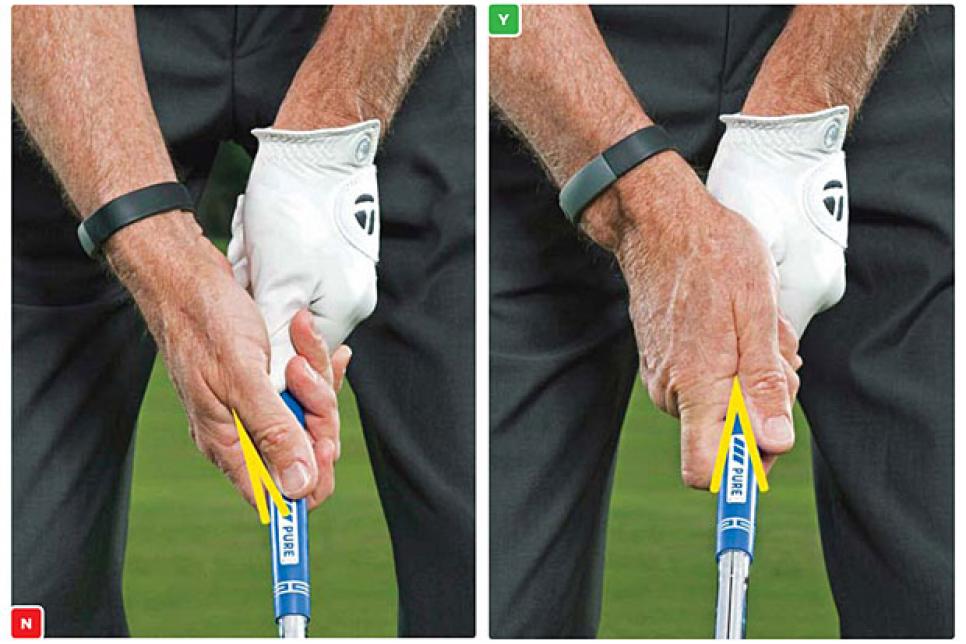
Image Source: golfdigest.sports.sndimg.com
What is a Golf Hook?
Imagine hitting your golf ball. If you are right-handed, a hook starts its flight somewhere near your target line. Sometimes it starts a little right of it. Then, in the air, the ball takes a sharp turn left. It lands far to the left of where you wanted it to go. If you are left-handed, the ball curves sharply to the right.
A hook loses distance. It also lands you in trouble. Think about trees, water hazards, or out-of-bounds areas on the left side of the fairway. For a right-handed player, a hook means you are always worried about that left side.
It’s helpful to know the difference between a hook and its opposite, the slice. The golf slice vs hook is a key idea. A slice for a right-handed player curves hard right. It usually starts left of the target and bends back right. A hook curves left. A slice often happens because the clubface is open at impact. A hook usually happens because the clubface is closed at impact.
Let’s break down why a hook happens. It’s not magic. It’s physics. It comes from how your club hits the ball. Two main things cause the ball to curve. One is the direction your club is moving (your swing path). The other is the way the clubface is pointing when it hits the ball (your clubface angle). For a hook, the clubface is pointing left of the swing path at impact. This puts too much spin on the ball. This spin makes the ball curve hard left.
Grasping Why Hooks Happen
Finding the root causes of golf hook is the first step to fixing it. A hook isn’t just one thing going wrong. It’s usually a mix of problems in your swing. But two things are the biggest culprits.
- Your clubface is too closed compared to your swing path.
- Your swing path moves too much from inside the target line to outside the target line.
Let’s look deeper at these main reasons.
Key Factors in Causing a Hook
Your clubface and swing path work together. They put spin on the ball. This spin makes the ball curve.
Clubface Position Golf
The way your clubface position golf points at impact is very important. If the clubface points left of your swing path when you hit the ball, you will put hook spin on the ball.
Think about the clubface like a rudder on a boat. It steers the ball. If it’s pointing left of the path, the ball will want to curve left.
How does the clubface get too closed?
* Too Strong a Grip: If your hands are turned too far to the right on the club (for a right-handed player), it’s a strong grip. This makes it easy for the clubface to close too much during the swing. We will talk more about golf grip for a hook later.
* Flipping or Hooding the Club: Some players turn their hands over too fast at impact. This closes the clubface sharply. It adds too much spin.
* Body Stops Turning: If your body stops rotating through impact, your hands and arms can take over. They might close the clubface too fast.
* Too Much Shaft Lean: If the club shaft is leaning too far forward at impact, it can sometimes close the face or make the dynamic loft less, which can affect how the ball spins.
The clubface angle is the biggest reason for the direction of the curve. A clubface just a few degrees closed relative to the path makes a big difference.
Swing Path Golf
Your swing path golf is the direction your club head moves as it hits the ball. Think of it as the line the club head travels on.
There are three main swing paths:
* In-to-Out: The club moves from inside the target line, hits the ball, and continues outside the target line.
* Out-to-In: The club moves from outside the target line, hits the ball, and continues inside the target line. This often causes a slice.
* Neutral/Straight: The club moves along the target line through impact.
A hook often happens with an in-to-out swing path golf. If your club moves from inside to outside AND your clubface is closed relative to that path, you get a hook.
Why an in-to-out path?
* Dropping the Club Inside Too Much: Some players drop the club way inside on the downswing. Then they have to swing hard out to the ball to hit it.
* Standing Too Far Away: If you stand too far from the ball, you might reach for it. This can push your path out to the right.
* Over-Rotation of Body: Turning your body too fast or incorrectly can sometimes shallow the path too much, leading to an in-to-out motion.
A common hook pattern is an in-to-out path with a clubface that is even more closed than the path. For example, the path might be 5 degrees in-to-out, but the face is 10 degrees closed to the target (which is 15 degrees closed relative to the path). This makes a big hook.
Golf Swing Flaws Hook
Besides face and path, other golf swing flaws hook the ball. These flaws often lead to the bad face or path.
- Casting or Early Release: This is when you lose the angle between your lead arm and the club shaft early in the downswing. It adds speed too early. It can lead to the clubhead passing the hands too soon. This often causes the clubface to close fast. It can also make your swing path go out-to-in (leading to a slice if the face is open) or sometimes an exaggerated in-to-out. For a hook, it’s often the face closing too fast.
- Lack of Body Turn: As mentioned, if your body doesn’t turn enough through the ball, your hands take over. This leads to “flipping” or “rolling” the hands. This closes the clubface fast.
- Over-the-Top (followed by correction): This is confusing, but sometimes a hooker starts over-the-top (an out-to-in move) but then makes a big move to save the shot. They might drop the club way inside late in the swing. Then they whip the club hard from the inside, often closing the face fast. This results in a hook from a swing that started as if it would be a slice.
- Poor Weight Shift: Not shifting your weight correctly can affect your swing plane and path. If you stay too much on your back foot, you might swing up and out too much.
Knowing these flaws helps you find the source of your hook. It’s not just about changing the impact position. It’s about changing the motion that gets you there.
Checking Your Grip and Setup
Your grip is how you hold the club. It’s your only connection to the club. It has a huge effect on the clubface angle at impact. Your setup is how you stand to the ball. It affects your swing path and body turn. Both are critical for a straight shot.
Does Your Grip Make You Hook?
Yes, your golf grip for a hook can be a major cause.
Look at your grip as a right-handed golfer.
* Weak Grip: Your hands are turned too far to the left. You see little or none of the knuckles on your left hand (when looking down). This makes it harder to close the clubface. It usually causes a slice or fade.
* Neutral Grip: You see about 2 knuckles on your left hand. Your right palm faces your left thumb. This grip helps the clubface stay square through impact.
* Strong Grip: Your hands are turned too far to the right. You see 3 or more knuckles on your left hand. Your right hand is too far under the club. This grip makes it easy for the clubface to close fast during the swing. This is a very common reason for a hook.
| Grip Type | Right-Handed View (Left Hand) | Effect on Clubface | Common Shot Shape |
|---|---|---|---|
| Weak | 0-1 Knuckle Visible | Open | Slice/Fade |
| Neutral | 2 Knuckles Visible | Square | Straight |
| Strong | 3+ Knuckles Visible | Closed | Hook/Draw |
If you have a strong grip, it’s like having a built-in hook machine. Even if your swing path is okay, that strong grip makes it very likely the face will close too much.
How to Check Your Grip:
1. Hold the club out in front of you at waist height.
2. Look down at your left hand (for righties). How many knuckles do you see?
3. Check your right hand. Is the lifeline of your right palm sitting on your left thumb? Is your right hand too far under the grip?
4. The ‘V’ shape formed by your left thumb and forefinger should point roughly between your right shoulder and chin. The ‘V’ from your right thumb and forefinger should point similarly. If both Vs point way to the right, your grip is strong.
To fix a hook caused by a strong grip, try to make your grip more neutral. Turn your hands slightly to the left on the club. This might feel strange at first. Practice just holding the club with this new grip. Then practice some slow swings. This change alone can reduce the hook spin.
Setup Basics to Prevent Hooks
How you set up to the ball also matters.
* Alignment: Are you aiming correctly? Sometimes a hook comes from aiming right of the target (to make up for the hook) and then swinging even more in-to-out. Check your alignment using an alignment stick or club on the ground pointing at your target.
* Ball Position: Where is the ball in your stance? For irons, the ball is usually in the middle or slightly forward. For a driver, it’s off your lead heel. If the ball is too far back in your stance, you might hit it too early on an in-to-out path, with a closing face. Make sure your ball position is standard for the club you are hitting.
* Posture: Standing too close or too far away affects your swing path. If you stand too far away and bend over too much, you might swing too much around your body, which can lead to an in-to-out path. Find a balanced, athletic posture.
Paying attention to these simple setup steps can make a big difference before you even start your swing.
Fixing Your Swing Path and Clubface
Okay, you’ve checked your grip and setup. Now let’s look at the swing itself. Fixing a hook mostly means changing how the clubface moves through impact and the direction of your swing path. This is the core of fix a golf hook.
Correcting Clubface Control
If your clubface is too closed at impact, you need to learn how to keep it more square.
How to Keep the Face Square
The feeling you want is the clubface staying pointed at the target longer through the impact area. Not closing too fast.
- Less Hand Rolling: Try to reduce how much your hands roll over each other after impact. Think of your lead wrist staying flat or slightly bowed, not cupped or broken down. The back of your lead hand (for righties, the left hand) should face the target or slightly left of it right after impact, not rotating quickly to face the sky.
- Use Your Body: Your body rotation should pull the club through impact. If your body stops turning, your hands flip. Keep your chest turning towards the target through the hitting zone.
- Think “Hold the Face”: Imagine holding the clubface square to the target line as long as possible after impact. This isn’t what actually happens in a good swing, but the feeling helps prevent excessive hand roll.
Practice hitting shots where you focus only on the clubface staying square. It might feel like you are leaving the face open at first. This is normal when you are used to closing it too much.
Adjusting Your Swing Path
If your swing path is too in-to-out, you need to make it more neutral or slightly out-to-in. An out-to-in path with a square face produces a fade or straight shot. With a slightly open face, it produces a slice. Since you hook, you likely have a closed face. Moving towards a more neutral or slightly out-to-in path will counteract your closed face.
Moving Away from In-to-Out
The goal is to swing more down the target line or slightly across it from out-to-in.
- Steeper Downswing (slightly): If you drop the club too far inside on the downswing, try to bring it down on a slightly steeper plane. This helps avoid getting stuck and forces you to swing more along the target line. This relates to a golf swing plane fix. Imagine your downswing plane being slightly more in front of you, not behind you.
- Feel Like You’re Cutting Across It: This might sound strange because cutting across causes a slice. But if you have a strong in-to-out path and a closed face (a hooker’s typical pattern), trying to feel like you are swinging left (for righties) will help neutralize the path. You won’t actually swing left that much, but the feeling counteracts the in-to-out tendency. Aim to feel like you are swinging to the left of the target.
- Aim Left (Temporarily): For practice, try aiming your body slightly left of the target. Then try to swing along your body line. This encourages an out-to-in path relative to the target. Combine this with trying to keep the face square to the target.
- Ball Position Forward: Moving the ball slightly more forward in your stance can help you catch the ball later in the swing arc. This can make your path less in-to-out relative to the target.
Work on feeling the club moving more towards the target line during impact, not pushing out to the right.
Common Golf Swing Flaws Hook and How to Fix Them
Let’s look at some specific golf swing flaws hook and ways to correct them.
- Casting (Early Release):
- Problem: You lose the wrist hinge too early in the downswing. This uses up your power early and often leads to flipping the hands at the ball.
- Fix: Work on maintaining the wrist angle longer. Feel like you are holding the angle of the club shaft relative to your forearm as you start the downswing. Imagine pulling the butt end of the club down towards the ball. This creates “lag.” Lag helps the club release correctly through impact, with the hands slightly leading the clubhead, making it easier to keep the face square or slightly open relative to an in-to-out path.
- Lack of Body Rotation:
- Problem: Your lower and upper body stop turning towards the target in the downswing and through impact. Your hands take over.
- Fix: Focus on a full body turn in the backswing and throughswing. Feel your belt buckle and chest turn towards the target as you hit the ball. This uses your core muscles to power the swing. It slows down the speed of hand rotation, helping the face stay square.
- Over-the-Top (with late save):
- Problem: On the downswing, the club goes outside the line to the ball. To avoid slicing, you then drop it way inside and whip it hard, closing the face.
- Fix: Work on your transition from backswing to downswing. Feel like you are dropping the club straight down or slightly inside, not throwing it out. Think about letting your lower body start the downswing while your arms stay relaxed and drop. This helps you come down on a better plane. This is a key golf swing plane fix.
Fixing swing flaws takes time and practice. Don’t try to change everything at once. Focus on one thing, like body turn or maintaining lag, until it feels more natural.
Drills to Stop the Hook
Drills are great for changing swing habits. They isolate a movement or feeling. Here are some golf swing drills hook fixers can use.
Simple Drills for Swing Path
These drills help you feel and control your swing path.
The Alignment Stick Drill
- Place an alignment stick or old club on the ground just inside the ball and pointing towards your target. Leave enough room for your club head to swing through without hitting it, maybe 1-2 inches away from the ball, on the target side.
- Set up to the ball as normal.
- Swing, trying to avoid hitting the stick on your downswing and throughswing.
- If you hit the stick on the way down, you are likely too far inside or dropping the club too much on the way down. This can contribute to an in-to-out path.
- If you hit the stick on the way through, you are swinging too far in-to-out.
This drill helps you feel what it’s like to swing more along the target line, not pushing out to the right.
The Two-Tee Drill
- Place a tee in the ground about an inch or two outside the ball and an inch or two closer to you (towards your heels).
- Place another tee about an inch or two inside the ball and an inch or two farther from you (towards the target).
- The goal is to hit the ball but avoid hitting either tee.
- Hitting the inside-forward tee means your path is too in-to-out.
- Hitting the outside-back tee means your path is too out-to-in. (Less likely for a hooker, but possible if you start over-the-top).
This creates a “gate” for your swing path. It forces you to swing more down the line. Start by swinging slowly, then build up speed.
Drills for Clubface Control
These drills focus on keeping the clubface square through impact.
The L-to-L Drill
- Take a very short backswing. Stop when your lead arm is parallel to the ground and the club shaft is straight up, forming an “L” shape with your lead arm and the club.
- Swing through to a similar “L” shape on the other side. Your back arm should be parallel to the ground with the club shaft straight up.
- Focus on keeping the clubface pointing towards the target throughout the hitting area and into the follow-through “L.” Avoid letting the clubface flip closed too quickly.
This drill shortens your swing. It lets you focus purely on how the clubface moves through impact. It helps you feel how to use body rotation to square the face, not just hand rolling.
The Towel Drill
- Place a towel or headcover under your lead arm (for righties, under your left armpit).
- Keep it there throughout the swing.
- Take half or three-quarter swings.
This drill helps connect your arms and body. It stops your arms from getting disconnected and flipping the club with just hands. It promotes body rotation, which helps control the clubface. If the towel falls out, your arms are not working with your body.
Drills Combining Path and Face
Some drills help with both issues.
The Gate Drill
This is similar to the Two-Tee Drill but adds a check for the clubface.
- Set up the two tees for path control (one outside-back, one inside-forward).
- Place two more tees about 1-2 feet in front of the ball, slightly wider than the width of your clubhead. These form a “gate” that the ball must pass through.
- Hit the ball, trying to avoid the path tees and sending the ball through the front gate.
- Avoiding the path tees helps your swing path.
- Hitting the ball through the front gate means your clubface was square or very close to square to the target line at impact. If the ball goes left of the gate, your face was too closed. If it goes right, your face was too open.
This drill gives you instant feedback on both major causes of the hook.
Use these drills regularly in your practice. Start slow. Get the feeling right. Then slowly build up your speed.
Special Cases – Fixing the Driver Hook
A hook with a driver can be the most frustrating. Drivers have the longest shafts. They have the least loft. This means they show your swing flaws more than any other club. A small hook with an iron can become a huge slice or hook with a driver. A driver hook fix is often a priority for players.
Why Drivers Hook More
Drivers are designed to hit the ball far.
* Length: The longer shaft means the clubhead travels faster. It also makes it harder to control the clubface and swing path.
* Loft: Less loft on the face means less backspin. Less backspin makes the side spin from a closed face have more effect. The ball curves more.
* Swing Speed: You swing a driver faster than other clubs. More speed makes mistakes bigger.
So, if you have a hook swing with an iron, that same swing with a driver will produce a much larger hook.
Specific Driver Adjustments
Because drivers make the hook worse, you might need specific tweaks for your driver hook fix.
- Check Driver Lie Angle: Sometimes, a driver’s lie angle is too upright. This means the heel of the club is lower than the toe at address or impact. An upright lie angle can promote a closed clubface at impact, especially for taller players or those who stand close to the ball. A club fitter can check and adjust this.
- Tee Height: Teeing the ball too low can encourage you to swing down on the ball. This can lead to an in-to-out path or an over-the-top move followed by a rescue hook. Tee the ball higher. You want to hit slightly up on the driver. This encourages a more neutral or even slightly out-to-in path (relative to the ground) and a slightly more open face angle at impact for players who tend to close the face fast. The bottom of the driver face should be level with the top of the ball.
- Ball Position: Make sure the ball is off your lead heel. This helps you hit the ball on the upswing. Hitting up on the ball naturally helps control the clubface rotation and path for many players.
- Grip Pressure: Holding the driver too tightly can make your hands and arms tense. This stops natural rotation and often leads to flipping or forced closing of the face. Hold the driver with light pressure, like holding a bird.
Apply the same principles (face control, path control) to your driver swing. Use the drills. But remember that the longer club makes everything harder. Small changes have big effects.
Summary and Practice
Stopping a hook in golf takes work. It requires looking at why it happens and making changes. It’s mainly about your clubface and your swing path. A closed clubface relative to an in-to-out swing path is the classic hook pattern.
Key Takeaways to Stop Hooking
- Grasp the Cause: A hook is usually a closed clubface compared to the swing path.
- Check Your Grip: A strong grip is a major suspect. Make it more neutral.
- Look at Setup: Ball position and alignment matter.
- Control the Clubface: Stop flipping or rolling your hands too fast. Use body rotation.
- Adjust the Path: Work on swinging more along the target line or slightly out-to-in, not too much in-to-out.
- Address Flaws: Fix things like casting or lack of body turn.
- Use Drills: Practice with alignment sticks, tees, and towels.
- Drivers Amplify: Be extra careful with your driver. Small errors become big hooks.
Practice Makes Permanent (Not Just Perfect)
Changing a hook swing feels weird. It’s a big change. Your body is used to doing one thing. The new movement will feel wrong at first. You might even hit some shots that are not perfect. That is okay.
Practice is key.
* Start Slow: Do slow swings. Focus on the feeling of the new movement.
* Use Feedback: Watch the ball flight. Use alignment sticks or tees. Get feedback from a friend or camera.
* Be Patient: Don’t expect miracles overnight. Fixing a hook takes time and repetition.
* Consider a Pro: A golf instructor can watch your swing. They can quickly identify your specific issues. They can give you tailored drills. This is often the fastest way to fix a hook.
Work on one thing at a time. Maybe one week focus only on your grip. The next week, add a drill for clubface control. Build the new swing piece by piece.
Your goal is a neutral swing path and a square clubface at impact. When you achieve that, your ball will fly straighter. You will have more control. You will enjoy the game more. Stop fearing the left side of the course. Learn to hit it straight.
Frequently Asked Questions (FAQ)
Q: Is a hook better than a slice?
A: Neither is good if it’s not intended. A hooked shot is usually more powerful than a sliced shot. This is because the clubface is often closed which can reduce dynamic loft and add forward shaft lean, resulting in a lower, more penetrating ball flight IF hit solid. A slice often has an open face adding loft and sidespin. However, both are off-target shots that cost you distance and accuracy. A consistent, small draw (gentle hook shape) or fade (gentle slice shape) can be useful shots, but a big hook is not.
Q: Can my equipment cause a hook?
A: Yes, sometimes. As mentioned, a driver with an upright lie angle can promote a hook. Some clubs are also designed with a “draw bias” to help slicers. If you use such a club and naturally tend towards a hook, it can make it worse. Your club’s shaft flex can also play a small role, but swing mechanics are almost always the main issue. Get fitted for clubs if you are unsure.
Q: How long does it take to fix a hook?
A: It varies greatly. If your hook is due to a very strong grip, changing that might help quickly, but getting used to the new grip takes time. If it’s a deeper swing path or body movement issue, it can take weeks or months of practice. Consistency and patience are key. Working with a pro usually speeds up the process.
Q: Can a hook happen with any club?
A: Yes, you can hook any club, from your putter (less common and not ball flight related) to your driver. The principles are the same: clubface angle relative to swing path. Hooks are most noticeable and damaging with woods and long irons because they have less loft, which makes sidespin affect the ball flight more.
Q: What’s the difference between a hook and a draw?
A: This is about intent and severity. A hook is an unintentional, often severe, curve left (for righties) that misses the target significantly. A draw is an intentional, gentle curve left (for righties) that starts right of the target and curves back to land on the target. It’s a controlled shot shape. The mechanics are similar (clubface closed relative to path), but in a draw, the face is only slightly closed relative to a slight in-to-out path. In a hook, it’s usually a lot closed relative to the path, or the path is too in-to-out.