
How do you score in golf? You count the number of swings it takes to get the ball into the hole on each shot, starting from the tee box, and add up the total swings for the round. What is a golf handicap? It’s a number that shows how good a golfer is, letting players of different skill levels compete fairly by adjusting their scores. How can you lower your golf handicap? By shooting lower scores on the golf course. This guide will walk you through scoring, understanding your handicap, and simple ways to play better and lower your scores.
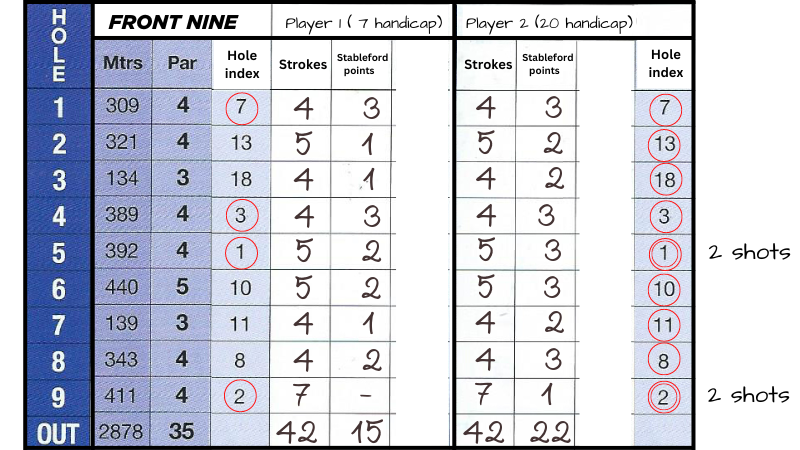
Image Source: socialgolfaustralia.com.au
How to Keep Score in Golf
Knowing how to keep score is the very first step in golf. It’s how you know how well you are playing. It’s how you track your game round by round. Keeping score is not hard, but it must be done correctly.
Grasping Stroke Play Scoring
Golf is mostly played using stroke play. This means you count every swing, or stroke, you make on each hole. This includes practice swings that accidentally hit the ball. It includes air swings (missing the ball completely). Every time you try to hit the ball and move it, it’s a stroke.
You start counting strokes from the tee box. You keep counting until the ball is in the hole. That total number of strokes is your score for that hole.
Once you finish playing all the holes on the course, you add up your scores for each hole. This gives you your total score for the round. The player with the lowest total score wins in stroke play.
There is another way to play called match play golf. In match play, you only worry about winning each hole against your opponent. You don’t add up total strokes for the round in the same way. Stroke play is the most common way to track scores for handicaps and many competitions.
The Scorecard Explained
Every golf course gives you a scorecard. This is a small card or paper. It helps you track your strokes on each hole.
Here is what you usually find on a golf scorecard:
- Hole Numbers: The holes are numbered 1 through 18 (for a full round).
- Yardage: This tells you how long each hole is from different tee boxes (like back tees, middle tees, front tees). Longer holes usually need more strokes.
- Par: This is a key number. Par is the expected number of strokes a good player should take to finish the hole. Par-3 means it should take 3 strokes. Par-4 means 4 strokes. Par-5 means 5 strokes. Most courses have a mix of par-3, par-4, and par-5 holes. A standard 18-hole course often has a total par of 70, 71, or 72.
- Your Score: This is where you write down the number of strokes you took on each hole.
- Total: This is where you add up your scores for all the holes. Scorecards often have a running total for the front 9 holes, the back 9 holes, and the full 18 holes.
- Other Players: There is space to write the names and scores of others in your group.
To keep a golf scorecard, you just write your total strokes for each hole in the box for that hole number. If you took 5 swings to get the ball in the hole on Hole 1, you write ‘5’ in the Hole 1 box. Do this for every hole. At the end, add them up. It’s simple math.
Deciphering Golf Terminology
Golf has its own language for scores on a hole compared to par. Knowing these terms helps you talk about your game and understand others.
Here are the most common golf terminology par bogey birdie eagle terms:
| Term | Definition | Score compared to Par | Example on a Par-4 |
|---|---|---|---|
| Albatross | Three strokes under par | -3 | 1 stroke |
| Eagle | Two strokes under par | -2 | 2 strokes |
| Birdie | One stroke under par | -1 | 3 strokes |
| Par | The expected number of strokes | 0 (Even) | 4 strokes |
| Bogey | One stroke over par | +1 | 5 strokes |
| Double Bogey | Two strokes over par | +2 | 6 strokes |
| Triple Bogey | Three strokes over par | +3 | 7 strokes |
| Other Scores | More than three strokes over par | +4, +5, etc. | 8, 9+ strokes |
So, if a hole is a Par-4 and you take 4 strokes, you made a Par. If you take 3 strokes, it’s a Birdie. If you take 5 strokes, it’s a Bogey. Getting an Eagle or Albatross is rare and exciting! Most golfers aim for Pars and Birdies and try to avoid Bogeys or worse.
Deciphering Your Golf Handicap
Knowing your score is important. But golf has a unique system called handicapping. This system helps different players compete fairly. It lets a newer player compete against a very good player.
What Your Handicap Number Means
Your golf handicap is a number. This number shows how well you typically play. It’s based on your recent scores.
- A lower handicap number means you usually shoot lower scores. You are a better player.
- A higher handicap number means you usually shoot higher scores.
For example, a player with a handicap of 5 is much better than a player with a handicap of 25.
When players compete using handicaps, the higher handicap player gets strokes taken off their score. This makes the game fairer. If a 25-handicap plays against a 5-handicap, the 25-handicap gets about 20 strokes removed from their total score. So, if the 5-handicap shoots 80 and the 25-handicap shoots 100, the scores are adjusted. The 5-handicap’s adjusted score is 80. The 25-handicap’s adjusted score is roughly 100 – 20 = 80. It’s a tie! This is the core idea of understanding golf handicap.
How Handicaps are Calculated
The exact way handicaps are figured out can seem a bit complex. But the main idea is simple. Handicaps use your recent scores on rated golf courses.
- You need to play a few rounds and record your scores.
- These scores are often adjusted slightly using something called Equitable Stroke Control (ESC). This stops one really bad hole from making your whole score too high and messing up your handicap. ESC puts a limit on the highest score you can take on any one hole based on your handicap level. This makes scores more consistent for handicap purposes.
- The system takes your best recent scores (often the best 8 out of your last 20 rounds).
- It also uses information about the golf course itself. Courses are rated for difficulty (Course Rating and Slope Rating). This makes sure your handicap is fair, whether you play on an easy course or a hard course.
- These adjusted scores and course ratings go into a formula. The formula creates your Handicap Index.
- Your Handicap Index is then used to figure out how many strokes you get on the specific course you are playing that day (your Course Handicap).
You don’t need to do the math yourself. You just need to post your scores correctly. Many golf apps or websites can track your scores and calculate your handicap for you based on official systems like the World Handicap System (WHS).
Why Handicaps Matter
Handicaps are vital for playing fair golf with others. They allow golfers of all skill levels to compete or just have friendly games together. Without handicaps, a beginner would never be able to beat an experienced player. Handicaps make golf fun for everyone. They also help you track your progress as a golfer. Seeing your handicap number go down is a clear sign you are improving and lowering golf scores.
Strategies for Lowering Golf Scores
Your handicap goes down when your actual scores go down. So, the goal is to play better golf. This doesn’t always mean hitting the ball farther. Often, it means playing smarter and working on the parts of your game that lose you the most strokes.
Course Management: Playing Smart
One of the best ways to lower your scores is to think your way around the course. This is golf course management strategy. It means making smart choices for every shot.
- Know Your Distances: Know how far you hit each club reliably. Don’t guess. If you know your 7-iron goes 150 yards, trust that number.
- Play to Your Strengths: If you are good at chipping, play your shots to leave yourself a chip instead of a long putt. If you hate hitting over water, find a way around it, even if it takes one more shot. Avoiding trouble is key.
- Aim for the Green Safely: On approach shots, don’t aim right at the pin if it’s tucked near a bunker or water. Aim for the middle of the green. A long putt is much better than a penalty stroke from a hazard.
- Understand the Hole: Before you hit, look at the hole. Where is the trouble (bunkers, water, trees)? Where is the safe spot to land the ball? Plan your shots backward from the green to the tee.
- Don’t Be Greedy: Sometimes trying a low-percentage hero shot costs you several strokes. Take your medicine. If you are in the trees, just hit it out to the fairway. Don’t try to hook it around branches and hit the green.
- Choose the Right Club: If you are unsure between two clubs, take the longer one if the danger is short of the green. Take the shorter one if the danger is long. Being short of the green is often better than hitting it over the green or into a hazard behind it.
Good course management isn’t about perfect swings. It’s about smart thinking. It saves you from big numbers on the scorecard.
Mastering Your Short Game
Where do most golfers lose strokes? Not usually on the tee shot. They lose strokes near and on the green. Improving short game golf is perhaps the single most important thing you can do to lower your scores quickly.
The short game includes:
- Putting: Hitting the ball into the hole on the green.
- Chipping: Short shots just off the green that roll most of the way to the hole.
- Pitching: Slightly longer shots, usually from 20-50 yards, that fly higher and stop faster.
- Bunker Shots: Getting out of the sand traps.
Think about it: a great drive goes 250 yards, but it’s only one stroke. A poor chip or putt might only go 5 feet, but it’s also one stroke. Three-putting a green or taking two chips to get on means adding strokes quickly. Getting good at shots from 100 yards and in saves many strokes per round.
Sharpening Your Putting
Putting is half the game by strokes on many holes (drive, approach, two putts = 4 strokes). Getting good at putting techniques is vital.
- Practice Short Putts: Become very good at making putts from 3, 4, and 5 feet. These are often called “knee-knockers.” Making these consistently saves you bogeys and secures pars. Practice making 100 in a row from 3 feet.
- Control Speed on Long Putts: On long putts (over 20 feet), the goal is not always to make it. The main goal is to get the ball close to the hole, making the next putt very easy (a tap-in). Practice getting your long putts within a 3-foot circle around the hole. This avoids three-putts.
- Read the Green: Look at the slope of the green. Will the ball break (curve)? Where is the high point? Where is the low point? Walk around the hole to see the slopes from different angles.
- Basic Setup: Stand over the ball with your eyes mostly over the ball. Use a grip that feels comfortable and stable. Keep your body still.
- Simple Stroke: Use a pendulum motion, swinging the putter back and through smoothly. The length of your backswing usually controls the distance the putt goes. Try to keep your wrists firm.
Practicing putting is easy. You can do it on a practice green for free or cheap. Spend a lot of time here.
Learning the Rules
Knowing the golf rules and penalties can save you strokes and confusion. You don’t need to know every rule, but know the common ones.
- Out of Bounds (OB): If your ball goes outside the white stakes or lines, it’s out of bounds. Penalty: one stroke. You must hit another shot from where you hit the OB shot. This is called stroke and distance.
- Lost Ball: If you can’t find your ball within three minutes of searching, it’s lost (unless you know it’s in a penalty area). Penalty: one stroke. You must go back to where you hit the shot and hit again (stroke and distance).
- Penalty Areas: These are marked with red or yellow stakes or lines (often water or thick bushes). If your ball is in a penalty area, you have options, usually with a one-stroke penalty:
- Play the ball as it lies (no penalty).
- Take relief behind the penalty area line (yellow stakes/lines) or on the side (red stakes/lines).
- Unplayable Ball: If you are in a bad spot (like under a bush) and can’t hit the ball, you can declare it unplayable anywhere on the course (except a penalty area). Penalty: one stroke. You have options for where to drop the ball.
- Casual Water/Ground Under Repair: If your ball is in temporary water (like a puddle not meant to be there) or an area marked Ground Under Repair, you get free relief. No penalty stroke. You drop the ball nearby in a safe spot.
Knowing these rules helps you avoid taking extra, wrong penalty strokes. It also speeds up play. When in doubt in a casual game, just ask the others in your group how they would handle it or agree on a fair way forward. In a competition, always know the rules or ask a referee.
Practice Makes Perfect
Improving in golf takes practice. But it’s important to practice the right things.
- Focus on Short Game: As mentioned, spend most of your practice time chipping and putting. This is where you will drop scores fastest.
- Practice Smart: Don’t just hit balls aimlessly at the driving range. Have a plan. Work on hitting different distances or aiming at specific targets.
- Work on Fundamentals: Make sure your grip, stance, and posture are correct. These basics are the foundation of a good swing. Get a lesson if you can afford it. A professional can spot problems you can’t see.
- Simulate On-Course Shots: On the practice range or chipping green, imagine you are on the course. Practice hitting a shot you might face, not just the same shot over and over.
Consistent, smart practice is better than long, unplanned sessions.
Golf Tips for Beginners
If you are just starting out, golf can seem hard. Here are some golf tips for beginners to help you enjoy the game and improve:
- Take Lessons: This is the best way to start with good habits. A pro will teach you the right way to swing and the basic rules.
- Start with Simple Courses: Play on shorter or easier courses at first. This makes learning less frustrating.
- Don’t Keep Score at First: Just go out and hit the ball. Learn how the game works. Don’t worry about your total score. Focus on hitting good shots.
- Play Ready Golf: When it’s your turn, be ready to hit. This helps keep the game moving.
- Focus on Fun: Golf should be enjoyable. Don’t get too upset about bad shots. Everyone hits them.
- Learn Basic Etiquette: Know things like being quiet when others are hitting, not walking in someone’s putting line, and fixing your divots and ball marks.
- Rent Clubs First: Don’t buy expensive clubs right away. Rent clubs or borrow some to see if you like the game and what feels good.
- Play with More Experienced Players: They can help you learn the rules and how to play the course.
Starting right makes learning golf much easier and more fun.
Putting It All Together: Playing to Improve
You know how to score, you grasp the handicap system, and you have ideas for playing better. Now, how do you use all this to lower your handicap over time?
Keeping Track of Your Progress
Lowering your handicap is a journey. It takes time and effort.
- Post Your Scores: Make sure you post your scores for every round you play that follows the rules for handicapping. This is how your handicap is calculated and updated.
- Track Your Stats: Go beyond just your score. Write down things like:
- How many putts did you take?
- Did you hit the green in regulation (in the expected number of strokes based on par)?
- Did you hit your tee shot in the fairway?
- How many penalty strokes did you take?
Keeping these stats helps you see where you are losing strokes. This tells you what to practice. If you take too many putts, practice putting. If you hit balls out of bounds often, work on hitting straighter drives or playing safer off the tee.
Setting Goals
Set clear goals for your golf game. Make them realistic.
- Instead of “I want to be a scratch golfer,” try “I want to lower my handicap by 5 strokes this year.”
- Or focus on process goals: “I want to practice putting for 30 minutes, three times a week.” “I will not take more than one penalty stroke per round.”
- Celebrate small wins. Did you make more pars this round? Did you avoid any triple bogeys? That’s progress!
Playing Different Formats
While stroke play is key for handicaps, playing other golf formats can be fun and help your game. Match play, for example, teaches you to be aggressive when you need to win a hole, but also to play safe if your opponent is in trouble. It changes your course management strategy compared to stroke play where every stroke counts the same. Playing different games keeps things interesting and can highlight different parts of your game.
Frequently Asked Questions (FAQ)
Here are some common questions about scoring and handicaps.
Q: Do practice rounds count towards my handicap?
A: Generally, only scores from rounds played following the Rules of Golf should be posted for handicap purposes. Casual practice rounds where you drop extra balls or don’t finish holes usually do not count.
Q: What is a “tap-in”?
A: A tap-in is a very short putt, usually just a few inches from the hole. It’s so close you can just “tap” it in easily.
Q: Can my handicap go up?
A: Yes. Your handicap is based on your recent scores. If your scores get higher, your handicap will go up. This is normal; golf has ups and downs.
Q: What happens if I miss a shot completely (an air ball)?
A: An air ball, or whiff, counts as one stroke. You intended to hit the ball, even if you missed it.
Q: Do I have to take a penalty if my ball is in the water?
A: If your ball is in a penalty area (often marked with red or yellow stakes, which can include water), you have options. You can play the ball as it lies (no penalty) or take one of the relief options (usually a one-stroke penalty). You don’t have to take penalty relief; you can play it from the water if you want and can.
Q: How many scores do I need to get a handicap?
A: The exact number can vary slightly by system or location, but you typically need to post scores from at least 54 holes (which could be three 18-hole rounds or six 9-hole rounds) to get an initial handicap index.
Q: Is a lower handicap better?
A: Yes, in golf, a lower handicap number means you are a better player because you shoot lower scores.
Scoring in golf is about counting strokes and understanding terms like par, bogey, birdie, and eagle. Your handicap makes the game fair for everyone and tracks your improvement. Lowering your scores and handicap comes from playing smarter golf through course management, mastering your short game (especially putting), learning the rules, and practicing effectively. Keep playing, keep learning, and most importantly, have fun out on the course!