
Image Source: www.hagginoaks.com
How To Measure Youth Golf Clubs: A Complete Guide
What is the best way to measure youth golf clubs? Can I measure them at home? Who needs specific club sizing? The best way to measure youth golf clubs involves simple home measurements, mainly focusing on a child’s height and their wrist-to-floor distance. Yes, you can easily measure golf clubs for juniors at home using common tools. Any child learning or playing golf needs properly sized clubs. Using the right clubs helps them learn good swing habits and enjoy the game more. This guide helps you get the right fit for your young golfer.
Why Proper Sizing Matters for Young Golfers
Giving a child the right size golf clubs is very important. Many parents think any small club will do. This is a common mistake. Clubs that are too long or too heavy can harm a child’s golf swing.
Playing with clubs that are too big makes the game harder. A child might have to stand too far from the ball. They may also lift the club too much at address. This creates bad habits. It can also lead to frustration. A child might even stop playing golf because it feels too hard.
The correct golf club size for kids helps them swing freely. It allows them to hit the ball well. This builds their confidence. It also makes golf more fun. Proper fitting helps them grow in the sport. It stops bad habits before they start. A good fit means a child can swing their best. It makes learning golf easier and more fun.
Key Ways to Measure Kids for Golf Clubs
There are a few key ways to size junior golf clubs. Each method helps you pick the right clubs. Combining methods gives the best fit.
Measuring by Height
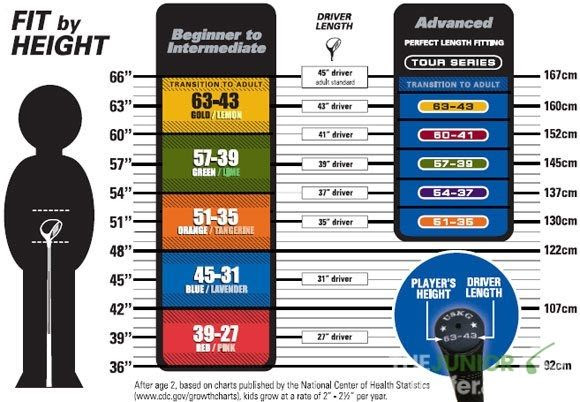
Using a child’s height is a simple first step. Many junior golf club makers use height charts. These charts match a child’s height to a club length. They also suggest the right club sets.
- How it works: You measure your child’s total height. Then, you look at a kids golf club size by height chart. This chart will tell you which age or height range your child fits into. It will then suggest the right club length.
- Benefits: It is easy and quick. Most golf brands for kids offer these charts. This makes it a good starting point.
- Limits: Height alone does not tell the whole story. Two kids of the same height might have different arm lengths. This can change the best club length for them.
Measuring Wrist-to-Floor
The wrist-to-floor measurement is a better way to size golf clubs. It helps find a club that fits a child’s arm length. This is very important for a good swing.
- How it works: Your child stands straight. Their arms hang naturally at their sides. You measure from the wrist bone to the floor. This is the “wrist to floor golf measurement youth” technique.
- Benefits: This method is very accurate. It takes arm length into account. It often gives a more precise club length than just using height. Many fitting guides use this measurement.
- Limits: It needs careful measuring. A small mistake can change the club length.
Assessing Swing Speed (For Advanced Junior Golfers)
For older or more skilled junior golfers, swing speed matters. This method is more advanced. It helps pick the right shaft flex and club head weight.
- How it works: A golf pro uses a launch monitor. This machine measures how fast a child swings the club. It also shows how fast the ball goes.
- Benefits: This gives a very precise fit. It helps fine-tune club choices. This can improve distance and shot shape.
- Limits: It needs special gear. You usually need a golf pro to do this. It is often not needed for very young or new golfers. Focus on height and wrist-to-floor first.
Tools You Need for Home Measurement
You do not need many tools to measure golf clubs for juniors. A few simple items will do the job.
- Measuring Tape: A standard measuring tape is best. A cloth one is good for height. A metal one is good for wrist-to-floor. Make sure it is at least 60 inches long.
- Flat Surface: A level floor is needed for both measurements.
- Pencil or Marker: For marking height on a wall.
- A Book or Ruler (Optional): For getting an exact height mark on the wall. Place it flat on the child’s head.
Gather these items before you start. This makes the measuring process smooth.
Step-by-Step Home Measurement Guide
Measuring your child at home is easy. Follow these steps for accurate results.
Step 1: Measuring Overall Height
This is the first step in sizing for kids golf club size by height.
- Find a Wall: Pick a wall with a flat, level floor. Make sure there are no baseboards that could get in the way.
- Child’s Position: Have your child stand tall against the wall. Their heels, back, and head should touch the wall. Their eyes should look straight ahead. Their body should be relaxed. Do not let them slouch or stand on their toes.
- Mark the Height: Place a book or a ruler flat on top of their head. Make sure it is level. Draw a light pencil line on the wall at the bottom of the book/ruler.
- Measure: Use your measuring tape. Measure from the floor to the pencil line. Write down this number in inches.
Step 2: Measuring Wrist-to-Floor Distance
This is a key part of the wrist to floor golf measurement youth process. It helps find the right club length based on arm length.
- Child’s Position: Have your child stand tall on a flat, level surface. Their arms should hang naturally at their sides. Make sure their shoulders are relaxed. Their fingers should point down. Their shoes should be off if possible, to get a true measurement.
- Measure: Hold the measuring tape. Start from the crease where the wrist meets the hand. Measure straight down to the floor. Keep the tape straight and not angled.
- Record the Number: Write down this number in inches. Be precise. Even a small error can lead to the wrong club length.
Step 3: Using Your Data
Once you have both measurements, you can use them. Compare them to junior golf club length charts. These charts help you find the proper golf club size for kids.
Keep these numbers handy. They will help you whether you buy clubs online or in a store. They are the start of a good youth golf club fitting guide.
Interpreting Junior Golf Club Length Charts
After measuring, you need to use the numbers. Junior golf club length charts help you do this. These charts usually list ranges. Your child’s height and wrist-to-floor number will fit into one of these ranges.
General Junior Golf Club Length Chart Example
Here is a general chart. It combines height and wrist-to-floor for a good starting point. Remember, these are guides. Brands may have slight differences.
| Child’s Height (Inches) | Wrist-to-Floor (Inches) | Suggested Driver Length (Inches) | Suggested 7-Iron Length (Inches) | Stage/Age Group (Approx.) |
|---|---|---|---|---|
| 36 – 42 | 15 – 19 | 26 | 22 | Stage 1 (Age 3-5) |
| 42 – 47 | 19 – 21 | 30 | 24 | Stage 2 (Age 5-7) |
| 47 – 52 | 21 – 23 | 34 | 27 | Stage 3 (Age 7-9) |
| 52 – 57 | 23 – 25 | 38 | 30 | Stage 4 (Age 9-11) |
| 57 – 60 | 25 – 27 | 40 | 32 | Stage 5 (Age 11-13) |
| 60 – 63 | 27 – 29 | 42 | 34 | Stage 6 (Age 13-15) |
How to use the table: Find your child’s height range. Then, find their wrist-to-floor range. These two numbers will point to the suggested club lengths. For example, a child 45 inches tall with a 20-inch wrist-to-floor measurement would likely fit into the “Stage 2” group. This means a driver around 30 inches and a 7-iron around 24 inches.
Using a US Kids Golf Club Fitting Chart
US Kids Golf is a popular brand for junior clubs. They have their own fitting system. Their system is well-known and easy to use. The US Kids Golf club fitting chart uses specific height ranges. Each range has clubs matched to it.
- Color-Coded System: US Kids Golf uses colors. Each color matches a height range. For example, a “red” club set is for kids up to 45 inches tall. A “green” set is for kids up to 51 inches tall.
- Online Fitting Tool: They also have an online tool. You input your child’s height and wrist-to-floor. The tool then tells you the best club set for them. This makes measuring golf clubs for juniors very simple.
- Why it’s good: Their system ensures clubs are not just the right length. They also have the right weight, grip size, and shaft flex. This creates a very good fit for growing players.
Always check the specific brand’s chart when buying. Each brand might have slightly different sizing.
Picking the Proper Golf Club Size for Kids
Beyond length, other things matter when choosing clubs. These include club weight, shaft flex, and grip size. They are all part of a good youth golf club fitting guide.
Club Weight
Junior clubs should be lighter than adult clubs. A club that is too heavy makes it hard to swing. A child will struggle to control it. They might use their body in bad ways to move the club.
Lighter clubs help a child swing faster. This creates more club head speed. It also helps them finish their swing in balance. Look for clubs made for juniors. They are often made from lighter materials.
Shaft Flex
Shaft flex means how much the club shaft bends during the swing. Adult clubs have different flexes (e.g., stiff, regular). Junior clubs also need the right flex.
For kids, shafts should be very flexible. This is often called “junior flex” or “youth flex.” A flexible shaft helps transfer energy to the ball. It works well with slower swing speeds. A stiff shaft would feel like swinging a heavy stick. It would not give much power.
Grip Size
The grip is where a child holds the club. A grip that is too big or too small can cause problems.
- Too Big: A grip that is too thick makes it hard for small hands to hold it well. The child might use too much hand pressure. This can hurt their swing.
- Too Small: A grip that is too thin can make the child squeeze too hard. This also creates tension.
- Right Fit: The child’s middle and ring fingers should barely touch their palm. This shows a good grip size. Many junior clubs have smaller grips.
When looking at a junior golf club buying guide, always check these points. A set of clubs with the right length, weight, flex, and grip will greatly help a child’s game.
The Growth Factor: Youth Golf Club Upgrades
Kids grow quickly. A club that fits well today might be too small next year. This means youth golf club upgrades growth is a key part of junior golf.
How Often to Re-measure
It is wise to re-measure your child every 6 to 12 months. This is especially true during growth spurts. Even a small growth in height or arm length can change the best club size.
- Toddlers and Young Kids (3-7): They grow very fast. You might need new clubs every 6 months.
- Pre-Teens (8-12): Growth can still be quick. Check every 9-12 months.
- Teenagers (13+): Growth slows down. They might use the same clubs for longer. But still check annually.
Signs a Child Has Outgrown Their Clubs
Watch for these signs that your child needs new clubs:
- Crouching Too Much: If they bend their knees a lot or crouch low to reach the ground.
- Standing Too Far Away: If they stand very far from the ball to get the club head down.
- Lack of Balance: If they struggle to stay balanced during their swing.
- Struggling with Contact: If they consistently hit shots thin (top of the ball) or fat (ground before the ball). This can be a sign the club length is off.
- Loss of Interest: If the game suddenly feels too hard and they lose fun. Sometimes, ill-fitting clubs are the cause.
Buying new clubs often might seem costly. But using the right clubs is an investment. It helps your child develop proper form. This prevents bad habits that are hard to fix later. It also keeps them loving the game.
Junior Golf Club Buying Guide: Making the Right Choice
Once you know the right size, buying clubs is next. Here is a junior golf club buying guide to help.
Sets vs. Individual Clubs
- Starter Sets: For beginners, a small set is best. It often includes a driver, a 7-iron, a wedge, and a putter. Some sets also have a fairway wood or hybrid. These sets are light and easy to carry. They are a good way to start.
- Advanced Sets: As a child gets better, they might need more clubs. They might want a full set (6-8 clubs). Or they might want individual clubs. This lets them add clubs as they need them.
- What to look for in a set: Make sure the set matches your child’s measured size. Look for a brand known for quality junior clubs.
New vs. Used Clubs
- New Clubs: New clubs offer the latest tech. They come with a warranty. Brands like US Kids Golf make clubs that are made for different heights and stages. They offer good support for youth golf club fitting guide needs.
- Used Clubs: Used clubs can save money. Look for well-kept clubs. Make sure the grips are still good. Check for any big dents or cracks. Used clubs are a good choice if your child is growing fast. You can upgrade without spending too much. Make sure to still do your measuring golf clubs for juniors before buying used.
Where to Buy
- Specialty Golf Stores: These stores often have a good range of junior clubs. Staff can help with sizing. Some even offer basic fittings.
- Online Retailers: Many online stores sell junior clubs. They often have better prices. But you cannot try them out. You must rely on your home measurements and online charts.
- Used Gear Stores: Play It Again Sports or similar stores often have used junior clubs.
When to Consider Custom Fitted Junior Golf Clubs
For most young golfers, a good off-the-rack set is fine. But for serious or very talented junior players, custom fitted junior golf clubs can be a big help.
Benefits of Custom Fitting
- Precision Fit: A professional fitter uses advanced tools. They measure swing speed, launch angle, and spin. They look at how the child moves. This gives a very precise fit.
- Optimized Performance: Custom fitting matches every part of the club to the child’s swing. This includes length, lie angle, loft, shaft flex, and grip size. It can improve distance, accuracy, and shot control.
- Prevents Bad Habits: A perfect fit means the child does not have to make changes to their swing to fit the club. This helps them build a natural, good swing.
- Long-Term Development: For a child who wants to play golf seriously, custom fitting is an investment. It supports their growth in the sport.
When to Seek a Professional Fitter
- Advanced Juniors: If your child plays in tournaments.
- Unique Physique: If your child is very tall, very short, or has unusual body build for their age. Standard charts might not work for them.
- Struggling with Consistency: If your child has a good swing but struggles to hit the ball well. The clubs might be the problem.
- Growing Out of Junior Sets: As kids get closer to adult height, they might need clubs that are still light but have more custom options. This bridges the gap between junior and adult clubs.
A good fitting helps them reach their full golf potential.
Beyond Length: Other Club Features to Note
While length is key, other features matter. These features also make up a great youth golf club fitting guide.
- Loft Angles: This is the angle of the club face. Junior clubs usually have higher lofts. This helps kids get the ball in the air easily. This is important for fun and early success.
- Club Head Design: Junior drivers often have larger, more forgiving heads. This helps hit the ball well even on off-center strikes. Irons may have wider soles. This helps them glide through the grass.
- Set Composition: A junior set should have a driver, a few irons (like a 7-iron and a 9-iron), a wedge, and a putter. These are the basic clubs needed to learn the game. As they grow, you can add fairway woods, hybrids, or more wedges.
Common Mistakes to Avoid
When measuring golf clubs for juniors, some common errors can happen. Avoid these:
- Buying Clubs to “Grow Into”: This is a big mistake. Clubs that are too big make learning hard. They can hurt a child’s swing. Always buy clubs that fit now.
- Ignoring Wrist-to-Floor Measurement: Relying only on height is not enough. Wrist-to-floor gives a better picture of arm length.
- Using Adult Clubs Cut Down: Adult clubs are too heavy. Even if cut to length, the weight and flex are wrong for a child.
- Not Re-measuring Often: Children grow fast. What fit last year might not fit today. Check regularly.
- Prioritizing Price Over Fit: Cheap clubs that do not fit will not help. Invest in clubs that truly fit your child’s size. This gives them the best chance to love golf.
Conclusion
Measuring youth golf clubs is a vital first step. It helps your child learn golf the right way. Using simple measurements like height and wrist-to-floor, you can find the proper golf club size for kids. Remember to check junior golf club length charts. Think about club weight, shaft flex, and grip size.
As your child grows, remember youth golf club upgrades growth is a key part of their golf journey. Re-measure often. Consider custom fitted junior golf clubs for serious players. By choosing the right clubs, you set your child up for success. You make golf a fun and rewarding sport for them for years to come. This complete guide gives you the tools to do just that.
Frequently Asked Questions (FAQ)
Q: How often should I measure my child for new golf clubs?
A: Measure every 6-12 months, especially during growth spurts. Younger kids may need new clubs more often.
Q: Can a child use cut-down adult clubs?
A: No, cut-down adult clubs are too heavy and stiff. They are not good for a child’s swing.
Q: What is the most important measurement for junior golf clubs?
A: Wrist-to-floor is often seen as the most accurate measurement. It accounts for arm length.
Q: Should I buy a full set of clubs for a beginner child?
A: A small starter set (3-5 clubs) is best for beginners. They do not need a full set at first.
Q: How can I tell if my child’s golf clubs are too short or too long?
A: If they crouch too much (too short) or stand too far from the ball (too long), the clubs may be the wrong size.
Q: What is the US Kids Golf club fitting chart?
A: It is a color-coded chart by US Kids Golf. It matches a child’s height to specific club sets. It is a very popular system.