
Learning how to measure a golf club shaft precisely is key for anyone wanting to improve their game or make club adjustments. You can measure the main parts of a golf club shaft by using a special ruler designed for clubs. The most common measurements are length, butt diameter, and tip diameter. Getting these numbers right helps you choose the right shafts or make sure your clubs meet standard rules.
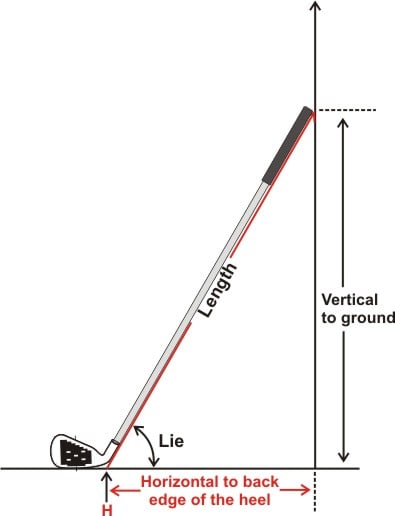
Image Source: www.hirekogolf.com
Why Getting Measurements Right Matters
Measuring golf club shafts correctly is more than just getting a number. It affects many things about how a club feels and performs.
The Connection to Performance
A club that is too long or too short for you can make it hard to hit the ball well. The wrong length can change your swing path. It can make you stand too close or too far from the ball. This leads to inconsistent shots. It can cause hooks, slices, or missed shots entirely.
The size of the handle end, called the butt diameter, matters a lot for your grip. If the grip is too big or too small, it changes how your hands work during the swing. This affects control and feel.
The tip end, or tip diameter, is important for how the clubhead connects. It also affects how stiff or flexible the shaft feels at impact. This feeling is called golf shaft flex. All these measurements work together. They help make sure the club is a good match for your swing speed and style.
Crucial for Golf Club Fitting
Precise measurement is a must for proper golf club fitting. A club fitter uses your swing data and body measurements. They combine this with exact club specs. This helps them find the best shafts for you. Knowing the current shaft dimensions is the first step. This helps the fitter see what might need changing. It ensures any new shafts ordered or installed are the right size.
Keeping Clubs to Rules
There are official rules for golf clubs. The main group that sets these rules is the USGA. The USGA golf club length rule is very specific. It sets a limit on how long a club can be. It also has a specific way you must measure the length. If you play in official events, your clubs must meet these rules. Knowing how to measure correctly ensures your clubs are legal.
The Essential Tools for Measuring
To measure golf club shafts well, you need the right tools. Using standard tape measures or rulers might not be accurate enough. Golf clubs have unique shapes. They need tools made just for them.
The Golf Club Ruler
The most important tool is a golf club ruler. This is often a long metal ruler, usually 48 inches long. It has special markings and a design that helps measure clubs in specific ways.
Why a Special Ruler?
A regular ruler is flat. A golf club ruler usually has a lip or end stop. This allows you to place the ruler correctly against the club’s end or heel. This is crucial for getting an accurate golf shaft length measurement. Some golf club rulers also have markings or sliding parts to help measure diameters easily.
Other Helpful Tools
- Calipers: These are tools used to measure the outside diameter of round objects. They are perfect for measuring the club shaft butt diameter and club shaft tip diameter precisely. There are digital and manual versions. Digital calipers give a clear number on a screen. Manual ones require reading a scale.
- V-Block: A V-block is a piece of metal with a V-shaped groove. You can rest the golf shaft or clubhead in the V-block. This keeps it steady and level while you measure. It’s very useful when measuring diameters or checking if a shaft is straight.
- Scale or Weight: Knowing the weight of the shaft or the whole club can be helpful. It’s not a measurement of the shaft itself, but it’s a key part of the shaft’s specs.
- Flat, Level Surface: You need a hard, flat floor or workbench to measure club length accurately, especially using the USGA method.
Deciphering Golf Club Length Measurement
Measuring the length of a golf club seems simple, but there are different ways to do it. The two main methods give slightly different numbers. You need to know which method you are using and why.
The USGA Standard Method (Heel Method)
This is the official way to measure club length for rules purposes. It’s often called the heel method.
How the USGA Rule Works
The USGA golf club length rule says you must measure from the point where the heel of the clubhead touches the ground up to the top of the grip. You must do this with the club resting against a flat surface.
Step-by-Step USGA Measurement
Let’s go through the steps carefully.
- Find a Flat Area: Use a smooth, level floor. A garage floor or workshop floor works well.
- Place the Club: Lay the club down on the floor. The clubhead should rest naturally against the floor. Make sure the face of the club is pointing mostly upwards. Do not force the toe or heel onto the ground. Let it sit how it would if you were setting it down gently.
- Identify the Heel Point: Look at the bottom of the clubhead. The heel is the part closest to the shaft. Find the point where the heel touches the floor.
- Position the Ruler: Take your golf club ruler. Place the end of the ruler (often designed with a lip or stop) against the heel point you identified on the floor. The ruler should lie along the back of the shaft. It should run straight up towards the grip.
- Keep it Tight: Make sure the ruler is pressed gently against the back of the shaft for the full length.
- Read the Measurement: Look at the top of the grip. Read the number on the ruler where it lines up with the very top of the grip cap. This number is the USGA length.
Why Use This Method?
This is the standard for competition. If you need to check if a club is legal, use this method. It’s also a consistent way to compare the stated length of a club to its actual length using official rules.
Golf Club Playing Length Measurement
Another common way to measure length is called the playing length. This method is perhaps more intuitive for some.
How Playing Length Works
Playing length is measured from the center of the club’s sole (the bottom of the clubhead) up to the top of the grip. The club is usually held upright or at its normal address angle.
Step-by-Step Playing Length Measurement
Here’s how to measure playing length.
- Hold or Stand the Club: You can hold the club upright, or lay it on a bench. If laying it down, make sure it’s not leaning.
- Find the Sole Center: Look at the bottom of the clubhead. Find the center point of the sole from the heel to the toe.
- Place the Ruler: Put the end of your ruler on this center point of the sole.
- Run Ruler Up Shaft: Hold the ruler along the back of the shaft, running it straight up towards the grip.
- Read the Measurement: Read the number on the ruler at the very top of the grip cap. This is the playing length.
Comparing the Two Methods
The playing length measurement will almost always be slightly shorter than the USGA (heel) length. This is because the heel is usually further from the top of the grip than the center of the sole when measured using the USGA method.
When to Use Each Method
- USGA (Heel) Length: Use this when checking club legality, comparing manufacturer specs against USGA rules, or for official purposes. Many golfers and club makers use this as the standard for reporting club length.
- Playing Length: Use this for personal reference, comparing the feel of different clubs, or when a fitter specifically requests this measurement. Some fitters find this length more related to how the club sits at address.
Measuring Shaft Diameters
Measuring the shaft’s diameter at both ends is critical. These numbers are important for fitting components like grips and clubheads.
Measuring Club Shaft Butt Diameter
The butt diameter is the size of the shaft at the thickest end. This is the end where the grip is installed.
What is Butt Diameter?
It’s the measurement of the outside of the shaft tube right at the very top, before any grip is put on.
Why It Matters
The butt diameter directly affects the grip size. Grips are designed to fit specific butt diameters. A common size is 0.600 inches. If your shaft has a butt diameter different from the grip’s intended size, installing the grip changes its final size and feel. Club fitters pay close attention to this to ensure the grip feels right in your hands.
How to Measure Butt Diameter
You need calipers for this measurement.
- Find the Butt End: This is the top end of the shaft. If a grip is on, you must remove it first.
- Use Calipers: Open the calipers slightly wider than the shaft. Place the jaws of the calipers around the very top edge of the shaft.
- Close Calipers: Gently close the calipers until the jaws touch the shaft without squeezing hard.
- Read the Number: Read the measurement shown on the calipers. This is the butt diameter. It’s usually given in inches or millimeters.
Measuring Club Shaft Tip Diameter
The tip diameter is the size of the shaft at the thin end. This is the end that goes into the clubhead.
What is Tip Diameter?
It’s the measurement of the outside of the shaft tube right at the very tip end.
Why It Matters
The tip diameter is crucial for fitting the shaft into the hosel of the clubhead. Hosel sizes vary. Common tip diameters are 0.335 inches (for most drivers, fairway woods) and 0.370 inches (for many irons). Putter shafts can have different tip sizes. Using a shaft with the wrong tip size means it won’t fit correctly. It might be too loose or not fit at all.
The tip size also relates to parallel tip length golf. Shafts with parallel tips have a section near the tip that is the same diameter. This section allows the fitter to “tip trim” the shaft. Cutting off parts of the parallel tip makes the shaft stiffer. This process is part of tuning golf shaft flex. Knowing the tip diameter and parallel tip length golf helps in choosing and preparing shafts.
How to Measure Tip Diameter
Use calipers for this measurement too.
- Find the Tip End: This is the bottom end of the shaft, where it connects to the head. If the shaft is already in a clubhead, you are measuring the part that sticks out, or you need to remove the head.
- Use Calipers: Place the jaws of the calipers around the very end of the shaft tip.
- Close Calipers: Gently close the calipers until the jaws touch the shaft without squeezing hard.
- Read the Number: Read the measurement shown on the calipers. This is the tip diameter. It’s usually given in inches or millimeters.
Grasping Other Shaft Specifications
While length and diameter are direct measurements, other specs like golf shaft flex are key parts of a shaft’s identity. These often relate to the measurements you take.
What is Golf Shaft Flex?
Golf shaft flex refers to how much a shaft bends during the swing. Shafts come in different flexes: Ladies (L), Senior (A/R2), Regular (R), Stiff (S), Extra Stiff (X), and sometimes Tour Extra Stiff (TX).
Why Flex Matters
Matching the shaft flex to your swing speed and tempo is very important. A shaft that is too flexible can cause loss of control and inconsistent ball flight. A shaft that is too stiff can make it hard to hit the ball far and feel harsh.
Flex and Physical Measurements
While you don’t measure flex directly with a ruler, the shaft’s design and measurements determine its flex.
- Length: A longer shaft of the same model and material will feel more flexible than a shorter one.
- Tip Diameter and Parallel Tip Length Golf: As mentioned, shafts with longer parallel tips can be “tip trimmed.” This means cutting off sections of the tip end. Tip trimming makes the shaft stiffer. This is a common way fitters adjust golf shaft flex. Knowing the parallel tip length golf tells you how much you can trim to adjust flex.
- Weight: Generally, heavier shafts are designed to be stiffer than lighter shafts of the same material and flex code.
- Material and Design: Graphite shafts behave differently than steel shafts. The way the material is layered or formed (taper tip vs. parallel tip) also affects flex.
Interpreting Parallel Tip Length Golf
This measurement is specific to parallel tip shafts.
What it Means
Parallel tip length golf is the distance from the very tip of the shaft upwards where the outside diameter stays the same. For example, a shaft might be a 0.370 parallel tip with a 4-inch parallel tip section. This means the bottom 4 inches of the shaft all measure 0.370 inches in diameter.
How it is Used
This uniform section allows club makers to “tip trim” the shaft by cutting off specific amounts from the tip. Cutting off 1 inch from a shaft with a 4-inch parallel tip leaves 3 inches of parallel tip. Each inch cut increases the shaft’s stiffness. Knowing the parallel tip length golf is essential for knowing how much tipping can be done before the shaft starts tapering. If you cut into the tapered section, you change the intended flex profile in unpredictable ways.
Mastering Accuracy and Avoiding Pitfalls
Accurate measurement needs care. Small errors can add up and affect the final club build or fitting decision.
Tips for Getting it Right
- Use the Right Tools: Always use a golf club ruler for length and calipers for diameter.
- Work on a Flat Surface: For length measurement, a truly level floor is a must for the USGA method.
- Be Gentle: When using calipers, close them gently. Squeezing hard can distort the measurement.
- Measure Multiple Times: Measure the same thing two or three times to make sure you get the same number.
- Check Your Ruler/Calipers: Make sure your tools are not damaged and are calibrated correctly if they are digital.
- Remove Grip for Butt Diameter: You cannot accurately measure butt diameter with a grip on.
- Note the Method: Always write down which length measurement method you used (USGA/Heel or Playing Length).
Common Mistakes to Avoid
- Using a Standard Tape Measure: These are flexible and hard to position correctly for club length.
- Not Resting the Club Properly: For the USGA method, letting the clubhead sit naturally is key. Don’t force it into a position.
- Reading the Ruler Wrong: Double-check your reading, especially with smaller markings.
- Ignoring Manufacturer Specs: Compare your measurements to what the manufacturer says the shaft should be. This helps spot if a shaft is mislabeled or damaged.
- Measuring with Grips On: This affects both length (adds to the top) and makes butt diameter measurement impossible.
- Not Measuring Before Cutting Golf Shafts: Always measure the full length of a shaft before you cut it for trimming or installation. This is crucial for planning your build.
Applying Your Measurements
Once you have your accurate measurements, they become valuable data points.
How Measurements Aid Golf Club Fitting
A club fitter uses length, diameter, and weight data alongside your swing characteristics (swing speed, tempo, attack angle) and body measurements (height, wrist-to-floor distance).
- Length: Helps determine the right club length for your posture and swing. A fitting might suggest adding or cutting golf shafts to reach the ideal length.
- Butt Diameter: Guides grip selection and installation. A fitter ensures the final grip size is comfortable and correct for your hand size.
- Tip Diameter: Confirms shaft-to-head compatibility. Ensures the right adapter or hosel size is used.
- Flex: Your swing speed helps the fitter pick a starting flex. Shaft measurements and how the shaft performs during testing help fine-tune the final flex choice.
Importance Before Cutting Golf Shafts
Measuring a shaft before cutting is a non-negotiable step.
- Verify Length: Make sure the raw shaft is the stated length.
- Plan Tip Trimming: For parallel tip shafts, knowing the parallel tip length golf is essential for planning how much to cut from the tip to achieve the desired golf shaft flex. You need enough parallel section to perform the required tipping.
- Plan Butt Trimming: Knowing the full length and how much you need to cut from the butt to reach the target club length is vital. You need to account for the depth the shaft goes into the clubhead hosel.
Consistency Across a Set
Measuring every club or shaft in a set ensures consistency. Golf club fitting aims for a set of clubs that feel and perform similarly, with controlled changes in length and flex as you move from wedges to woods. Checking the length and other specs of each club helps verify the set matches the fitting recommendations. It catches errors made during assembly.
Advanced Measurement Considerations
Measuring can get more complex when dealing with different club types or components.
Variations by Club Type
- Woods (Drivers, Fairways, Hybrids): Tend to have longer shafts and often use 0.335 or 0.350 tip diameter shafts. Drivers have the strict USGA length limit (currently 48 inches).
- Irons: Shafts get progressively shorter from long irons to wedges. They commonly use 0.370 parallel tip shafts or 0.355 taper tip shafts. Measuring iron length often requires careful attention to the different lie angles. The USGA method accounts for this by resting the club naturally.
- Putters: Putter shafts are much shorter. Tip diameters can vary widely (e.g., 0.370, 0.355, 0.390). Putter length measurement is typically done using the USGA method.
Measuring Components vs. Assembled Club
You can measure a raw shaft (without a head or grip) or a finished club.
- Raw Shaft: You can measure the full raw length, the butt diameter, and the tip diameter. For parallel tip shafts, you can measure the parallel tip length golf. These measurements are taken before any cutting golf shafts happens.
- Assembled Club: You measure the total length (USGA or playing length) and potentially the butt diameter if the grip is removed. You cannot measure the tip diameter once the head is on without removing the head.
Measuring components before assembly ensures they meet specs. Measuring the assembled club confirms the final build matches the target specifications from the golf club fitting process.
Frequently Asked Questions About Shaft Measurement
Here are some common questions people ask about measuring golf club shafts.
h4 What is the standard length of a driver?
The standard length for a men’s driver is often around 45 inches to 45.75 inches when measured using the USGA method. However, this varies between manufacturers and models. The maximum legal length allowed by the USGA golf club length rule is 48 inches.
h4 Can I measure my own shaft length?
Yes, you can measure your own shaft length. You will need a golf club ruler and a flat surface. Follow the steps for either the USGA method or the playing length method. Just be careful to be accurate.
h4 Does shaft length affect swing weight?
Yes, shaft length has a big impact on swing weight. Swing weight is a measure of how heavy the head end of the club feels during the swing. A longer club will have a higher swing weight, assuming the same head weight. Cutting golf shafts will lower the swing weight. Adding length (using an extension) will increase it.
h4 How do I know if my shaft is parallel tip?
You can tell if a shaft is parallel tip by measuring the diameter near the tip end. A parallel tip shaft will have a section (the parallel tip length golf) where the diameter is constant, usually 0.370 inches or 0.335 inches. A taper tip shaft gets thinner consistently from the point it exits the hosel all the way to the tip. Taper tip shafts usually measure 0.355 inches right at the very end.
h4 Why is measuring butt diameter important for grips?
Butt diameter is important for grips because grips are made to fit shafts with specific butt sizes. If the shaft’s butt diameter is larger than the grip’s inner diameter, the grip will be stretched when installed, making it feel thinner. If the shaft is smaller, the grip will be less stretched, making it feel thicker. Fitters use tape layers under the grip to build up the butt diameter and fine-tune the final grip size based on the shaft’s measured butt diameter.
In Summary
Accurately measuring your golf club shafts is a fundamental skill for any golfer interested in their equipment. Whether you are getting a professional golf club fitting, checking your clubs meet the USGA golf club length rule, or planning to adjust your clubs by cutting golf shafts, precise measurements are required.
Focus on getting accurate golf shaft length measurement using either the USGA (heel) or playing length methods. Pay attention to club shaft butt diameter and club shaft tip diameter for proper component fitting. Recognize how these measurements relate to golf shaft flex and parallel tip length golf.
Using the right tools, like a golf club ruler and calipers, and following careful steps will help you get reliable numbers. These numbers are your key to better understanding your clubs and setting yourself up for improved performance on the course.