
Image Source: www.hirekogolf.com
Step-by-Step: How To Measure A Golf Club Shaft Length
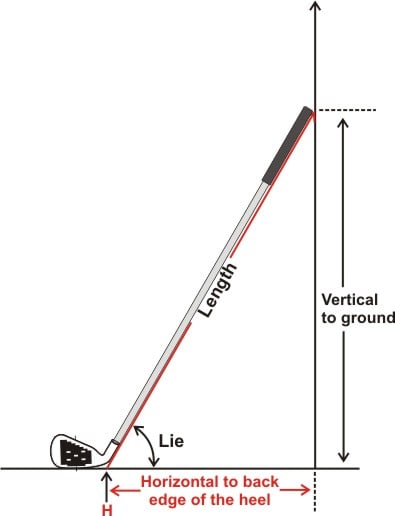
Knowing how to measure a golf club shaft is important for many reasons, like checking if clubs meet standard rules or figuring out the right size for your swing. The most common method follows guidelines set by the R&A and USGA golf bodies. This golf shaft length measurement method ensures everyone measures the same way. You measure the club while it is resting on a flat surface. You find the point where the shaft’s center line meets the club’s sole (bottom). Then, you measure in a straight line up the back of the shaft to the very top of the grip. This specific measuring golf club R&A USGA way helps keep things fair in the game. It also helps when using a golf club specification chart or measuring golf club for fitting.
Why Correct Club Length Is Important
The length of your golf club shaft greatly affects how you swing and how the ball flies. A club that is too long or too short can make hitting the ball well very hard.
Swing Impact
A longer club often means you stand further from the ball. It also means you swing on a flatter angle. This can give you more speed but make it harder to control where the ball goes. A shorter club means you stand closer. You swing on a more upright angle. This can make it easier to hit the center of the club face. It can also help with accuracy. Getting the length right helps you make your best swing again and again.
Ball Flight
Club length changes how fast the club head moves. It changes the angle the club hits the ball (attack angle). Longer clubs generally give more club head speed. This can lead to hitting the ball further. But it can also cause the ball to curve more. Shorter clubs might hit the ball shorter. But they often lead to straighter shots. The right length helps you hit the ball with the right power and direction.
Feel and Balance
The length of the shaft affects how the club feels in your hands during the swing. It changes the club’s balance. A club that feels balanced is easier to swing smoothly. If a club is the wrong length, it can feel heavy or light in the wrong places. This makes a smooth swing difficult. The right length gives you better feel and control.
Club Fitting Help
Getting measured correctly is key for a good club fitting. A fitter uses your measurements to find the best club length for your height, posture, and swing. They can suggest shafts that are longer or shorter than standard. This is part of getting clubs made just for you. Measuring golf club for fitting correctly helps the fitter help you play better.
The Rules Explained
Golf has rules about many things, including how long a club can be. These rules come from the R&A and the USGA. They set the standard golf club length rule.
Maximum Lengths
There is a limit to how long a golf club can be for play that follows the rules.
- Most clubs (except putters) cannot be longer than 48 inches.
- Putters have a different rule. They cannot be longer than 60 inches.
These maximums are measured using the official method. This rule stops players from using very long clubs to gain an unfair distance edge.
Minimum Lengths
There is also a minimum length rule. It is not about the shaft itself but the club as a whole. A club must be at least 18 inches long. This is to make sure clubs are used in a way that fits the game.
Why Rules Matter
These rules keep golf fair. They ensure players use equipment within certain limits. If you play in official games or tournaments, your clubs must follow these rules. Knowing how to measure helps you check if your clubs are legal. This measuring golf club R&A USGA method is the official way to check this.
Getting Ready to Measure
Before you measure a golf club, make sure you have the right tools and space. Being prepared helps you get an accurate measurement.
What You Need
- A Golf Club: The club you want to measure. Make sure it is clean, especially the sole (bottom).
- A Long, Stiff Ruler or Tape Measure: A metal ruler or a rigid tape measure that is longer than the club is best. A floppy fabric tape measure is hard to keep straight.
- A Flat Surface: A level floor, workbench, or sturdy table works well. This surface is where the club head will rest.
- Something to Mark (Optional): A pencil or a small piece of tape can help mark the spot on the sole if needed, but often isn’t necessary once you get the hang of it.
- Good Light: Make sure you can clearly see the sole of the club and the measurement marks on your ruler.
Setting Up Your Space
Find a clear area where you can lay the club down flat. Make sure the surface is truly level. Any tilt can change your measurement. Clear away anything that could get in the way of the club head resting flat or your measurement line.
The Right Way To Measure
The R&A and USGA have a specific way to measure club length. This is the standard golf shaft length measurement method. It is important to follow this method to get the right length, especially for checking rules or comparing specs.
Positioning the Club
- Lay the club down: Place the club on your flat surface. The bottom of the club head (the sole) should rest fully on the surface. The shaft will naturally angle upwards.
- Set the club face: Turn the club head so the face is pointing straight up or slightly towards you. Make sure the sole is flat on the surface. This can sometimes be tricky depending on the shape of the sole.
Finding the Measurement Point
The rule says you measure from the point where the center line of the shaft meets the sole of the club head.
- Picture the shaft: Imagine a line running straight down the center of the shaft into the club head.
- Picture the sole: The sole is the very bottom surface of the club head that touches the ground when resting.
- The meeting point: The measurement starts from where these two imaginary lines meet. For most clubs, this point is roughly in the middle of the sole, directly below the shaft opening (the hosel).
Taking the Measurement
- Place the ruler: Hold or lay your stiff ruler or tape measure along the back of the shaft. One end of the ruler should be placed precisely at the point on the sole you identified where the shaft axis hits the sole.
- Keep it straight: Make sure the ruler runs in a straight line following the angle of the shaft.
- Measure to the top: Read the measurement at the very top of the grip cap. This is the end of the club furthest from the head.
- Read carefully: Look closely to get the measurement right, usually to the nearest quarter or eighth of an inch.
This golf club sole measurement point is key to getting the official length. It accounts for how the club head sits on the ground.
Checking Different Clubs
The basic measurement method is the same for all clubs, but there are small things to note for each type.
How to Measure Driver Shaft Length
Measuring a driver can be a little trickier than other clubs. Drivers have the longest shafts and the largest heads.
- Head size: The large head means finding the exact point on the sole where the shaft axis meets the sole can feel a bit different. Rest the driver head flat on the surface. Look at where the shaft enters the head (the hosel). Imagine the shaft line going down. The point will be right below it on the sole.
- Length: Drivers are the longest clubs. You will definitely need a long measuring tool. Make sure the entire club fits on your flat surface while the head is resting correctly.
- Face angle: With a driver, make sure the club face is square (pointing straight up) or slightly closed (pointing a bit inwards) as it rests. This helps the sole sit correctly.
Knowing how to measure driver shaft length is often the first step when checking if a driver follows the rules (under 48 inches).
Iron Shaft Length Measurement
Measuring irons is usually the easiest. Irons have smaller heads than woods.
- Sole shape: Iron soles are generally flatter and simpler than wood soles. This makes finding the point where the shaft meets the sole easier.
- Positioning: Just rest the sole flat on your surface. The shaft will angle up.
- Measurement: Place your ruler at the point below the hosel on the sole and measure straight up the back of the shaft to the grip top.
Iron shaft length measurement is important for setting distance gaps between your irons. It also helps check lie angle fitting.
Putter Shaft Length Guide
Putters are measured using the same method as other clubs by the R&A and USGA. However, putter length is a very personal choice.
- Resting the head: Putters have many different sole shapes. Some are flat, some are curved, some have weights. Rest the putter head so the bottom surface is flat on your measuring surface.
- Finding the point: Locate where the shaft enters the putter head. Imagine the shaft line going down to the sole. This is your starting point.
- Measuring: Measure from this point up the back of the shaft to the top of the grip.
While the method is standard, the ideal putter length varies greatly between players. Shorter putters (33-34 inches) are common, but longer putters (35-36 inches) are also used. The rules allow putters up to 60 inches, though these are rare. This putter shaft length guide uses the official method.
What the Bottom Tells You: Golf Club Sole Measurement
The shape of the club’s sole is important for measurement because it sets the starting point. The golf club sole measurement is not a length of the sole, but using the sole to define the start point of the shaft measurement.
- Flat soles: Irons usually have flat soles. This makes it easy to see when the club is resting flat on the surface. The measurement point is clear, straight below the hosel.
- Curved soles: Woods and hybrids have more curved soles. You need to make sure the curve is resting fully on the flat surface. This can sometimes mean the club head tilts slightly. Ensure it’s resting naturally as if it were sitting on the ground. The measurement point is still below the hosel, but finding the exact “shaft meets sole” point might require a careful look.
- Unique shapes: Some putters or wedges have very specific sole grinds or shapes. Rest the club as it would sit naturally on a flat surface for putting or hitting. Then find the point below the shaft axis on that resting surface.
Getting the golf club sole measurement correct sets up the rest of your length reading. If the sole isn’t flat on the surface, your measurement will be wrong.
Shaft Lengths: Two Types
When people talk about shaft length, they might mean one of two things: the length of the shaft by itself or the length of the shaft once it is put into the club head. This is the difference between raw shaft length vs installed length.
Raw Shaft Length
This is the length of the shaft material before it is cut and put into a club head. Shafts come from the factory at a certain length, often longer than needed for any club.
- Full length: A shaft might start as, say, 46 or 48 inches long.
- Tip trimming: The end of the shaft that goes into the club head (the tip) is often cut down. This is called tip trimming. It affects the shaft’s stiffness (flex). Different club heads need different amounts of tip trimming.
- Butt trimming: The other end of the shaft, where the grip goes (the butt), is cut to get the final playing length after the shaft is put into the head. This is called butt trimming.
Installed Length (Playing Length)
This is the length of the finished club, measured using the R&A/USGA method we’ve described. It is the length from the sole measurement point all the way to the top of the grip.
- Shaft + Head: The installed length is the raw shaft length minus any tip trimming plus the part of the club head that adds length (like the height of the hosel and the club head itself, measured along the shaft axis from the sole). Then, the butt end is trimmed to get the final target length.
- What you swing: This installed length is the number that matters for how you play the club. It is also the length checked against the rules.
Understanding the difference between raw shaft length vs installed length is key if you are buying shafts to build clubs or getting custom work done. A 45-inch raw shaft will not result in a 45-inch installed length club.
Looking at Club Charts: Golf Club Specification Chart
Manufacturers provide details about their clubs. This often includes a golf club specification chart. This chart shows things like loft, lie angle, swing weight, and often, the standard length for each club model.
- Typical lengths: These charts show the intended or standard length the manufacturer builds that club to. For example, a chart might say a 7-iron is 37 inches long, or a driver is 45.5 inches long.
- Variations: However, the actual length of a club you buy might be slightly different. Small differences happen in manufacturing. Also, custom orders will have different lengths.
- Checking against the chart: You can use your measurement skills to check the actual length of your club against the golf club specification chart. This is helpful if you think your clubs might have been made to a different length or if you bought them used.
These charts are a good guide, but measuring your actual club gives you the true playing length.
Why Measurement Helps Fitting
Accurate club measurement is a basic but vital part of a proper club fitting session. Measuring golf club for fitting helps the fitter understand your current clubs and how they might compare to clubs that would fit you better.
- Starting point: A fitter will often measure your current clubs first. This gives them a baseline. They see what length you are currently using.
- Finding the right length: Based on your height, how you stand (posture), and how you swing, the fitter will figure out if you need clubs that are standard length, shorter, or longer.
- Trying options: During the fitting, you will hit balls with clubs of different lengths. The fitter measures the results (like ball speed, launch angle, spin). They also watch your swing and ask how the club feels.
- Matching shaft to length: The length of the shaft affects its flex and weight. A fitter makes sure the shaft’s playing characteristics match the chosen length and your swing.
- Custom building: Once the ideal length is found, the fitter or club builder uses this precise measurement to build or adjust your clubs.
Without accurate initial measurements and the ability to measure test clubs, a fitting cannot find the truly optimal length for you. Measuring golf club for fitting is a key step to unlocking your best game.
Your Step-by-Step Guide
Let’s break down the official golf shaft length measurement method into simple steps you can follow easily. This is the measuring golf club R&A USGA process.
Step 1: Gather What You Need
Get your club, a stiff ruler or tape measure that is longer than the club, and find a flat surface. Make sure the club head is clean.
Step 2: Prep the Club
Lay the club down on the flat surface. Make sure the entire sole (bottom) of the club head rests flat on the surface. For woods and hybrids, make sure the club face is square or slightly closed. For irons and putters, just make sure the sole is flat.
Step 3: Find the Sole Point
Look closely at where the shaft enters the club head (the hosel). Imagine a line going straight down the center of the shaft to the sole. This is the point on the sole where you will start measuring. It’s right below where the shaft comes out of the head. This requires careful golf club sole measurement observation.
Step 4: Position Your Ruler
Place the start of your ruler or tape measure exactly at the point you found on the sole. Line up the ruler so it runs straight up along the back of the shaft. Keep it pressed against the shaft as much as possible, following the shaft’s angle.
Step 5: Measure Up to the Grip
Keep the ruler steady at the sole point. Look at the very top of the grip cap. Read the number on the ruler that lines up with the top of the grip. Make sure the ruler is still running straight along the shaft.
Step 6: Write Down the Measurement
Note the length you read. It is usually measured in inches and fractions of an inch (like 37 inches, 45 and a half inches).
Repeat these steps for each club you want to measure. Practice helps you get more accurate readings. This method applies whether you are doing how to measure driver shaft length, iron shaft length measurement, or following a putter shaft length guide.
Things to Watch Out For
Getting an accurate measurement can be tricky. Here are some common mistakes to avoid.
- Not resting the sole flat: If the club head is tilted up or down, your measurement will be wrong. Make sure the entire sole is touching the flat surface.
- Starting the measurement in the wrong spot: The measurement starts where the shaft line meets the sole as the club rests. It’s not necessarily the very edge of the sole or the front of the hosel.
- Using a floppy tape measure: A cloth or flexible tape measure is hard to keep straight along the shaft’s angle. Use a stiff ruler or metal tape.
- Not measuring to the top of the grip: The length includes the grip. Measure to the very top, including the cap.
- Not keeping the ruler straight: Make sure the ruler follows the line of the shaft exactly. Don’t let it angle off to the side.
- Misreading the ruler: Double-check your reading, especially the fractions of an inch.
Avoiding these mistakes will help you get a more reliable golf shaft length measurement method result.
Keep It Right: Maintaining Accuracy
Getting one good measurement is great, but here are tips for consistent results.
- Use the same method every time: Always use the R&A/USGA method (resting the sole, measuring up the back).
- Measure on the same surface: Use the same flat floor or table each time.
- Check your tools: Make sure your ruler is straight and the markings are clear.
- Measure multiple times: Measure the same club two or three times to see if you get the same number.
- Be precise: Pay close attention to placing the ruler at the exact sole point and reading the exact spot on the grip.
Consistency is key when you are checking clubs against a golf club specification chart or measuring golf club for fitting.
FAQ
Here are some questions people often ask about measuring golf club length.
Q: Why is this R&A/USGA method the standard?
A: This method is the official way set by golf’s main governing bodies. It provides a consistent way to measure all clubs, regardless of head or shaft design. This is important for setting rules like the maximum length and for comparing clubs accurately. It’s the accepted golf shaft length measurement method for fair play.
Q: Does the grip affect the measurement?
A: Yes, the measurement goes to the very top of the grip. The grip is part of the club’s total length.
Q: What if my club head has a weird shape?
A: For clubs with complex soles (like some drivers or putters), rest the club head naturally on the flat surface as it would sit on the ground. Then, find the point on that resting surface directly below the center line of the shaft. This is the starting point for your golf club sole measurement.
Q: Does cutting the grip affect the length?
A: Yes, if you cut down the grip or put a new grip on that is shorter, the club’s overall measured length will be shorter when using the standard method.
Q: I see a “raw shaft length” listed. Is that the length of my club?
A: No. Raw shaft length vs installed length are different. The raw shaft is the length of the shaft material before it is put into the club head and trimmed. The installed length is the length of the finished club, measured from the sole to the grip top. The installed length will be shorter than the raw shaft length because of tip trimming and how the shaft sits in the head.
Q: How do I know the right length for me?
A: Finding the right length is best done through a professional club fitting. A fitter looks at your body size, swing, and ball flight to find the length that helps you hit the ball best. Measuring golf club for fitting your current clubs is a first step.
Q: My driver measures 48.5 inches. Is it legal?
A: No, for play that follows the rules, a driver (or any non-putter club) cannot be longer than 48 inches according to the standard golf club length rule by the R&A and USGA.
Final Thoughts
Measuring your golf clubs is a simple task that gives you important information. It helps you check if your clubs meet the rules, understand how they compare to manufacturer specs on a golf club specification chart, and provides key data if you are thinking about a club fitting. By following the official golf shaft length measurement method used by the measuring golf club R&A USGA bodies, you ensure your measurements are accurate and consistent. Whether it’s how to measure driver shaft length, iron shaft length measurement, or using a putter shaft length guide, the principle of resting the club and measuring from the sole point to the grip top is the correct way. Pay attention to the golf club sole measurement point and the difference between raw shaft length vs installed length. Taking the time to measure your clubs properly is a step towards better understanding your equipment and improving your game.