
You’ve just arrived at the golf course. You paid for your round, perhaps grabbed a coffee, and now you’re heading to the first tee. You reach into your bag for a golf ball. You pull one out. But wait, is this your ball? This is where marking your golf ball comes in. Why mark your golf ball? Simple: you need to know your ball from everyone else’s. How to identify your golf ball? By the unique mark you put on it. What are the rules for marking golf balls? Rule 6.3a says you must have a way to identify your ball. Let’s dive into how to do this right.
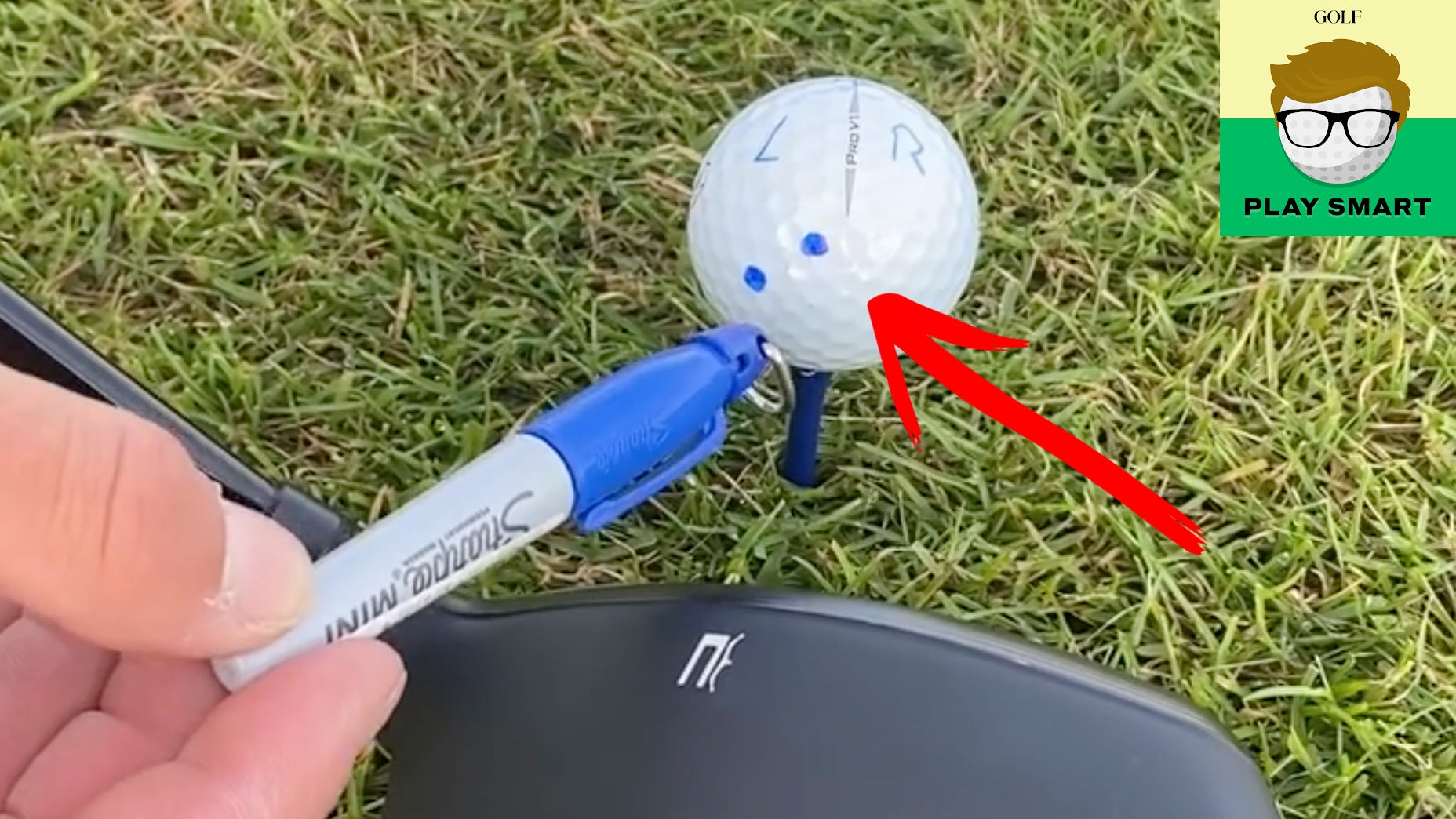
Image Source: golf.com
Why Your Golf Ball Needs a Mark
Hitting the right ball is crucial in golf. Playing the wrong ball costs you two penalty strokes in stroke play. In match play, you might even lose the hole! So, marking your ball is more than just a good idea. It’s a key part of playing by the rules.
Besides the rules, there are other good reasons to mark your ball:
- Finding It Easily: In the rough or among autumn leaves, a unique mark helps your ball stand out.
- Avoiding Mix-Ups: On busy days, groups can be close. A clear mark stops you and others from playing the wrong ball by mistake.
- Superstition or Habit: Many golfers have a specific mark they use every time. It becomes part of their routine.
- Personal Touch: Marking your ball lets you add your own style. It’s a way of personalizing golf balls.
Rules About Marking Golf Balls Explained Simply
The main rule you need to know is Rule 6.3a. It says: “The player must be able to identify his or her ball before playing a stroke to it.”
This means you need some way to be sure the ball you’re about to hit is yours. How you do this is mostly up to you. The rules don’t say you have to draw a smiley face or a specific pattern. You just need a way to tell your ball from any other ball that could be on the course.
Here’s what the rules don’t allow about marks:
- You cannot change the ball’s playing properties by marking it. A normal ink mark won’t do this. Painting the whole ball bright pink might.
- The mark must not be made to gain an unfair advantage (like a huge mark that makes the ball easier to see in flight – but this is very hard to do with ink).
For most golfers, a simple ink mark is perfectly fine and follows the rules. The key is just having a mark you recognize.
Different Ways to Mark Golf Balls
There isn’t just one way to put a mark on your ball. Golfers use many different golf ball marking techniques. The method you choose depends on what you like, how much time you have, and how neat you want the mark to be.
Here are the common ways:
Using a Golf Ball Marker Pen Freehand
This is perhaps the simplest method. You take a permanent marker, like a Sharpie, and draw directly on the ball.
How it works:
- Get a permanent marker. Black, blue, or red are popular colors.
- Hold the ball steady.
- Draw your chosen mark on the ball’s surface.
- Let the ink dry fully.
Pros:
- Very quick and easy.
- Allows for any kind of mark you can draw.
- Requires only a pen.
Cons:
- Marks can look messy if you don’t have a steady hand.
- Hard to make the same mark perfectly every time.
- Might not look as professional as other methods.
Using a Golf Ball Stencil
A golf ball stencil is a tool, usually made of plastic, that fits around the ball. It has cutouts for shapes or lines. You place the stencil on the ball and color in the cutouts with a pen.
How it works:
- Choose a golf ball stencil. They come in different patterns (lines, circles, letters).
- Place the stencil around the golf ball. Make sure it fits snugly.
- Use a golf ball marker pen to color inside the stencil’s cutouts.
- Carefully remove the stencil.
- Let the ink dry completely.
Pros:
- Creates clean, sharp lines and shapes.
- Easy to make a consistent mark on every ball.
- Great for alignment aids (like a straight line).
Cons:
- Limited to the shapes or patterns on the stencil.
- Takes a little more time than freehand.
- Requires buying a stencil.
Custom Golf Ball Marking
This goes beyond simple DIY. Custom golf ball marking involves getting balls printed with a specific design, logo, or text before you even get them.
How it works:
- Order golf balls from a company that offers custom printing.
- Provide your design (logo, initials, text).
- The company prints the mark on the balls during manufacturing or packaging.
Pros:
- Most professional-looking mark.
- Highly durable mark.
- Allows for complex logos or designs.
- Already marked when you get them.
Cons:
- Costs more than regular balls.
- Requires buying in bulk usually.
- Cannot change the mark once printed.
Besides these, some golfers use small, colored dots made with paint pens or even fingernail polish, though permanent markers are most common and easiest to use. These different ways to mark golf balls give you options based on your needs.
Golf Ball Marking Techniques for Success
Putting a mark on your ball seems simple. But using good golf ball marking techniques can make your mark last longer and look better.
Picking the Right Pen
A standard permanent marker works well. Look for one with a fine or extra-fine tip if you want small, detailed marks. Broader tips are good for filling in stencils or making bold lines.
- Sharpie: A popular choice. Widely available. Comes in many colors.
- Other Permanent Markers: Brands like Bic Marking, Pilot Permanent Marker also work.
- Paint Pens: These use liquid paint. They can make a bolder mark, but might be too thick or not last as well on the ball’s surface. Stick to ink markers for ease.
Make sure the pen is permanent. Regular markers will wash or wear off quickly.
Applying the Mark Neatly
- Clean the Ball: Wipe the area where you plan to mark. Ink sticks better to a clean, dry surface.
- Steady Hand: Hold the ball firmly. Rest your hand on a table if needed for freehand drawing.
- Use Stencils Right: If using a stencil, hold it tightly against the ball so ink doesn’t bleed underneath. Don’t overload the pen with ink.
- Let It Dry: This is key! Give the mark plenty of time to dry before putting the ball in your bag or sleeve. Wet ink will smear easily. A few minutes is usually enough for permanent marker ink in a normal room temperature.
Where to Put Your Mark
Most golfers mark their ball near the manufacturer’s logo. This area is often flat or has a slight dimple pattern that still allows for marking.
- Near the Logo: Easy to find a spot.
- Opposite the Logo: Some players prefer this.
- Along the Sideline: Marking along the ball’s equator is great if you use a line mark for putting alignment. Many balls have a built-in “alignment line” you can trace or enhance.
Avoid marking directly over the printed name or number if you want your mark to stand out clearly.
The Best Way to Mark Golf Balls: It Depends On You
Is there a single “best way to mark golf balls”? Not really. The best way is the one that works for you. Consider what’s important:
- Speed: Freehand is fastest.
- Neatness: Stencils offer the cleanest lines. Custom printing is perfect.
- Uniqueness: Freehand allows any design. Custom printing allows logos.
- Putting Aid: A stencil or careful freehand line is best for adding an alignment aid.
- Cost: Freehand with a cheap pen is cheapest. Stencils are a small cost. Custom balls cost more.
Many golfers start with a simple freehand dot or initial. As they play more, they might switch to a stencil for a cleaner look or add a line for putting. Some eventually invest in custom balls if they play often or want a company logo on their ball.
Think about what kind of mark helps you identify your ball quickly and easily on the course. That’s the most important factor.
Personalizing Golf Balls: Beyond Just a Mark
Marking your ball is a fundamental form of personalizing golf balls. But you can take it further.
- Signature Mark: Develop a unique mark that only you use. Maybe it’s a specific combination of dots, a small drawing, or your initials written in a certain way.
- Color Coding: Use different colored pens. Maybe blue for practice rounds and black for score rounds. Or use different colors for different types of shots if you’re experimenting (though be careful this doesn’t slow you down!).
- Adding Multiple Marks: Some players add marks in several places on the ball for easy identification from any angle. A dot by the number and a line on the side, for example.
- Themed Marks: Draw marks related to your favorite sports team, a holiday, or something personal. Just keep it simple enough to draw quickly and consistently.
Deep Dive into Custom Golf Ball Marking Services
If you want the ultimate personalization, custom golf ball marking services are the way to go. Companies like Titleist, Callaway, Srixon, and many others offer this directly. There are also third-party printing companies.
What you can usually customize:
- Text: Your name, initials, a short phrase.
- Logos: Company logos, club logos, personal designs (within certain limits).
- Images: Simple graphics.
- Colors: Often you can choose the ink color for the print.
Things to know about custom orders:
- Minimums: You usually have to order a minimum number of balls, often 3 or 6 dozen.
- Cost: It adds to the price per ball compared to standard balls.
- Lead Time: It takes time for them to print and ship your custom order. Order well in advance!
Custom marking is great for gifts, corporate events, club tournaments, or for golfers who want a truly unique and permanent mark without having to draw it themselves every time. It combines personalization with convenience and durability.
How to Identify Your Golf Ball: Putting the Mark to Use
Having a mark is one thing. Using it to identify your golf ball during play is another.
- Before You Hit: Any time you think you might be hitting your ball (especially if another ball is nearby), you should check the mark. Announce you are identifying your ball to anyone playing with you.
- Lifting for Identification: Rule 7.2 says you can lift your ball to identify it.
- Mark the spot where the ball lies first (with a tee or coin).
- Lift the ball.
- Clean it only as much as needed to see the mark. Do not clean it fully unless it was on the putting green.
- Confirm your mark.
- Put the ball back on its original spot.
- Knowing Your Mark: Make sure your mark is clear and easy for you to recognize quickly. Don’t pick a mark that’s hard to see or might be confused with something else.
Imagine two white balls sitting close in the fairway. One has a small blue dot by the number. The other has three red dots in a triangle pattern. Knowing which mark is yours is the fastest way to tell which ball belongs to you.
Grasping the Benefits of Different Ways to Mark Golf Balls
Each method of marking has its own strengths.
| Method | Speed | Neatness | Customization (DIY) | Durability (DIY) | Alignment Aid Use | Cost |
|---|---|---|---|---|---|---|
| Freehand (Pen) | Fast | Low-Mod | High | Mod | Mod (can draw line) | Low |
| Stencil (Pen) | Mod | High | Mod (stencil design) | Mod | High (lines) | Low-Mod (cost of stencil) |
| Custom Printing (Factory) | N/A | High | Very High (initial) | Very High | Mod (can print line) | High |
Note: Durability for DIY methods depends heavily on the pen quality and drying time.
Understanding these benefits helps you choose the method that best fits your needs and style of play. If you just need a quick identifier, freehand is fine. If you rely on a putting line, a stencil is likely better. If you want your ball to look perfect and represent a brand, custom printing is the way.
Ideas for Your Golf Ball Mark
Need some ideas for what to draw? Here are common and creative marks:
- Simple Dots: One dot, two dots, three dots. Placed near the number, logo, or in a pattern. Easy and quick.
- Initials: Your first name initial, last name initial, or both. Can be drawn freehand or with a stencil letter.
- A Line: A straight line across the ball. Very popular, especially for putting alignment. Many stencils are designed specifically for this.
- Shapes: A small heart, star, triangle, or square. Keep it simple.
- Numbers: An extra number added near the ball’s printed number (e.g., if the ball is ‘2’, you add a ‘3’ for ’23’).
- Combination: A dot and a line. Initials and a dot.
When choosing, think about:
- Is it unique enough? Is anyone else in your regular group likely to use the exact same mark?
- Is it easy to spot? Will you see it quickly in different lies?
- Is it easy to draw consistently? Can you make the same mark every time you open a new sleeve of balls?
Remember, the goal is clear identification on the course.
Essential Expert Tips for Marking Your Golf Balls
Drawing a mark is easy, but doing it well takes a little care. Here are some expert tips:
- Use a Quality Permanent Marker: Not all “permanent” markers are created equal. Brands known for quality tend to last better on the slick cover of a golf ball.
- Allow Ample Drying Time: This is perhaps the most overlooked tip. Mark your balls the day before your round if possible. If you mark them just before playing, give them at least 5-10 minutes in the air, not touching anything, before putting them in a sleeve or pocket. This prevents smearing.
- Mark Where It Makes Sense: Consider why you are marking. If it’s for identification, near the logo is good. If it’s for putting alignment, mark along the equator (the middle line) of the ball.
- Practice Your Mark: If you’re doing freehand or using a complex stencil, practice on an old ball first. Get a feel for how the pen works on the surface.
- Consistency is Key: Use the same mark every time. This makes identification second nature. You won’t have to pause and think, “Did I use the dot or the line today?”
- Carry a Backup Pen/Stencil: Markers can dry out. Stencils can get misplaced. Keep a spare in your golf bag.
- Consider Bright Colors: While black is standard, a bright color like red or blue might be easier to spot in the rough or low light, especially if you use a simple dot mark.
- Don’t Press Too Hard: You don’t need to press down with the pen. Let the ink flow onto the surface. Pressing too hard can damage the pen tip or distort the mark.
Following these golf ball marking techniques will help you mark your balls effectively and keep your marks clear throughout your round.
Troubleshooting Common Marking Problems
Sometimes things go wrong. Here’s how to handle common issues:
- Mark Smears:
- Reason: Didn’t dry long enough, touched before dry, or ball surface was oily/dirty.
- Fix: If minor, leave it. If bad, try carefully wiping it off with a bit of rubbing alcohol (test in a small area first) and re-mark after letting the ball dry completely. Next time, ensure the ball is clean and let the mark dry longer.
- Mark Fades or Wears Off:
- Reason: Using a non-permanent marker, low-quality marker, or hitting the ball many times (wear and tear).
- Fix: Use a proper permanent golf ball marker pen. Re-mark balls that show wear before your next round. Accept that marks on softer cover balls might wear faster.
- Stencil Bleeds:
- Reason: Stencil wasn’t snug against the ball, or too much ink was used.
- Fix: Ensure the stencil is held tight. Use less ink; multiple light passes are better than one heavy one. Let ink dry between passes if needed.
- Pen Tip is Dry or Damaged:
- Reason: Old pen, left cap off, pressed too hard.
- Fix: Get a new permanent marker. Store pens properly with caps tightly on.
Simple care when marking and using the right tools prevent most problems.
FAQ About Marking Golf Balls
Here are answers to some common questions golfers ask:
h4. Can I use any pen to mark my golf ball?
h5. You should use a permanent marker. Regular markers will likely wear off or smear too easily during a round. Look for markers labeled “permanent.”
h4. Does the color of the ink matter?
h5. Not for the rules. It’s up to your preference. Some players find bright colors like red or blue easier to see. Black is standard.
h4. Does the size or type of mark affect the flight of the ball?
h5. A normal ink mark made with a marker pen will not affect the flight of the ball. The mark is too small and light to change the ball’s aerodynamics. Don’t worry about this for standard marking.
h4. Where is the best place on the ball to put my mark?
h5. There’s no “best” place for everyone. Many mark near the manufacturer logo. If you use a line for putting, mark along the seam/equator of the ball. Choose a spot that’s easy for you to see and remember.
h4. Do professional golfers mark their balls?
h5. Yes, absolutely. All professional golfers mark their balls. It’s a fundamental part of the rules and tournament play. They often use simple dots or lines, sometimes tracing the ball’s existing alignment aid.
h4. Can I use correction fluid (like White-Out) to make a mark?
h5. It’s generally not recommended. Correction fluid can be thicker than ink, might flake off, and could potentially change the ball’s balance slightly if applied thickly. Stick to permanent ink markers or paint pens designed for marking.
h4. My ball already has a number and logo. Isn’t that enough to identify it?
h5. No, not on its own. Many golfers play the same brand, model, and even number of ball. Your unique mark is what truly distinguishes your ball from another player’s identical ball.
Conclusion: Mark Your Ball, Play With Confidence
Marking your golf ball is a simple, quick step before you play, but it’s hugely important. It keeps you playing by the rules, helps you find your ball faster, and prevents costly errors on the course.
Whether you use a quick freehand squiggle with a golf ball marker pen, a precise line from a golf ball stencil, or order balls with custom golf ball marking, find a method and a mark that works for you. Keep your mark consistent, use quality pens, and let the ink dry.
Mastering these golf ball marking techniques is part of being a prepared golfer. Take a moment on the tee box or before your round to ensure your ball is clearly marked. Knowing that you can easily identify your golf ball lets you focus on your shots and enjoy the game. So grab your favorite marker and make your mark on the game!