
Do you want to learn how to hit a hook shot in golf? A hook, also called drawing the ball, is a shot that starts slightly right of the target and curves back left for a right-handed golfer (or starts slightly left and curves back right for a left-handed golfer). It’s a useful shot for getting around trees or reaching tucked-away pins. You hit a hook mainly by swinging the club on an inside path compared to the target line and having the club face pointed left of that path at impact. This guide will show you how to do it.
Hitting a hook, or drawing the ball, on purpose is a key skill for shaping golf shots. It lets you curve the ball to avoid trouble or get a better angle to the green. It’s more than just swinging hard. It needs specific adjustments to your setup and swing mechanics.
Knowing how the ball flies is key. The golf ball flight laws tell us how the ball’s path and curve are made. For a hook, the ball usually starts slightly right of your target (for a righty). Then it curves hard to the left. This curve happens because of how the club face angle is compared to the swing path when you hit the ball.
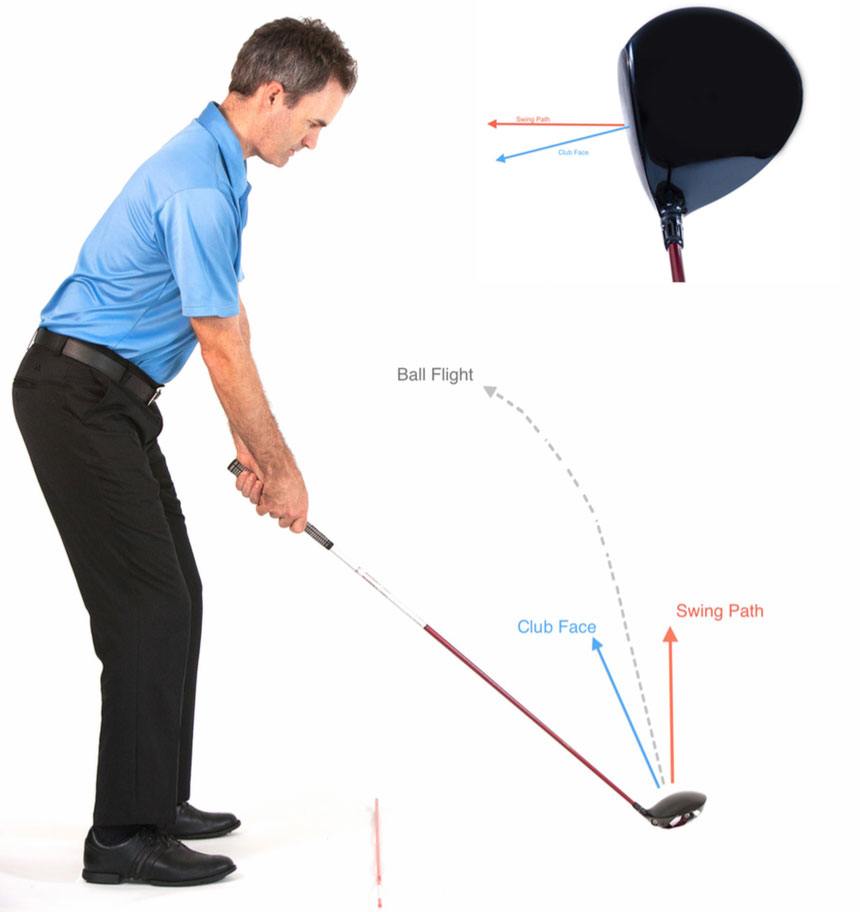
Image Source: about-golf.org
Getting Ready to Hit a Hook
The hook shot starts before you even swing. Your setup and grip are very important. Small changes here set the stage for your swing path and club face angle.
Your Stance and Alignment
To hit a hook, you want to encourage an inside out swing path. This means the club moves from inside the target line through impact and then back outside.
Here’s how to stand:
- Aim your body right: For a right-handed golfer, set your feet, hips, and shoulders to point a bit right of where you want the ball to end up. Imagine railroad tracks. The ball line is one track. Your body line is another track, pointing right of the first one.
- Aim the club face at the target: Even though your body aims right, make sure the club face is pointing straight at your final target when you set up. This difference between where your body aims and where the club face points is very important. Your body alignment sets your swing path. The club face alignment at address hints at its position at impact.
This setup makes your body want to swing along its line (right of the target). But your goal is to hit the ball towards the target line. This puts the club on an inside path relative to the target at impact.
Your Grip Adjustments
Your grip controls the club face angle. To hit a hook, you need the club face to be closed relative to your swing path at impact. A closed clubface points left of the swing path (for a righty).
Here’s how to adjust your grip:
- Strengthen your grip: For a right-handed golfer, this means turning your left hand slightly to the right on the club. You should be able to see more knuckles on your left hand (maybe three or four) when looking down.
- Put your right hand on correctly: Your right hand should fit over your left thumb. The V shape made by your right thumb and forefinger should point towards your right shoulder or slightly outside it.
A stronger grip helps you close the club face more easily through impact. This is key to creating the leftward curve needed for a hook shot. Practice holding the club with this stronger grip to make it feel normal. It might feel strange at first.
Ball Position Matters
Where you place the ball in your stance also helps.
- Move the ball slightly back: For a right-handed golfer, placing the ball a little further back in your stance (towards your right foot) can help you hit the ball with the club face angle slightly closed relative to the swing path. It encourages you to hit the ball a moment later in your swing arc.
Table: Setup for a Hook (Right-Handed Golfer)
| Part of Setup | Adjustment Needed | Reason |
|---|---|---|
| Body Aim | Aim feet, hips, shoulders right of target | Sets up inside out swing path |
| Club Face Aim | Point club face directly at target | Helps control final direction |
| Grip | Strengthen left hand (show more knuckles) | Makes closing the face easier |
| Ball Position | Move slightly back in stance (towards right foot) | Helps hit the ball with a closed face |
Grasping Golf Swing Mechanics for a Hook
Now that you are set up, let’s talk about the swing itself. The golf swing mechanics for a hook involve making sure your swing path and club face angle are correct at impact.
The Swing Path
The swing path is the direction the club head moves as it hits the ball. For a hook (or draw), you need an inside out swing path.
- How to get inside out: Your setup with your body aimed right helps a lot. As you swing down, feel like you are swinging the club out towards where your body is aimed (right of the target).
- Feel the path: Imagine hitting the ball and then swinging the club head out towards first base if you are hitting a baseball (for a righty). The club head should be moving from inside the target line, hitting the ball, and then continuing to move outside the target line just after impact.
Your swing path sets the starting direction of the ball. For a hook, the ball should start right of the target. This requires a swing path that is moving right at impact.
The Club Face Angle
The club face angle at impact, relative to the swing path, creates the curve of the ball. For a hook, the club face must be closed relative to the swing path.
- Club face aim: If your swing path is moving 5 degrees to the right of the target line at impact, the club face needs to be pointing less than 5 degrees right of the target line (or even slightly left of the target line) at impact.
- Example: Path is 5 degrees right. If face is 3 degrees right, the face is closed relative to the path (5 > 3). This will cause a draw/hook. If face is 0 degrees (at target), it’s also closed relative to the path. If face is 6 degrees right, it’s open relative to the path (5 < 6), causing a slice.
The stronger grip helps you close the club face naturally as you swing through the ball. You don’t want to just flip your wrists. You want a feeling of releasing the club head so the face closes smoothly through impact.
Bringing Path and Face Together
The magic happens when the inside out swing path meets the closed clubface.
- Swing Path direction: This mainly controls where the ball starts. An inside out path starts the ball right (for a righty).
- Club Face direction relative to path: This mainly controls how the ball curves. A club face pointing left of the path makes the ball curve left (for a righty).
So, for a hook:
1. Swing path goes right of the target line.
2. Club face points left of the swing path but usually right of the target line (or slightly left, depending on the hook strength).
This combination makes the ball start right and curve back left.
How Release Affects the Shot
The release is how your hands and arms work through the impact zone. For a draw or hook, a good release helps square or close the club face.
- Passive vs. Active Release: A more passive release might leave the face open. An active release, where your hands and forearms rotate through impact, helps close the club face.
- Feeling the Release: Imagine your right hand rotating over your left hand just after you hit the ball. This motion helps square the club face quickly. The stronger grip makes this motion more effective at closing the face.
Deciphering Ball Flight Laws
To truly hit a hook on command, you need to understand the simple rules of how the ball flies. Ball flight laws explain why the ball goes where it goes and curves how it curves.
The main things that control the ball’s flight are:
1. The direction of the club face at impact.
2. The direction of the swing path at impact.
3. The angle of attack (up or down swing).
4. The center-ness of the hit on the club face.
For side spin and curve (like a hook), the first two are most important:
- Starting Direction: For most shots with irons and woods, the club face angle at impact is the biggest factor in the ball’s starting direction. If the face points 5 degrees right, the ball starts close to 5 degrees right.
- Curvature: The difference between the swing path and the club face angle causes the curve. If the club face points left of the swing path, the ball curves left. If the club face points right of the swing path, the ball curves right (a slice).
Ball Flight for a Hook (Right-Handed)
- Swing Path: Inside-out (moving right of the target line at impact). Let’s say it’s 5 degrees right.
- Club Face Angle: Needs to be closed relative to the path. So, it must be pointing less than 5 degrees right of the target line at impact. Let’s say it’s pointing 2 degrees right of the target line.
- Result: The ball starts slightly right (because the face points 2 degrees right). The face (2 degrees right) is left of the path (5 degrees right). Face is closed to path. This causes the ball to curve left.
The ball starts right and curves left. This is a hook or a draw. The amount of curve depends on how much the club face is closed relative to the path. More closed means more curve.
Mastering the Inside Out Swing
Developing a good inside out swing is key to hitting a hook. It feels different than swinging straight down the target line.
The Takeaway
Start the swing by taking the club back low and inside. Don’t lift the club head up steeply. Feel like the club head stays slightly behind your hands. This starts the club on an inside path from the beginning.
The Downswing
This is where the inside out path is created.
- Feel the weight shift: As you start down, shift your weight to your left side.
- Drop the hands: Instead of coming over the top (swinging outside-in), feel like your hands drop down towards your right pocket or thigh. This helps keep the club on an inside path.
- Swing to the right: Imagine you are hitting the ball and then swinging out towards right field (for a righty). The club head should move out away from your body after impact.
Practice Drills for Inside Out Path
- Alignment sticks: Place an alignment stick on the ground pointing at your target. Place another stick a few inches inside and parallel to the first one. When you swing, try to keep the club head between the two sticks during the backswing and downswing through impact. You can also place a headcover or obstacle outside the ball to force you to swing from the inside.
- Gate drill: Place two objects (like tees) just wider than your club head on either side of the ball, slightly ahead of the ball. This creates a “gate” you must swing through. To hit a hook, you’d set up for an inside path and aim to swing through the gate while closing the face.
Table: Common Swing Path Types and Results (Right-Handed Golfer)
| Swing Path | Club Face Angle (Relative to Path) | Ball Starts | Ball Curves | Shot Type |
|---|---|---|---|---|
| Inside-Out | Open (Right of path) | Right | Right | Push Slice |
| Inside-Out | Closed (Left of path) | Right | Left | Draw/Hook |
| Straight | Open (Right of path) | Straight | Right | Fade/Slice |
| Straight | Closed (Left of path) | Straight | Left | Pull Hook |
| Outside-In | Open (Right of path) | Left | Right | Pull Slice |
| Outside-In | Closed (Left of path) | Left | Left | Pull Hook/Snap Hook |
How to Use a Closed Clubface at Impact
Having the club face closed relative to your swing path at impact is crucial for the hook. This doesn’t mean the face is pointing way left of the target. It means it’s pointing left of the direction your club is moving.
Controlling the Club Face
- Stronger Grip: As discussed, this is the first step. It puts your hands in a position that makes it easier to rotate the club face closed.
- Rotation of Forearms: Through impact, your forearms should rotate. For a right-handed golfer, the left forearm rotates over the right forearm. This rotation helps square the club face or even close it past square relative to the path.
- Feeling the Release: Think about throwing a Frisbee low and left (for a righty). That forearm rotation is similar to what you need in your golf swing release to close the face.
Avoiding Common Club Face Mistakes
- Leaving the face open: This happens if you don’t rotate your forearms enough or if your grip is too weak. It leads to pushes or slices.
- Flipping the wrists: Too much wrist action without forearm rotation can make the face shut down too early or be inconsistent. Focus on forearm rotation through the ball.
Remember, the difference between path and face matters most for curve. For a hook, the face needs to be left of the path. The absolute direction of the face determines the start direction.
Practicing and Fixing a Golf Hook (Intentional vs. Accidental)
Sometimes, a hook happens by accident. This is usually caused by a swing path that is too far inside-out combined with a club face that is too closed. You want to hit a controlled hook, not a snap hook that goes wildly left.
Intentional Hook Practice
- Start small: Don’t try to hit a huge hook at first. Start with a small draw (a slight curve left). Use your setup (body aimed slightly right, face at target, slightly stronger grip). Swing on your normal path, focusing on a good release.
- Increase the curve: To hit a bigger hook, increase your body alignment to the right and maybe slightly strengthen your grip more. Really focus on swinging out to the right and releasing the club face.
- Range time: Spend time on the driving range hitting shots and watching the ball flight. Pay attention to where the ball starts and how much it curves. Adjust your setup, path feel, and release based on the result.
- Use alignment aids: Practice with alignment sticks to check your body aim and swing path.
Fixing an Accidental Hook
If you are accidentally hitting hooks, it means your swing path is too inside-out and your club face is too closed relative to that path for a straight shot.
To fix an accidental hook:
- Check your setup: Are you aiming your body too far right? Are you aiming the club face too far left?
- Weaken your grip slightly: If your grip is too strong, it can cause the face to close too much.
- Adjust your swing path: Try to feel like you are swinging more along the target line, not so much to the right. This might involve feeling less “stuck” on your downswing and bringing the club more down in front of you.
- Control the club face: Ensure you are not overly rotating your hands or flipping the club head at impact. Focus on keeping the club face more square to the target line through impact if you want a straight shot or a gentle fade.
Table: Differences Between Intentional Hook and Accidental Hook
| Feature | Intentional Hook | Accidental Hook |
|---|---|---|
| Setup Aim (Body) | Right of target | Often square or slightly right |
| Club Face Aim | At target (or slightly open) | Often at target or left |
| Swing Path | Purposefully Inside-Out | Often Too far Inside-Out |
| Club Face @ Impact | Closed relative to path | Too Closed relative to path |
| Control | High – repeatable shape | Low – unpredictable shape |
| Starting Point | Predictably right of target | Can start left or right |
| Curve Amount | Controlled, matches needed shape | Often excessive or snap hook |
Learning to hit a hook effectively helps you fix an unwanted hook too. You learn the cause and effect of swing path, club face angle, and ball flight laws.
Shaping Golf Shots: Why Hit a Hook?
Learning to shape golf shots like hooks and fades (the opposite shot, curving right for a righty) makes you a more complete player. Why would you want to hit a hook?
- Around obstacles: The most common reason. If a tree is blocking your direct line to the green, you can start the ball right of the tree and curve it around.
- Finding tucked pins: If the pin is on the left side of the green behind a bunker, a hook allows you to start the ball safely away from the bunker on the right and curve it towards the pin.
- Adding distance: For many players, an inside out swing path with a closed face (a draw/hook shape) can produce a more powerful swing and less backspin, leading to more distance, especially with a driver.
- Controlling rollout: A hook shot tends to land and roll out more than a fade shot, which often stops quicker due to more backspin. This can be useful on firm fairways or when you need the ball to run onto the green.
- Playing in wind: Sometimes, hitting a controlled draw into a left-to-right wind can help the ball fight the wind and hold its line better than a straight shot or a fade.
Learning to shape shots adds another tool to your golf bag. It gives you options on the course you didn’t have before.
Refining Your Technique
Once you can hit a hook, you can work on controlling its size.
- Small Draw: Slight body aim right, slightly stronger grip, smooth release. Ball starts slightly right, curves a little left.
- Big Hook: More body aim right, stronger grip, more active release feeling. Ball starts further right, curves a lot left.
Practice hitting different amounts of curve. This helps you develop feel and control over your swing path and club face.
Use Technology
- Launch monitors: Devices like TrackMan or SkyTrak give you exact numbers for swing path, club face angle, ball speed, spin, etc. This takes the guesswork out and shows you exactly what you are doing. They tell you the numbers behind the ball flight laws.
- Video analysis: Recording your swing helps you see if your body is aligned correctly and if your swing path looks inside out.
Get Help
Consider a lesson from a golf pro. They can watch your swing and tell you exactly what adjustments you need to make to hit a hook intentionally or fix an unwanted one. They can guide you on your grip, setup, swing mechanics, and release.
Step-by-Step Guide to Hitting a Hook
Here is a summary of the steps to hit an intentional hook:
- Identify the need: Decide if a hook is the right shot for the situation (around a tree, tucked pin).
- Choose your target: Pick the spot where you want the ball to end up.
- Pick your starting point: Select a spot to the right of your target where you want the ball to begin its flight.
- Set up your body: Aim your feet, hips, and shoulders along a line pointing at your starting point (right of the target).
- Set the club face: Point the club face directly at your final target.
- Adjust your grip: Take a slightly stronger grip (more knuckles visible on the left hand for a righty).
- Adjust ball position (optional but helpful): Move the ball slightly back in your stance.
- Start your swing: Take the club back slightly more to the inside.
- Swing down inside-out: On the downswing, feel like you are swinging out towards where your body is aimed (your starting point).
- Release the club face: As you swing through impact, allow your forearms to rotate, closing the club face relative to your swing path.
- Follow through: Complete your swing, finishing with your body facing the target.
- Watch the ball flight: Observe where the ball starts and how it curves. Adjust on the next shot based on the result.
Common Mistakes When Trying to Hook the Ball
Trying to hit a hook can go wrong in a few ways.
- Aiming the club face left: If you aim your body right but also aim the club face left of the target, you’ll likely pull the ball left. The club face needs to be at or slightly right of the target line at impact to start the ball right.
- Not swinging inside-out: Just aiming your body right isn’t enough. You need to make the swing path follow that alignment. If you swing outside-in from this setup, you’ll hit a pull-slice.
- Flipping or Hooding: Trying too hard to close the face by flipping your wrists or turning the club face down too early can lead to low, uncontrollable hooks (snap hooks). Focus on forearm rotation.
- Hitting from too far inside: If your path is extremely inside-out, it’s hard to time the club face closing correctly. Practice controlling the amount of inside-out path.
- Not committing: You need to fully commit to the setup and swing shape. Hesitation leads to poor contact and inconsistent results.
It takes practice to match the swing path and club face angle to produce a controlled hook.
Maintaining Your Hook Shot Skill
Like any golf skill, hitting a hook takes practice to keep.
- Regular practice: Spend some time on the range specifically hitting hooks. Try hitting different clubs. The shape might be harder to create with shorter irons than with longer clubs or drivers.
- Course practice: When playing a practice round or when the situation allows without penalty, try hitting a hook when it’s not strictly necessary just to keep the feel.
- Understand the feel: Pay attention to how it feels when you hit a good hook. What was your setup? How did the swing path feel? How did the release feel? Try to recreate that feel.
Frequently Asked Questions
Q: What is the main difference between a hook and a slice?
A: A hook curves left for a right-handed golfer, while a slice curves right. A hook happens when the club face is closed relative to the swing path. A slice happens when the club face is open relative to the swing path.
Q: Will hitting a hook help me hit the ball further?
A: For many amateur golfers who struggle with a slice, learning to hit a draw (a gentle hook) often increases distance. This is because the swing path is more efficient (inside-out), and the ball tends to have less spin and a lower trajectory, leading to more rollout.
Q: Is a hook always a bad shot?
A: No, not at all. An intentional hook is a valuable shot shape used to get around obstacles or access certain pin positions. An accidental hook, often called a snap hook, is usually a bad shot because it’s out of control.
Q: How does the club face angle relate to the swing path for a hook?
A: For a hook, the club face must be pointing to the left of the swing path direction at impact (for a right-handed golfer). For example, if your path is 5 degrees right of the target, your face might be 2 degrees right of the target. The face (2 degrees right) is left of the path (5 degrees right), causing the left curve.
Q: Can I hit a hook with any club?
A: Yes, you can hit a hook with any club, from a driver to a short iron. However, shaping shots like hooks is generally easier with longer clubs (woods and long irons) due to their lower loft. It takes more skill and practice to hit a significant hook with a wedge.
Q: Is hitting a hook harder than hitting a fade?
A: It depends on your natural swing tendencies. Many golfers naturally swing outside-in, making a fade easier. Golfers with a natural inside-out path might find a hook easier. Learning both gives you maximum control on the course.
Conclusion
Learning how to hit a hook effectively, or drawing the ball, is a great step towards becoming a more complete golfer. It requires specific changes to your setup and golf swing mechanics, focusing on an inside out swing path and a closed clubface relative to that path at impact. By understanding the ball flight laws and practicing your setup, grip, swing path, and release, you can learn to shape golf shots on command. Whether you need to work the ball around a tree or just want to add distance, mastering the intentional hook gives you more options and more control on the golf course. Practice the steps outlined in this guide, be patient, and soon you’ll be drawing the ball right where you want it.