
Image Source: cdn.shopify.com
Play Better: How To Get Fitted For Golf Grips Pro Tips
What is golf grip sizing? It means finding the right size grip for your golf clubs. This fit matches your hands. Why is correct grip size important? It helps you swing better. You feel more comfortable. It can stop bad shots. Can I measure my golf grip size at home? Yes, you can do this yourself. We will show you how. Who offers professional golf grip fitting? Many golf shops and pro stores have experts. They can fit you perfectly.
Grasping Grip Importance: Why Size Matters
Your grip is the only part of your body touching the golf club. This makes it super important. A golf grip that fits well helps your game. It gives you many benefits.
Hitting with More Control
A good grip size helps you hold the club lightly. You do not need to squeeze it hard. This lets your wrists work freely. You get better control of the club head. This means straighter shots.
Playing with Less Tension
If your grip is too small, you squeeze too much. This causes tension in your hands. This tension goes up your arms. It gets into your shoulders. Tension makes it hard to swing smoothly. It hurts your power. A proper grip size lets your hands relax. This means less tension. You swing with ease.
Feeling the Club More Clearly
The right grip size gives you a good feel for the club. You sense where the club head is. You feel how it moves. This helps you hit the ball squarely. It helps you control the club face. Better feel means better shots.
Avoiding Hand Pain and Injuries
Wrong grip size can hurt your hands. It can hurt your wrists or elbows. Too much squeezing can lead to pain. It can cause problems like golfer’s elbow. A grip that fits well spreads pressure evenly. This saves your body. It helps you play without pain.
Boosting Your Consistency
A good grip lets you repeat your swing easily. Your hands stay in the right spot. You make the same swing each time. This means more good shots. It means more shots that go where you want them. Consistency is key in golf. Proper grip size helps you get it.
Finding Your Fit: The Hand Measurement For Golf Grips
Your hand size tells you a lot. It is the key to finding your ideal grip. You need to take some simple measurements. There are a few ways to do this.
Method 1: The Simple Finger-Wrap Test
This is a quick way to check your current grip.
- Hold a club: Pick up a golf club. Use your normal golf grip. If you are right-handed, this is your left hand. If you are left-handed, use your right hand.
- Check your fingers: Look at your middle two fingers. Are they wrapping around the grip? Are they just touching your palm?
- What to look for:
- Fingers dig into palm: If your fingers dig deep into your palm, the grip is too small. You are squeezing it too tightly.
- Small gap: If your fingers just touch your palm, the size is likely good. This is the ideal fit.
- Big gap: If there is a clear gap between your fingers and palm, the grip is too big. You cannot get a firm hold.
This test gives you a quick idea. But it is not always perfect.
Method 2: The Exact Hand Measurement
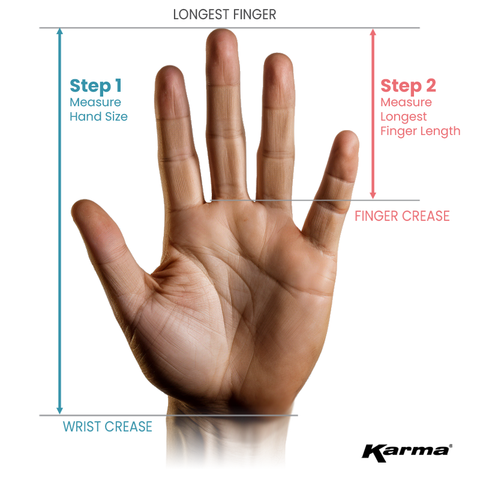
This method is more precise. It helps you use a golf grip fitting chart. You will need a ruler or a tape measure.
- Measure your hand length:
- Put your hand flat. Point your middle finger straight.
- Place the ruler at the tip of your middle finger.
- Measure down to the bottom of your palm. This is where your wrist starts.
- Write this number down. This is your hand length.
- Measure your finger length:
- Place the ruler at the main crease of your wrist. This is the line where your hand bends.
- Measure up to the tip of your middle finger.
- Write this number down. This is your finger length.
These two numbers are very important. They help you find the correct grip size.
Navigating the Grip Fitting Guide and Chart
Grip size does not just depend on your hand length. It also depends on your finger length. The grip fitting guide uses both. It helps you find a starting point. Here is a common golf grip fitting chart. This chart shows general guidelines.
| Hand Length (inches) | Finger Length (inches) | Recommended Grip Size | Common User | Notes |
|---|---|---|---|---|
| Up to 7.0 | Up to 6.0 | Undersize (Junior) | Children, very small adult hands | Thinner grips for a firm hold. |
| 7.0 – 8.25 | 6.0 – 7.0 | Standard | Most adult male and female golfers | The most common grip size. |
| 8.25 – 9.25 | 7.0 – 8.0 | Midsize | Larger hands, players preferring less finger wrap | Thicker than standard. |
| Over 9.25 | Over 8.0 | Jumbo (Oversize) | Very large hands, players with arthritis | Helps reduce grip pressure. |
This table is a general guide. Different grip brands may have small differences.
How to use the chart: Find your hand length in the first column. Then find your finger length in the second column. This will point to your recommended grip size. For example, if your hand is 8.0 inches long and your middle finger is 6.5 inches, a Standard grip is likely best.
Deciphering Golf Grip Thickness and Layers
The overall golf grip thickness is very important. It is not just about the outer rubber. It also comes from the tape layers underneath. This tape is called “build-up” tape.
- Most grips come with one layer of tape. This is the “standard” setup.
- You can add more layers of tape. Each layer makes the grip bigger.
- One extra layer of tape adds about 1/64 inch to the grip’s size.
- This lets you fine-tune the fit. You can make it exactly right for you.
How Tape Affects Grip Size
- Standard Grip: This usually means one base wrap of tape.
- Midsize Grip: A midsize grip can be made in two ways.
- It can be a standard grip. Then 2 to 4 extra tape wraps are added.
- Or, it can be a grip made with a naturally thicker core. This grip is already midsize.
- Jumbo Grip: This can also be a standard grip with many extra wraps of tape. Or it can be a grip made with a very thick core.
Pros use tape to get the perfect golf grip sizing. They can add tape under specific parts of the grip. This helps if your hand shape is unusual. For example, if your lower hand needs more thickness.
Standard Vs. Midsize Grips: Which Is For You?
These are the most common grip sizes you will hear about. It is important to know the difference.
- Standard grips: These are the most common size. They fit most golfers well. If your hand length falls in the “Standard” range on the chart, this is likely for you.
- Midsize grips: These grips are thicker than standard grips. They suit players with larger hands. They also help players who prefer less “finger wrap” around the grip. If your hand is at the upper end of “Standard” or into “Midsize” on the chart, try a midsize.
How to choose between them:
- Check your hand measurement: Look at the golf grip fitting chart. See what it suggests first.
- The finger-wrap test: Try holding a club with a standard grip. Then try one with a midsize grip. Which one feels better? Which one lets your fingers just touch your palm?
- Consider your feel: Do you like to feel more of your fingers around the club? Or do you prefer a thicker, fuller feel?
Other Grip Sizes to Know
- Undersize / Junior: These grips are thinner than standard grips. They are for children. They are also for adults with very small hands.
- Jumbo / Oversize: These grips are much thicker than midsize grips. They are for golfers with very large hands. They are also popular for players with arthritis. The thicker grip helps reduce grip pressure. This can ease pain. It also helps some golfers who tend to grip too hard.
The goal is to find the correct grip size that feels natural. It should let you hold the club lightly.
The Professional Golf Grip Fitting Process
Getting a professional golf grip fitting is the best way to ensure a perfect match. A pro fitter has special tools. They have years of experience. They can see things you might miss.
Steps a Professional Fitter Takes:
- Talk about your game: The fitter will ask you questions. What are your golf goals? What feels good with your current grips? What feels bad? Do you have any hand pain?
- Measure your hands precisely: They use a golf grip measurement tool. This might be a special ruler, a caliper, or a digital device. They get very exact numbers for your palm and finger length. These numbers are used with a detailed golf grip fitting chart.
- Observe your current grip: The fitter will watch how you hold the club. Do you squeeze too hard? Are your hands slipping? Do your fingers look too wrapped or too open?
- Watch your swing: They may have you hit some balls. They watch your hands during the swing. They look for tension. They see how your hands react to the club.
- Let you try different grips: This is a key step. The fitter will put different size grips on clubs. You will swing them. You feel the difference. They may try different golf grip thickness setups. This includes adding different layers of tape.
- Suggest the right size and type: The fitter combines all this info. They tell you the best grip size for you. They also suggest specific grip models. Some grips are soft. Some are firm. Some have more texture. Some are better in wet weather. They choose what is best for you.
- Install the grips: Once you decide, the fitter will put the new grips on all your clubs. They do this with care. This makes sure the grips are on straight and secure.
A pro fitting is not just about size. It is about feel, material, and player needs. They can guide you to grips that truly help your game.
Deciding: DIY or Professional Fitting?
You have options when it comes to getting new grips.
DIY (Do It Yourself) Grip Fitting
- Pros:
- Cheaper: You only pay for the grips. You do the work yourself.
- You learn: You learn about your hands and grip sizes.
- Convenient: You can do it when you want.
- Cons:
- Hard to get perfect: It is tough to get the exact right fit. You might miss small details.
- Need tools: You need a golf grip measurement tool. You also need grip tape, grip solvent, and a vise to install them.
- Less choice: You might not have access to many grip types or sizes to try.
Professional Golf Grip Fitting
- Pros:
- Most accurate fit: Experts use precise tools and knowledge. They get it right.
- Expert advice: They give you personal tips. They help you choose the best grip for your game.
- Many options: They have many types and sizes of grips to try.
- Proper installation: They install the grips correctly.
- Cons:
- Costs more: You pay for the grips and the fitting service.
Which should you choose? If you are a new golfer, or if you want to save money, DIY is fine. But if you are serious about golf, a professional golf grip fitting is very much worth the cost. It can make a huge difference in how you play. It is an investment in your game.
Beyond Size: Grip Material and Texture
While golf grip sizing is key, the grip’s material and texture also matter. They affect feel and how well you can hold the club.
- Rubber Grips:
- Feel: Soft to medium feel.
- Use: Very common. Good for most weather.
- Pros: Good vibration dampening. Many colors.
- Cons: Can get slick when wet.
- Cord Grips:
- Feel: Firmer feel. Has fabric threads woven into the rubber.
- Use: Excellent in wet or humid weather. The cord helps wick away moisture.
- Pros: Very good traction. Durable.
- Cons: Can be rough on hands.
- Hybrid Grips:
- Feel: Mix of rubber and cord. Often cord on the top (for the top hand) and rubber on the bottom (for the lower hand).
- Use: Best of both worlds. Good for many conditions.
- Pros: Good balance of feel and grip.
- Cons: Can be more expensive.
- Wrap Grips:
- Feel: Made to feel like old leather wraps. Very cushioned and soft.
- Use: Good for players who want a soft feel.
- Pros: Comfortable. Classic look.
- Cons: Can wear out faster. May not be as good in wet weather.
How to choose material: Think about your hands. Do you sweat a lot? Do you like a soft feel or a firm feel? Do you play in rain often? Discuss these things with your fitter.
Care and Keeping: Making Your Grips Last
Even the correct grip size will not last forever if you do not care for it. Clean grips last longer. They also perform better.
- Clean them often: Dirt, oils from your skin, and sunscreen build up. This makes grips slick. Clean them every few weeks, or after every 5-10 rounds.
- How to clean:
- Use mild soap (like dish soap) and warm water.
- Use a soft brush (like a toothbrush) or a cloth.
- Scrub the grip gently but firmly.
- Rinse them well with clean water.
- Let them air dry completely before use. Do not use heat to dry them.
- Store clubs well: Do not leave clubs in a very hot car trunk. High heat damages grips. It makes them hard and shiny faster. Store them in a cool, dry place.
Good care keeps your grips tacky. This helps you maintain the benefits of proper grip size.
When to Regrip Your Clubs
Grips do not last forever. They wear out. They lose their tackiness and firmness. This makes it harder to hold the club.
- Rule of thumb: You should regrip your clubs every 40 rounds. Or, change them at least once a year. Even if you do not play much, the grip material still breaks down over time.
- Signs you need new grips:
- Slick feel: The grip feels slippery, even when clean.
- Hard or shiny: The grip feels hard. It looks shiny in spots.
- Cracks or wear spots: You see cracks, flat spots, or holes.
- Loss of tackiness: The grip does not feel sticky anymore.
- Increased tension: You find yourself squeezing harder to hold the club. This is a clear sign your grips are worn.
New grips are like new tires on a car. They give you better control. They make the club feel fresh. It is one of the cheapest ways to improve your golf game. Do not wait until your grips are terrible. Change them regularly. This helps you keep the benefits of proper grip size all year long.
Frequently Asked Questions (FAQ)
Q1: Can grip size really make a big difference in my golf game?
A1: Yes, a very big difference! The right grip size lets you hold the club lightly. It stops you from gripping too hard. This means you can swing faster. You get more power. You also hit the ball more squarely. This leads to more consistent shots.
Q2: How do I know if my golf grip is too small for my hands?
A2: If your fingers dig into your palm when you hold the club, the grip is too small. You will also feel like you have to squeeze the club very hard to keep control. This causes tension.
Q3: How do I know if my golf grip is too big for my hands?
A3: If there is a gap between your fingers and your palm when you hold the club, the grip is too big. You might also feel like you cannot fully close your hand around the club. This makes it hard to control the club face.
Q4: Do all my golf clubs need the same grip size?
A4: Yes, almost always. Your hands are the same size for every club in your bag. Keeping grip sizes the same helps your feel. It makes your swing consistent across all your clubs. This is key for good play.
Q5: How much does a professional golf grip fitting typically cost?
A5: The cost can vary. Some golf stores offer a basic fitting for free if you buy grips from them. Others may charge a small fee, perhaps $25-$50. The cost is usually worth it for the expert advice.
Q6: What is a golf grip measurement tool?
A6: A golf grip measurement tool is a device used to measure your hand dimensions. This can be a special ruler, a caliper, or a digital tool. It helps fitters find your correct grip size with great accuracy.
Q7: Can cold weather affect my golf grip’s performance?
A7: Yes. Cold weather can make grips feel harder. They can also lose some tackiness. This means they might feel more slippery. Many golfers use winter gloves or softer grips in cold conditions.
Q8: What is “build-up” tape in golf grip fitting?
A8: “Build-up” tape is extra layers of tape. It is wrapped around the shaft before the new grip is put on. Each layer increases the golf grip thickness. This helps fine-tune the golf grip sizing for a perfect, custom fit.
Conclusion
Finding your correct grip size is a very important step. It is key to playing better golf. It improves your control. It boosts your comfort. It can even stop pain. Use a grip fitting guide. Measure your hands with care. Look at a golf grip fitting chart. Think about if standard vs midsize grips are right for you. For the very best fit, see a pro for professional golf grip fitting. A proper grip setup is an easy way to play better. It is a small change that makes a big impact.