
How To Choose A Golf Shaft For Better Performance
What is a golf shaft? It is the long, thin part of a golf club that connects the grip to the clubhead. Why is it important? The shaft is key to how the club feels and performs. It helps you hit the ball far and straight. Can it help my game? Yes, picking the right shaft can greatly improve your shots. It can boost your distance, make your shots more accurate, and give you a better feel.
When you play golf, many things affect your swing and how the ball flies. You think about the clubhead, the grip, and even your shoes. But one part often gets little thought: the golf shaft. This simple tube is more than just a stick. It is the engine of your club. It stores and releases energy. It changes how the clubhead moves through the air. A well-chosen shaft can make your golf game much better. A poor one can hold you back. Let’s look closely at how to pick the best shaft for your swing.
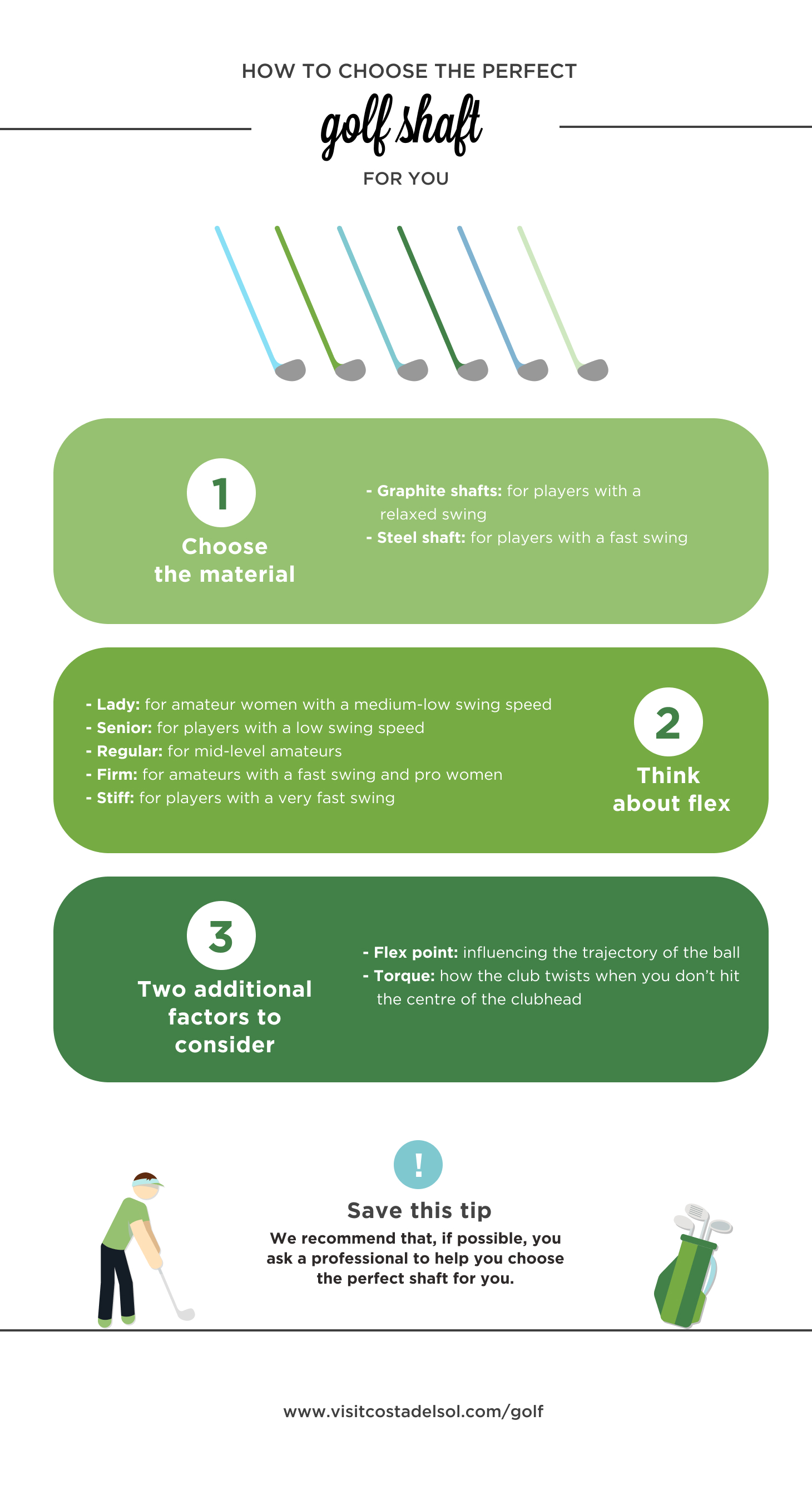
Image Source: blog.visitacostadelsol.com
Finding Your Perfect Golf Shaft
Choosing a golf shaft is not a one-size-fits-all task. What works for a tour pro may not work for a weekend player. Your swing is special. Your shaft should be too. The right shaft helps your clubhead meet the ball perfectly. This means more speed, better control, and straighter shots. It helps you hit the sweet spot more often. This feels good and leads to better scores.
Many factors go into picking the right shaft. We will look at each one. We will see how each part affects your swing and ball flight. By the end, you will know what to look for. You will understand how to get a shaft that fits you like a glove. This knowledge will help you play your best golf.
The Core Elements of a Golf Shaft
Each part of a golf shaft plays a role. They all work together. Let’s break down these important features.
Shaft Flex: The Golf Shaft Flex Guide
What is shaft flex? It is how much the shaft bends during your swing. It bends back and forth. This bending happens when you start your downswing and as you hit the ball. The flex affects how the clubhead gets to the ball. It also affects the angle of the clubface at impact. This is very important for how the ball flies.
Shafts come in different flexes. These are usually marked with a letter. Here are the common ones:
- L (Ladies): These shafts are very flexible. They are for slower swing speeds.
- A (Senior/Amateur): A bit stiffer than L. Good for seniors or those with slower, smooth swings.
- R (Regular): A common choice. Good for average swing speeds.
- S (Stiff): Less flexible. For faster, stronger swings.
- X (Extra Stiff): Very stiff. For very fast, powerful swings.
- TX (Tour Extra Stiff): The stiffest. For the fastest, most powerful swings.
Why flex matters:
- Too much flex (too soft): The shaft bends too much. The clubhead may close too quickly. This can lead to hooks (ball curves left for right-handed players). It can also cause high shots with too much spin. You might feel like you lose control.
- Too little flex (too stiff): The shaft does not bend enough. The clubhead may stay open. This can lead to slices (ball curves right for right-handed players). It can also cause low shots with too little spin. This means less distance. You might feel like you have to work harder.
The right flex helps you hit the ball squarely. It helps you get the right ball flight. It makes the club feel good in your hands. A good golf shaft flex guide will always link flex to swing speed.
Swing Speed: Your Key to Matching
Your swing speed is how fast your clubhead moves just before it hits the ball. This is the main factor in choosing shaft flex. Knowing your swing speed is the first step to picking the right shaft.
How to measure swing speed:
- Launch Monitor: This is the best way. Tools like Trackman, Foresight, or even smaller home devices can measure your clubhead speed.
- Professional Fitter: A good club fitter will have a launch monitor. They can measure your speed accurately. They will also watch your swing.
- Playing Experience: You can guess your swing speed based on how far you hit your driver. But this is not as exact.
Here is a general guide for swing speed and shaft recommendations:
| Swing Speed (Driver) | Recommended Shaft Flex | Example Distance (Driver) |
|---|---|---|
| Below 70 mph | Ladies (L) | Less than 170 yards |
| 70-80 mph | Senior (A) | 170-200 yards |
| 80-90 mph | Regular (R) | 200-230 yards |
| 90-105 mph | Stiff (S) | 230-260 yards |
| 105-115 mph | Extra Stiff (X) | 260-280 yards |
| 115+ mph | Tour Extra Stiff (TX) | 280+ yards |
Remember, this is a guide. Your personal feel and ball flight are also important. A professional fitting will fine-tune these swing speed shaft recommendations. They will find the perfect match for you.
Graphite vs Steel Golf Shafts: A Comparison
The material of your golf shaft makes a big difference. The two main types are graphite and steel. Each has its own features. The choice depends on your clubs, your swing, and what you want from your game. This is a big part of any golf shaft material comparison.
Steel Golf Shafts:
- What they are: Made of steel. They are heavier and stronger.
- Pros:
- Control: Offer great feel and control. You can feel the clubhead better. This helps with accuracy.
- Durability: Very tough and last a long time.
- Cost: Often less expensive than graphite shafts.
- Consistency: Provide a very stable and consistent feel.
- Cons:
- Weight: Much heavier than graphite. This can slow down your swing.
- Vibration: Can send more shock to your hands on off-center hits. This can be hard on your joints.
- Best for: Irons and wedges. Also for golfers who want maximum control and feel. Often chosen by skilled players and pros. They usually have faster swing speeds.
Graphite Golf Shafts:
- What they are: Made from layers of carbon fiber. They are very light.
- Pros:
- Weight: Much lighter than steel. This can help you swing faster. Faster swing means more distance.
- Vibration Absorption: Absorbs shock better. This makes them more comfortable, especially for golfers with joint pain.
- Distance: The lighter weight can lead to higher clubhead speed. This can mean more yards on your shots.
- Flexibility: Easier to make in different flexes and designs.
- Cons:
- Feel/Control: Can offer less feedback. Some golfers find it harder to feel the clubhead. This can affect control for some.
- Durability: Can break more easily than steel if hit in the wrong spot or bent too far.
- Cost: Usually more expensive than steel shafts.
- Best for: Drivers, fairway woods, and hybrids. Also good for golfers seeking more distance or who need less shock. Often chosen by slower-swinging players, seniors, and women.
Here is a table summarizing the graphite vs steel golf shafts debate:
| Feature | Graphite Shafts | Steel Shafts |
|---|---|---|
| Weight | Lighter (around 40-85 grams) | Heavier (around 90-130+ grams) |
| Distance | Can increase clubhead speed for more distance | Good distance, but less potential for speed gain |
| Feel | Less feedback, smoother feel, less vibration | More feedback, solid feel, more vibration |
| Control | Good, but some pros prefer steel for irons | Excellent, very precise feel and control |
| Cost | Generally more expensive | Generally less expensive |
| Uses | Drivers, woods, hybrids, some irons for speed | Irons, wedges, some putters |
The choice of material often depends on the club type. Most drivers and woods use graphite. Most irons and wedges use steel. But options exist for all clubs.
Kick Point: Where the Bend Happens
The kick point, also called the bend point, is where the shaft bends the most during the swing. It affects how the ball launches and spins. When we talk about kick point golf shaft explained, we look at three main types: low, mid, and high.
- Low Kick Point:
- Where it bends: Closer to the clubhead.
- Effect on ball flight: Helps the ball launch higher. It also adds a bit more spin.
- Who it’s for: Golfers who need more height on their shots. This includes players with slower swing speeds. It can also help those who struggle to get the ball in the air. This often means more carry distance.
- Mid Kick Point:
- Where it bends: In the middle of the shaft.
- Effect on ball flight: Offers a balanced launch. The ball goes neither too high nor too low. It provides a medium amount of spin.
- Who it’s for: A good choice for most golfers. It offers a good mix of height, distance, and control. It works for a wide range of swing speeds.
- High Kick Point:
- Where it bends: Closer to the grip.
- Effect on ball flight: Launches the ball lower. It also reduces spin.
- Who it’s for: Golfers with very fast swing speeds. They already create a lot of height and spin. A high kick point helps keep the ball down. This can give them more roll and better control in windy conditions.
Picking the right kick point helps you get the right ball flight for your game. If you hit the ball too low, a low kick point might help. If you hit it too high, a high kick point could be better.
Golf Shaft Weight: Impacting Feel and Speed
The weight of a golf shaft is measured in grams. It has a big impact on your swing. It affects how fast you can swing the club. It also affects the feel of the club. The golf shaft weight impact is very important.
-
Lighter Shafts (e.g., 40-60 grams for drivers, 70-90 grams for irons):
- Pros:
- Swing Speed: Can help you swing the club faster. This means more clubhead speed. More speed can lead to more distance.
- Ease of Swing: Easier to swing for golfers with slower speeds or less strength.
- Feel: Can feel very quick and lively.
- Cons:
- Control: Can be harder to control for faster swingers. The club might feel too light. This can lead to shots going off-line.
- Consistency: Might be less consistent for some players.
- Best for: Golfers who want more distance. Also for seniors, women, and juniors.
- Pros:
-
Heavier Shafts (e.g., 70-85+ grams for drivers, 100-130+ grams for irons):
- Pros:
- Control: Offers more control and stability. You can feel the clubhead better. This helps with accuracy.
- Consistency: Provides a more consistent feel.
- Feel: Gives a solid, stable feel.
- Cons:
- Swing Speed: Can slow down your swing. This means less distance.
- Effort: Requires more effort to swing.
- Best for: Golfers with faster, stronger swings. Those who prioritize control and accuracy over maximum distance. Often used by tour pros.
- Pros:
The right shaft weight balances distance and control. It helps you swing with ease. It also helps you hit the ball where you aim.
Shaft Torque: The Twist in Your Swing
What is shaft torque golf meaning? Torque is the amount of twist a golf shaft has during the swing. It measures how much the shaft twists around its long axis. This twist happens when you swing the club down and through impact.
- Measured in: Degrees. A lower number means less twist. A higher number means more twist.
- Typical Range: From 2 degrees (very low torque) to 7 degrees (very high torque).
How torque affects your shot:
- Low Torque (e.g., 2-4 degrees):
- Feel: Feels very stable and solid.
- Control: Offers more control. The clubface stays squarer.
- Who it’s for: Golfers with fast, aggressive swings. They load the shaft a lot. They need stability. Often preferred by skilled players.
- Impact: Can be harder on the hands on off-center hits.
- High Torque (e.g., 5-7 degrees):
- Feel: Feels softer and smoother. More forgiving.
- Control: Can allow the clubface to twist more. This can lead to less accuracy for strong swings. But it can help slower swings square the face.
- Who it’s for: Golfers with slower, smoother swings. Those who need more help squaring the clubface. It also dampens vibration.
- Impact: More comfortable on mis-hits.
The right torque helps you square the clubface at impact. This leads to straighter shots. It also affects the feel of the club.
Spin and Launch: Tailoring Your Ball Flight
Shaft features like kick point, weight, and flex all work together to control how your ball flies. Specifically, they affect the launch angle (how high the ball goes) and spin rate (how much the ball spins). Matching these to your swing and desired shot shape is key.
- High Launch Golf Shaft:
- Characteristics: These shafts usually have a low kick point. They might be a bit lighter. They are designed to help the ball get up in the air quickly.
- Who it’s for: Golfers who hit the ball too low. This could be due to slower swing speeds. It can also help if you want more carry distance. This means the ball stays in the air longer.
- Result: A higher, softer landing shot. Good for reaching greens or getting over obstacles.
- Low Spin Driver Shaft:
- Characteristics: These shafts usually have a high kick point. They are often stiffer and might have lower torque. They are designed to reduce the amount of backspin on the ball.
- Who it’s for: Golfers with fast swing speeds. They tend to put too much spin on the ball. Too much spin makes the ball balloon (go too high and stop dead). This reduces distance. A low spin driver shaft helps the ball fly on a flatter path. It gets more roll.
- Result: A penetrating ball flight. It travels farther due to less drag. This means more total distance.
Choosing a shaft based on your desired launch and spin helps fine-tune your shots. It ensures your ball flies in the most effective way for your game.
The Value of Custom Golf Shaft Fitting
After learning about all these shaft features, you might feel a bit lost. How do you put it all together? This is where a custom golf shaft fitting comes in. It is the best way to find your perfect shaft. This is not just for pros. Every golfer can benefit from it.
Why getting fitted is crucial:
- Personalized Match: A fitter uses your swing data. They look at your clubhead speed, ball speed, launch angle, and spin rate. They watch how you deliver the club. This helps them find the shaft that truly fits your swing.
- Optimal Performance: A properly fitted shaft helps you get the most out of your swing. It can lead to more distance. It can lead to better accuracy. It can give you a better feel.
- Confidence: When you know your clubs are right for you, it builds confidence. This helps you swing freely.
- Save Money: Avoid buying clubs that do not fit. A fitting helps you make smart choices the first time.
- Injury Prevention: A shaft that is too stiff or too heavy can put strain on your body. A good fit can help prevent pain or injury.
What happens during a fitting:
- Interview: The fitter will ask about your game. What are your goals? What are your struggles?
- Swing Analysis: You will hit balls. A launch monitor will collect data on your swing and ball flight. The fitter will also watch your swing closely.
- Shaft Testing: The fitter will give you different shafts to try. They will change flex, weight, kick point, and torque. You will hit shots with each one. You will see the data. You will feel the difference.
- Feedback and Selection: You and the fitter will look at the results. You will talk about what feels best and performs best. You will choose the shaft that helps you hit your best shots.
- Club Building: Once chosen, the shaft is put into your club. It is built to your exact specs.
A custom golf shaft fitting takes the guesswork out of shaft selection. It uses science and expert knowledge to find your ideal shaft.
Putting It All Together: Your Shaft Selection Process
Now you know about the key parts of a golf shaft. You also know why a fitting is so important. Let’s look at the steps to choose your shaft.
-
Assess Your Current Game:
- What are your main issues? Are you slicing? Hooking? Hitting it too low or too high?
- Do you want more distance or more control?
- How do your current clubs feel? Do they feel too heavy, too light, too stiff, or too soft?
- Knowing your problems helps you know what to look for.
-
Measure Your Swing Speed (If you can):
- If you have a launch monitor, great! If not, a pro shop or fitting center can help.
- This gives you a good starting point for shaft flex.
-
Consider Your Build and Strength:
- Are you strong and fast? Or do you have a slower, smoother swing?
- This helps guide your initial thoughts on shaft weight and flex.
-
Think About Ball Flight Goals:
- Do you need to launch the ball higher for more carry? Look at lower kick points.
- Do you need to reduce spin to get more roll? Look at higher kick points and low spin driver shafts.
-
Decide on Material (Driver/Woods):
- For drivers and woods, graphite is common. Do you need maximum distance and comfort? Or do you value a bit more control and feedback? Most drivers and woods will use graphite.
- For irons, steel is common. Do you want ultimate control and consistency? Or do you need something lighter and more shock-absorbing? This choice is more varied for irons.
-
Seek a Professional Custom Fitting:
- This is the most important step. An expert fitter will guide you through all the options. They have the tools and knowledge. They will let you try different shafts. They will show you the data.
- This will confirm your choices and fine-tune the shaft to your exact swing. This is where you connect all the data points from your swing to the perfect shaft characteristics. They will make sure you have the right golf shaft material comparison, weight, flex, kick point, and torque.
-
Test and Refine:
- After your fitting, try out your new club on the course or range.
- Pay attention to how it feels. Look at your ball flight.
- Sometimes small tweaks are needed. A good fitter will offer a follow-up.
Picking the right golf shaft is a journey. It requires thought and testing. But the reward is a club that feels great and helps you play your best golf. It makes your swing more efficient. It gives you more power and precision. Do not overlook this vital part of your golf clubs. Your golf game will thank you for it.
Frequently Asked Questions (FAQ)
Q1: How often should I change my golf shafts?
A1: Shafts do not wear out quickly. You might change them when your swing changes or gets faster. Or if you want a different ball flight. For most players, shafts last many years.
Q2: Can I put any shaft in any clubhead?
A2: No. Shafts have different tip sizes. Clubheads have different hosel sizes. You need a shaft that matches your clubhead. A club fitter or builder can help with this.
Q3: Does a stiffer shaft always mean more distance?
A3: No. A shaft that is too stiff for your swing will likely lead to less distance. This is because you cannot load it properly. It can also cause slices. The right flex for your swing gives the most distance.
Q4: Is a lighter shaft always better for distance?
A4: Not always. A lighter shaft can increase swing speed. But if it’s too light, you might lose control. This can lead to worse contact. The best weight is one that lets you swing fast with good control.
Q5: What is shaft spine alignment?
A5: Shaft spine alignment is a way to find the stiffest part of the shaft. This stiff part is called the “spine.” Builders can set up the shaft so the spine is in a specific spot. This can make the shaft feel more consistent through the swing. Not all golfers agree on its importance.
Q6: Can I buy a shaft online without getting fitted?
A6: You can, but it is risky. Without a fitting, you are guessing. You might pick a shaft that doesn’t fit your swing. This can waste money and hurt your game. A fitting is always the best path.