
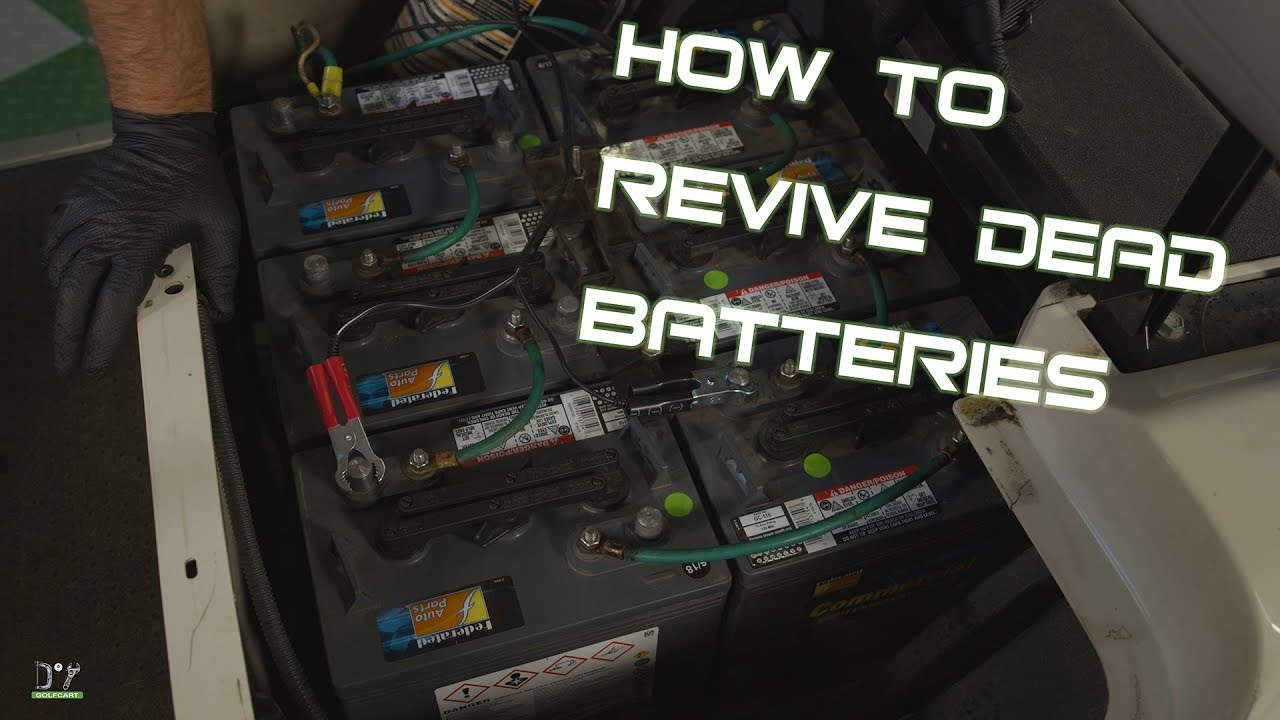
Image Source: i.ytimg.com
Solved: How To Charge Golf Cart Batteries That Are Dead
Yes, you can often charge golf cart batteries that seem dead, even if they show zero volts. It takes some steps, the right tools, and a bit of patience. This guide will show you how to do it safely and effectively. We will cover the golf cart battery revive process, deep cycle battery reconditioning, and ways to handle charging fully discharged golf cart batteries.
Golf carts are great for getting around. But their batteries can die if you do not care for them. When a golf cart battery goes flat, it can be scary. You might think it is broken for good. But many times, you can bring these batteries back to life. This guide helps you learn how. We will look at why batteries die. We will show you how to get them working again. You will also learn about the right chargers to use.
The Problem: Why Golf Cart Batteries Die
Golf cart batteries are special. They are deep cycle batteries. This means they are made to give power over a long time. They can also handle being used a lot. But even these tough batteries can have issues.
Most golf carts use lead-acid batteries. These batteries work with chemicals. They make power when you use them. They store power when you charge them. Over time, these chemicals can change. This makes the battery lose its ability to hold a charge.
Causes of a Dead Battery:
- Deep Discharge: This is a big reason. If you use the golf cart until the batteries are completely empty, they get hurt. Leaving them empty for too long is even worse.
- Sulfation: This is common for lead-acid batteries. If a battery is empty, or not charged often, tiny crystals form on its plates. These crystals are called sulfates. They block the battery from taking a charge. This is a key part of
sulphated golf cart battery chargingandgolf cart battery desulfation. - Old Age: Batteries do not last forever. After many years, they just wear out.
- Lack of Water: Lead-acid batteries need water. If the water level is too low, the plates inside can get damaged.
- Faulty Charger: A bad charger might not charge the batteries right. Or it might not charge them at all.
- Parasitic Drain: Something on the golf cart might be using power even when it is off. This slowly drains the batteries.
Initial Checks for a Dead Battery
Before you try to charge a dead battery, do some quick checks. This helps you know what you are dealing with. It also keeps you safe.
H4: Safety Comes First
Working with batteries can be risky. Batteries have strong acid and can make gases. Always be careful.
- Wear Safety Gear: Put on safety glasses. Wear strong gloves. This protects your eyes and hands from acid.
- Good Air Flow: Work in a place with fresh air. Batteries can give off hydrogen gas. This gas can explode if it builds up.
- No Sparks or Flames: Do not smoke near batteries. Keep any open flames away. No sparks from tools either.
- Remove Jewelry: Take off rings, watches, and chains. Metal can touch battery terminals. This can cause a short circuit. It can burn you badly.
H4: Checking Battery Health
A dead battery might not be truly dead. It might just be very low. Use a tool called a voltmeter to check each battery.
Steps to Check:
- Find Batteries: Most golf carts have many batteries. They are usually under the seat.
- Clean Terminals: Make sure the metal parts (terminals) are clean. Dirt can stop good readings. Use a wire brush if needed.
- Set Voltmeter: Set your voltmeter to DC volts. Choose a range that is higher than your battery voltage. (e.g., 20V for a 6V or 12V battery).
- Test Each Battery: Put the red (positive) lead on the positive terminal. Put the black (negative) lead on the negative terminal.
- Write Down Numbers: Write down the voltage for each battery.
What the Numbers Mean:
- 12V Battery: A good 12V battery should be around 12.6V. If it reads less than 10.5V, it is very low. If it reads 0V, it is flat dead.
- 8V Battery: A good 8V battery should be around 8.4V.
- 6V Battery: A good 6V battery should be around 6.3V.
If all your batteries are at zero, or very low, you have a deep discharge problem. This is where charging fully discharged golf cart batteries comes in.
The Golf Cart Battery Revive Process
When batteries are very low, regular chargers might not work. Many smart chargers need to see some voltage. If they do not, they think the battery is bad. They will not start charging. This is where automatic charger bypass dead golf cart battery issues come up. You need a special way to “wake up” the battery.
H4: Waking Up Dead Golf Cart Batteries
This method is sometimes called a “jump start” or “wake-up” charge. It tricks your main charger into working.
Tools You Need:
- Another Good Battery: This battery needs to be the same voltage. If you have a 12V golf cart battery that is dead, you need a good 12V car battery.
- Jumper Cables: Standard car jumper cables work.
- Your Regular Golf Cart Charger: The one you normally use.
- Voltmeter: To check progress.
- Safety Gear: Glasses and gloves.
Steps for a Jump Start:
- Isolate the Dead Battery: Find the dead battery in your golf cart’s pack. You will work on this one battery at a time. Disconnect it from the rest of the golf cart’s system if possible.
- Connect Good Battery: Put the good battery near the dead one.
- Attach Jumper Cables:
- Connect the positive (+) end of a jumper cable to the positive (+) terminal of the good battery.
- Connect the other positive (+) end of the jumper cable to the positive (+) terminal of the dead battery.
- Connect the negative (-) end of the other jumper cable to the negative (-) terminal of the good battery.
- Connect the other negative (-) end of the jumper cable to the negative (-) terminal of the dead battery.
- Wait: Let the good battery share its power. Wait about 5-10 minutes. This slowly puts a little charge into the dead battery. You are trying to raise its voltage just enough.
- Check Voltage: After 5-10 minutes, remove the jumper cables. Use your voltmeter. Check the voltage of the now “waking up” battery.
- Target Voltage: You want the voltage to be at least 10.5 volts for a 12V battery. For a 6V battery, aim for at least 5.5V. If it is not there, repeat step 3 for another 5-10 minutes.
- Connect Golf Cart Charger: Once the battery has a bit of voltage, reconnect it to the golf cart’s system. Then, plug in your main golf cart charger. The charger should now “see” the voltage. It should start charging.
- Monitor: Watch the charger. If it starts, let it run its full cycle. If it does not, the battery might be too far gone.
This golf cart battery jump start method can bring a battery out of its deep sleep. It makes the battery ready for a full charge.
Addressing Sulfation: Deep Cycle Battery Reconditioning
Sulfation is a big problem for dead lead-acid batteries. The sulfate crystals on the plates stop the battery from working. Sulphated golf cart battery charging needs a special approach. This is part of deep cycle battery reconditioning.
H4: What is Sulfation?
When a lead-acid battery is empty or sits unused, lead sulfate crystals form. These crystals are like a shield. They cover the battery’s plates. This stops the chemical reactions that make power. A normal charger cannot break these crystals.
H4: Golf Cart Battery Desulfation
Some chargers have a desulfation mode. This mode sends quick pulses of high-frequency current. These pulses try to shake off the sulfate crystals.
How to Desulfate:
- Special Charger: You need a charger with a “desulfation” or “recondition” setting.
Best charger for dead golf cart batteriesoften have this feature. - Connect and Run: Connect the desulfator charger to the battery. Let it run. This can take many hours. It might even take days.
- Monitor Voltage: Check the battery voltage often. You should see it slowly go up.
- Check Acid: If your batteries are the kind you can open, check the water level. Add distilled water if needed. Do this after the desulfation process. The water level can rise during charging. Do not overfill.
Desulfation is not a magic fix for every battery. It works best on batteries that are not too old. It works if the sulfation is not too bad. If the battery plates are damaged, desulfation might not help.
Choosing the Best Charger for Dead Golf Cart Batteries
Not all chargers are made the same. When dealing with dead batteries, you need a charger that can handle low voltage. Or you need one that can desulfate.
H4: Types of Chargers
- Smart/Automatic Chargers: These are common. They watch the battery. They change how they charge. They stop when the battery is full. Many will not charge a battery below a certain voltage (e.g., 10.5V). This is the
automatic charger bypass dead golf cart batteryissue. - Manual/Simple Chargers: These chargers put out a constant charge. They do not stop on their own. You must watch them. They can sometimes force a charge into a very low battery. But they can also overcharge if you are not careful. This can hurt the battery.
- Desulfating Chargers: These are smart chargers that have a special desulfation mode. They are great for batteries with sulfation.
- Tender/Maintainer Chargers: These are for keeping a charged battery healthy. They are not for charging a dead battery.
H4: What to Look For in a Charger
- Voltage Match: The charger must match your golf cart’s voltage (e.g., 36V, 48V). Or, if charging individual batteries, it must match the single battery voltage (e.g., 6V, 8V, 12V).
- Amperage (Charge Rate): Look for a charger with enough amps. Higher amps mean faster charging. But too high can hurt the battery. For reviving dead batteries, a lower amp setting (e.g., 1-2 amps) is safer for the initial “wake up” charge. Then, switch to a higher amp for the main charge.
- Safety Features: Look for reverse polarity protection (if you hook it up backward), spark-proof clamps, and automatic shut-off.
- Desulfation Mode: This is a big plus for reviving batteries with sulfation.
- Repair Mode: Some chargers have a repair mode that can help.
Table: Charger Features for Dead Batteries
| Charger Type | Good for Dead Batteries? | Pros | Cons |
|---|---|---|---|
| Smart Charger | Yes, if voltage is above 10.5V | Safe, automatic, prevents overcharge | May not “see” truly dead batteries (automatic charger bypass dead golf cart battery) |
| Manual Charger | Yes, with care | Can force charge into very low batteries | No automatic shut-off, can overcharge/damage battery if not watched |
| Desulfating Charger | Yes, excellent | Special mode for sulfation, revives better | Can be more expensive |
| Jump Starter/Booster | For initial wake-up only | Quickly raises voltage | Not for full charging, can damage battery if not used right |
Deep Cycle Battery Reconditioning Process
Once you have done the initial “wake-up” charge, you need to fully recondition the batteries. This deep cycle battery reconditioning aims to bring them back to their best.
H4: Steps for Full Reconditioning
- Check Water Levels (Again): After the initial charge, check the water in each cell. Make sure the plates are covered by about 1/2 inch of distilled water. Never use tap water. Tap water has minerals that hurt batteries.
- Full Charge Cycle: Connect your proper golf cart charger. Let it run a full charge cycle. This can take 8-16 hours.
- Equalize Charge (If Possible): Some smart chargers have an equalize mode. This mode gives a slow, long overcharge. It balances the cells. It can also help break down sulfate crystals. Do not do this too often. Maybe once every few months.
- Rest Period: After charging, let the batteries rest for 12-24 hours. Do not use them.
- Check Resting Voltage: After resting, check the voltage of each battery again.
- A healthy 12V battery should be around 12.6V.
- An 8V battery should be around 8.4V.
- A 6V battery should be around 6.3V.
- If any battery is much lower, it might be truly bad.
H4: Specific Gravity Test
This test tells you how strong the acid is in each cell. It is the best way to know a battery’s true health.
Tools: Hydrometer (a tool that floats in acid).
Steps:
- Fully Charged: Batteries must be fully charged before testing.
- Suck Acid: Squeeze the bulb of the hydrometer. Put the tube into a cell. Release the bulb. It will suck up some acid.
- Read Scale: The hydrometer will float. Read the number where the acid level is.
- Repeat: Do this for every cell in every battery.
What Readings Mean:
- Good: Around 1.265 to 1.277.
- Low: Below 1.250 means a low charge.
- Big Differences: If one cell is much lower than others (e.g., 0.050 difference), that cell is likely bad. The battery might be beyond repair.
Dead Golf Cart Battery Troubleshooting
Even after trying to revive them, batteries might not work. Here is how to figure out what went wrong. This is your dead golf cart battery troubleshooting guide.
H4: Common Issues and Solutions
| Problem | Possible Cause | Solution |
|---|---|---|
| Charger does not turn on. | Too low voltage (automatic charger bypass dead golf cart battery) | Use golf cart battery jump start method. Add a small charge with jumper cables from another good battery. |
| Battery heats up fast when charging. | Short circuit inside the battery | Stop charging immediately. The battery is likely bad. It is a fire risk. Replace it. |
| Battery makes bubbling/gurgling sounds. | Normal during charging (gassing) | This is usually okay. Make sure there is good air flow. If it’s too much, check charger voltage. |
| One battery is much lower voltage than others. | Bad cell, internal short, or sulfation | Try specific gravity test. If one cell is very low, the battery is likely dead. Replace it. |
| Batteries charge, but cart still slow. | Batteries not holding full charge, or overall pack voltage low | Check each battery’s resting voltage. Check specific gravity. If all are low, deep cycle battery reconditioning may not have worked. Consider replacement. |
| Cart goes short distance, then dies. | Batteries cannot handle a load | Batteries may be old or damaged. They might hold a surface charge but cannot give power. This means they are likely beyond reconditioning. Replace. |
| Battery terminal corrosion. | Acid leaking, poor connection | Clean terminals with a wire brush and baking soda/water mix. Apply battery terminal protector. Check for cracks. |
H4: When to Say Goodbye
Sometimes, a battery is truly dead. It is not worth the risk or effort to keep trying.
- Cracked Casing: If a battery has a crack or leaks acid, replace it. It is unsafe.
- Bulging Sides: If the battery sides are bulging, it means it has been severely overcharged or damaged. Replace it.
- Won’t Hold Charge: After repeated
golf cart battery revive processattempts anddeep cycle battery reconditioning, if the battery still will not hold a charge or perform, it is time to replace it. - Very Old: If batteries are 5-7 years old or more, they are at the end of their life. Reconditioning may give them a little more time, but not much.
- One Bad Cell: If the specific gravity test shows one cell is drastically lower than the others, that battery is bad.
Recycling: Always recycle old batteries. They contain lead and acid. These are harmful to the environment. Many battery stores take old batteries for free.
Extending Battery Life and Preventing Future Deaths
Once you have revived your batteries (or replaced them), you want them to last. Good care stops them from dying again.
H4: Regular Charging Habits
- Charge After Every Use: Even if you only drive a short distance, charge the batteries. This prevents deep discharge and sulfation.
- Do Not Overcharge: Smart chargers stop when full. Manual chargers need you to unplug them. Overcharging damages batteries.
- Store Fully Charged: If you put your golf cart away for winter, fully charge the batteries. Then, use a smart charger or tender to keep them topped off. Do not leave them empty.
H4: Water Levels (For Flooded Lead-Acid)
- Check Often: Check water levels monthly or every few weeks.
- Only Distilled Water: Always use distilled water. Tap water has minerals that build up.
- Fill After Charge: Fill after the battery is fully charged. Water expands during charging. Do not overfill. Leave about 1/2 inch space above the plates.
H4: Cleanliness and Connections
- Clean Terminals: Keep battery terminals clean. Use a mix of baking soda and water to clean corrosion. Then, rinse with clean water and dry. Apply anti-corrosion spray or grease.
- Tight Connections: Make sure all cables are tight. Loose cables cause heat and poor performance.
H4: Load and Use
- Do Not Overload: Do not carry too much weight. This makes the batteries work too hard.
- Avoid Extreme Temperatures: Hot weather makes batteries work harder. Cold weather reduces their power. Store in a mild place if possible.
By following these tips, you can greatly extend the life of your golf cart batteries. This will save you time, money, and frustration. The golf cart battery revive process is good, but prevention is always better.
Final Thoughts on Battery Revival
Reviving a dead golf cart battery is possible in many cases. It requires understanding why it died (often deep discharge and sulfation). It means using the right tools and methods. The golf cart battery jump start is key to waking up very low batteries. Deep cycle battery reconditioning focuses on breaking down sulfate crystals. Using the best charger for dead golf cart batteries makes the job easier.
However, remember that not all batteries can be saved. If a battery is very old, physically damaged, or has a shorted cell, it is time for a new one. Always put safety first. Work in a well-aired area. Use protective gear. With patience and proper care, you can often bring your golf cart batteries back to life. You can get your golf cart moving again.
Frequently Asked Questions (FAQ)
H3: How long does it take to charge a completely dead golf cart battery?
It can take a long time. First, you need to “wake up” the battery. This might take 10-30 minutes with a golf cart battery jump start. After that, a full charge can take 8 to 16 hours. If you are doing deep cycle battery reconditioning with a desulfator, it could even take days.
H3: Can a dead golf cart battery explode?
Yes, it can. Batteries make hydrogen gas. This gas is explosive. If there is a spark or flame nearby, it can cause an explosion. A severely damaged or overcharged battery can also overheat and explode. Always work in a place with good air flow. Do not have any sparks or flames nearby. Wear safety gear.
H3: Will my regular golf cart charger charge a dead battery?
Often, no. Many modern smart chargers need to see some voltage. If the battery is below 10.5V (for a 12V battery), the charger might think it is faulty. It will not start charging. This is the automatic charger bypass dead golf cart battery issue. You need to use a golf cart battery jump start method first. This raises the voltage enough for the regular charger to work.
H3: What is battery desulfation and how does it help?
Battery desulfation is a process. It uses special electric pulses. These pulses try to remove sulfate crystals from the battery plates. These crystals form when a battery is left dead or sits unused. They stop the battery from working. Desulfation helps the battery take and hold a charge again. It is a part of deep cycle battery reconditioning.
H3: How do I know if my golf cart battery is truly dead or just needs charging?
Check the voltage of each battery with a voltmeter. If a 12V battery reads 0 volts, it is truly dead. If it reads very low (like 1-5 volts), it is deeply discharged but might be savable. A specific gravity test can also show if a cell inside is bad. If the battery casing is cracked or bulging, it is likely dead and cannot be saved.
H3: Can I use a car battery charger to charge a golf cart battery?
You can use a car battery charger for a golf cart battery jump start. This is for a single 12V battery. But you cannot use it to charge an entire golf cart battery pack (e.g., 36V or 48V). You need a charger that matches the whole pack’s voltage. If you charge individual batteries with a car charger, make sure the voltage matches (e.g., 12V car charger for a 12V golf cart battery). Always use care, as car chargers can sometimes overcharge a golf cart battery if not watched.
H3: What are the signs of sulfated golf cart batteries?
Signs include:
* Batteries do not hold a charge well.
* They charge very slowly.
* They die quickly even after charging.
* The charger does not recognize them.
* Specific gravity readings are consistently low across all cells.
* There might be white powder on the plates if you can see them (only open cell batteries).
These are all reasons to try sulphated golf cart battery charging methods, like desulfation.