
Guide: How Tall Do Ceilings Need To Be For Golf Simulator
How tall do ceilings need to be for a golf simulator? For most golfers, a minimum golf simulator ceiling height of 9 feet is a good starting point. This gives you basic indoor golf swing clearance. But for the best experience, and for taller golfers, an ideal golf simulator height of 10 feet or more is much better. The exact height you need depends on how tall you are and how you swing the golf club. We will look at all the golf simulator setup requirements to help you plan your perfect space.
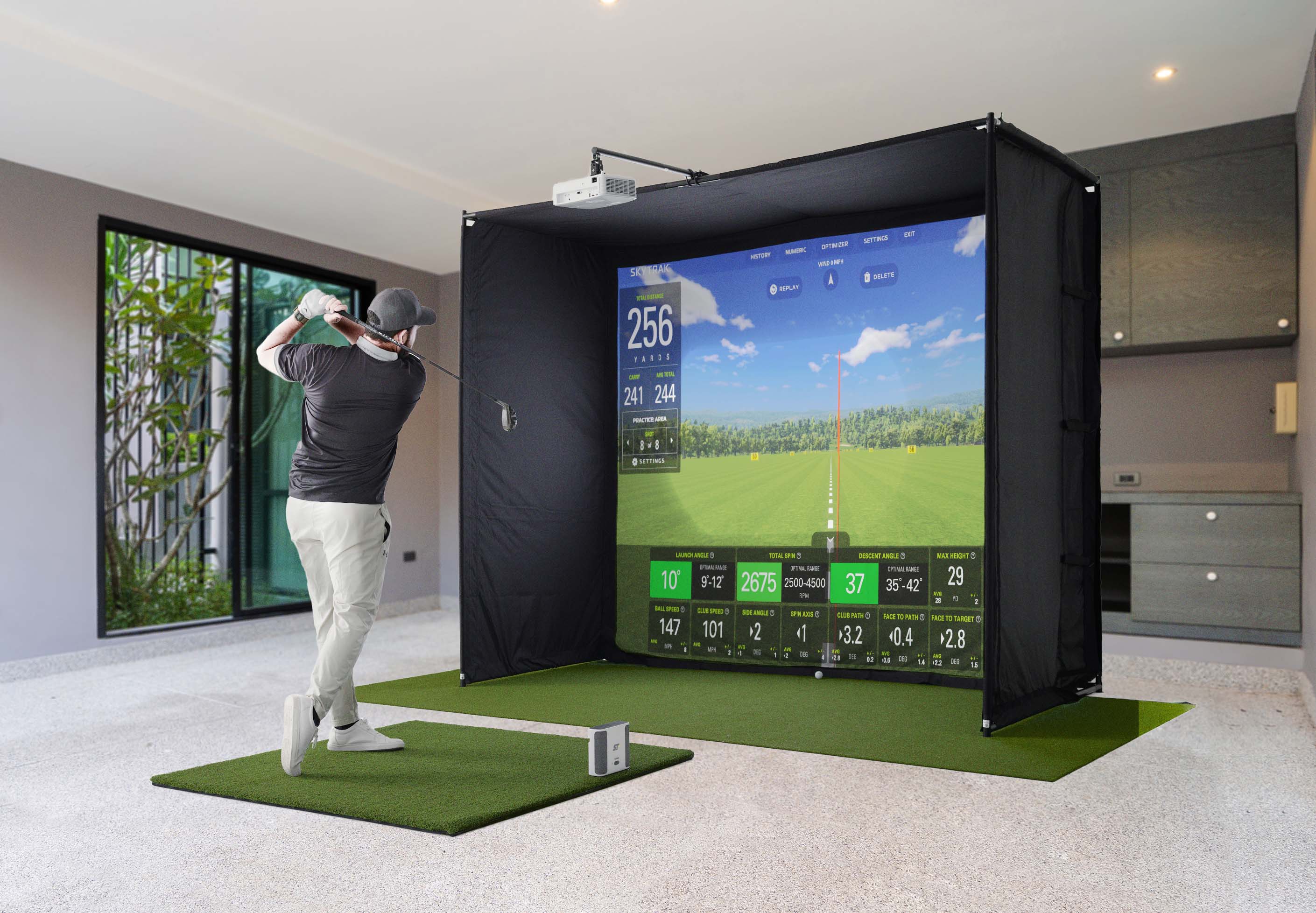
Image Source: www.playbetter.com
Finding the Right Overhead Space for Your Golf Simulator
Building a home golf simulator is exciting. Many people dream of hitting balls indoors. But one big question always comes up: How high must my ceiling be? This is a key part of your golf simulator room dimensions. Getting this right is very important. It affects your safety and how well you play.
Why Ceiling Height Matters So Much
The height of your ceiling is not just a small detail. It is a big deal. It impacts many parts of your golf simulator.
- Your Safety: Hitting your golf club on the ceiling is a real risk. This can break your club. It can hurt you or others. Enough overhead space for golf simulator makes hitting safe.
- Swing Freedom: You want to swing the club naturally. You do not want to hold back your swing. A low ceiling can make you change your swing. This is not good for improving your game. You need full indoor golf swing clearance.
- Better Play: When you swing freely, you hit the ball better. Your launch monitor will get better data. This helps you understand your golf swing. It leads to more fun and better golf.
- No Damage: A low ceiling can get marks. It can get holes. Your golf club can leave dents. A tall ceiling protects your home. It protects your clubs too.
The Key Factors That Change Ceiling Height Needs
Many things change how much ceiling height you need. It is not a single number for everyone. Let’s look at what matters most.
Your Height and Swing
You are unique. Your swing is unique. How tall you are makes a big difference.
- Tall Golfers: A taller person holds the club higher. Their backswing goes higher. Tallest golfer swing height is a key thing to think about. If a 6-foot-5-inch golfer uses the simulator, you need more height. If a 5-foot-tall golfer uses it, you might need less.
- Swing Style: Some golfers have a steep swing. Their club goes up very high. Others have a flatter swing. Their club stays lower. A steep swing needs more room.
- Full Swing vs. Chip Shots: A full driver swing needs the most room. Pitching and chipping shots need less. If you only plan to putt, ceiling height hardly matters. But most people want to hit full shots.
Club Lengths
Different clubs are different lengths.
- Driver: This is your longest club. It needs the most space. When you swing a driver, the club head goes very high.
- Wedge: This is a much shorter club. It needs less space.
- Irons: These are in between.
Always plan for your longest club. This is usually your driver.
Swing Path
Where your club goes during your swing matters.
- On-Plane Swing: A good swing keeps the club on a good path. It goes up and down smoothly.
- Over-the-Top Swing: Some golfers swing “over the top.” The club goes very high at the start of the downswing. This needs more ceiling height.
- Flat Swing: Other golfers swing very flat. The club stays low. This needs less ceiling height.
Mat Height
Your hitting mat adds to your height.
- Added Inches: Most hitting mats are 1 to 2 inches thick. This lifts you up. It makes your head closer to the ceiling. Add this to your height.
- Floor Impact: Some mats are placed on top of your floor. Other mats fit into a frame. This frame can make the mat flush with the floor. This second way is better for ceiling height.
Golf Simulator Components
Other parts of your setup can take up space.
- Enclosures: Many simulators use a frame or golf simulator enclosure dimensions. These frames have a set height. You must fit this frame in your room.
- Projectors: Projectors often hang from the ceiling. This takes up some vertical space. The projector distance golf simulator needs affects how high it is.
Minimum Golf Simulator Ceiling Height: What You Need
What is the lowest ceiling you can have? The minimum golf simulator ceiling height is often said to be 9 feet. This means 108 inches. This might work for some people.
- Who it Works For: If you are shorter, say 5 feet 8 inches or less, 9 feet might be okay. If you have a compact swing, it might work.
- The Risks: Even at 9 feet, you might still hit the ceiling. This is especially true with a driver. It is also true if you swing very high. You will have to be careful. You might not swing freely.
- Think Safety First: Always put safety first. A few extra inches of height can save you from injury. It can save you from damage.
Here is a simple table. It shows common golfer heights. It suggests a minimum golf simulator ceiling height for each. These are just ideas.
| Golfer Height (Feet & Inches) | Suggested Minimum Ceiling Height (Feet & Inches) | Notes |
|---|---|---|
| 5’0″ – 5’6″ | 8’6″ – 9’0″ | Might be tight with driver. |
| 5’7″ – 6’0″ | 9’0″ – 9’6″ | Common height. Needs at least 9′. |
| 6’1″ – 6’4″ | 9’6″ – 10’0″ | Taller golfers need more. |
| 6’5″ and up | 10’0″ + | Best for the tallest swings. |
Remember, these are minimums. More height is always better.
Ideal Golf Simulator Height: Aiming for the Best
What is the ideal golf simulator height? Most experts agree that 10 feet is good. Even better is 11 or 12 feet. Why aim for more?
- Full Freedom: At 10 feet or more, you can swing freely. You do not worry about hitting the ceiling. You can make your normal golf swing.
- Comfort: A higher ceiling feels more open. It feels less like a cave. This makes your golf simulator more enjoyable.
- Safety: The more space you have, the safer you are. You reduce the chance of hitting anything.
- Future Proofing: You might get new clubs. You might change your swing. You might have taller friends use your simulator. More height means you are ready for anything.
- Better Lighting: Taller ceilings can make lighting easier. You can place lights higher up. This reduces shadows.
For the best experience, try to get as much height as you can. Aim for 10 feet. If you can get 11 or 12 feet, that is even better.
Checking Your Indoor Golf Swing Clearance
You need to check your own indoor golf swing clearance. This is the best way to know for sure. Do not just guess.
- Use a Long Object: Grab a broom. Or a pool noodle. A long stick works too. Hold it like a golf club.
- Take Practice Swings: Stand in your planned simulator spot. Take slow practice swings. Do your full backswing. Then your full follow-through. Make sure the broom clears the ceiling. Make sure it clears the walls too.
- Measure Apex of Swing: Have a friend watch. Or set up a camera. See how high your club goes at the top of your backswing. Measure from the floor to this point. Add an extra 6-12 inches for comfort. This is your needed ceiling height.
- Use Your Driver: Do this check with your driver. The driver is your longest club. It will need the most space.
- Consider Your Mat: Remember to add the thickness of your hitting mat. If your mat is 1.5 inches thick, add that to your swing height.
This test is very important. It tells you your real needs.
Golf Simulator Room Dimensions: More Than Just Height
Ceiling height is vital. But other golf simulator room dimensions are also important. You need enough width and depth too. These are all part of your golf simulator setup requirements.
Width: Side-to-Side Space
- For Swing: You need room to swing without hitting walls.
- For Enclosure: The screen or net needs width.
- Minimum: At least 10 feet wide is good. This lets you swing on both sides.
- Ideal: 12 to 15 feet wide is better. This gives more room. It also lets you place chairs or other items.
Depth: Front-to-Back Space
- For Ball Flight: The ball needs to fly a short distance. It hits the screen.
- For Player: You stand behind the hitting mat.
- For Equipment: Your launch monitor needs space. Your projector needs space.
- Minimum: 15 feet deep is often the minimum.
- Ideal: 18 to 20 feet deep is much better. This gives you more room for setup. It also allows the launch monitor to work best.
Here is a table showing ideal golf simulator room dimensions:
| Dimension | Minimum Recommended | Ideal Recommended |
|---|---|---|
| Height | 9 feet | 10-12 feet |
| Width | 10 feet | 12-15 feet |
| Depth | 15 feet | 18-20 feet |
Always measure your space carefully.
Specific Setups and Their Height Needs
Different places in your home have different ceiling heights. Let’s look at common spots.
Basement Golf Simulator Height Challenges
Basements are popular for golf simulators. But they often have low ceilings. Basement golf simulator height is a common problem.
- Typical Basements: Many basements have 8-foot ceilings. This is 96 inches. This is usually too low for a full driver swing.
- Workarounds for Basements:
- Shorter Clubs: You could use shorter clubs. You might only use irons. You could use a shorter driver. But this limits your practice.
- No Driver: Some people just do not hit a driver in their basement simulator.
- Specific Mats: Some hitting mats can be “inset” into the floor. This means you stand at floor level. The mat fills a hole. This saves a few inches of height.
- Open Joists: If your basement ceiling has open joists, you might gain height. You could swing between the joists. But this needs careful planning. You must make sure no pipes or wires are in the way.
- Swing Modifications: You might have to flatten your swing. This is not ideal for real golf.
- Children’s Use: A basement might be fine for kids. Their swings are shorter.
If your basement is 8 feet high, it is very hard to use a driver safely. It might work for chipping or irons.
Garage Setups
Garages are another popular spot.
- Often Higher: Garage ceilings are often higher than basements. Many garages have 9-foot or 10-foot ceilings. This makes them good for simulators.
- Concrete Floors: Garage floors are usually concrete. This is good for stability.
- Ventilation: Garages are easier to vent if you plan to use a heater or fan.
- Door Openers: Watch out for garage door openers. These can hang low. They might be in your swing path. You might need to move them.
Dedicated Golf Rooms
If you are building a new room, or changing an old one, you can plan for height.
- Build High: Aim for 10 feet, 11 feet, or even 12 feet. This will give you the best experience.
- No Compromises: You do not have to compromise on your swing.
The Role of Enclosures and Projectors
Your main golf simulator equipment also takes up space. Consider their needs.
Golf Simulator Enclosure Dimensions
Most simulators use an enclosure. This is a frame with a screen.
- Set Heights: Golf simulator enclosure dimensions are usually fixed. They come in heights like 8 feet, 8.5 feet, or 9 feet.
- Fitting Your Room: You must pick an enclosure that fits your ceiling. If your ceiling is 9 feet, you cannot buy a 10-foot enclosure.
- Top Bar: The top bar of the enclosure is a key point. You need to make sure your club clears this bar. It is not just about the ceiling. It is also about the enclosure frame.
- Safety Netting: Some enclosures have top netting. This also takes up space.
Always check the total height of the enclosure. Make sure it is lower than your ceiling. And make sure your swing clears it.
Projector Distance Golf Simulator Needs
The projector shows the image on the screen. How you set it up matters for height.
- Mounting:
- Ceiling Mount: Many projectors hang from the ceiling. This is common. It needs a mount. The mount lowers the projector a few inches. Make sure the projector is not in your swing path.
- Floor Mount: Some projectors sit on the floor. They are put in a special box. This is good if your ceiling is too low. It removes the need to worry about projector height.
- Placement: The projector distance golf simulator needs from the screen affects image size. It also affects where shadows fall.
- Shadows: You do not want your body to cast a shadow on the screen. The projector needs to be placed far enough away. It also needs to be high enough (or low enough, for floor mount) to avoid shadows.
- Clearance: If ceiling mounted, make sure the projector is not in your swing path. You might need to place it far back. Or off to the side.
Think about your projector early in your planning.
Preparing for a Tall Golfer Swing Height
If you are tall, or if a tall friend will use your simulator, plan for their swing.
- The Tallest User: Always build for the tallest person who will use the simulator often. This is called planning for the tallest golfer swing height.
- More Than Just Your Height: Your height is one thing. Your swing path is another. The club head goes higher than your head.
- Driver Apex: For a driver, the club head can go 1 to 2 feet above your head at the top of the backswing.
- Example: A 6-foot-tall golfer (72 inches) might have their driver club head go to 8 feet (96 inches) or 9 feet (108 inches) at the top of their swing. If your ceiling is 9 feet, that leaves very little room.
This table shows a rough idea of how high a driver might go for different golfer heights.
| Golfer Height (Feet & Inches) | Approx. Driver Apex (Feet & Inches) | Needed Ceiling Height (Feet & Inches) |
|---|---|---|
| 5’0″ | 7’0″ – 7’6″ | 8’0″ – 8’6″ |
| 5’6″ | 7’6″ – 8’0″ | 8’6″ – 9’0″ |
| 6’0″ | 8’0″ – 8’6″ | 9’0″ – 9’6″ |
| 6’6″ | 8’6″ – 9’0″ | 9’6″ – 10’0″ |
| 6’10” | 9’0″ – 9’6″ | 10’0″ – 10’6″ |
This table is a guide. Always test your own swing. Add extra buffer space for safety.
Other Important Setup Requirements
Beyond height, width, and depth, here are a few more golf simulator setup requirements:
- Lighting: You need good, even light. Avoid dark spots. Avoid glare. Use lights that do not flicker for cameras.
- Power: You will need power outlets for your computer, projector, and launch monitor.
- Internet: A strong internet connection is key. Many simulator software programs need it.
- Flooring: A solid, level floor is best. Concrete is good. Carpet or artificial turf can go on top.
- Sound: Think about noise. Golf balls hit hard. You might want soundproofing.
- Heating/Cooling: If the room gets hot or cold, plan for climate control.
- Safety Features: Side netting or pads can stop stray shots. Make sure no windows or fragile items are in the way.
- Computer: You will need a good gaming PC. It needs to run the golf software.
- Launch Monitor: This is the brains of your simulator. It tracks your shot. Choose one that fits your budget. Choose one that fits your space. Some sit behind you. Some sit beside you.
By thinking about all these details, you can build a great golf simulator. The ceiling height is often the first and biggest hurdle. Get that right, and the rest is easier.
Planning Your Home Golf Simulator Project
Here are steps to plan your golf simulator.
- Measure Your Space: Get exact measurements. Measure the length, width, and height. Measure more than once. Write them down.
- Test Your Swing: Use a broom or long stick. Take full swings. See how much space you truly need.
- Research Equipment: Look at different launch monitors. Look at different enclosures. Note their sizes.
- Draw a Layout: Sketch your room. Put in the hitting area. Put in the screen. Put in the launch monitor. See how it all fits.
- Consider Your Budget: Golf simulators can cost a lot. Set a budget.
- Get Help: Ask for advice. Join online forums. Talk to people who have simulators.
- Build Smart: Build slowly. Check things as you go.
Building a golf simulator is a fun project. It brings golf home. With careful planning, you can make a great space. A space where you can swing freely. A space where you can improve your game. Make sure your ceiling is high enough. This is the most important step.
Frequently Asked Questions (FAQ)
Here are some common questions about golf simulator height.
Q1: Can I use a golf simulator with 8-foot ceilings?
A1: Generally, 8-foot (96-inch) ceilings are too low for a full golf swing, especially with a driver. You would likely hit the ceiling. It might work for short irons, chips, or putting. But it is not ideal for a complete golf practice setup. For taller golfers, it will definitely not work.
Q2: What if my ceiling is too low for a full swing?
A2: If your ceiling is too low, you have a few choices. You can limit your practice to shorter clubs (no driver). You can try to swing more flatly, but this can hurt your real game. You could look into special hitting mats that let you stand lower. Or, if possible, you might need to find a different space with a higher ceiling.
Q3: How wide does a golf simulator room need to be?
A3: A minimum width of 10 feet is usually needed. This allows you to swing on both sides of the hitting area. It also gives enough space for the screen. An ideal width is 12 to 15 feet. This provides more comfort and room for equipment or seating.
Q4: Do I need a special mat for a golf simulator?
A4: Yes, you need a good hitting mat. A hitting mat protects your floor. It also protects your wrists and elbows. Look for a mat that is thick and durable. Some mats are designed to be soft on joints. Some can be cut into the floor to save ceiling height.
Q5: How far away should my projector be from the screen?
A5: The projector distance golf simulator needs from the screen depends on the projector. Each projector has a “throw ratio.” This tells you how far it needs to be for a certain image size. You also need to think about shadows. Most setups place the projector 10 to 15 feet from the screen. This allows for a clear image. It also helps avoid shadows from your body or club. Ceiling-mounted projectors are often placed behind or to the side of the golfer.