
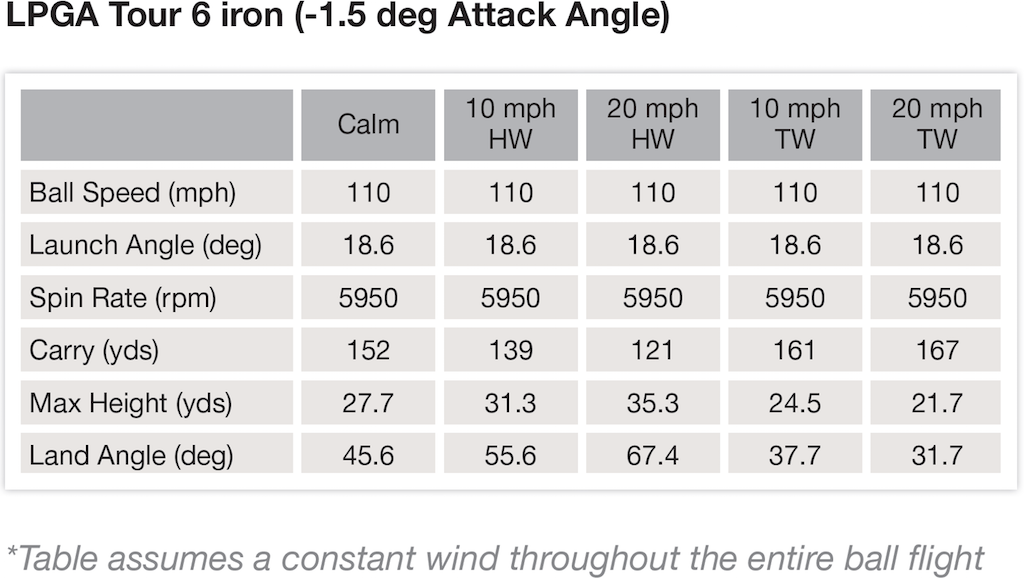
Image Source: www.golfwrx.com
How Much Does Wind Affect A Golf Ball: The Science Behind It
Wind greatly affects how a golf ball flies. It can change how far the ball goes, its direction, and even how high it flies. Wind can add or take away many yards from your shot. It can also push the ball far off to the side. Knowing how wind works can help golfers play better. It allows them to choose the right club and make the right swing.
The Basics of Wind and Golf
A golf ball flies through the air because of the forces of physics. When you hit the ball, it moves fast. The air around it slows it down and pushes it. Wind is just air moving fast in a certain direction. When this moving air meets your golf ball, it changes the ball’s path.
The way wind pushes the ball sideways is called golf ball wind deflection. This deflection can be very big. Even a light breeze can push a ball off its target. Strong winds can make a ball go way off course. The total wind impact on golf shots is huge. It is one of the biggest challenges on a golf course.
Air Resistance and Lift
To grasp how wind moves a golf ball, we first need to look at how a golf ball flies at all. When you hit a golf ball, two main air forces work on it: drag and lift.
- Drag: This is air resistance. It tries to slow the ball down. The ball pushes against the air as it moves forward. The air pushes back. This push back is drag.
- Lift: This force makes the ball go up. When you hit a golf ball, it spins backward. This backspin makes air move faster over the top of the ball and slower under it. This difference in air speed creates an upward force. This force is called lift. It helps the ball stay in the air longer.
The dimples on a golf ball are very important for both drag and lift. Without dimples, a smooth ball would fly like a knuckleball in baseball. It would have a lot of drag and very little lift. Dimples create a thin layer of air that sticks to the ball. This layer is called a turbulent boundary layer. It helps the air flow more smoothly over the ball’s surface. This reduces drag and boosts lift. So, dimples make the ball fly farther and higher. This is a key part of golf ball aerodynamics wind.
When wind blows, it changes how these forces act on the ball. It changes how much drag and lift the ball feels. This is why wind changes where your golf ball goes.
Wind’s Directional Punch: Headwind, Tailwind, and Crosswind
Wind can blow from different directions. Each direction changes how the ball flies in its own way.
Battling the Breeze: Headwind
A headwind blows against you. It comes from the direction you are hitting the ball. Imagine the wind blowing right into your face. This type of wind is very hard for golfers. It makes the ball slow down very fast. This leads to headwind golf distance loss.
Why does this happen? A headwind adds to the air resistance on the ball. The ball is already pushing against the air. When the air is moving towards the ball, the ball has to push even harder. It feels like hitting into a wall of air. This extra resistance takes away speed from the ball. When the ball loses speed, it loses lift. It then drops to the ground sooner than it would in still air.
How much distance do you lose? It depends on the wind speed. A light headwind of 5-10 mph might cost you 5-15 yards. A strong headwind of 15-20 mph could mean 20-40 yards lost. Very strong headwinds can make you lose even more. Golfers often need to use one or two extra clubs to make up for this lost distance. For example, if you normally hit a 7-iron 150 yards, you might need a 5-iron in a strong headwind to get the same distance.
Tips for playing in a headwind:
- Use more club: Take one or two clubs more than usual. This means hitting a longer iron or a fairway wood instead of a driver.
- Swing smooth: Do not try to hit the ball harder. A harder swing might add more spin. Too much spin in a headwind can make the ball balloon up. When it balloons, it loses even more distance. A smooth, controlled swing is better.
- Hit it lower: Try to hit the ball with less loft. This means using a club with less angle on its face. Or, you can try to keep your hands ahead of the ball at impact. This makes the ball fly lower, which helps it cut through the wind better.
- Aim slightly left or right: Even a headwind can have small side pushes. Watch the flags on the course to see if the wind is perfectly straight or has a slight angle.
Riding the Air: Tailwind
A tailwind blows with you. It comes from behind you, pushing the ball forward. Imagine the wind blowing at your back. This is usually good for golfers. It leads to tailwind golf shot distance gain.
Why does this happen? A tailwind reduces the air resistance on the ball. The ball is moving forward, and the air is also moving forward. This means the ball does not have to push against as much air. It feels like the wind is helping to push the ball along. This reduces drag. Less drag means the ball slows down less quickly. It keeps its speed for longer. This allows it to fly farther. A tailwind also gives the ball an extra push. This push helps the ball go farther.
How much distance do you gain? Again, it depends on the wind speed. A light tailwind of 5-10 mph might add 5-15 yards. A strong tailwind of 15-20 mph could add 20-40 yards. Sometimes, a tailwind can make your ball go much farther than you expect. This is especially true for drives.
Tips for playing in a tailwind:
- Use less club: You might need one or two clubs less than usual. If you normally hit a 7-iron 150 yards, you might only need an 8-iron or 9-iron with a strong tailwind.
- Control the spin: A tailwind can make a ball with a lot of backspin fly very high. This is called
wind lofting golf ball. While it adds distance, it can also make the ball harder to control when it lands. Try to hit the ball with a little less spin if possible. - Aim for a softer landing: Since the ball might fly farther, it will come down at a higher angle. This can make it stop faster on the green. This is good if you want the ball to stop quickly. But if you want it to roll out, you might need to adjust your shot.
- Beware of “over-flying” the green: Sometimes, the ball can go too far and fly over the green. Always think about how much extra distance the tailwind will give you.
Sideways Push: Crosswind
A crosswind blows from the side. It comes from your left or right. This is often the trickiest type of wind for golfers. It causes crosswind golf ball flight. This means the ball gets pushed sideways off its line.
Why does this happen? When the wind blows from the side, it applies a force to the ball that pushes it sideways. The ball is also spinning, and this spin interacts with the side wind. For example, if you hit a ball with backspin and a wind blows from the right, it will push the ball to the left. The golf ball wind deflection is very clear here.
The amount of sideways push depends on:
- Wind speed: Stronger crosswinds push the ball more.
- Ball height: A ball that flies higher will be in the wind for longer. It will also be in stronger wind higher up. So, it will drift more.
- Ball spin: A ball with more spin will interact with the wind more. This can make it curve more. If you put sidespin on the ball (a hook or a slice), the crosswind can make that curve even worse.
Dealing with crosswinds:
- Aim into the wind: This is the most common way to fight a crosswind. If the wind blows from the left, aim your shot to the left of your target. Let the wind push the ball back to the target. This is called playing the “wind allowance.”
- Know your shot shape: If you naturally hit a small fade (ball curves right), and the wind is from the right, the ball will curve even more right. You need to aim extra left. If the wind is from the left, it might straighten your fade or even turn it into a draw.
- Swing smooth and low: Again, a lower ball flight helps. The less time the ball spends high in the air, the less time the wind has to push it. A smooth swing helps keep the spin controlled.
- Adjust for different clubs: Driver shots will be most affected because they fly highest and furthest. Short irons fly lower and less far, so they are less affected.
Here is a simple table showing how much to adjust for a crosswind (these are rough guides, actual results vary):
| Wind Speed (mph) | Club (e.g., 7-iron) | Expected Sideways Deflection (yards) |
|---|---|---|
| 5-10 | Driver | 5-10 |
| 5-10 | Mid-iron | 3-7 |
| 5-10 | Short-iron | 1-3 |
| 10-15 | Driver | 10-20 |
| 10-15 | Mid-iron | 7-15 |
| 10-15 | Short-iron | 3-7 |
| 15-20 | Driver | 20-40+ |
| 15-20 | Mid-iron | 15-25 |
| 15-20 | Short-iron | 7-12 |
Note: These are estimates. Your actual results will depend on your swing, ball type, and exact wind angle.
Wind and Ball Spin: A Key Factor
Spin is central to how a golf ball flies. When wind blows, it changes how this spin works. This is known as wind effect on golf spin.
- Backspin: Almost every well-hit golf shot has backspin. This spin creates the lift that keeps the ball in the air.
- In a headwind: Too much backspin in a headwind can make the ball climb sharply. It “balloons” up. This looks high but quickly loses forward speed. The ball then drops sharply. This is bad for distance.
- In a tailwind: Backspin can make the ball fly even higher in a tailwind. This can give extra distance. But it can also make the ball harder to control when it lands. It might just stop where it lands without much roll.
- Sidespin (Hook/Slice): If you hit the ball with sidespin, it curves left (hook) or right (slice).
- In a crosswind: A crosswind can greatly increase the effect of sidespin. If you hit a slice (right-to-left spin for a right-handed golfer) and the wind blows from the right, the ball will slice even more. The wind works with your spin to push the ball further off line. The opposite happens if the wind blows against your spin. It can sometimes straighten a slight hook or slice.
Golfers who can control their spin have a big advantage in wind. Hitting a low, piercing shot with less spin is often best in strong winds. This lets the ball cut through the air better.
The Upward Tug: Wind Lofting Golf Ball
When the wind blows from behind, especially a strong tailwind, it can cause wind lofting golf ball. This means the ball seems to hang in the air longer and fly higher than normal.
This happens because the tailwind adds to the ball’s lift. The wind is pushing the ball forward and upward. This extra lift makes the ball’s flight path steeper. It can look impressive to see your ball soaring high. But too much lofting can also be bad. While it adds distance, it can make it harder to judge how far the ball will go. The ball might also land very softly, which is good for stopping on greens, but not if you need roll.
In very strong headwinds, the opposite can happen. The wind can push down on the ball, making it fly lower than usual. This is another reason why distance is lost.
Wind Speed and Ball Carry: The Numbers
The faster the wind blows, the more it affects your shot. Wind speed golf carry changes a lot with even small increases in wind speed.
- Light Wind (0-5 mph): You might not even notice this wind. It causes small changes, maybe 1-5 yards.
- Gentle Breeze (5-10 mph): This wind is noticeable. It can change your distance by 5-15 yards. You need to start thinking about it.
- Moderate Wind (10-15 mph): This wind is a challenge. It can change distance by 15-30 yards. Crosswinds will push the ball significantly. You need to adjust your club choice and aim.
- Strong Wind (15-20 mph): This is very tough. Distance changes can be 20-40+ yards. Crosswinds will make it very hard to hit your target. You will need big club changes and careful aiming.
- Very Strong Wind (20+ mph): Only the best golfers can play well in these conditions. Distance changes can be 50 yards or more. The ball will be very hard to control. Some courses might even close in such strong winds.
Here is a table showing typical yardage adjustments based on wind speed and direction:
| Wind Speed (mph) | Headwind (Distance Loss) | Tailwind (Distance Gain) | Crosswind (Sideways Deflection) |
|---|---|---|---|
| 0-5 | 0-5 yards | 0-5 yards | 0-3 yards |
| 5-10 | 5-15 yards | 5-15 yards | 3-10 yards |
| 10-15 | 15-30 yards | 15-30 yards | 10-20 yards |
| 15-20 | 20-40+ yards | 20-40+ yards | 20-40+ yards |
| 20+ | 40+ yards | 40+ yards | 40+ yards |
Note: These are for a typical full shot with a mid-iron. Driver shots will be affected more, short irons less.
To figure out the wind speed golf carry, many golfers look at flags on the course. They also throw grass in the air. This helps them see the wind’s direction and strength. Some golf apps can also give wind speed and direction.
The Swirling Air: Turbulent Air Golf Ball Effects
Sometimes, the wind does not blow in a straight line. It can swirl and change direction quickly. This is called turbulent air golf ball flight.
Turbulence happens when the wind hits obstacles like:
- Tall trees
- Buildings
- Hills or mountains
- Deep valleys
When the wind hits these things, it breaks up. It creates gusts and swirls. If your ball flies through this turbulent air, it can behave very strangely. It might move in an unpredictable way. It can drop suddenly or get pushed unexpectedly. This makes it very hard to guess where the ball will go.
For example, if you are playing on a course with many tall trees, the wind at ground level might feel calm. But once your ball gets above the trees, it might hit strong, swirling wind. This can ruin your shot.
Tips for dealing with turbulent air:
- Keep it low: If possible, try to hit the ball below the tops of trees or buildings. This keeps the ball out of the worst of the turbulence.
- Aim for the middle: If you must hit through turbulence, aim for the widest part of the target. Do not try to hit a perfect shot to the flag. Give yourself room for the ball to move.
- Trust your feel: Sometimes, you just have to hit the shot and hope. Pay attention to how other players’ balls fly in the same area.
Playing Smart: Tips for Windy Golf
Playing golf in windy conditions takes practice and smart choices. Here are some key tips:
- Choose the right club: Always take more club than you think you need in a headwind. Take less club in a tailwind. For crosswinds, use a club that lets you hit the ball lower. A lower shot stays out of the strongest winds and drifts less.
- Control your swing:
- Smooth tempo: Do not try to swing harder. A smooth, controlled swing is always better in the wind.
- Punch shots: Learn to hit a “punch shot.” This is a shorter, lower swing with less backswing and follow-through. It keeps the ball lower and reduces spin, helping it cut through the wind.
- Keep your weight stable: Make sure your feet are firmly planted. A strong gust of wind can make you lose your balance during your swing.
- Adjust your aim: In a crosswind, always aim into the wind. If the wind is from the right, aim left. If it is from the left, aim right. The stronger the wind, the more you need to aim off target.
- Think about the wind on the green: Even on the putting green, wind can move your ball. Pay attention to its direction. A strong wind can make a putt break more or less than usual.
- Stay patient: Wind is frustrating. Do not let it get to you. Accept that scores might be higher on windy days. Focus on making smart decisions, not on perfect shots.
Interpreting Wind’s Forces on Your Game
Wind is a powerful force in golf. It changes the path of the ball in major ways. Golf ball wind deflection is a constant factor. Wind impact on golf shots affects distance, direction, and height. Headwinds cut distance, while tailwinds add it. Crosswind golf ball flight demands careful aim. Wind lofting golf ball makes the ball fly higher, and wind speed golf carry changes everything. Turbulent air golf ball flight is unpredictable. And wind effect on golf spin can make good shots go bad.
To play well in the wind, you need to:
* Understand the basic physics: Know how drag, lift, and spin work with the wind.
* Read the wind: Use flags, grass, and your own feel to judge wind speed and direction.
* Adjust your club: Often, using a different club is the easiest way to deal with wind.
* Control your ball flight: Try to hit lower shots in strong winds.
* Practice: The more you play in wind, the better you will get at it.
Playing in the wind is a true test of a golfer’s skill. But with a bit of science and some smart choices, you can learn to play well even on very windy days.
Frequently Asked Questions About Wind and Golf Balls
h4: Does wind affect every club the same way?
No, wind affects different clubs in different ways. Longer clubs, like drivers and fairway woods, launch the ball higher and make it fly farther. This means they are in the air longer and reach higher wind speeds. So, wind affects them much more. Shorter clubs, like wedges and short irons, hit the ball lower and less far. They are less affected by wind.
h4: How do pro golfers handle strong winds?
Pro golfers are masters of wind play. They often hit “punch shots” to keep the ball low. They choose clubs with less loft to control the ball’s height. They also curve the ball into or with the wind to fight its effects. They spend a lot of time judging wind direction and speed. They trust their feel and practice in all conditions.
h4: Can a golf ball spin too much in the wind?
Yes, a golf ball can spin too much in the wind. In a headwind, too much backspin makes the ball “balloon” up. It climbs high but loses all its forward speed. This greatly reduces distance. In a tailwind, too much spin can make the ball fly too high and hard to control on landing. This is why golfers often try to hit low, piercing shots with less spin in windy conditions.
h4: Does wind affect putting?
Yes, wind can affect putting. While the ball is on the ground, strong wind can still push it. A strong crosswind can make your putt break more or less than it would on a calm day. Pay attention to how the wind feels on your face and watch nearby flags to see its direction. This is especially true for long putts or putts on very fast greens.
h4: How can I tell the wind speed on the golf course?
You can guess wind speed in a few ways. Look at the flags on the greens or flagpoles. How stiff are they blowing? Toss up a few blades of grass. Watch how quickly they fall and where they go. You can also feel the wind on your skin. Stronger winds will make more noise or feel like a harder push. Some golf apps can also give you wind speed data for your location.