
How much does a golf cart battery weigh? On average, a single golf cart battery, especially a lead-acid one, weighs between 50 to 90 pounds. However, this weight changes a lot. It depends on the battery type, its voltage, and its capacity. Knowing the exact weight is important for many reasons, from how your cart runs to how much it costs to ship.
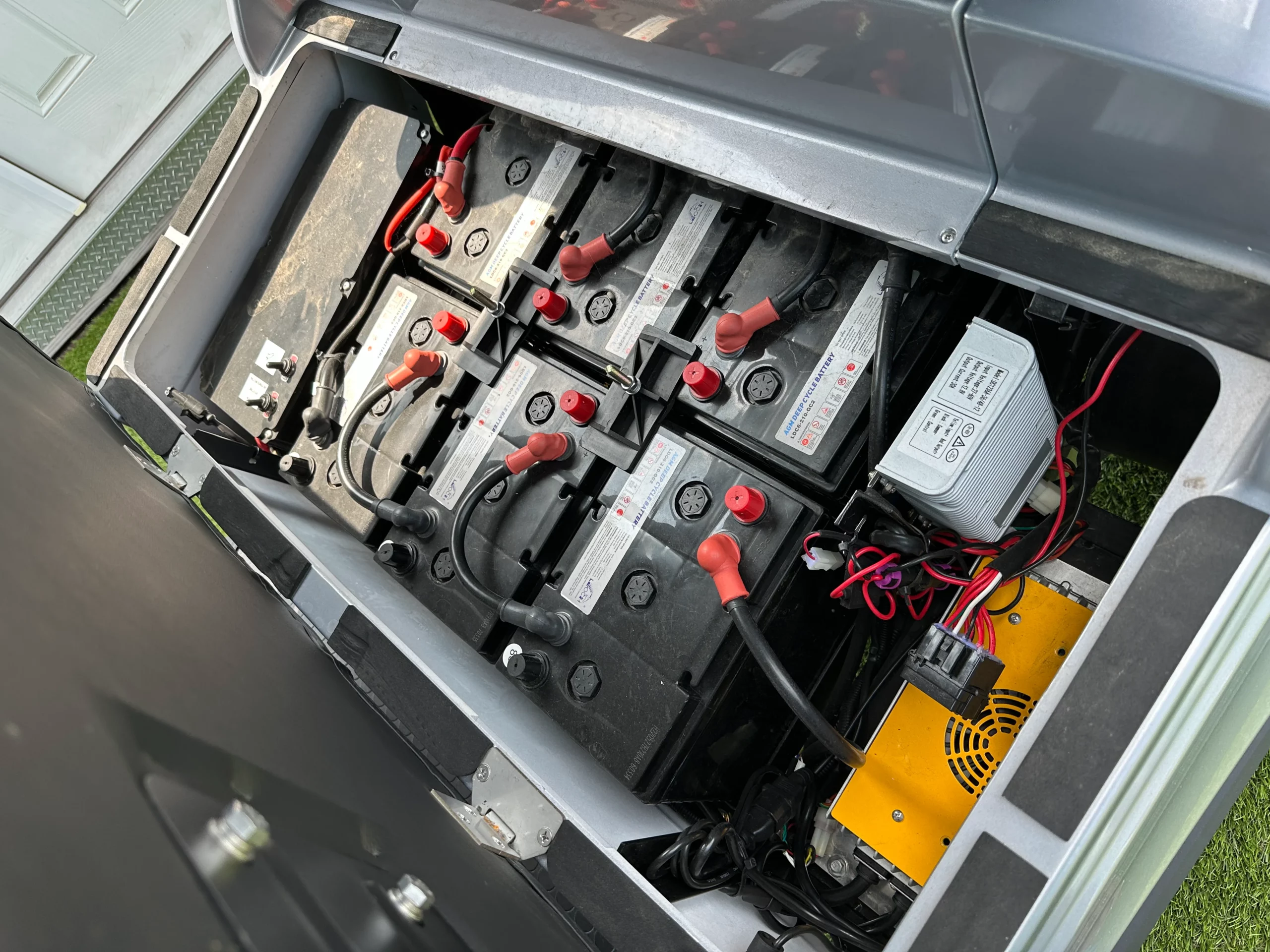
Image Source: hartvillegolfcarts.com
Deciphering Golf Cart Battery Weights
The weight of a golf cart battery is not just a number. It tells a story about the battery’s make-up, its power, and what it can do for your cart. Different types of batteries use different materials. This affects how heavy they are. Also, bigger batteries hold more power. This means they are heavier.
When you think about golf cart batteries, you usually think of two main types: lead-acid and lithium-ion. Each type has its own weight range. They also have their own pros and cons.
Lead-Acid Golf Cart Battery Weight
Lead-acid batteries are very common in golf carts. They have been used for a long time. These batteries get their weight from their main parts: lead plates and sulfuric acid. The more lead and acid inside, the more power the battery can store. This also means it will be heavier.
There are a few kinds of lead-acid batteries.
* Flooded Lead-Acid (FLA): These are the most common. They need water added sometimes. They are often the heaviest type.
* Sealed Lead-Acid (SLA): This group includes Absorbent Glass Mat (AGM) and Gel batteries. They do not need water added. They are often a bit lighter than FLAs of the same size. But they are still quite heavy.
Generally, a lead-acid golf cart battery weight can be anywhere from 50 to over 100 pounds for a single unit. This weight can vary by voltage and capacity. For example, a 6-volt battery will likely be lighter than a 12-volt battery of the same brand. This is because the 12-volt battery usually has more plates and lead inside to get the higher voltage.
Lithium-Ion Golf Cart Battery Weight
Lithium-ion batteries are newer for golf carts. They are becoming very popular. A big reason for this is their weight. Lithium-ion golf cart battery weight is much lighter than lead-acid batteries. This is because they use different materials that are not as heavy.
A lithium-ion battery can be two to three times lighter than a lead-acid battery with the same power output. For instance, a lithium battery designed to replace a whole pack of lead-acid batteries might weigh around 80 to 120 pounds. This single battery unit can replace six or eight heavy lead-acid batteries. This makes a huge difference in the total weight of the golf cart.
Here is a quick look at how the weights compare:
| Battery Type | Typical Weight Range (per unit, approximate) |
|---|---|
| Lead-Acid | 50 – 100+ pounds |
| Lithium-Ion | 25 – 60 pounds (for individual batteries) |
| Lithium-Ion | 80 – 120 pounds (for pack replacement units) |
This difference in weight is one of the main reasons people switch to lithium-ion. It can improve the cart’s speed, range, and ride.
Factors Influencing Battery Weight
Many things make a golf cart battery heavy or light. It is not just about if it is lead-acid or lithium-ion. Let’s look at the key factors.
Voltage
The voltage of a battery directly impacts its weight. Higher voltage usually means more cells inside the battery. This means more materials, and thus more weight.
- 6V golf cart battery weight: These are very common. They are used in carts that run on 36 volts or 48 volts. A typical
6V golf cart battery weightis between 55 to 70 pounds. - 8V golf cart battery weight: These are also widely used, especially in 48-volt golf carts. An
8V golf cart battery weightusually falls between 65 to 80 pounds. They have more cells than 6V batteries, so they are heavier. - 12V golf cart battery weight: These are used in some 48-volt and all 72-volt golf carts. A
12V golf cart battery weightis generally the heaviest per unit. They can weigh from 75 to over 90 pounds. They contain the most cells per battery among the lead-acid types.
It’s important to remember that these are weights for single batteries. A golf cart uses a pack of these batteries. So, the total weight depends on how many batteries are in the pack.
Capacity (Ah – Amp-hours)
Capacity tells you how much power a battery can store. It is measured in Amp-hours (Ah). A higher Ah rating means the battery can power your cart for longer. To store more power, a battery needs more active material. For lead-acid batteries, this means more lead plates. More lead plates equal more weight.
So, a 6V battery with 225 Ah will be heavier than a 6V battery with 180 Ah. This is true for all battery types. If you want a longer range, you will likely get heavier batteries.
Type (Deep Cycle vs. Starting)
Most golf carts use deep cycle golf cart battery weight. Deep cycle batteries are made to be drained and recharged many times. They have thicker lead plates. This makes them much heavier than car batteries (starting batteries). Starting batteries are made to give a quick burst of power to start an engine. They have thinner plates. They are not meant for deep discharges.
So, a deep cycle golf cart battery weight is higher than a typical car battery of the same voltage. This is because deep cycle batteries are built for endurance, not just a quick start.
Brand
Different battery brands might have slightly different weights for batteries of the same voltage and capacity. This is due to variations in manufacturing processes, plate thickness, and casing materials. For example, a Trojan golf cart battery weight is a common benchmark. Trojan is a well-known brand. Their batteries are known for being robust. Their weights are often at the higher end of the ranges mentioned. This is a sign of quality and durability.
Casing Material
The battery casing protects the internal parts. Most golf cart battery cases are made of strong plastic. The thickness and type of plastic can add a small amount to the overall weight. While not a huge factor, it does play a small part.
Detailed Weight Breakdown by Battery Type and Voltage
Let’s look closer at the weights for common golf cart battery setups. This will help you get a clear picture.
Lead-Acid Battery Weights in Detail
Lead-acid batteries are heavy. Their weight comes from lead and acid. The specific weight depends on their design, voltage, and capacity.
-
6V Lead-Acid Batteries: These are often used in 36V systems (six 6V batteries) and sometimes in 48V systems (eight 6V batteries).
- Typical
6V golf cart battery weightis between 55 to 70 pounds. - Examples:
- A 6V 210 Ah battery might weigh around 63 pounds.
- A 6V 232 Ah battery might weigh around 67 pounds.
- A 6V 260 Ah battery (high capacity) might weigh around 70 pounds.
- Typical
-
8V Lead-Acid Batteries: These are mostly found in 48V golf carts (six 8V batteries).
- Typical
8V golf cart battery weightis between 65 to 80 pounds. - Examples:
- An 8V 165 Ah battery might weigh around 68 pounds.
- An 8V 170 Ah battery might weigh around 70 pounds.
- An 8V 190 Ah battery (high capacity) might weigh around 75 pounds.
- Typical
-
12V Lead-Acid Batteries: These are used in some 48V carts (four 12V batteries) and all 72V carts (six 12V batteries).
- Typical
12V golf cart battery weightis between 75 to 90+ pounds. - Examples:
- A 12V 100 Ah battery might weigh around 78 pounds.
- A 12V 110 Ah battery might weigh around 80 pounds.
- A 12V 150 Ah battery (high capacity) might weigh around 92 pounds.
- Typical
Here’s a table for common lead-acid golf cart battery weights:
| Voltage | Capacity (Ah) | Approximate Single Battery Weight (pounds) |
|---|---|---|
| 6V | 180-260 | 55 – 70 |
| 8V | 150-190 | 65 – 80 |
| 12V | 100-150 | 75 – 95 |
These numbers can change slightly based on the specific model and brand. Always check the product specifications.
Lithium-Ion Battery Weights in Detail
Lithium-ion batteries are game-changers due to their low weight. Unlike lead-acid batteries, lithium-ion often comes as a single unit that replaces the entire pack of lead-acid batteries.
- Single Unit Replacements: A common lithium-ion battery for a golf cart will be a single battery. It will provide 36V, 48V, or 72V power. These units are designed to connect directly to your golf cart’s system.
- A
lithium-ion golf cart battery weightfor a 36V or 48V pack replacement unit can range from 60 to 120 pounds. - A 72V lithium-ion pack replacement unit might be heavier, around 100 to 150 pounds.
- A
Consider this: To get 48V using lead-acid batteries, you might need six 8V batteries (6 x 70 lbs = 420 lbs). A single 48V lithium-ion battery can do the same job. It might only weigh 80-100 pounds. This is a massive weight saving.
Here’s a table for common lithium-ion golf cart battery weights (as single pack replacements):
| System Voltage | Approximate Single Battery Unit Weight (pounds) |
|---|---|
| 36V | 60 – 90 |
| 48V | 80 – 120 |
| 72V | 100 – 150 |
The weight savings with lithium-ion are clear. This can have a big impact on your golf cart’s overall performance.
Golf Cart Battery Pack Weight
Most golf carts do not use just one battery. They use a group of batteries wired together. This group is called a battery pack. The golf cart battery pack weight is the total weight of all the batteries in this group. This total weight can be very heavy.
Let’s look at common golf cart battery pack setups and their total weights.
-
36-Volt Golf Carts (Lead-Acid):
- These carts typically use six 6-volt lead-acid batteries.
- If each 6V battery weighs about 65 pounds:
- Total Pack Weight = 6 batteries * 65 pounds/battery = 390 pounds.
-
48-Volt Golf Carts (Lead-Acid – using 8V batteries):
- These carts often use six 8-volt lead-acid batteries.
- If each 8V battery weighs about 70 pounds:
- Total Pack Weight = 6 batteries * 70 pounds/battery = 420 pounds.
-
48-Volt Golf Carts (Lead-Acid – using 12V batteries):
- Some 48V carts use four 12-volt lead-acid batteries.
- If each 12V battery weighs about 85 pounds:
- Total Pack Weight = 4 batteries * 85 pounds/battery = 340 pounds.
- Note: While this pack is lighter than the six 8V setup, the individual 12V batteries are heavier. The 12V setup offers fewer connection points.
-
72-Volt Golf Carts (Lead-Acid):
- These high-power carts typically use six 12-volt lead-acid batteries.
- If each 12V battery weighs about 85 pounds:
- Total Pack Weight = 6 batteries * 85 pounds/battery = 510 pounds.
Compare these lead-acid pack weights to a single lithium-ion replacement:
-
36-Volt Golf Carts (Lithium-Ion):
- A single 36V lithium-ion unit might weigh around 70 pounds.
- Weight Saving: 390 pounds (lead-acid) – 70 pounds (lithium) = 320 pounds saved.
-
48-Volt Golf Carts (Lithium-Ion):
- A single 48V lithium-ion unit might weigh around 90 pounds.
- Weight Saving: 420 pounds (lead-acid) – 90 pounds (lithium) = 330 pounds saved. (Using 8V lead-acid comparison)
- Weight Saving: 340 pounds (lead-acid) – 90 pounds (lithium) = 250 pounds saved. (Using 12V lead-acid comparison)
-
72-Volt Golf Carts (Lithium-Ion):
- A single 72V lithium-ion unit might weigh around 120 pounds.
- Weight Saving: 510 pounds (lead-acid) – 120 pounds (lithium) = 390 pounds saved.
The golf cart battery pack weight is a critical number. It affects many things about your cart. Reducing this weight, as seen with lithium-ion, can change your golf cart’s performance a lot.
Why Battery Weight Matters
The weight of your golf cart batteries is more important than you might think. It impacts several key areas of your golf cart’s performance and ownership experience.
Performance: Speed, Acceleration, and Range
- Speed: A lighter golf cart needs less power to move. This can mean higher top speeds, especially on flat ground.
- Acceleration: Less weight means the motor can make the cart go faster from a stop. Your cart will feel quicker.
- Range: A lighter cart uses less energy to travel. This means your batteries last longer on a single charge. You can drive further. Think of it like this: a car gets better gas mileage when it is lighter. The same goes for golf carts and battery charge.
Handling and Ride Quality
- Handling: Heavy batteries can make your cart feel sluggish. It can be harder to turn. A lighter battery pack can make your cart feel more nimble and easier to steer.
- Ride Quality: A very heavy cart can feel bumpy. It can put more stress on the suspension. Reducing battery weight can lead to a smoother ride.
Frame Stress and Longevity
- Less Stress: Golf cart frames are made to carry a certain amount of weight. Very heavy lead-acid batteries put a lot of stress on the frame, suspension, and tires.
- Longer Life: Reducing this weight can help your golf cart’s parts last longer. You might need fewer repairs over time. It can prevent wear and tear.
Energy Efficiency
- Lower Energy Use: Moving less weight means less energy is needed. This leads to lower electricity bills for charging your golf cart. Over time, these savings add up.
Installation and Removal
- Easier Handling: Lead-acid golf cart batteries are extremely heavy. Moving them for replacement or maintenance is hard work. It often needs two people. It is also a risk for injury.
- Safer: Lighter lithium-ion batteries are much easier and safer to install or remove. One person can often handle them alone.
Shipping Costs
- Higher Costs for Heavy Items: When you buy new batteries, especially online,
golf cart battery shipping weightis a big factor in the price. Freight shipping for heavy lead-acid batteries can be very expensive. - Lower Costs for Lighter Items: Lighter lithium-ion batteries cost less to ship. This can save you a lot of money upfront.
Managing Battery Weight
Knowing about battery weight is helpful. But what can you do with this knowledge? Here are some ways to manage battery weight for your golf cart.
Choosing Between Lead-Acid and Lithium-Ion
- Lead-Acid (Heavier):
- Pros: Lower initial cost, proven technology.
- Cons: Very heavy, shorter lifespan, needs maintenance, less efficient.
- Best for: Budget-conscious buyers, those who don’t mind maintenance, or those who drive short distances.
- Lithium-Ion (Lighter):
- Pros: Much lighter, longer lifespan, no maintenance, faster charging, better performance (speed, range).
- Cons: Higher initial cost.
- Best for: Those seeking top performance, long range, low maintenance, and long-term savings despite the higher upfront cost. The weight saving is a major benefit here.
If weight is a big concern for you, lithium-ion is the clear winner. The overall benefits often make the higher price worth it for many owners.
Proper Installation
No matter what battery type you pick, proper installation is key.
* Secure: Make sure all batteries are held firmly in place. Heavy batteries can shift. This can cause damage to the cart or the batteries themselves.
* Clean Connections: Keep battery terminals clean and tight. This ensures good power flow. Loose or dirty connections can cause problems.
Regular Maintenance (for Lead-Acid)
- Water Levels: If you have flooded lead-acid batteries, check the water levels often. Add distilled water when needed. This helps the batteries last longer. It also keeps them working well.
- Cleaning Terminals: Keep battery terminals free of corrosion. Use a wire brush and a baking soda solution. Clean terminals mean better power transfer.
Checking Battery Health
- Voltage Checks: Regularly check the voltage of each battery in your pack. This helps you see if one battery is failing. A weak battery can drag down the whole pack.
- Weight Can Change: Over time, lead-acid batteries can lose some weight due to evaporation (if not maintained). This can affect performance. While not a huge factor, it’s part of knowing your battery.
By choosing the right battery type and taking good care of your batteries, you can make sure your golf cart runs at its best. The weight of your batteries plays a direct role in this.
Conclusion
The question “How much does a golf cart battery weigh?” leads to a lot of important answers. A single lead-acid golf cart battery typically weighs 50 to over 90 pounds. This depends on its voltage and capacity. A 6V battery might be 55-70 pounds. An 8V battery could be 65-80 pounds. A 12V battery can be 75-95 pounds.
The total golf cart battery pack weight can be very heavy. A lead-acid pack for a 48V cart often weighs 340 to 420 pounds. In contrast, a lithium-ion battery that replaces the entire pack might only weigh 80 to 120 pounds. This is a huge difference.
Battery weight affects many things. It changes your cart’s speed, how fast it picks up pace, and how far it can go. It also impacts how the cart handles. It even affects the life of your cart’s frame and suspension. Plus, it changes how much it costs to ship new batteries.
Choosing lighter lithium-ion batteries can give your golf cart a big performance boost. It can make it last longer and save you money on charging and shipping. While lead-acid batteries are cheaper at first, the long-term benefits of lighter, more efficient lithium-ion often win out. Knowing battery weight helps you make smart choices for your golf cart. It helps you get the best ride and the most value.
Frequently Asked Questions (FAQ)
Q1: What is the average golf cart battery weight?
A1: The average golf cart battery weight for a single lead-acid unit is about 50 to 90 pounds. Lithium-ion batteries are much lighter, often weighing 25 to 60 pounds per individual unit or 80-120 pounds for a full pack replacement unit.
Q2: How heavy is a 48V golf cart battery pack?
A2: A 48V golf cart battery pack using lead-acid batteries typically weighs between 340 to 420 pounds. This depends on if it uses four 12V batteries or six 8V batteries. If you switch to a single 48V lithium-ion battery, the pack weight drops to around 80 to 120 pounds.
Q3: Does battery weight affect golf cart speed and range?
A3: Yes, battery weight greatly affects both speed and range. A lighter golf cart needs less energy to move. This can lead to higher top speeds and faster acceleration. It also means the batteries last longer on a single charge. This gives you a longer driving range.
Q4: Is a heavier battery better for a golf cart?
A4: Not necessarily. While heavier lead-acid batteries often mean higher capacity within their type, the goal is often to reduce overall weight for better performance. Lithium-ion batteries are much lighter but offer superior performance and lifespan. So, lighter is generally better if you are talking about the battery type and not just capacity within the same type.
Q5: How do I reduce my golf cart’s weight?
A5: The best way to reduce your golf cart’s weight is to switch from lead-acid batteries to lithium-ion batteries. This change can cut hundreds of pounds from your cart. You can also remove any unnecessary items you carry in the cart.
Q6: What is deep cycle golf cart battery weight compared to a car battery?
A6: Deep cycle golf cart battery weight is much heavier than a typical car battery of similar voltage. Deep cycle batteries are built with thicker lead plates. This lets them handle repeated deep discharges. Car batteries (starting batteries) have thinner plates and are only meant for short bursts of power.
Q7: How much does Trojan golf cart battery weight usually fall within?
A7: Trojan golf cart battery weight is usually at the higher end of the ranges for lead-acid batteries due to their robust construction. For example, a Trojan 6V deep cycle battery might weigh around 65-70 pounds, an 8V around 70-75 pounds, and a 12V around 80-90 pounds, depending on the specific model and capacity.