
Essential Guide: How Many Irons In A Set Of Golf Clubs
How many irons in a set of golf clubs? Most golfers carry between six and eight irons in their bag. A standard golf club set often includes irons numbered from 4 or 5 up to a pitching wedge. However, the exact number of irons in golf bag can change based on a player’s skill level, the course they play, and their personal choices. Golf club rules allow for a total of 14 clubs in a bag, so golfers pick their irons as part of their overall club collection.
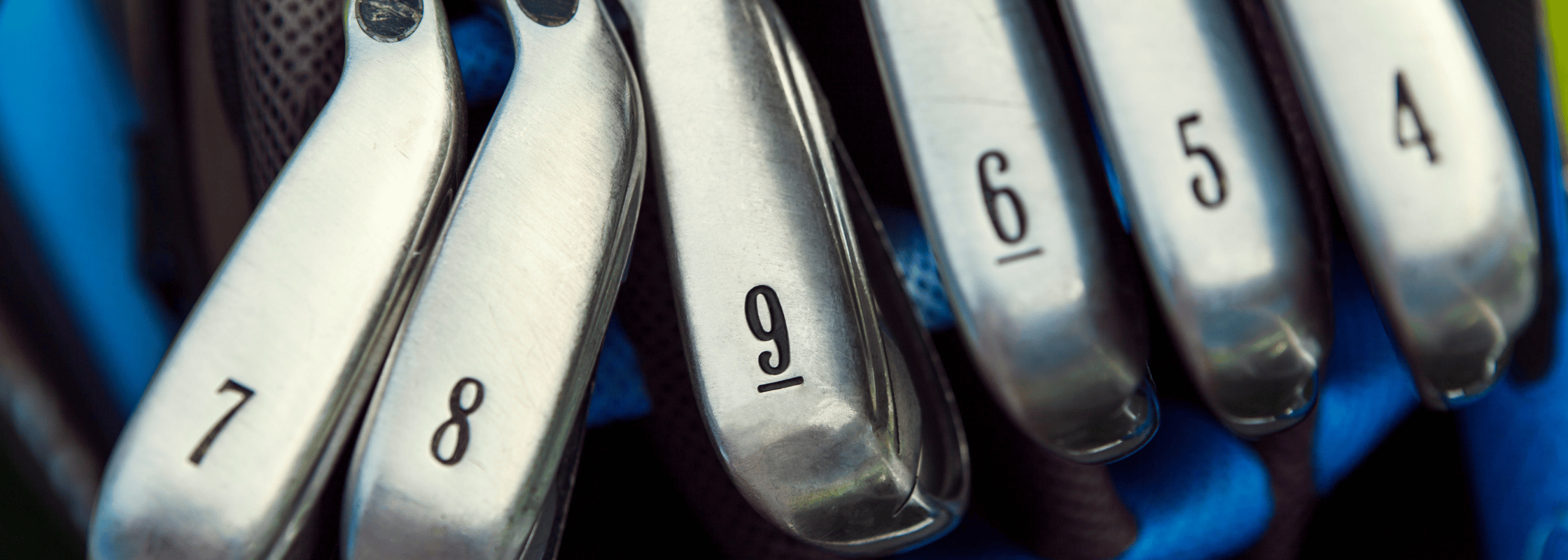
Image Source: ucarecdn.com
The Core of the Set: How Many Irons are Standard?
When you buy a ready-made golf club set, you will often find a common range of irons. These sets aim to give a golfer clubs for many shots. A typical standard golf club set irons will include clubs from the 4-iron or 5-iron all the way to the pitching wedge. This means you might get a 4, 5, 6, 7, 8, 9, and Pitching Wedge (PW). That is seven irons. Some sets might start at the 5-iron, giving you six irons.
Why this range? Lower numbered irons (like the 4-iron) hit the ball farther. Higher numbered irons (like the 9-iron and pitching wedge) hit the ball shorter and higher. This range helps golfers cover many distances on the course. The golf club set composition aims for a good mix of clubs.
Here is a common setup for irons in a standard set:
| Iron Number | Typical Loft (Degrees) | Main Use |
|---|---|---|
| 4-Iron | 22-25 | Long shots from the fairway or tee |
| 5-Iron | 25-28 | Medium-long shots |
| 6-Iron | 28-32 | Medium shots |
| 7-Iron | 32-36 | Medium-short shots; very versatile |
| 8-Iron | 36-40 | Shorter approach shots |
| 9-Iron | 40-44 | Short approach shots; good for control |
| Pitching Wedge (PW) | 44-48 | Chip shots, short approaches, full swings |
This table shows how different golf iron club numbers help golfers hit shots of different lengths and heights. Most golfers feel comfortable with this range. It gives them the tools they need for most shots on the course.
Golf Club Rules: The Maximum Allowed
Golf has clear rules about how many clubs a player can carry. The maximum golf clubs allowed in a golf bag during a round is 14. This rule is set by the R&A and USGA, the main golf ruling bodies. This means your total number of woods, irons, wedges, and putter cannot go over 14.
These golf club rules 14 clubs affect how a golfer builds their set. You must pick the 14 clubs that best suit your game. If you carry more than 14 clubs, you will get a penalty. The penalty is two strokes for each hole where you broke the rule. The maximum penalty is four strokes per round. It is very important to count your clubs before you start playing.
So, while a standard iron set might have 6-7 irons, you also need to make room for other clubs. This includes drivers, fairway woods, hybrids, and a putter. The golf club set composition becomes a puzzle. You want to make sure you have clubs for long shots, mid-range shots, short shots, and putting. The number of irons you pick will depend on what other clubs you like to carry. Some golfers might carry fewer irons to make room for an extra hybrid or another wedge.
Diving Deeper: Types of Golf Irons
Irons are grouped by their number. This number roughly tells you how far the ball will go. It also tells you how high the ball will fly. Lower numbers mean longer shots and lower flight. Higher numbers mean shorter shots and higher flight. Let’s look at the main types of golf irons:
Long Irons (2, 3, 4 Irons)
These irons have the lowest lofts among irons. Loft is the angle of the clubface. Lower loft means the ball flies lower and travels farther.
* 2-Iron: Very low loft. Hard to hit for most golfers. Gives a very low, piercing ball flight. Many golfers now use hybrids instead of a 2-iron.
* 3-Iron: Also low loft. A bit easier to hit than a 2-iron. Used for long shots from the fairway or off the tee when accuracy is key.
* 4-Iron: This is often the longest iron in many sets. It is still a long club but more manageable than a 2 or 3-iron. Good for long approaches or tight tee shots.
Long irons are generally harder to hit well. They need a faster swing speed to get the ball up in the air. For this reason, many golfers, especially those newer to the game, choose to replace their long irons with hybrid clubs. Hybrids are easier to hit and give similar distance.
Mid Irons (5, 6, 7 Irons)
These are the workhorses of a golf bag. They offer a good balance of distance and control.
* 5-Iron: A good mid-range club. Useful for longer approach shots to the green.
* 6-Iron: A very common club for mid-range shots. Good for controlled shots into the green.
* 7-Iron: Often called the most versatile iron. Many golfers use a 7-iron for practice. It is good for many different shots, from full swings to chip shots. It is easier to hit than long irons.
Mid irons are found in almost every golfer’s bag. They provide a good gap between long-distance clubs and short-game clubs. Mastering these irons is key to good golf.
Short Irons (8, 9 Irons)
These irons have higher lofts. They are designed for accuracy and stopping the ball quickly on the green.
* 8-Iron: Used for shorter approach shots. Provides a good arc and stopping power.
* 9-Iron: Used for even shorter approach shots. The ball flies high and lands softly. Great for getting close to the pin.
Short irons are generally easier to hit than mid or long irons. They give golfers more control over distance and direction. They are vital for scoring well.
Here is a summary of golf iron club numbers and their general uses:
| Iron Type | Numbers | Typical Yardage (Approx.) | Key Feature |
|---|---|---|---|
| Long Irons | 2, 3, 4 | 180-230+ yards | Longest distance, lower flight, harder to hit |
| Mid Irons | 5, 6, 7 | 150-180 yards | Balanced distance and control, good versatility |
| Short Irons | 8, 9 | 120-150 yards | Good control, higher flight, softer landing |
Keep in mind that yardages are just guides. They depend greatly on the golfer’s swing speed and skill.
The Role of Wedges: Are They Irons?
Yes, wedges are a special type of iron. They are designed for short, high shots and for getting out of tricky spots. The question, “Are wedges included in golf set?” is important. They typically are, especially the pitching wedge.
Most golfers carry at least two or three wedges. A full set of wedges often includes:
- Pitching Wedge (PW): This is almost always part of a standard iron set. Its loft is usually between 44 and 48 degrees. It is used for full shots from around 100-120 yards and for chip shots near the green.
- Gap Wedge (GW) or Attack Wedge (AW): This wedge fills the distance gap between a pitching wedge and a sand wedge. Its loft is usually 50-52 degrees. It is good for shots from about 80-100 yards.
- Sand Wedge (SW): This wedge has a high loft, usually 54-56 degrees. It also has a wider bottom (called “bounce”). This design helps it glide through sand in bunkers without digging in too much. It is also great for short shots from grass around the green.
- Lob Wedge (LW): This wedge has the highest loft, typically 58-60 degrees, or even more. It is used to hit the ball very high and make it stop quickly on the green. Perfect for shots over bunkers or when you have little green to work with.
Wedges are crucial for the short game. They are what golfers use to get the ball close to the hole from within 100 yards. Without a good selection of wedges, it is hard to score well. While a standard set might only come with a PW, many golfers buy extra wedges to complete their short game arsenal. This adds to the total number of irons in golf bag.
Building Your Arsenal: Beyond the Standard Set
As we know, the maximum golf clubs allowed is 14. Knowing how many clubs in a full set helps golfers decide which clubs to carry. Most golfers do not just use a driver, a set of irons, and a putter. They add other clubs to fill gaps and make shots easier.
The golf club set composition can vary wildly from player to player. Here is a common breakdown of the 14 clubs:
- Driver (1): For the longest shots off the tee.
- Fairway Woods (1-2): For long shots from the fairway or tee. (e.g., 3-wood, 5-wood).
- Hybrids (1-3): These clubs combine features of woods and irons. They are often easier to hit than long irons and go farther than mid-irons. They replace 2, 3, or 4-irons for many players.
- Irons (6-8): This is where most of your irons will be. For example, a 5-iron through a pitching wedge.
- Wedges (2-4): Beyond the pitching wedge, golfers often add a gap wedge, sand wedge, and lob wedge.
- Putter (1): For rolling the ball into the hole on the green.
Example of a 14-club setup for an average golfer:
* Driver (1)
* 3-wood (1)
* Hybrid (1) – replacing a 4-iron
* Irons: 5, 6, 7, 8, 9 (5 irons)
* Wedges: Pitching Wedge, Gap Wedge, Sand Wedge, Lob Wedge (4 wedges)
* Putter (1)
* Total: 1+1+1+5+4+1 = 13 clubs. This leaves one slot open if needed.
Another example, closer to 14 clubs:
* Driver (1)
* 3-wood (1)
* 5-wood (1)
* Irons: 4, 5, 6, 7, 8, 9 (6 irons)
* Wedges: Pitching Wedge, Sand Wedge (2 wedges)
* Putter (1)
* Total: 1+1+1+6+2+1 = 12 clubs. Leaves two slots open for maybe a hybrid and a lob wedge.
This shows that the number of irons in golf bag is flexible. It depends on what other clubs a golfer needs or wants.
Assembling Your First Set: Beginner Golf Iron Set Considerations
If you are new to golf, choosing your first set of irons can seem hard. A beginner golf iron set should focus on ease of use and forgiveness. Forgiveness means the club helps reduce bad shots when you do not hit the ball perfectly.
Here are some tips for a beginner golf iron set:
- Focus on Mid and Short Irons: Beginners often struggle with long irons (2, 3, 4). These require a lot of swing speed and skill. It is better to start with irons that are easier to hit. A set that includes 6, 7, 8, 9, and Pitching Wedge is a great starting point.
- Consider Hybrids: Many beginner sets come with hybrids instead of long irons. A 4-hybrid or 5-hybrid can be much easier to hit than their iron counterparts. They fly higher and land softer.
- Game-Improvement Irons: Look for irons labeled “game-improvement.” These clubs often have a larger clubhead and a cavity back design. This design moves weight to the edges of the club, making it more forgiving on off-center hits.
- Standard Loft: Do not get irons with very strong (low) lofts. Strong lofts are designed for distance but can be harder to control. Standard lofts are more forgiving for beginners.
- Shaft Flex: Get the right shaft flex for your swing speed. Most beginners do well with “regular” or “light” (senior) flex shafts. This helps you get the ball in the air more easily.
- Do Not Overbuy: You do not need all 14 clubs right away. A good beginner set might have a driver, a few irons (like 6-PW), a sand wedge, and a putter. You can add more clubs as your game improves.
A common beginner golf iron set might look like this: 6-iron, 7-iron, 8-iron, 9-iron, Pitching Wedge. This gives you five irons that are fairly easy to hit and cover a good range of distances. Later, you can add a 5-iron or a hybrid to extend your reach.
Factors Influencing Your Iron Selection
Choosing the right irons is a personal choice. Many things play a role in what irons a golfer puts in their bag.
-
Skill Level:
- Beginners/High Handicappers: Benefit from forgiving, cavity-back irons with wider soles. They often use fewer long irons, preferring hybrids.
- Mid Handicappers: Can use a mix. Maybe a few game-improvement irons for long shots and more traditional irons for mid and short shots.
- Low Handicappers/Pros: Often use “blade” or “muscle-back” irons. These offer maximum control and feel but are very unforgiving. They might carry more long irons if they have the swing speed to hit them well.
-
Swing Speed: This is how fast you swing the club.
- Faster swing speeds can handle lower-lofted irons (like 3 or 4-irons) and less forgiving designs.
- Slower swing speeds do better with higher-lofted irons, hybrids, and forgiving designs that help get the ball airborne.
-
Course Type:
- Long Courses: Might need more clubs for distance, possibly a 4-iron or a hybrid.
- Short/Tight Courses: More focus on control and accuracy. Might carry more wedges and short irons.
-
Personal Preference and Feel: Some golfers simply like the feel of certain irons. This can be more important than what a chart says. The look of the club at address (when you stand over the ball) also matters. Some golfers prefer a thicker top line, others a thinner one.
-
Budget: Golf clubs can be expensive. Many beginners start with used sets or complete package sets. As skills grow, golfers might upgrade to more specific, higher-priced irons.
-
Club Fitting: Getting custom fitted for clubs is very helpful. A fitter will measure your swing, wrist-to-floor length, and other things. They will then suggest the best irons (and other clubs) for you. This ensures the right shaft flex, length, and lie angle. A good fitting can greatly improve your game. It helps you pick the right number of irons in golf bag for your specific needs.
Maintaining Your Irons: Tips for Longevity and Performance
Taking care of your golf irons helps them last longer and perform their best. Good care also helps you play better golf.
Cleaning Your Irons
- After Every Shot: Use a golf towel to wipe dirt and grass off the clubface. This keeps the grooves clean. Clean grooves are very important for putting spin on the ball.
- After Every Round: Use warm water, a mild soap, and a stiff brush (like a plastic bristle brush, not wire, which can damage the clubface). Scrub the clubface and grooves well. Rinse thoroughly with clean water.
- Dry Completely: Always dry your irons completely before putting them back in your bag. This prevents rust. Use a dry towel.
- Check Grips: Wipe your grips with a damp cloth to remove sweat and dirt. Clean grips give you a better hold.
Storing Your Irons
- Dry Place: Store your golf clubs in a cool, dry place. Avoid storing them in a damp garage or car trunk for long periods. Moisture leads to rust.
- Club Covers: Use headcovers for your woods and hybrids to protect them. While not common for irons, some golfers use iron covers. These can protect the clubs from dings, but can also trap moisture if not used correctly.
Checking Grips and Shafts
- Grip Wear: Grips wear down over time. If your grips feel slick, hard, or show shiny spots, it is time to replace them. Worn grips make it harder to hold the club, leading to worse shots.
- Shaft Damage: Check shafts for any dents, cracks, or bends. Carbon fiber (graphite) shafts can splinter. Steel shafts can bend. If you see damage, have a pro check it out. A damaged shaft can affect performance and even break during a swing.
Proper care helps keep your golf iron club numbers performing at their peak, round after round.
The Future of Irons: What’s Next?
Golf club technology keeps moving forward. Irons are no exception. Companies are always looking for ways to make irons easier to hit, go farther, and feel better.
-
Technology Advancements:
- Hollow Body Designs: Some irons are now made with hollow bodies. This lets designers put weight where it helps most. It makes the club more forgiving and faster across the face.
- AI Design: Artificial intelligence is used to design clubfaces. AI can test thousands of designs very quickly to find the best one. This leads to faces that are faster and more consistent.
- Multi-Material Construction: Irons are no longer just one piece of metal. They combine different materials like steel, tungsten, and polymers. Each material is placed to improve feel, forgiveness, or distance.
- Loft Gapping: Club makers are paying more attention to the gaps between irons. They want to ensure each iron goes a predictable distance further than the one before it. This helps golfers choose the right club.
-
Design Trends:
- Stronger Lofts: Many new irons have stronger (lower) lofts. This makes them hit the ball farther. However, it also means a 7-iron today might have the loft of an old 5-iron. This makes the golf iron club numbers a little less direct when comparing old and new clubs.
- More Forgiveness: Even “player’s” irons (for better golfers) are becoming more forgiving. Makers are adding small features to help even pros hit better shots when they miss the sweet spot.
- Personalization: More golfers are getting custom fittings. This means irons are not just bought off the shelf. They are tuned to a player’s exact needs. This helps fine-tune the golf club set composition for each individual.
The trend is towards making golf easier and more fun for everyone, from beginners to pros. This means irons will continue to evolve, offering better performance and more choices for how many and what types of golf irons you put in your bag.
Frequently Asked Questions (FAQ)
Q1: Do I need a full set of 14 clubs as a beginner?
A1: No, a beginner does not need all 14 clubs. A smaller set is often better. It helps you learn the basics without getting confused by too many choices. A beginner golf iron set usually focuses on mid to short irons (like 6-PW) along with a driver, a hybrid, and a putter. You can add more clubs as your skills grow.
Q2: What is the most important iron in a set?
A2: The 7-iron is often seen as the most important. It is versatile and often used for practice. It gives a good balance of distance and control. Many golfers find their swing rhythm with their 7-iron.
Q3: Can I carry more than 14 clubs if I’m not playing in a tournament?
A3: The golf club rules 14 clubs apply to official rounds. For casual play or practice, you can carry as many clubs as you like. However, sticking to 14 clubs, even in casual play, helps you practice with your official setup.
Q4: Are hybrid clubs considered irons?
A4: No, hybrids are not truly irons. They are a mix between a wood and an iron. They are designed to replace long irons (like 2, 3, or 4-irons) because they are easier to hit and offer similar distance. They help fill out your golf club set composition.
Q5: How do I know if my irons are too old?
A5: Irons can last a long time. Signs they are too old include worn grooves, rusty clubheads, or worn-out grips. If your irons are very old, technology changes might mean new irons offer better performance and forgiveness.
Q6: What does “loft” mean on an iron?
A6: Loft is the angle of the clubface. It affects how high the ball flies and how far it goes. A higher loft means a higher, shorter shot. A lower loft means a lower, longer shot. This is key to understanding golf iron club numbers.
Q7: How many wedges should I carry?
A7: Most golfers carry 2 to 4 wedges beyond their pitching wedge. This usually includes a gap wedge, sand wedge, and lob wedge. The choice depends on your short game needs and the overall number of irons in golf bag you want to have.