
You may wonder, “How many irons are in a set of golf clubs?” A typical set of golf clubs often includes between 6 and 8 irons. These clubs are key parts of a golf bag, used for many shots on the course. Golfers use them for shots that are too far for wedges but not far enough for woods. The exact number of irons can change depending on the set and the golfer’s needs, but they form a large part of the standard golf set composition.
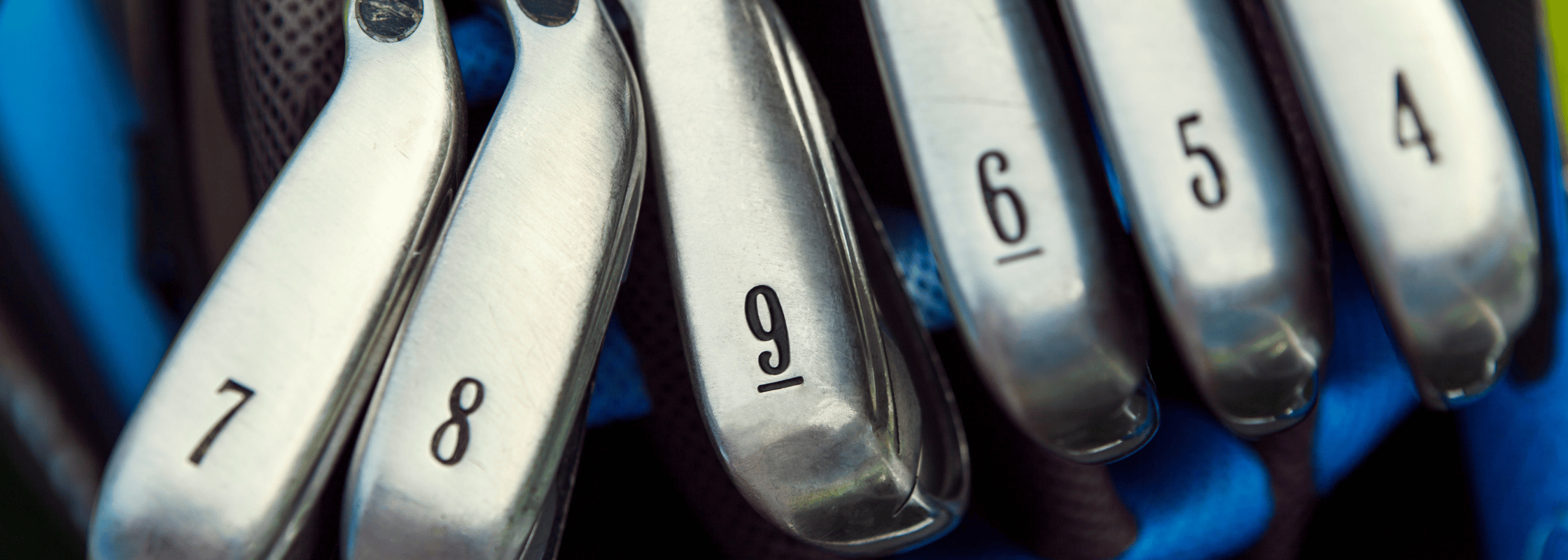
Image Source: ucarecdn.com
Decoding Golf Irons
Golf irons are clubs with flat, angled faces, usually made of metal. Players use them to hit the ball over medium distances, usually aiming for the green. Each iron has a number, like 3, 4, 5, 6, 7, 8, or 9. The number on the iron tells you how far the ball will likely go and how high it will fly.
Lower numbers (like 3, 4, 5) have less angle on the face. This helps the ball go farther and fly lower. These are often called long irons in golf. Higher numbers (like 8, 9) have more angle on the face. This makes the ball go shorter distances and fly higher. These are known as short irons in golf. Mid irons (like 6, 7) are in the middle, offering a good mix of distance and height.
The Usual Number of Irons
Most golf sets bought in a store will have a range of irons. It is common to find sets that include irons from the 4-iron through the pitching wedge (PW). This gives you these irons: 4, 5, 6, 7, 8, 9, and PW. This adds up to 7 irons. Some sets might start with a 3-iron, making it 8 irons in total (3, 4, 5, 6, 7, 8, 9, PW).
- Common Iron Sets:
- 4-iron through Pitching Wedge (7 irons)
- 3-iron through Pitching Wedge (8 irons)
These irons are a core part of the components of a golf club set. They give golfers options for many different shots on the course.
Knowing the Different Irons
Each iron is designed for a specific job.
- Long Irons (3, 4): These are for longer shots. They are harder to hit well because the club face has less angle. They need a faster swing speed to get the ball up in the air. Many players now use hybrid clubs instead of long irons because hybrids are often easier to hit.
- Mid Irons (5, 6, 7): These are easier to hit than long irons. They are used for approach shots to the green from moderate distances. They are often called the “scoring clubs” for many players because they are used for shots that lead to getting the ball close to the hole.
- Short Irons (8, 9): These are the easiest irons to hit high and straight. They are used for shorter approach shots or chipping around the green. They give players good control over where the ball lands.
The pitching wedge (PW) is often grouped with the irons, even though it’s also a type of wedge. It acts like a high-lofted short iron, used for shots into the green or short chips.
The Rule About How Many Clubs You Can Carry
While a set might have a certain number of irons, there is a rule about the total number of golf clubs allowed in a golfer’s bag during a round. The regulation golf club limit is 14 clubs. This means that all the clubs in your bag – drivers, woods, hybrids, irons, wedges, and your putter – must add up to 14 or less.
This rule is set by the main golf rule-makers, the USGA and The R&A. It means golfers must choose carefully which clubs to put in their bag before starting a round. You cannot just put all your clubs in the bag.
How the 14-Club Limit Affects Irons
Since you can only have 14 clubs in total, the number of irons you carry is part of this limit. If a standard set comes with 7 irons (4-PW), that uses up 7 spots in your bag. You then have 7 more spots for other clubs like:
- Driver (1 club)
- Woods (like a 3-wood, 5-wood – maybe 2 clubs)
- Hybrids (maybe 1 or 2 clubs, often replacing long irons)
- Wedges (like a sand wedge, lob wedge – maybe 2 or 3 clubs, in addition to the pitching wedge)
- Putter (1 club)
Let’s look at an example of a typical golf bag clubs setup that respects the 14-club limit:
| Club Type | Example Clubs Included | Number of Clubs |
|---|---|---|
| Driver | Driver (10.5°) | 1 |
| Fairway Woods | 3-wood (15°) | 1 |
| Hybrids | 3-Hybrid (19°) | 1 |
| Irons | 4-iron, 5-iron, 6-iron, 7-iron, 8-iron, 9-iron | 6 |
| Wedges | Pitching Wedge (PW), Sand Wedge (SW), Lob Wedge (LW) | 3 |
| Putter | Blade or Mallet Putter | 1 |
| Total | 13 |
In this example, there are 6 irons plus the pitching wedge which makes it effectively 7 ‘iron-like’ clubs used for approach shots. This setup leaves room for one more club if the golfer wanted, or keeps the total at 13. This shows how the number of irons is part of a bigger choice about the whole set.
Knowing About Different Set Compositions
A standard golf set composition includes a mix of drivers, woods, hybrids, irons, wedges, and a putter. The exact mix can be different from set to set.
Components of a Golf Club Set Explained
Let’s look closer at the different parts that make up a full set:
- Drivers: This is the longest club, used to hit the ball the farthest from the tee box on long holes. It has the largest head and lowest loft (face angle).
- Fairway Woods: These clubs are shorter than a driver but longer than irons. They are used for hitting the ball long distances from the fairway or the tee. They come in numbers like 3, 5, 7.
- Hybrids: These clubs mix features of irons and woods. They are designed to be easier to hit than long irons and often go a similar distance. They have become very popular and often replace 3, 4, or even 5 irons in many golfers’ bags.
- Irons: As discussed, these are for shots between woods/hybrids and wedges. They cover a range of distances.
- Wedges: These are high-lofted clubs used for shorter shots, often around the green or out of sand traps. The number of wedges in a set varies greatly, but common types include Pitching Wedge (PW), Sand Wedge (SW), Gap Wedge (GW), and Lob Wedge (LW). The PW is usually included in an iron set, while the others are often bought separately or included based on the set type.
- Putter: This club is used for hitting the ball on the putting green to roll it into the hole. Every golfer needs a putter.
So, what is a complete golf set? It is not just a set of irons. A complete set typically means a collection of clubs that allows a golfer to play a round of golf, including clubs for long, medium, and short shots, plus a putter. It adheres to the 14-club limit.
The Number of Wedges in a Set
Wedges are special types of irons with very high loft. While the pitching wedge is often included with a set of irons (like 4-PW or 3-PW), other wedges are usually considered separately.
- Pitching Wedge (PW): Usually has a loft between 44 and 48 degrees. Used for full shots into the green or chipping. Often part of the iron set.
- Gap Wedge (GW) or Attack Wedge (AW): Loft between 50 and 52 degrees. Used to cover the distance gap between the pitching wedge and sand wedge.
- Sand Wedge (SW): Loft between 54 and 58 degrees. Designed for hitting the ball out of sand bunkers, but also used for other short shots.
- Lob Wedge (LW): Loft between 60 and 64 degrees. Used for high, short shots that need to stop quickly on the green.
While a standard iron set might include a PW, a golfer looking to build a complete set up to the 14-club limit will often add 2 or 3 more wedges (like a SW and a GW/LW).
Example of how wedges fit into the 14-club limit:
Let’s take the previous example set:
* Driver (1)
* 3-wood (1)
* 3-Hybrid (1)
* Irons (4-9 = 6 clubs)
* Wedges (PW, SW, LW = 3 clubs)
* Putter (1)
* Total = 1 + 1 + 1 + 6 + 3 + 1 = 13 clubs. This works.
If the iron set was 3-PW (8 irons) and the golfer added a SW and LW (2 wedges), plus the typical Driver, 3-wood, and Putter:
* Driver (1)
* 3-wood (1)
* Irons (3-9, PW = 8 clubs)
* Wedges (SW, LW = 2 clubs)
* Putter (1)
* Total = 1 + 1 + 8 + 2 + 1 = 13 clubs. This also works.
It shows how the number of irons directly impacts how many other clubs, like wedges or hybrids, a golfer can carry while staying within the regulation golf club limit.
Interpreting Set Numbers: What Do They Mean?
When you buy a set of clubs, it might be sold as an “8-piece set” or “12-piece set”. This number often includes all the clubs, and sometimes even the golf bag itself or headcovers.
For example, an “11-piece set” might include:
* Driver (1 piece)
* Fairway Wood (1 piece)
* Hybrid (1 piece)
* Irons (like 5-PW = 6 pieces)
* Putter (1 piece)
* Golf Bag (1 piece)
* Total = 11 pieces (but only 10 clubs)
This is different from saying how many irons are in the set or how many clubs total are in the set to play golf with. Always check the list of clubs included, not just the “piece” count.
Beginner Golf Club Sets
A beginner golf club set often has fewer clubs than a set for more experienced players. This is because beginners are still learning and don’t need as many options. Fewer clubs can also make the game simpler and less confusing.
A typical beginner set might include around 7-10 clubs, not counting the bag. The irons in a beginner set are usually the easier-to-hit ones.
- Typical Beginner Iron Set:
- Often starts with a 6-iron or 7-iron instead of a 3-iron or 4-iron.
- Includes irons like 6, 7, 8, 9.
- Includes a Pitching Wedge.
- May or may not include a Sand Wedge.
A beginner set might look like this:
| Club Type | Example Clubs Included | Number of Clubs |
|---|---|---|
| Driver | Driver | 1 |
| Fairway Wood or Hybrid | 5-wood or 4-hybrid | 1 |
| Irons | 6-iron, 7-iron, 8-iron, 9-iron | 4 |
| Wedges | Pitching Wedge (PW) | 1 |
| Putter | Putter | 1 |
| Total | 8 |
This example beginner set has only 4 irons plus the PW, for a total of 5 ‘iron-like’ clubs. This is fewer than the 6 or 7 irons (plus PW) in a standard set, but it is plenty for a new player. Beginner sets focus on clubs that are forgiving and easy to hit, which generally means avoiding the hard-to-hit long irons (3, 4).
Using a beginner set is a great way to start. As a player gets better, they can add more clubs, maybe a 5-iron, a sand wedge, or a gap wedge, building up towards the 14-club limit as their skills grow.
Typical Golf Bag Clubs: A Closer Look
Let’s think about what most golfers put in their bag. While the 14-club limit is the rule, the mix of clubs changes from player to player.
A common setup for someone playing regularly might be:
- Driver (1)
- Fairway Woods (1 or 2)
- Hybrids (1 or 2)
- Irons (often 6-8, including the PW)
- Wedges (2 or 3 other wedges like SW, GW, LW)
- Putter (1)
Let’s see how the irons fit into this mix to reach close to 14 clubs:
-
Scenario 1: Fewer Irons, More Hybrids/Wedges
- Driver (1)
- 3-wood, 5-wood (2)
- 3-Hybrid, 4-Hybrid (2)
- Irons: 5, 6, 7, 8, 9 (5 clubs)
- Wedges: PW, GW, SW, LW (4 clubs)
- Putter (1)
- Total = 1 + 2 + 2 + 5 + 4 + 1 = 15 clubs. Oh! Too many!
The golfer must drop one club. Maybe they drop the 5-wood or the 4-hybrid to get down to 14 clubs. Or perhaps they use a combo set where a 5-iron is replaced by a 5-hybrid.
-
Scenario 2: More Irons, Fewer Hybrids/Wedges
- Driver (1)
- 3-wood (1)
- Irons: 3, 4, 5, 6, 7, 8, 9, PW (8 clubs)
- Wedges: SW, LW (2 clubs)
- Putter (1)
- Total = 1 + 1 + 8 + 2 + 1 = 13 clubs. This is fine.
This shows that the number of irons in your bag is not fixed. It depends on your playing style and what other clubs you choose to carry to fill the 14 spots. Many golfers find it easier to hit hybrids than long irons (3, 4), so they carry fewer irons and add hybrids instead. Others are good with their long irons and carry more of them.
Fathoming Why Sets Vary
Why don’t all golf sets have the same number of irons?
- Skill Level: Beginners need forgiveness and ease of use. Fewer clubs, especially avoiding hard-to-hit long irons, makes sense. Advanced players might benefit from the control a 3-iron offers.
- Player Preference: Some golfers prefer hybrids over long irons. Some prefer to carry more wedges for shots around the green. The set makeup matches what the golfer feels most comfortable and effective with.
- Course Type: A course with many long par-3s might lead a golfer to include a 3-iron or a 5-wood. A course with tricky short shots might lead to carrying more wedges.
- Technology: Club makers constantly update designs. Newer irons might perform differently, leading to slight changes in set makeup over time. Hybrids becoming popular changed standard sets.
- Cost: Sets with fewer clubs are often cheaper, making them good options for beginners or casual players.
So, while a standard set might offer 6-8 irons (including the PW), the final number a golfer carries is a personal choice limited by the 14-club rule.
Grasping the Role of Each Club Type
To truly know how many irons you might need or want, it helps to see how each type of club fits into the overall goal of getting the ball into the hole.
Think of it like tools in a toolbox. Each tool has a specific job.
- Driver/Woods/Hybrids: These are your power tools for covering large distances quickly.
- Irons (3-9): These are your control tools for reaching the green from different distances with some precision.
- Wedges (PW, GW, SW, LW): These are your fine-tuning tools for short, accurate shots and getting out of trouble.
- Putter: This is your finishing tool for rolling the ball into the cup.
The irons are the core set of tools for approaching the green. The more irons you have, the more options you have for different distances. For example, the distance you hit a 7-iron is different from the distance you hit an 8-iron. Having both lets you pick the club that matches the distance to the green. If you only had a 7-iron and 9-iron, you might have a distance ‘gap’ that is awkward for certain shots.
Adding more wedges (GW, SW, LW) gives you more options for shots very close to the green or from tricky spots. Adding hybrids gives you easier options for long-distance shots compared to using long irons.
The balancing act of choosing clubs is about making sure you have a club for every typical shot distance you expect to face, while staying under the 14-club limit. For most golfers, this means a good range of irons (often 5-iron through 9-iron or PW) forms the central part of their bag, and then they add drivers, woods, hybrids, and other wedges around that core.
Building Your Own Set
Once you understand the components of a golf club set and the regulation golf club limit, you can think about building your own ideal set of 14 clubs.
Start with the must-haves:
1. A Putter (1 club)
2. A Driver (1 club)
3. A Pitching Wedge (usually comes with iron sets, counts as 1 club)
4. Some core irons (like 6, 7, 8, 9 – 4 clubs)
This basic setup gives you 7 clubs. You have 7 spots left. Now you can add based on what you need:
- Need more distance? Add a 3-wood or a hybrid (or both).
- Need more options for short shots or sand? Add a Sand Wedge and a Lob Wedge.
- Need options for distances between your 9-iron and 6-iron? Add a 5-iron and maybe a 4-iron or hybrid.
Most golfers end up with a set of irons covering a range of numbers, plus the key woods, hybrids, and wedges they feel comfortable with, ensuring they don’t go over 14. The number of irons in their bag is a result of these choices.
Summarizing Typical Iron Numbers
To wrap up, let’s review the common iron counts:
- Standard Retail Sets: Often sold as 4-PW or 3-PW (7 or 8 irons, including the PW).
- Golfer’s Bag (within 14-club limit): Can vary widely, but typically includes 5 to 8 irons (counting the PW as an iron here) depending on how many hybrids and extra wedges are carried.
- Beginner Sets: Usually include 4 to 6 irons (counting the PW), often starting with a 6-iron or 7-iron.
The number of irons is flexible, fitting into the overall puzzle of creating a useful set of 14 clubs. The LSI keywords like standard golf set composition, total number of golf clubs allowed, components of a golf club set, regulation golf club limit, number of wedges in a set, long irons in golf, short irons in golf, what is a complete golf set, and typical golf bag clubs all show how irons are one piece of a larger picture.
Whether you are just starting with a simple beginner golf club set or putting together a complete golf set aiming for the regulation golf club limit of 14 clubs, understanding the role and number of irons is key to choosing the right clubs for your game. The most important thing is to have a set of clubs that helps you enjoy playing golf and hit the shots you need to.
Frequently Asked Questions
How many clubs can I carry in my golf bag during a game?
You can carry a maximum of 14 clubs in your bag during a round of golf. This is the rule set by golf’s governing bodies.
Does the pitching wedge count as an iron?
Yes, the pitching wedge (PW) is usually considered part of the iron set and is often included in the count of irons in a set (like 4-PW being 7 irons). It acts like a high-lofted short iron.
Do beginner sets have fewer irons?
Yes, beginner golf club sets often have fewer irons than standard sets. They might start with a 6-iron or 7-iron instead of a 3-iron or 4-iron because shorter, higher-numbered irons are easier for new players to hit.
Are long irons (3, 4 irons) still common in golf bags?
Long irons (3, 4) are less common than they used to be. Many golfers now choose to use hybrid clubs instead. Hybrids often go a similar distance but are usually easier to hit well than long irons.
What is the difference between a standard set and a complete set?
A “standard set” often refers to the main collection of irons (like 4-PW) and maybe a driver and putter sold together. A “complete set” usually refers to the full collection of clubs a golfer chooses to put in their bag, up to the 14-club limit, covering all types of shots needed to play a round.
How many wedges besides the pitching wedge do golfers usually carry?
Most golfers carry 2 or 3 extra wedges in addition to their pitching wedge. These are often a Sand Wedge (SW), a Gap Wedge (GW), and/or a Lob Wedge (LW), chosen to cover distances for shorter shots and different situations like hitting out of sand.
If a set is called a “12-piece set,” does that mean it has 12 clubs?
Not always. The “piece” count can include the golf bag and headcovers, not just the clubs. Always check the list of items to see exactly which clubs are included.
Why do some sets start with a 4-iron instead of a 3-iron?
Club makers know that 3-irons are hard for many golfers to hit. Starting the set with a 4-iron makes it easier for players to use the irons they have effectively. Players who need the distance of a 3-iron might use a 3-hybrid instead.