
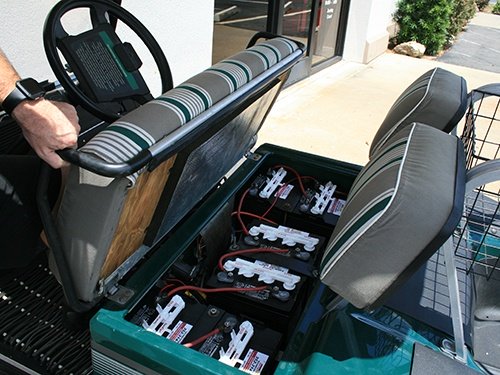
Image Source: jsgolfcarts.com
How Many Golf Cart Batteries: A Complete Guide to Power
Knowing how many golf cart batteries you need is simple. It depends on your golf cart’s total voltage. Most golf carts use a main power system of either 36 volts or 48 volts. This main voltage tells you how many batteries are needed and what kind they are. For example, a 36-volt cart often uses six 6-volt batteries. A 48-volt cart might use six 8-volt batteries or four 12-volt batteries. The exact number of batteries will always add up to your golf cart’s main voltage. This guide will help you figure out your golf cart battery count, explain common setups like 36 volt golf cart battery setup and 48 volt golf cart battery configuration, and give tips on making them last.
Grasping Battery Basics: Voltage and Quantity
Your golf cart needs a certain amount of power to run. This power level is measured in volts. Most golf carts are either 36-volt or 48-volt systems. Some heavy-duty carts might use 72-volt systems, but these are less common. The number of batteries in your golf cart depends on two things: your golf cart’s total voltage and the voltage of each single battery.
Think of it like building a tower. Each battery is a block. You need to stack blocks until you reach a certain height (the total voltage). If your blocks are 6 volts each, you’ll need more of them to reach 36 volts than if your blocks are 12 volts each.
Every golf cart battery setup uses batteries wired together in a “series.” This means the positive end of one battery connects to the negative end of the next. This way, the voltage of each battery adds up. This is key to getting the right golf cart battery count for your ride.
Let’s look at the most common setups.
Deciphering Common Golf Cart Battery Setups
The number of batteries in your golf cart is not random. It is set by the cart’s design. The goal is always to reach the total voltage the motor needs.
36-Volt Golf Cart Battery Setup
Many older golf carts, or some smaller, lighter models, use a 36-volt system. To get to 36 volts, these carts almost always use 6-volt batteries.
This means you will need six 6-volt batteries. Each battery adds 6 volts to the total.
* Battery 1: 6V
* Battery 2: 6V
* Battery 3: 6V
* Battery 4: 6V
* Battery 5: 6V
* Battery 6: 6V
* Total: 36V (6 batteries x 6 volts/battery)
This is the standard 6V golf cart battery quantity for a 36-volt cart. When you connect these batteries, you link them positive to negative, positive to negative. This is called series wiring. It makes sure the voltage adds up.
Table 1: 36-Volt System Battery Breakdown
| System Voltage | Individual Battery Voltage | Number of Batteries | Total Batteries |
|---|---|---|---|
| 36 Volts | 6 Volts | Six | 6 |
48-Volt Golf Cart Battery Configuration
Newer golf carts, and many faster or more powerful models, use a 48-volt system. This system gives more power and often a bit more speed. To get to 48 volts, carts can use a few different battery arrangements.
Most often, a 48-volt cart uses either:
- Six 8-volt batteries: This is very common. Six batteries, each giving 8 volts, add up to 48 volts. (6 batteries x 8 volts/battery = 48V). This arrangement is known as 8V golf cart battery arrangements.
- Four 12-volt batteries: This is also common. Four batteries, each giving 12 volts, add up to 48 volts. (4 batteries x 12 volts/battery = 48V).
Both setups work well. The choice often depends on the cart’s design and how much space is available for the batteries. The wiring is still series wiring, connecting positive to negative to add up the voltage.
Table 2: 48-Volt System Battery Breakdown
| System Voltage | Individual Battery Voltage | Number of Batteries | Total Batteries |
|---|---|---|---|
| 48 Volts | 8 Volts | Six | 6 |
| 48 Volts | 12 Volts | Four | 4 |
Other Battery Setups (Less Common)
While 36-volt and 48-volt systems are the most popular, some carts, especially larger utility or industrial models, might use higher voltage systems like 72 volts.
- 72-Volt Systems: These often use six 12-volt batteries (6 x 12V = 72V) or twelve 6-volt batteries (12 x 6V = 72V). These systems give even more power and range.
No matter the voltage, the rule is the same: the number of batteries times each battery’s voltage must equal the total system voltage. Always check your golf cart’s manual or the battery compartment to confirm your exact setup.
Comprehending Golf Cart Battery Types
Not all golf cart batteries are the same. While they all aim to store and release power, they do it in different ways. The main types are lead-acid and lithium-ion. Most golf carts use deep cycle batteries. These are designed to discharge most of their power and then recharge many times. This is different from car batteries, which give a quick burst of power to start an engine.
Lead-Acid Batteries
Lead-acid batteries are the most common type used in golf carts. They are reliable and less expensive upfront. There are a few kinds of lead-acid batteries:
- Flooded Lead-Acid (Wet Cell): These are the traditional type. They have liquid inside, a mix of sulfuric acid and water. They are the most common.
- Pros: Lower cost, good performance, can be very long-lasting with proper care.
- Cons: Need regular maintenance (checking water levels and adding distilled water), can spill acid, produce gases when charging, need good ventilation.
- Absorbed Glass Mat (AGM): In AGM batteries, the acid is soaked into a glass mat between the plates. They are sealed.
- Pros: Maintenance-free, no spills, safer, charge faster than flooded batteries, handle vibrations well.
- Cons: More expensive than flooded batteries, can be damaged by overcharging.
- Gel Cell: These batteries use a gel-like substance instead of liquid acid. They are also sealed.
- Pros: Maintenance-free, no spills, good for slow discharge, very durable.
- Cons: Most expensive lead-acid type, charge slowly, can be damaged by fast charging, less power than flooded types.
For lead-acid batteries, especially flooded ones, proper care is very important. This helps them last longer and work better.
Lithium-Ion Batteries
Lithium-ion batteries are a newer option for golf carts. They are becoming more popular. They are different from lead-acid batteries in many ways.
- Pros:
- Lighter Weight: They weigh much less than lead-acid batteries. This makes your golf cart lighter, which can increase speed and range.
- Longer Lifespan: They can last 2-3 times longer than lead-acid batteries. This means fewer battery replacements.
- No Maintenance: They do not need water checks or terminal cleaning. They are truly “set it and forget it.”
- Consistent Power: They provide full power until almost completely empty. Lead-acid batteries lose power as they discharge.
- Faster Charging: They charge much quicker than lead-acid batteries.
- Cons:
- Higher Upfront Cost: They are much more expensive to buy than lead-acid batteries.
- Specific Charger: You often need a special charger designed for lithium batteries.
- Cold Weather: Some types may have reduced performance in very cold temperatures.
Many people are now choosing lithium-ion batteries despite the higher cost. The long lifespan and no maintenance make them a good deal over time. They are also a great way to extend golf cart range batteries due to their consistent power output and lighter weight.
Fathoming Deep Cycle Golf Cart Battery Wiring
No matter if you have 36 volts or 48 volts, or if you use 6V, 8V, or 12V batteries, they must be wired correctly. Golf cart batteries are almost always wired in “series.” This means you connect the positive (+) post of one battery to the negative (-) post of the next battery. Doing this adds up the voltage of each battery.
Safety First: Before you touch any battery wires, always turn off your golf cart. Take out the key. Wear safety glasses and gloves. Batteries hold a lot of power and can cause serious injury or damage if not handled right.
Steps for Series Wiring:
- Start with the Main Positive: Find the main positive (+) cable coming from your golf cart’s motor or controller. Connect this to the positive (+) post of your first battery.
- Connect in Series:
- Take a short, thick cable. Connect it from the negative (-) post of the first battery to the positive (+) post of the second battery.
- Repeat this pattern: negative (-) of the second battery to positive (+) of the third, and so on.
- Continue until all batteries are linked in this positive-to-negative chain.
- Connect the Main Negative: After all your batteries are linked in series, you will have one remaining negative (-) post on your last battery. Connect the main negative (-) cable from your golf cart’s motor or controller to this last negative post.
- Double Check: Look at all your connections. Are they tight? Are the cables clean? Make sure no tools are left on the batteries.
Example for a 36-Volt System (Six 6V Batteries):
- Cart Main (+) cable to Battery 1 (+)
- Battery 1 (-) to Battery 2 (+)
- Battery 2 (-) to Battery 3 (+)
- Battery 3 (-) to Battery 4 (+)
- Battery 4 (-) to Battery 5 (+)
- Battery 5 (-) to Battery 6 (+)
- Battery 6 (-) to Cart Main (-) cable
This setup ensures that the individual battery voltages (6V + 6V + 6V + 6V + 6V + 6V) add up to the required 36 volts. The same process applies for 48-volt systems, just with different battery numbers and voltages. This wiring method is crucial for any deep cycle golf cart battery wiring.
Extending Golf Cart Battery Pack Lifespan
Your golf cart batteries are a big investment. Taking good care of them can make them last much longer. Good maintenance saves you money and trouble. Here’s how to make your golf cart battery pack lifespan as long as possible:
Charging Correctly
This is the most important part of battery care.
- Charge After Each Use: Even if you just took a short ride, plug in your golf cart when you get back. Deep cycle batteries like to be kept fully charged. Letting them sit discharged for long periods can harm them.
- Use the Right Charger: Always use a charger that matches your golf cart’s voltage (36V or 48V) and battery type (lead-acid or lithium). Using the wrong charger can damage your batteries or prevent a full charge.
- Avoid Overcharging: Modern smart chargers usually stop charging when batteries are full. If you have an older charger, be careful not to leave it plugged in for too long after the batteries are full. Overcharging can dry out flooded batteries or harm sealed ones.
- Do Not Undercharge: Make sure your batteries get a full charge. Sometimes, if a charger turns off too soon, batteries might not be fully charged. A proper charge cycle is essential.
Checking Water Levels (for Flooded Lead-Acid Batteries Only)
If you have flooded lead-acid batteries, you must check their water levels regularly.
- When to Check: Check water levels monthly, or more often if you use your cart a lot.
- What to Add: Only add distilled water. Tap water has minerals that can hurt the batteries.
- How Much to Add: Add water after charging, not before. Fill the cells just enough to cover the plates, about 1/4 to 1/2 inch below the cap opening. Do not overfill.
- Safety: Always wear safety glasses and gloves when checking battery water.
Keeping Batteries Clean
Battery tops and terminals can get dirty and corroded. This can prevent good electrical flow.
- Clean Terminals: Check battery terminals for corrosion (a fuzzy, often bluish-white substance). Clean them with a wire brush and a mix of baking soda and water (1 cup water to 1 tablespoon baking soda). Rinse with plain water and dry thoroughly.
- Keep Battery Tops Clean: Wipe down the tops of your batteries regularly with a damp cloth. Dirt and moisture can create a path for electricity to drain, slowly discharging your batteries.
Storing Your Golf Cart
If you store your golf cart for a long time (weeks or months), follow these steps:
- Full Charge: Fully charge the batteries before storing.
- Disconnect: Disconnect the main positive battery cable or turn off the tow/run switch. This stops any small power drains.
- Maintain Charge: If possible, use a “trickle charger” or a smart charger that keeps the batteries topped off during storage. If not, plan to charge them fully every 4-6 weeks.
- Cool Place: Store the cart in a cool, dry place. Extreme heat or cold can harm batteries.
Following these tips will greatly improve your golf cart battery pack lifespan and make your cart more reliable.
Interpreting Golf Cart Battery Voltage
Knowing how to read your golf cart’s battery voltage is important. It tells you how much power is left. You can often see a battery meter on your cart’s dashboard. For a more exact reading, you can use a handheld voltmeter directly on the battery terminals.
The total voltage of your battery pack will drop as you use the cart. How low it can go depends on the battery type and what’s safe. Draining lead-acid batteries too low too often can shorten their life. Lithium batteries can handle lower discharges better.
Here is a general golf cart battery voltage chart. This chart shows the approximate charge level for 36-volt and 48-volt lead-acid battery packs based on their voltage. Remember, these readings should be taken when the cart has been at rest for a few hours (not immediately after charging or using). This is called “resting voltage.”
Table 3: Golf Cart Battery Voltage Chart (Lead-Acid Resting Voltage)
| State of Charge (%) | 36 Volt System (V) | 48 Volt System (V) |
|---|---|---|
| 100% | 38.2 | 50.9 |
| 90% | 37.0 | 49.3 |
| 80% | 36.2 | 48.2 |
| 70% | 35.5 | 47.1 |
| 60% | 35.0 | 46.5 |
| 50% | 34.2 | 45.4 |
| 40% | 33.5 | 44.5 |
| 30% | 32.7 | 43.4 |
| 20% | 31.8 | 42.4 |
| 10% (Empty) | 30.0 | 40.0 |
Note: These are approximate values for lead-acid batteries at rest. Voltage will be higher immediately after charging and lower under load (when driving).
For lithium-ion batteries, the voltage curve is flatter. They hold a higher voltage for longer, then drop off more quickly when near empty. You usually don’t need a detailed chart for lithium; most have a built-in battery management system (BMS) that gives a clear charge status.
Regularly checking your golf cart battery voltage helps you know when to recharge and prevents over-discharging, which can hurt your batteries.
Navigating Golf Cart Battery Replacement
Even with the best care, golf cart batteries will eventually need to be replaced. They don’t last forever. The average golf cart battery pack lifespan for lead-acid batteries is typically 4-6 years. Lithium-ion batteries can last 8-10 years or even longer. Knowing when and how to replace them is part of being a golf cart owner. This is your golf cart battery replacement guide.
Signs You Need New Batteries
Watch for these signs that your batteries are getting old:
- Reduced Range: Your cart doesn’t go as far on a full charge as it used to. This is often the first clear sign.
- Slow Speed: The cart feels sluggish, especially going uphill or with more people on board.
- Longer Charging Times: It takes much longer for the batteries to fully charge.
- Quick Discharge: The battery meter drops very fast after a full charge.
- Visible Damage: Swollen battery cases, leaking acid (for flooded types), or corroded terminals that can’t be cleaned.
- One Bad Battery: If one battery in the pack goes bad, it can affect the whole pack. The cart might run poorly, even if other batteries seem fine. Test each battery individually.
How to Test Your Batteries
You can test your batteries yourself or have a shop do it.
- Voltmeter Test: Use a voltmeter to check the resting voltage of each individual battery. For a 6-volt battery, anything below 5.5 volts (at rest, fully charged) is a red flag. For an 8-volt, below 7.5 volts. For a 12-volt, below 11.5 volts.
- Load Test: This is a better test. A special tool puts a heavy electrical load on each battery to see how well it holds up. A professional shop can do this. A battery that drops its voltage quickly under load is likely weak.
- Hydrometer Test (for Flooded Lead-Acid Only): This tool measures the acid level in each cell. It tells you the “specific gravity” of the electrolyte. Different readings across cells or low readings overall show a problem.
If tests show your batteries are weak, it’s time for replacement. It’s usually best to replace all batteries in the pack at the same time. A new battery with old ones will likely get ruined by the old ones.
Replacing Your Batteries
Replacing batteries is a job that requires care and safety.
- Gather Tools: You’ll need a wrench (insulated preferred), battery terminal cleaner, baking soda/water mix, safety glasses, and gloves.
- Take Pictures: Before disconnecting anything, take clear photos of your current battery setup and wiring. This is your map for putting new ones in.
- Disconnect Safely:
- Always disconnect the main negative (-) cable first. This prevents accidental sparks.
- Then disconnect all the series cables (positive to negative links).
- Finally, disconnect the main positive (+) cable.
- Remove Old Batteries: Batteries are heavy. Get help if you need it. Lift them out carefully.
- Clean Battery Tray: While the tray is empty, clean any corrosion or dirt. Spray with a baking soda/water mix, scrub, rinse, and dry.
- Install New Batteries: Place the new batteries in the same positions as the old ones. Make sure they are secure.
- Wire New Batteries: Refer to your photos and the deep cycle golf cart battery wiring instructions from earlier.
- Connect the main positive (+) cable first.
- Then connect all the series cables (positive to negative).
- Connect the main negative (-) cable last.
- Tighten All Connections: Make sure all cable connections are tight. Loose connections can cause power loss and heat.
- Charge Fully: Once installed, give your new batteries a full, long charge cycle before using the cart.
Always dispose of old batteries properly. Battery stores or recycling centers can take them.
Selecting the Right Batteries for Range
When you buy new golf cart batteries, you have choices. You need to pick batteries that match your cart’s voltage and that give you the range you need. This is how to extend golf cart range batteries.
Matching Voltage and Size
- Voltage: Make sure the new batteries match your cart’s system voltage (36V or 48V). If your cart uses six 6-volt batteries, buy six 6-volt batteries. Do not mix and match voltages within a pack.
- Physical Size: Batteries come in standard sizes (like GC2 for 6-volt, GC8 for 8-volt, GC12 for 12-volt). Make sure the new batteries will fit in your battery tray.
- Terminal Type: Check the type of terminals (posts) on your old batteries and make sure the new ones have the same type, or get adapter kits if needed.
Amp-Hour (Ah) Rating
This is key for range. The “amp-hour” (Ah) rating tells you how much energy a battery can store. A higher Ah rating means the battery can provide power for a longer time before needing a recharge.
- More Ah = More Range: If you want to extend golf cart range batteries, choose batteries with a higher Ah rating if they fit in your cart. For example, some 6-volt batteries might have 210 Ah, while others have 225 Ah or more. Going from 210 Ah to 225 Ah across your pack will give you a bit more driving time.
- Weight vs. Range: Remember that higher Ah ratings usually mean bigger and heavier lead-acid batteries. Lithium-ion batteries offer high Ah ratings at a much lower weight, which also boosts range.
Brand and Quality
Just like with cars, some battery brands are known for better quality and longer life. Research reputable brands. While a cheaper battery might save money upfront, a higher-quality battery often lasts longer, giving better value over time. Read reviews and ask for recommendations from other golf cart owners or local shops.
Cost vs. Lifespan
- Lead-Acid: Cheaper to buy, but you might replace them more often. Good for those on a tight budget.
- Lithium-Ion: More expensive to buy, but last much longer and need no maintenance. They can save money in the long run and offer better performance. Consider your budget and how long you plan to keep your cart.
Choosing the right batteries is a balance of your cart’s needs, your budget, and how far you want to go on a single charge.
Frequently Asked Questions (FAQ)
Q1: Can I mix different battery brands or ages in my golf cart?
A1: No, you should never mix different brands, ages, or even types (like flooded with AGM) of batteries in your golf cart’s pack. All batteries in a series-wired pack must be the same. If one battery is older or weaker, it will drain the new or stronger ones and hurt the whole pack. Always replace all batteries at the same time.
Q2: How often should I check the water in my flooded lead-acid golf cart batteries?
A2: For flooded lead-acid batteries, you should check the water levels about once a month, or more often if you use your golf cart every day or in hot weather. Always use distilled water, and fill only after the batteries are fully charged.
Q3: How do I know if my golf cart is 36-volt or 48-volt?
A3: The easiest way to tell is by looking at your batteries. Count them and check the voltage printed on each battery.
* If you have six 6-volt batteries, it’s a 36-volt cart (6 x 6V = 36V).
* If you have six 8-volt batteries, it’s a 48-volt cart (6 x 8V = 48V).
* If you have four 12-volt batteries, it’s a 48-volt cart (4 x 12V = 48V).
You can also check your golf cart’s owner’s manual or look for a sticker near the battery compartment or charging port.
Q4: Can I upgrade my 36-volt golf cart to a 48-volt system?
A4: Yes, it is possible, but it’s not just a simple battery swap. You will need to change the motor, controller, and possibly the charger. This is a complex and costly upgrade that usually requires professional help. For most people, it’s easier and cheaper to buy a cart that is already 48-volt if they need more power.
Q5: What is “deep cycle” mean for golf cart batteries?
A5: “Deep cycle” means the battery is built to be discharged and recharged many times. Unlike car batteries that give a quick burst of power to start an engine, golf cart batteries are designed to provide steady power over a long period, discharging deeply, and then being recharged fully. This cycle makes them perfect for golf carts.
Q6: Why do my golf cart batteries die so fast in cold weather?
A6: Cold temperatures reduce the efficiency of lead-acid batteries. The chemical reactions slow down. This means they cannot deliver as much power or hold as much charge. Lithium-ion batteries also see some impact in extreme cold, but generally less than lead-acid. Always store your golf cart in a warmer place during winter if possible.
Q7: Is it safe to work on golf cart batteries myself?
A7: Yes, if you follow safety rules. Always turn off the cart, remove the key, wear safety glasses and gloves. Disconnect the main negative cable first, and reconnect it last. Batteries hold a lot of power, so be careful to avoid sparks or short circuits. If you are not comfortable, ask a professional to help.
Your Power Journey: A Final Note
Getting the right number of golf cart batteries and taking good care of them is key to your cart’s performance. Whether you have a 36-volt golf cart battery setup or a 48-volt golf cart battery configuration, knowing your battery count, how they wire together, and how to maintain them will keep you rolling. Remember to check your golf cart battery voltage chart often, practice good charging habits, and know when it’s time for a golf cart battery replacement guide to get new power. A well-cared-for battery pack will give you many years of enjoyable rides.