
Image Source: golf.com
The Truth: How Many Dimples On A Regulation Golf Ball?
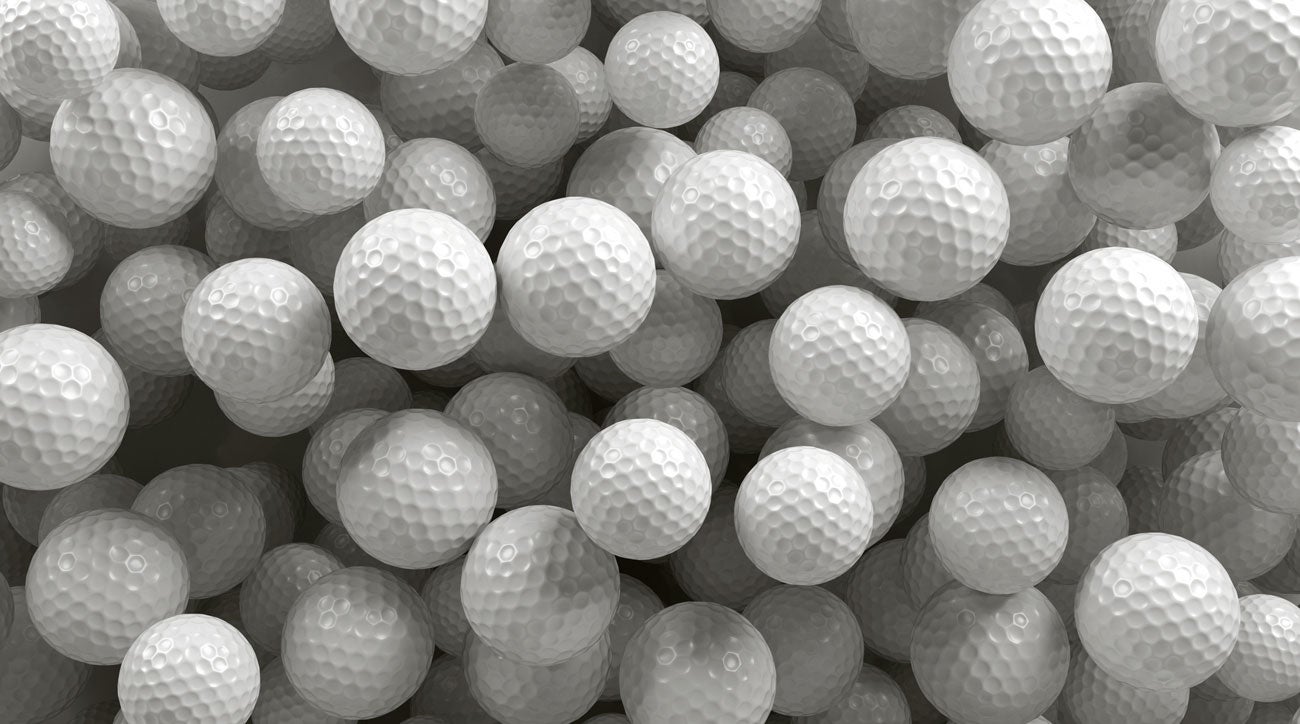
People often ask how many dimples are on a golf ball. The truth is, there is no one exact number. Golf rules do not say how many dimples a ball must have. They care more about how the ball flies and weighs. Most golf balls have many small dents. The number is usually between 300 and 500. These dents are called dimples. They help the ball fly far and straight.
Why Golf Balls Have Dimples
Think about a smooth ball. If you throw a smooth ball, it does not go far. Air pushes on it a lot. This push slows it down. It makes it fall fast.
Golf balls have dents. These dents are dimples. Dimples change how air moves around the ball. This makes the ball go much farther. It helps it stay in the air longer. This is the main purpose of golf ball dimples. They are not just for looks. They are a key part of how the ball works. This is why golf balls have dimples.
How Dimples Help The Ball Fly
This is about golf ball aerodynamics. It is how air moves around the ball.
Air Around A Smooth Ball
Imagine a smooth ball flying. Air hits the front of the ball. It flows back along the sides. But the air cannot stay close to the smooth ball for long. It pulls away from the ball’s surface quickly. This creates a space of mixed-up air right behind the ball. Think of it like a small windy spot behind the ball.
This mixed-up air creates low pressure. The air in front of the ball has higher pressure. The higher pressure pushes the ball back into the low pressure area. This pushing back slows the ball down a lot. This slowing force is called drag. A smooth ball has a lot of drag.
Air Around A Dimpled Ball
Now think about a golf ball with dimples. As the dimpled ball flies, air hits the front. The dimples cause the air closest to the ball to swirl a little. This makes a thin layer of fast-moving air right on the ball’s surface. This layer is called the boundary layer.
This boundary layer of air sticks to the dimpled ball better than to a smooth ball. It stays attached to the ball’s surface for longer as the air flows back. This means the air separates from the ball much farther back. This makes the space of mixed-up air behind the ball much smaller. A smaller space of mixed-up air means less low pressure behind the ball. Less low pressure means less push slowing the ball down. So, the dimples greatly reduce the drag.
Less drag means the ball keeps its speed better. It travels farther through the air.
Grasping Lift
Dimples do more than just cut drag. They also help the ball stay up in the air. This is called lift.
When a golf player hits the ball, they usually hit down on it a little. This makes the ball spin. The ball spins backwards as it flies forward. This is called backspin.
Think about the ball spinning with backspin. The bottom of the ball is moving forwards, against the air flow. The top of the ball is moving backwards, with the air flow.
The backspin affects the air moving around the dimpled ball. The air going over the top of the ball moves faster. The air going under the bottom of the ball moves slower.
Faster moving air creates lower pressure. Slower moving air creates higher pressure. So, there is lower pressure on top of the ball and higher pressure under the ball. This difference in pressure creates an upward force. This upward force is called lift.
Dimples make this lift effect stronger. They help the air flow in a way that makes a bigger pressure difference between the top and bottom of the ball. This is the lift and drag golf ball science at work. Dimples help lower the drag and increase the lift. These two things together have a huge dimple effect on flight. They make the ball fly high and far. Without dimples, a golf ball would only go about a quarter as far!
The History of Golf Ball Dimples
Golf balls did not always have dimples. The history of golf ball dimples is quite interesting.
- Early Balls: The first golf balls were made of wood. Then came balls made from boiled feathers stuffed into leather cases. These were called ‘featheries’. Featheries were expensive. Making them took a lot of work.
- Accidental Discovery: Golfers back then used the featheries. They noticed something odd. Old, beat-up featheries with cuts and bumps seemed to fly better. They went farther than new, smooth ones.
- Making Marks on Purpose: Ball makers saw this. They started making marks on the featheries on purpose. They used hammers or tools to make little dents and cuts all over the ball. They did not know why it worked. They just knew it did.
- Gutta-Percha Balls: In the mid-1800s, balls made from a rubbery tree sap called gutta-percha became common. These were cheaper and easier to make. At first, these balls were smooth. But again, golfers found that balls got better as they got nicked and marked from hitting them.
- Hand Hammering: Makers started to copy the effect. They would take the smooth gutta-percha balls and hit them all over with a hammer. This made small dents. This was called “hand-hammering.”
- Molded Dimples: People then started making molds to shape the gutta-percha balls. These molds had patterns in them to create the dents during the molding process. They tried different patterns. They tried lines, bumps, and dents. They learned that dents worked best. These dents slowly turned into what we now call dimples.
- Testing and Science: As time went on, people used science to figure out why the dimples worked. They learned about air flow, drag, and lift. This led to testing different dimple shapes, sizes, and patterns. This research made golf balls fly even better.
So, the idea of dimples came from noticing that worn balls flew better than new smooth ones. Then people started making the marks on purpose. Science later explained why it works.
How Many Dimples Really? The Average Number
We know there is no rule for the exact number. But balls have a lot of dimples! The average number of golf ball dimples is not a single number. It falls within a range.
Most modern golf balls have between 300 and 500 dimples.
Here are some examples of dimple counts on different golf balls (keep in mind, this can change slightly with new versions):
| Golf Ball Model (Example) | Typical Dimple Count |
|---|---|
| Titleist Pro V1 | 388 |
| Callaway Chrome Soft | 332 |
| TaylorMade TP5 | 322 |
| Bridgestone Tour B XS | 330 |
| Srixon Z-Star | 338 |
As you can see, the numbers are different for each ball. One ball might have 332 dimples. Another might have 388. This is okay because the rules do not set a number. They care about how the ball performs.
The maker of each ball decides the number of dimples. They choose a number and a pattern that they believe makes the ball fly best.
Dimple Patterns and Shapes
Dimples are not all the same. They can have different shapes, sizes, and depths. They are also placed on the ball in specific ways. These are the golf ball dimple patterns.
- Shape: Most dimples look like little cups or bowls. They are round or slightly rounded. Some may have a flat spot at the bottom. Some might be slightly different shapes.
- Size: Dimples are small. But they can be different sizes on the same ball. A ball might have some slightly larger dimples and some slightly smaller ones.
- Depth: Dimples also have different depths. Some are deeper than others.
- Arrangement (Pattern): This is very important. How the dimples are placed on the ball matters a lot.
- Octahedral Pattern: A very common pattern. It looks like dimples are arranged around points like on a shape with eight sides (an octahedron). Many balls use a version of this pattern.
- Other Patterns: Makers try different ways to lay out the dimples. Some patterns look very regular. Some look more complex. The goal is to cover the ball’s surface well. They want the air flow to be good no matter how the ball is spinning or facing.
Ball makers spend a lot of time testing different golf ball dimple patterns. They use computers and wind tunnels to see how air moves around balls with different patterns. They are looking for the pattern that gives the best mix of low drag and high lift for that specific ball design. The material the ball is made from also plays a role. The dimples and the ball’s material work together.
What Rules Say About Golf Balls
The main groups that make rules for golf are the USGA (United States Golf Association) and The R&A (The Royal and Ancient Golf Club of St Andrews). These groups set the USGA golf ball rules.
Do their rules say exactly how many dimples a ball must have? No, they do not.
The rules for a regulation golf ball design focus on other things. They make sure all balls used in official games are fair and perform in a similar way.
Here are some key things the rules do care about:
- Weight: A golf ball must not weigh more than 1.620 ounces (45.93 grams).
- Size: The ball must not be smaller than 1.680 inches (42.67 mm) in diameter.
- Shape: The ball must be shaped like a sphere. It must be built symmetrically. This means it should be balanced. It should fly the same way no matter which side is facing up. Dimples must be arranged in a way that keeps this balance.
- Speed: The rules limit how fast a ball can go when hit by a test machine. This is often called the “initial velocity” rule. It stops makers from making balls that go too fast and too far, keeping the game fair.
- Overall Distance: The rules also check how far a ball flies in a test setting. This is called the Overall Distance Standard. The dimple design plays a big part in meeting this rule.
So, while the rules do not count the dimples, the dimples must be part of a design that helps the ball meet all these other requirements for weight, size, shape, speed, and distance. A ball with the wrong kind of dimples, or no dimples at all, would not pass the test for speed or distance.
Why The Exact Number Doesn’t Matter As Much
Now you know that no single number of dimples is required. Why is this okay?
- Performance is Key: The USGA and The R&A care about how the ball performs. Does it fly too far? Is it too heavy? Is it too small? The rules are about the results of the ball’s design, not every single detail of how it is made.
- Maker Choice: Letting makers choose the dimple number and pattern allows them to use their own research and ideas. They can test different designs to make the ball fly in a certain way. Some balls might be designed for more spin, some for less. The dimple design is part of how they achieve this.
- Different Designs: Because makers can choose, different balls from different companies look a little different up close. They have different numbers and patterns of dimples. This is part of the variety in golf balls today.
So, when you see a golf ball, you know it has dimples because dimples are needed for flight. But the exact number is up to the company that made it, as long as the ball follows all the main rules about size, weight, and how far it goes.
Putting It All Together
Let’s recap what we have learned about golf ball dimples:
- There is no set number of dimples required by golf rules.
- The rules focus on ball weight, size, shape, and performance (speed and distance).
- Most golf balls have an average number of dimples between 300 and 500.
- Dimples are small dents on the ball’s surface.
- The main purpose of golf ball dimples is to improve flight.
- Dimples change golf ball aerodynamics.
- They make air flow better around the ball.
- This greatly reduces drag (the force that slows the ball down).
- They also increase lift (the upward force that keeps the ball in the air).
- This dimple effect on flight lets the ball fly much farther and more truly than a smooth ball.
- The idea came from old balls that flew better when they were nicked and marked (history of golf ball dimples).
- Makers use different numbers, shapes, sizes, and golf ball dimple patterns.
- The dimple design is a key part of meeting the regulation golf ball design rules.
- The specific number of dimples varies depending on the ball model and maker.
Knowing about dimples helps us see the small details that make a big difference in golf. The tiny dents on the ball are a marvel of design and science. They are key to hitting the ball far down the fairway.
Frequently Asked Questions About Golf Ball Dimples
Here are some common questions people ask about golf ball dimples.
H5 Why don’t they just make golf balls smooth?
A smooth golf ball would not fly well at all. It would face too much air resistance (drag). It would fall to the ground very quickly. Dimples are needed to cut down drag and create lift. This lets the ball go a usable distance. A smooth ball would only go a short way.
H5 Does the number of dimples change how the ball flies?
Yes, the number, size, shape, and pattern of dimples all matter. Ball makers test different designs. They find what works best for a certain ball. Changing the dimples can change how high the ball flies, how much it spins, and how it cuts through the air.
H5 Is there an ideal or perfect number of dimples?
No, there is no single “perfect” number. The best number and pattern depend on the ball’s size, weight, materials, and the goals of the design (like how much spin it should have). What works best for one ball might not be best for another. Ball makers choose the number they find works best for their specific ball design.
H5 Are dimples always round?
Most dimples are round or close to it. But some dimple designs use slightly different shapes or have flat bottoms. The most common shape is a rounded cup.
H5 Do dimples ever wear out?
Yes, over time, dimples can get damaged or filled with dirt. This can change how air moves around the ball a little. A very old or damaged ball might not fly as well as a new one. Hitting trees or cart paths can also damage dimples.
H5 Can I play with a ball that has a different number of dimples than average?
As long as the ball meets the rules for weight, size, and performance, the number of dimples is okay. All balls sold for regulation play meet these rules. The number of dimples will be within the range that works for that ball’s design.
H5 Does the color of the ball matter for the dimples?
No, the color of the ball does not affect how the dimples work. A yellow ball flies the same way as a white ball with the same dimple design. Color is just for seeing the ball easily.
In the end, the many small dimples on a golf ball are a crucial design element. They are not just random dents. They are carefully made features that use science to make the ball fly. The exact number might not be set by rules, but their job in making a golf ball work is very clear.