
Image Source: creativegolfdesign.com
How Long Does It Take To Build A Golf Course: Timeline.
Building a golf course is a big job. It takes a lot of time and effort. On average, it can take anywhere from 2 to 5 years to build a full 18-hole golf course from start to finish. This timeframe includes everything from initial ideas and permits to growing the grass. Some projects can be faster, but others might take much longer. Many steps are involved, and each step adds to the total golf course construction timeline. This guide will show you each step, helping you see why the process takes so long. We will look at all the golf course development phases and the many factors influencing golf course construction duration.
Key Stages: The Golf Course Development Phases
Building a golf course is like putting together a big puzzle. Many pieces must fit just right. It is not just about moving dirt. It involves careful thought, permits, and a lot of hands-on work. Let us look at the main stages of how a golf course comes to life. Each stage is important and takes its own time.
Phase 1: Envisioning and Early Steps (The Blueprint Phase)
This first part is all about ideas and rules. It sets the stage for everything else. No physical work happens yet, but crucial decisions are made.
Deciphering the Vision: Golf Course Design and Planning
Every golf course starts as an idea. It needs a good plan, just like building a house. First, you need land. The land must be big enough and in a good spot. Then, you hire experts. These include golf course designers and land planners. They work together to draw up the course layout. This is where they decide where each hole goes. They plan for fairways, greens, bunkers, and water features. They also think about how players will move around the course. They consider the land’s natural shape. This helps them create a course that fits well with nature.
This stage also includes checking if the project makes sense. Experts study the land and local rules. They see if the course can be built as planned. They look at things like soil type and water sources. Good planning saves time and money later. It stops big problems from popping up during building. This golf course design and planning stage is very important. It lays the groundwork for the entire project.
- Finding the Land: This can take a few months to over a year. The right size and location are key.
- Hiring Experts: Designers and planners come on board. This can take 1-3 months.
- Master Planning: The team draws the first course maps. This can take 6-12 months. They decide the look and feel.
- Feasibility Studies: Experts check if the plan can work. They look at costs and benefits. This takes 3-6 months.
The design and planning phase usually takes 6 to 18 months. But it can be shorter or longer based on how big or complex the project is.
Navigating Regulations: Environmental Permitting Golf Course
Before any digging starts, you need permission. This means getting many permits. Permits are legal papers that say you can build. They come from local, state, and even federal groups. This part of the process often takes a lot of time. It is important to make sure the golf course will not harm the environment.
Experts do special studies. They check for wetlands, rare plants, or animals. They look at how water flows on the land. They make sure the course will not pollute rivers or streams. These studies are called environmental impact assessments. After the studies, plans are sent to government groups. These groups review the plans. They might ask for changes. Sometimes, there are public meetings. People living nearby can share their thoughts. All these steps add time.
Getting environmental permitting for a golf course is often the longest part. It can take 6 to 36 months, or even more. This stage often runs at the same time as the design stage. But it can still cause big delays if problems come up. Careful planning helps move permits along faster.
- Environmental Studies: Experts look at the land for any sensitive areas. This can take 3-12 months.
- Permit Applications: Filling out and sending in all the papers. This takes 1-3 months.
- Review Periods: Government groups check the plans. This can take 6-24 months. They might ask for more details.
- Public Hearings: Local people get to say what they think. This adds 1-6 months.
- Permit Approval: Finally, the permits are given.
This phase is critical. Without permits, building cannot begin.
Phase 2: Shaping the Land (The Heavy Lifting Phase)
Once permits are in hand, the real physical work starts. This is where the land begins to look like a golf course. Big machines are used in this phase.
Getting Ready: Site Preparation Golf Course
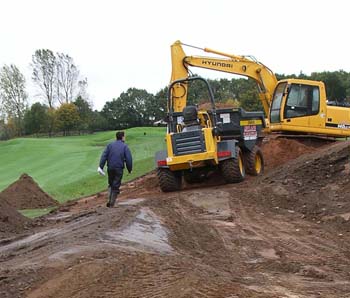
Site preparation is about making the land ready for building. It is a very active stage. First, workers clear the land. This means taking out trees, rocks, and old buildings. Big machines like bulldozers and excavators are used. Then, they start shaping the land. This is called earth moving. They dig out areas for ponds and bunkers. They build up areas for greens and tee boxes. The land is sculpted to create the golf course layout. This requires a lot of dirt to be moved.
Good drainage is also planned at this stage. This helps water flow away from the course. It stops flooding and keeps the grass healthy. They might install pipes and drains underground. They also start putting in roads and paths for carts. Utilities like power and water lines are also set up. This site preparation for a golf course is hard work. It sets the foundation for the entire course.
- Land Clearing: Removing trees, bushes, and rocks. This takes 2-6 months.
- Earth Moving: Shaping the fairways, greens, and bunkers. This is a big job and takes 6-12 months.
- Drainage System: Putting in pipes to manage water. This takes 3-6 months.
- Rough Grading: Getting the land close to its final shape.
This phase typically takes 6 to 18 months. It depends on how much the land needs to change.
Water Flow: Golf Course Irrigation System
A golf course needs a lot of water to stay green. So, a complex irrigation system is vital. This system brings water to every part of the course. It includes pumps, pipes, and sprinklers. Engineers design the system first. They decide where all the pipes and sprinklers should go. Then, workers dig trenches for the pipes. They lay thousands of feet of pipe all over the course. They install sprinklers that pop up to water the grass.
This system is often controlled by computers. This allows precise watering. It helps save water too. Installing the golf course irrigation system is a big job. It needs to be done right for the grass to grow well. This work often happens at the same time as site preparation.
- Design of System: Engineers plan how water will flow. This takes 1-3 months.
- Trenching and Pipe Laying: Digging ditches and putting in pipes. This takes 3-6 months.
- Sprinkler Installation: Putting in all the sprinkler heads. This takes 1-3 months.
- Testing and Adjusting: Making sure the system works perfectly. This takes 1-2 months.
Building the irrigation system usually takes 3 to 6 months. It can overlap with other work.
Phase 3: Growing the Green (The Finishing Touch Phase)
This is the phase where the golf course starts to look like a golf course. It is about planting grass and adding all the small details.
Green Carpets: Turf Establishment Golf Course
This is one of the most exciting parts. It is when the course turns green. First, the right type of grass is chosen. Different parts of the course need different grass. Greens need a very fine, tough grass. Fairways can have a different type. The climate of the area also affects grass choice.
Once the grass is chosen, it is planted. This can be done by spreading seeds. Or, pre-grown turf (sod) can be laid down. Sod gives an instant green look but costs more. After planting, the grass needs time to grow strong. This is called the grow-in period. During this time, the grass is watered, fertilized, and mowed often. It needs constant care to become a healthy playing surface. This turf establishment for a golf course takes patience. You cannot rush nature.
- Grass Selection: Choosing the best grass types for each area. This takes 1-2 months during design.
- Planting: Spreading seeds or laying sod. This takes 1-3 months.
- Grow-in Period: The grass needs time to grow thick and strong. This is the longest part and takes 6-18 months. This includes watering, feeding, and first mows.
The turf establishment stage usually takes 6 to 18 months. The course cannot open until the grass is ready.
The Small Details: Finishing Touches and Facilities
While the grass is growing, other parts of the course are being built. This includes the clubhouse. The clubhouse is where golfers check in, eat, and relax. It might have a pro shop and locker rooms. Practice areas like driving ranges and putting greens are also built. Cart paths are laid out. Bridges might be built over water or difficult areas.
Landscaping around the clubhouse and along the course adds beauty. Signage for holes and directions is put up. Benches, ball washers, and trash cans are also installed. All these small details make the course complete and enjoyable. This phase often overlaps with the grow-in period of the grass.
- Clubhouse Construction: Building the main building. This takes 6-12 months.
- Practice Areas: Creating putting greens and driving ranges. This takes 3-6 months.
- Cart Paths and Bridges: Building ways for carts to move easily. This takes 3-6 months.
- Landscaping and Signage: Adding plants, trees, and signs. This takes 2-4 months.
- Furniture and Fixtures: Adding benches, ball washers, etc. This takes 1-2 months.
This stage takes about 6 to 12 months and often runs alongside turf growth.
Influences on the Clock: Factors Influencing Golf Course Construction Duration
Many things can change how long it takes to build a golf course. Some things can make it faster. Others can cause big delays. Knowing these factors helps to understand the golf course construction timeline better. These are the main things that affect the average golf course build time.
Land Characteristics
The type of land you start with makes a huge difference.
- Terrain: Flat land is easier and faster to shape. Hilly land needs more earth moving. This means more time and bigger machines.
- Soil Type: Good soil helps grass grow well. Rocky soil is hard to dig and slow to work with. Very sandy or clay soils can also need special treatment.
- Existing Vegetation: Land covered in dense forest takes longer to clear than open fields. Removing trees is a big job.
- Water Access: Is there enough water nearby for irrigation? If not, you might need to build wells or pipes to bring water in. This adds time.
Permits and Regulations
As mentioned earlier, getting permits is a major hurdle.
- Complexity of Rules: Some areas have very strict environmental laws. This means more studies and more time for approval.
- Environmental Concerns: If the land has wetlands or rare animals, permits can be very hard to get. It might even stop the project.
- Public Pushback: Local people might not want a golf course built. They can protest and slow down the permit process.
Project Scope and Quality
The kind of golf course you want to build also affects the time.
- Number of Holes: A 9-hole course is much faster to build than an 18-hole course.
- Luxury vs. Basic: A high-end course with complex designs, many water features, and custom landscaping takes much longer. A simpler course can be built faster.
- Difficulty of Design: A course with many tricky slopes, deep bunkers, or complex green shapes needs more detailed work and time.
- Amount of Earth Moved: The more the land needs to be changed, the longer the site preparation takes.
Financial Resources
Money plays a big role in how fast a project moves. This also ties into the overall cost to build a golf course.
- Enough Money: Having all the money ready from the start helps. Work can continue without breaks.
- Funding Gaps: If money runs out during building, work stops. This can add many months, or even years, to the timeline. Getting new funding takes time.
Weather
Nature can stop or slow down work.
- Rain: Too much rain makes the ground muddy. Machines cannot work, and dirt cannot be shaped.
- Cold: In cold places, work might stop in winter. Ground freezes, and grass cannot grow.
- Heat: Extreme heat can affect workers and equipment. It can also stress new grass.
- Storms: Big storms can cause damage and delay work.
Project Management Team
The people in charge of the project are very important.
- Experience: A team with a lot of experience in golf course building can manage problems better and keep things on track.
- Coordination: All the different workers and companies need to work together well. Poor coordination causes delays.
- Skilled Labor: Having enough skilled workers for each job speeds things up.
The Full Picture: Golf Course Construction Timeline Summary
Let us put all the phases together to see the total time. Remember, many of these stages can overlap. For example, environmental permitting often happens while design is still ongoing. The actual building of the clubhouse can start while the grass is growing.
Here is a summary of the typical golf course construction timeline:
| Phase | Key Activities | Typical Duration (Approximate) | Overlap Potential |
|---|---|---|---|
| Phase 1: Envisioning and Early Steps (The Blueprint Phase) | 12-36 Months (can overlap) | ||
| Deciphering the Vision: Golf Course Design and Planning | Land selection, master planning, preliminary designs, feasibility studies. | 6-18 Months | Partially overlaps with Environmental Permitting. |
| Navigating Regulations: Environmental Permitting Golf Course | Environmental impact studies, permit applications, public hearings, agency reviews. | 6-36+ Months | Often runs concurrently with Design & Planning. Can be a bottleneck. |
| Phase 2: Shaping the Land (The Heavy Lifting Phase) | 9-24 Months (significant overlap) | ||
| Getting Ready: Site Preparation Golf Course | Clearing, earth moving (shaping greens, fairways, bunkers), drainage, initial utility setup. | 6-18 Months | Overlaps with Irrigation System installation. |
| Water Flow: Golf Course Irrigation System | Design, trenching, pipe laying, sprinkler installation, testing. | 3-6 Months | Largely overlaps with Site Preparation. |
| Phase 3: Growing the Green (The Finishing Touch Phase) | 12-24 Months (significant overlap) | ||
| Green Carpets: Turf Establishment Golf Course | Grass selection, seeding/sodding, grow-in period (watering, fertilizing, mowing). | 6-18 Months | Overlaps with Finishing Touches. Cannot be rushed. |
| The Small Details: Finishing Touches and Facilities | Clubhouse construction, practice areas, cart paths, bridges, landscaping, signage. | 6-12 Months | Overlaps with Turf Establishment. |
Total Average Golf Course Build Time: When all these phases are considered, and allowing for typical overlaps and potential delays, the average golf course build time from initial concept to opening is typically 2 to 5 years.
Some projects might push for 18 months if everything goes perfectly. However, this is rare. Big, complex courses or those facing tough environmental rules can take 5 years or even longer. The average golf course build time truly depends on many factors.
Counting the Pennies: The Cost to Build a Golf Course
The cost to build a golf course is another huge factor. It directly impacts how long the project takes. If money runs out, work stops. This can cause very long delays. Building a golf course is not cheap. The total cost can be from $5 million for a basic course to over $30 million for a high-end, championship-level course. Some very complex courses can cost even more.
Here is a general breakdown of where the money goes:
- Land Purchase: This is often the biggest cost. The price depends on location, size, and if the land is ready for building.
- Design and Consulting Fees: Paying golf course architects, engineers, and environmental consultants. This can be 5-15% of the construction cost.
- Permitting Fees: Costs for all the applications, studies, and legal reviews. This can be high, especially for complex sites.
- Site Preparation and Earthwork: Moving tons of dirt, clearing land, and shaping features. This is a very big part of the cost.
- Irrigation System: Designing and installing the entire watering system. This is a major expense.
- Turfgrass: Buying and planting all the grass, plus initial care. High-quality turf can be costly.
- Construction of Facilities: Building the clubhouse, maintenance buildings, cart paths, and other structures.
- Equipment: Buying or renting machines needed for construction and later for maintenance.
- Contingency: An extra 10-20% of the budget is often kept aside. This covers unexpected problems or changes.
The cost to build a golf course is huge. This means good financial planning is a must. Delays can happen if there are funding issues. This is why having enough money from the start is important for keeping the timeline on track.
In Conclusion: The Long View
Building a golf course is a true marathon, not a sprint. It is a very large project with many moving parts. The idea of a fast build is tempting. But, the reality is that careful planning, permits, heavy construction, and the slow growth of nature all take time. The average golf course build time often sits between 2 to 5 years. This includes all the golf course development phases. Things like the land, permits, money, and even the weather can stretch this timeline.
Every step is important. From the first ideas and drawings to the green grass ready for play. Each stage requires specific skills and time. The environmental permitting for a golf course often takes the longest. Site preparation for a golf course and turf establishment for a golf course are also big time commitments. The golf course irrigation system is vital for green grass. And, of course, the cost to build a golf course is always a big factor.
So, if you are dreaming of building a golf course, remember that patience is key. It is a long journey, but the result can be a beautiful and lasting place for people to enjoy the game.
Frequently Asked Questions (FAQ)
Can I build a golf course faster than 2 years?
It is very hard to build a full 18-hole golf course in less than 2 years. A few rare cases might come close to 18 months. This would only happen if the land is perfect, permits fly through quickly, and there are no money or weather delays. A 9-hole course might be built faster. But generally, the processes like grass grow-in and permit approvals cannot be rushed.
What is the biggest challenge in golf course construction?
Often, the biggest challenge is getting all the environmental permits. This process can take a very long time. It involves many studies, reviews by different government groups, and public comments. Dealing with unexpected issues like finding rare plants or animals on the land can cause huge delays. Land conditions and funding issues can also be very big challenges.
How much does golf course maintenance cost after it is built?
Maintaining a golf course is an ongoing expense. It can cost from $500,000 to over $2 million per year for an 18-hole course. This includes costs for staff (greenskeepers), water, fertilizer, chemicals, equipment repairs, and electricity. Maintenance is a big part of the long-term cost of owning a golf course.
Is every golf course 18 holes?
No, not every golf course has 18 holes. While 18 holes is the standard for championship courses, many smaller courses exist. These can have 9 holes, or even just a few holes for practice or short play. The number of holes affects the size of the land needed, the construction time, and the overall cost.