
How long do lithium batteries last in a golf cart? Typically, lithium golf cart batteries have a long life, often lasting 8 to 10 years, or even longer, and they can handle 3,000 to 5,000 charge cycles before their capacity drops. This means they usually outlast the golf cart itself.
Lithium batteries are becoming very popular for golf carts. People like them because they are lighter, need less work, and last a long time. They are different from the old lead-acid batteries many golf carts use. Knowing how long a lithium battery will last helps you decide if it is the right choice for your cart. This article looks closely at the lithium golf cart battery lifespan.
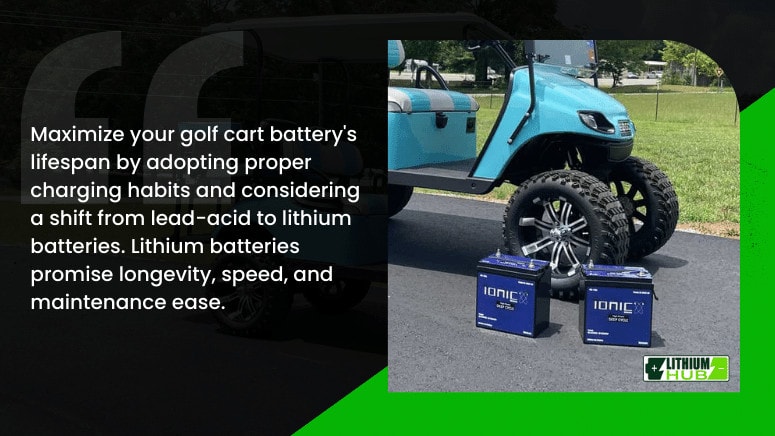
Image Source: lithiumhub.com
Why Choose Lithium for Your Golf Cart?
Many people switch to lithium batteries for their golf carts. They offer several big benefits over lead-acid batteries.
- Less Weight: Lithium batteries weigh much less. This makes the golf cart lighter. A lighter cart uses less power. It also goes faster and climbs hills better.
- More Power: They give full power until they are almost empty. Lead-acid batteries get weaker as they lose charge.
- Charge Faster: Lithium batteries charge much quicker than lead-acid ones.
- Need Less Work: You do not need to add water to lithium batteries. They need almost no upkeep. This is a big plus for many golf cart owners.
- Last Longer: As we will see, the golf cart lithium battery life expectancy is usually much longer than lead-acid.
This longer life and less work are why many people think the higher cost is worth it.
Measuring Battery Life: Cycles and Years
When we talk about how long a lithium golf cart battery lasts, we use two main ways to measure it:
- Cycle Life: This is how many times the battery can be fully charged and then used until it is mostly empty. One full charge and discharge is one cycle.
- Calendar Life: This is simply how many years the battery lasts from the day it was made or put into use.
For a deep cycle lithium battery life golf cart, the cycle life is very important. These batteries are made to be used deeply and recharged many times.
How Many Cycles Can a Lithium Battery Do?
A key part of the lithium golf cart battery lifespan is its cycle rating. Most good quality lithium golf cart batteries are rated for 3,000 to 5,000 cycles.
- What does 3,000 cycles mean? If you use your golf cart battery and charge it fully one time each week, that is about 52 cycles a year. At this rate, a battery rated for 3,000 cycles could last nearly 58 years (3000 / 52).
- What about 5,000 cycles? Using the same idea, 5,000 cycles could last over 96 years (5000 / 52).
These numbers show the great potential for how many cycles lithium golf cart battery can handle. However, these are perfect numbers. How you use and care for the battery changes things. Few people use their cart the exact same amount every week for years.
Also, a cycle does not always mean going from 100% down to 0%. Often, a “cycle” in ratings might mean going from 100% down to 80% depth of discharge (DoD) or similar. Recharging a battery from 50% down to 30% is only a partial cycle. Many partial cycles add up to one full cycle. So, the actual number of times you plug in your charger might be higher than the number of full cycles.
Seeing the Average Lifespan
Looking at the average lifespan of lithium golf cart battery, most people can expect their battery pack to last 8 to 10 years. Some top-quality batteries, especially with good care, can last 12 to 15 years or even more.
This is much longer than typical lead-acid batteries, which often last only 3 to 5 years. The difference in golf cart lithium battery life expectancy is one of the biggest reasons people switch.
What Things Change How Long a Lithium Battery Lasts?
Many things affect the true lithium golf cart battery lifespan. The numbers like 3,000 cycles or 10 years are estimates based on good conditions. Your own results may be different.
Let’s look at what makes a difference:
- How You Use the Cart: Using the cart a lot, going up steep hills often, or carrying heavy loads makes the battery work harder. Harder work means more stress on the battery cells.
- How Deeply You Use It: Running the battery almost empty (deep discharge) then fully charging it puts more stress on it than using it a little and topping it off often (shallow discharge). Batteries generally last longer if you avoid running them completely flat all the time.
- Charging Habits: How you charge matters a lot.
- Using the right charger for lithium batteries is a must. A lead-acid charger will harm a lithium battery.
- Leaving the battery plugged in all the time is okay for lithium batteries with a good Battery Management System (BMS), as the BMS stops charging when full.
- Avoiding extreme temperatures while charging is also important.
- Temperature: Lithium batteries do not like extreme heat or cold.
- High Heat: Storing or using the battery in very hot places speeds up how fast it loses capacity over time. Charging in high heat is even worse.
- Low Cold: Using the battery in very cold places can reduce its power for a while. Charging below freezing can harm the battery permanently. A good Battery Management System (BMS) helps prevent charging when it’s too cold.
- Storage: If you store your cart for a long time, like over the winter, how you store the battery affects its life. Storing at a moderate charge level (like 50%) and in a cool place is best. Storing fully charged or fully empty for months is not good.
- Battery Quality: Not all lithium batteries are made the same. Batteries using better quality cells and a more advanced Battery Management System (BMS) will likely last longer. The quality of the build and the parts inside matter a lot for the golf cart lithium battery life expectancy.
- Battery Management System (BMS): This is a vital part of a lithium battery pack. The BMS watches over the battery cells. It protects against overcharging, over-discharging, too much current, and wrong temperatures. A good BMS keeps the cells balanced and safe. This protection is key to getting the full lithium golf cart battery lifespan. If the BMS fails or is not good quality, the battery’s life can be cut short.
All these things work together. Taking good care of your battery pack, using it nicely, and keeping it in good conditions helps extend golf cart lithium battery life.
Lithium vs. Lead-Acid: Life Compared
Let’s directly compare the golf cart lithium battery life expectancy to that of traditional lead-acid batteries. This is a key point in the “Lithium vs lead acid golf cart battery life” discussion.
| Feature | Lithium (LiFePO4) | Lead-Acid (Deep Cycle) |
|---|---|---|
| Average Lifespan | 8 – 10+ years | 3 – 5 years |
| Cycle Life | 3,000 – 5,000+ cycles | 500 – 1,000 cycles |
| Weight | Much Lighter | Very Heavy |
| Maintenance | Almost None (No watering) | Regular watering, terminal cleaning |
| Charging Time | Faster | Slower |
| Performance | Full power until low charge | Power drops as charge lowers |
| Cost (Upfront) | Higher | Lower |
| Cost (Over Time) | Often Lower (lasts much longer) | Often Higher (need to replace more often) |
| Best Storage Charge | ~50% (for long periods) | Full charge |
| Self-Discharge | Very Low | Higher |
As you can see, the lithium golf cart battery lifespan is several times longer than lead-acid. While you pay more at first for lithium, you avoid buying replacement lead-acid batteries every few years. Over the life of the golf cart, the cost can be similar or even less with lithium, while also getting better performance and less work. The long deep cycle lithium battery life golf cart provides is a major plus.
Grasping the Battery Management System (BMS)
The Battery Management System (BMS) is the brain of a lithium battery pack. It is a small electronic board inside the battery casing. Its job is crucial for safety and getting the most out of the battery.
What the BMS does:
- Cell Balancing: It makes sure all the small cells inside the big battery pack have the same charge level. This helps the battery work well and live longer.
- Overcharge Protection: Stops the charger when the battery is full. This keeps the battery from being harmed by getting too much charge.
- Over-discharge Protection: Stops the battery from being used when its charge is too low. This prevents damage that happens when lithium batteries are run completely empty.
- Over-current Protection: Shuts off the battery if the golf cart tries to pull too much power, which could harm the battery.
- Temperature Protection: Stops charging or discharging if the battery gets too hot or too cold (especially below freezing). This is key for safety and lifespan.
A high-quality BMS is essential for a long and safe lithium golf cart battery lifespan. When looking at batteries, ask about the BMS features.
Reading the Lithium Ion Golf Cart Battery Warranty
Battery companies often show how long they expect their batteries to last by offering a warranty. The lithium ion golf cart battery warranty is usually much longer than for lead-acid batteries.
- Lead-acid warranties are often 1 to 2 years.
- Lithium warranties are commonly 5 to 8 years, and sometimes even 10 years or more.
A long warranty shows that the maker is confident about the battery’s lifespan. Read the warranty carefully. See what it covers (is it full replacement or pro-rated?). Find out if there are any things that make the warranty void (like using the wrong charger or opening the battery case).
The warranty is a good sign of the expected golf cart lithium battery life expectancy from the company that made it.
Taking Care: Maintenance for Lithium Golf Cart Batteries
One big benefit of lithium batteries is they need very little work. Unlike lead-acid batteries that need water added regularly, maintenance for lithium golf cart batteries is simple.
Here are the main things to do:
- Keep it Clean: Wipe down the battery top sometimes to remove dirt or dust. Make sure the terminals where cables connect are clean and tight. Loose or dirty connections can cause problems.
- Use the Right Charger: Always use a charger made for lithium iron phosphate (LiFePO4) batteries. Chargers for lead-acid batteries have different charge cycles and can damage lithium ones.
- Avoid Extreme Temperatures: Try not to leave your golf cart or store the battery in places that are very hot or very cold for long times. If you live where it gets very cold, especially below freezing, make sure the BMS prevents charging in these temps.
- Store Correctly: If storing the cart for a long time (months), charge the battery to about 50% before putting it away. Store in a cool, dry place if possible. Check on it every few months to make sure it’s okay.
- Check Cables: Make sure the cables connecting the battery to the cart are in good shape and connected firmly.
That’s mostly it! The built-in Battery Management System (BMS) handles most of the hard work of keeping the battery healthy. This simple maintenance routine helps ensure you get the full lithium golf cart battery lifespan.
Ways to Extend Golf Cart Lithium Battery Life
While lithium batteries last a long time already, there are ways to help them last even longer and get the most out of their golf cart lithium battery life expectancy.
- Charge Smart:
- Avoid leaving the battery completely empty for long periods. Charge it soon after use.
- You do not need to charge to 100% every time. Partial charges are fine and can even be slightly better for the battery’s long-term health compared to always doing full cycles.
- Do not charge in very hot or very cold places.
- Go Easy on the Gas (Pedal): Driving very fast all the time or sudden stops and starts make the battery work harder. Smooth driving uses less power and is easier on the battery.
- Watch the Weight: Carrying very heavy loads or pulling trailers adds stress to the motor and the battery. Only carry what you need.
- Keep Tires Full: Make sure your golf cart tires are filled to the right air pressure. Low tires make the cart work harder, using more battery power.
- Check the BMS: While you cannot usually work on the BMS itself, making sure you bought a battery with a quality, known-brand BMS is important from the start. A good BMS is key to a long deep cycle lithium battery life golf cart can offer.
- Regular Checks: Even though maintenance is low, a quick look at the battery and connections a few times a year is a good idea. Look for any signs of damage or loose parts.
Doing these things helps reduce stress on the battery cells and the BMS. This can add years to the lithium golf cart battery lifespan.
Signs That a Lithium Battery is Failing
Even with a long lifespan, lithium batteries do not last forever. Over many years and thousands of cycles, their ability to hold a charge slowly drops. This is normal aging. There are signs lithium golf cart battery is failing or getting close to the end of its useful life.
These signs might include:
- Shorter Range: The most common sign. The golf cart does not go as far on a full charge as it used to. The amount of time or distance you can use the cart gets less and less.
- Holds Less Charge: The battery might seem to charge up fast, but it reaches 100% capacity quicker because its total capacity has gone down. It cannot store as much energy as when it was new.
- Voltage Drops Quickly: The battery voltage might drop faster than normal when you are using the cart, especially going up hills or speeding up.
- Cart Slows Down: The cart might feel weaker or slower, especially on inclines. This happens because the battery cannot deliver as much power as easily.
- Charger Behavior: Sometimes the charger might act differently, though this is less common with lithium than lead-acid. A charger designed for lithium should just show it’s full when it reaches maximum capacity, even if that capacity is less than it was when new.
- Warning Lights/Codes: If your cart has a battery meter or system that talks to the lithium battery’s BMS, it might show a warning light or code.
These signs show the battery is reaching the end of its deep cycle lithium battery life golf cart use case requires. While it might still work, its performance and range will be much less than when it was new. When these signs become very clear, it’s time to plan for a replacement to keep enjoying your cart. This means the golf cart lithium battery life expectancy for your needs is coming to an end.
Deciphering the Investment: Is Lithium Worth the Cost?
Lithium batteries cost more money upfront than lead-acid batteries. This higher initial cost makes some people hesitate. However, when you look at the total cost over time, lithium often comes out ahead.
Consider this:
- A set of lead-acid golf cart batteries might cost $800 – $1500 and last 3-5 years.
- A lithium golf cart battery pack might cost $1500 – $3000 and last 8-10+ years.
Over 10 years:
- You might buy 2 or 3 sets of lead-acid batteries. Total cost could be $1600 – $4500.
- You might buy only 1 set of lithium batteries. Total cost is $1500 – $3000.
On top of the cost, remember:
- You save money on buying water for lead-acid batteries.
- You save time on checking water levels and cleaning terminals.
- You get better performance (more power, faster charging) with lithium.
- The lighter weight saves wear and tear on the cart (suspension, motor).
- You avoid the hassle of battery acid spills or fumes.
When you add it all up, the long lithium golf cart battery lifespan and low maintenance make them a very cost-effective choice over the life of the cart. The golf cart lithium battery life expectancy is a key part of this value.
The Environmental Side
Thinking about the environment, the longer lithium golf cart battery lifespan means fewer batteries are made and recycled over the life of a golf cart. Lead-acid batteries contain lead and sulfuric acid, which need careful handling and recycling. While lithium batteries also require proper recycling, replacing them less often is a benefit. The deep cycle lithium battery life golf cart gets contributes to less waste.
Summary of Lifespan Insights
The central point is clear: the average lifespan of lithium golf cart battery packs is significantly longer than lead-acid.
- Typical Life: 8-10+ years
- Cycle Count: 3,000 – 5,000+ cycles
- Main Factors: Usage (how hard, how deep), Charging habits (right charger, temperature), Temperature (avoid extremes), Quality of Battery and BMS, Proper Storage.
- Comparison: Lithium lasts 2-3 times longer than lead-acid.
- Care: Very low maintenance, but store correctly and use the right charger.
- End of Life Signs: Shorter range, less capacity, cart feels weaker.
Choosing lithium is an investment in your golf cart’s future. It means less worry about battery problems, better performance, and ultimately, potentially lower costs over many years of use. The robust lithium golf cart battery lifespan is a major draw.
FAQ: Common Questions About Lithium Golf Cart Battery Lifespan
Here are some common questions people ask about how long lithium golf cart batteries last.
Q: How many cycles can a lithium golf cart battery do before it dies?
A: Most quality lithium golf cart batteries are rated for 3,000 to 5,000 full charge-discharge cycles. They do not instantly “die” after this many cycles, but their ability to hold a charge (capacity) starts to drop below about 80% of when they were new.
Q: What is the average lifespan of a lithium golf cart battery in years?
A: The average lifespan of lithium golf cart battery packs is usually 8 to 10 years. Some top brands can last 12 years or even more with good care. This is much longer than lead-acid batteries.
Q: Does a lithium golf cart battery warranty tell me about its lifespan?
A: Yes, the lithium ion golf cart battery warranty is a good hint. A longer warranty (like 8-10 years) usually means the company expects the battery to last at least that long and is confident in its quality and expected golf cart lithium battery life expectancy.
Q: How much shorter is the Lithium vs lead acid golf cart battery life?
A: Lead-acid batteries typically last only 3 to 5 years, while lithium batteries last 8 to 10+ years. So, lead-acid life is about 1/3 to 1/2 as long as lithium life.
Q: Can I extend golf cart lithium battery life?
A: Yes, you can help your battery last longer. Avoid extreme temperatures, use the correct charger, store the battery properly (around 50% charge in a cool place if storing long term), and avoid running it completely empty often.
Q: What kind of maintenance for lithium golf cart batteries is needed to make them last?
A: Maintenance for lithium golf cart batteries is very simple. Keep terminals clean and tight. Use the correct charger. Avoid extreme heat or cold. Store correctly if not using for months. The Battery Management System (BMS) does most of the work.
Q: What are the signs lithium golf cart battery is failing?
A: Signs include the cart not going as far on a charge (shorter range), the battery not holding as much power as before, or the cart feeling weaker, especially on hills.
Q: How does the deep cycle lithium battery life golf cart rating work?
A: Deep cycle means the battery is built to handle being used down to a low charge level and recharged many times. The “life” part refers to how many of these deep cycles it can handle before its capacity drops a lot (usually below 80%). Lithium batteries are great for deep cycle use and offer a very high cycle life compared to other battery types.
Q: Does how often I charge affect how many cycles lithium golf cart battery can do?
A: Yes. A “cycle” is a measure of total energy used. If you use half the battery’s power and recharge it, that’s about half a cycle. If you do this twice, that’s one full cycle. Charging less often might mean you use more power each time, leading to deeper cycles. However, the number of times you plug it in doesn’t equal the number of full cycles. Partial cycles add up. Avoiding deep discharges (running almost empty) can sometimes help extend the total number of equivalent full cycles the battery lasts.
Q: Does letting the battery sit fully charged all the time hurt it?
A: For lithium iron phosphate (LiFePO4) batteries, it’s generally okay to leave them plugged in with a proper lithium charger. The BMS will stop charging when full. However, for very long storage (many months), storing at a lower charge level (around 50%) in a cool place is slightly better for maximum long-term battery health. For regular use, keeping it charged is fine.
Q: Will using my cart lightly make the lithium battery last longer in years?
A: Yes, generally less intense use (fewer deep discharges, fewer full cycles per year) puts less stress on the battery cells. While calendar age still matters, a battery used lightly will likely reach its end of life based on calendar age rather than hitting its maximum cycle count first. This means it will likely last closer to the upper end of the average lifespan of lithium golf cart battery range (10+ years).
In conclusion, the lithium golf cart battery lifespan is a major advantage. With average lifespans of 8-10 years and thousands of cycles, these batteries provide reliable power for a very long time, often making the investment well worth it.