
Mastering: How Fast Does A Golf Ball Come Off A Driver
A golf ball can zoom off a driver’s face very fast. Its speed can range from 100 miles per hour (mph) for someone with a slower swing to over 180 mph for pro players. This speed is called the golf ball initial velocity. It tells us how fast the ball leaves the club. Many things affect this speed. These include how fast the club swings, how well the ball hits the club, and the type of golf gear used. Getting higher ball speed helps your shots go farther.
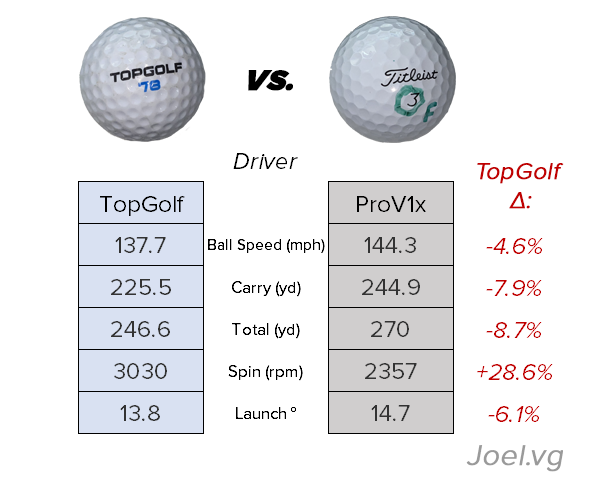
Image Source: joel.vg
Grasping Golf Ball Initial Velocity
What is golf ball initial velocity? It is the speed of the golf ball right after it leaves the club. This speed is key. It sets how far the ball will fly and how high it will go. A higher initial velocity means a longer shot. It is a main goal for golfers who want more distance.
Many things change this initial speed. The main ones are clubhead speed, how the club hits the ball, and the ball itself. We will look at each part. We want to help you get more speed from your driver.
The Clubhead Speed Correlation
How fast your club moves is very important. This is your clubhead speed. It is the biggest factor for golf ball initial velocity. Think of it like this: The faster you swing the club, the faster the ball will go. This is a direct clubhead speed correlation.
A pro golfer can swing their driver at 110 mph or more. This makes the ball fly off at speeds of 165 mph or higher. For an average golfer, a clubhead speed of 90 mph might lead to a ball speed of 135 mph. There is a clear link. More club speed often means more ball speed.
But club speed is not the only thing. You must hit the ball well too. A fast swing that misses the sweet spot will not give you top ball speed. It is about both speed and good contact.
H5: Average Clubhead Speeds and Ball Speeds
Let us look at some typical speeds. This table shows how clubhead speed often links to ball speed.
| Golfer Type | Average Clubhead Speed (mph) | Typical Ball Speed (mph) |
|---|---|---|
| Beginner | 70 – 80 | 105 – 120 |
| Average Male | 90 – 100 | 135 – 150 |
| Average Female | 60 – 75 | 90 – 112 |
| Low-Handicapper | 100 – 110 | 150 – 165 |
| PGA Tour Pro | 110 – 120+ | 165 – 180+ |
This table shows a clear pattern. As clubhead speed goes up, ball speed goes up too. But how well you hit the ball makes a big difference. This is where “smash factor” comes in.
Smash Factor Explanation
What is smash factor? It is a number that tells us how well you hit the ball. It compares your golf ball initial velocity to your clubhead speed. It is a very helpful tool.
Formula for Smash Factor:
Smash Factor = Golf Ball Initial Velocity / Clubhead Speed
For example, if your ball speed is 150 mph and your clubhead speed is 100 mph, your smash factor is 1.5. A smash factor of 1.5 is the ideal goal for a driver. This means you hit the ball perfectly. It shows that you transfer almost all the energy from the club to the ball.
H5: Why Smash Factor Matters
A good smash factor means you hit the sweet spot. It means you hit the ball squarely. A low smash factor means you did not hit the ball well. Maybe you hit it off-center. Maybe you hit it too high or too low on the face.
Even with a fast swing, a low smash factor will lower your ball speed. If a pro swings at 115 mph but has a smash factor of 1.3, their ball speed would be about 149.5 mph. This is much less than the 172.5 mph they would get with a 1.5 smash factor.
Improving your smash factor is often easier than swinging faster. It means focusing on hitting the ball cleanly. This includes hitting the center of the club face. It also means hitting the ball with the club face square to your target line.
The Driver Loft Impact Speed
The loft of your driver is important. Loft is the angle of the club face. It points the ball up into the air. Driver loft impact speed is about how this angle affects how fast the ball leaves the club.
A driver with the right loft for your swing can help you get more ball speed. It also helps you get the best launch conditions. Launch conditions are how the ball flies off the club.
If your loft is too low, the ball may not go high enough. It might have too much spin. Both can lower your ball speed in the air. If your loft is too high, the ball might go too high. It might lose speed quickly.
H5: Choosing the Right Loft
Most drivers today let you change the loft. This is good because you can set it for your swing.
- Slower Swings (under 90 mph): A higher loft, like 10.5 to 12 degrees, can be best. This helps get the ball in the air. It also helps reduce unwanted spin.
- Average Swings (90-100 mph): Lofts from 9.5 to 10.5 degrees often work well.
- Faster Swings (over 100 mph): Lower lofts, such as 8.5 to 9.5 degrees, can be better. This helps keep the ball flight lower. It helps reduce too much spin.
The right loft helps you get the ideal launch angle and spin. These are key parts of golf ball launch conditions.
Fathoming Golf Ball Launch Conditions
Golf ball launch conditions are the numbers that describe how the ball leaves the club. They are more than just ball speed. They tell us about how the ball flies. The main conditions are:
- Launch Angle: This is how high the ball starts its flight. It is the angle the ball takes off at.
- Spin Rate: This is how fast the ball spins in the air. Spin can be backspin, sidespin, or rifle spin.
- Ball Speed (Initial Velocity): We already talked about this. It is how fast the ball moves away from the club.
These three work together. They decide how far and how straight your ball will fly. Getting the right mix is key for optimal ball speed driver results and max distance.
H5: Ideal Launch and Spin
There is an ideal range for launch angle and spin rate. This range helps your ball fly the farthest.
- Launch Angle: For most golfers, a launch angle between 12 and 17 degrees is good. Players with faster swings might want a lower launch. Players with slower swings might want a higher launch.
- Spin Rate: The goal is usually a low spin rate. For a driver, a spin rate between 2,000 and 2,800 revolutions per minute (RPMs) is often best. Too much spin makes the ball go high and stop fast. Too little spin makes it drop fast.
The right driver loft impact speed and a good swing help you hit these numbers.
Optimal Ball Speed Driver Strategies
How do you get the best ball speed from your driver? It takes a mix of things. It is about your swing, your club, and your golf ball.
H4: Improving Your Swing
- Swing Faster (Safely): Work on increasing your clubhead speed. This means getting stronger. It also means using your body better in the swing. Do not try to just swing harder. Focus on good body turns and using your legs.
- Hit the Sweet Spot: Focus on hitting the center of the club face. This improves your smash factor. Practice hitting balls from a tee. Make sure the tee height is right for you.
- Square Clubface at Impact: Make sure your club face is square to your target when you hit the ball. This helps with direction. It also helps transfer energy well.
- Angle of Attack: This is how the club comes down on the ball. For a driver, you want to hit the ball slightly on the upswing. This helps launch the ball higher with less spin. This is key for good golf ball launch conditions.
H4: Choosing the Right Equipment
- Driver Loft: As we talked about, pick a driver with the right loft for your swing speed. If you are unsure, try a few different lofts. See what works best for you.
- Shaft Flex: The shaft in your driver needs to match your swing speed. A shaft that is too stiff or too flexible can hurt your ball speed. It can also make you hit off-center.
- Regular flex: For clubhead speeds of 75-90 mph.
- Stiff flex: For clubhead speeds of 90-105 mph.
- Extra stiff flex: For clubhead speeds over 105 mph.
- Driver Head Design: Newer drivers have larger heads. They also have technology to make the sweet spot bigger. This helps you get a better smash factor even if you do not hit the very center.
PGA Tour Ball Speeds: The Benchmarks
PGA Tour players are the best in the world. They show us what top golf ball initial velocity looks like. Their ball speeds are very high. They are a good target to aim for if you want max distance.
Most PGA Tour pros have driver clubhead speeds between 113 mph and 120 mph. Some very long hitters, like Bryson DeChambeau, can swing over 130 mph. Their ball speeds are amazing.
H5: PGA Tour Averages
| Measurement | Average PGA Tour Pro Value | Top PGA Tour Pro Value |
|---|---|---|
| Clubhead Speed | 113 mph | 130+ mph |
| Ball Speed | 170 mph | 190+ mph |
| Smash Factor | 1.50 – 1.51 | 1.50 – 1.51 |
| Launch Angle | 10 – 12 degrees | 8 – 14 degrees |
| Spin Rate | 2200 – 2600 RPMs | 1800 – 2800 RPMs |
These numbers show why PGA Tour players hit the ball so far. They have high clubhead speed. They also hit the ball perfectly (high smash factor). This gives them incredible golf ball initial velocity. This makes their golf ball carry distance very long.
Golf Ball Compression Rating: How it Affects Speed
The golf ball itself plays a role in speed. One key part of a golf ball is its compression rating. This tells us how soft or hard the ball is. It means how much the ball flattens when it is hit.
- Lower compression balls (soft): These flatten more easily. They are good for golfers with slower swing speeds. They can help these players get more golf ball initial velocity. This is because the ball stays on the club face a tiny bit longer. It transfers more energy.
- Higher compression balls (firm): These do not flatten as much. They are for golfers with faster swing speeds. A firm ball can handle the high energy of a fast swing. It will not flatten too much. This helps keep ball speed high.
Using a ball that matches your swing speed is important. If you have a slow swing and use a hard ball, you might not get the best ball speed. The ball will not compress enough. If you have a fast swing and use a soft ball, the ball might compress too much. This can cause too much spin. It can also lose energy.
H5: Matching Ball to Swing Speed
| Golfer Type | Clubhead Speed (mph) | Recommended Ball Compression (Approx.) |
|---|---|---|
| Slower Swings | Below 85 | 50 – 70 (Soft) |
| Average Swings | 85 – 100 | 70 – 90 (Mid) |
| Faster Swings | 100+ | 90 – 100+ (Firm) |
Choosing the right golf ball compression rating can help you get the best golf ball initial velocity. It can also help with better feel.
Interpreting Launch Monitor Ball Data
How do we know all these numbers? We use launch monitors. A launch monitor is a device that tracks what happens when you hit a golf ball. It gives you very exact launch monitor ball data.
These devices use radar or cameras. They measure many things. They measure clubhead speed. They measure golf ball initial velocity. They measure launch angle. They measure spin rate. They also measure smash factor.
H5: How Launch Monitors Help
- See Your Numbers: You can see your actual clubhead speed, ball speed, and other stats. This takes the guesswork out.
- Find Weak Spots: If your ball speed is low, the launch monitor can show why. Maybe your smash factor is low. Maybe your launch angle is off.
- Try Different Gear: You can test different drivers, lofts, or golf balls. See which ones give you the best numbers.
- Track Progress: You can hit balls over time. See if your training makes your numbers better.
Using a launch monitor is one of the best ways to improve your driver play. It gives you facts, not just feelings. Many golf stores and teaching pros have these devices.
Connecting Ball Speed to Golf Ball Carry Distance
The main reason we care about ball speed is for distance. Golf ball initial velocity is directly linked to golf ball carry distance. Carry distance is how far the ball flies in the air before it lands.
A higher ball speed means the ball starts faster. If all other things are equal (launch angle, spin), a faster ball will fly farther.
Think of it like this: If your ball speed goes from 140 mph to 150 mph, you will likely add 10 to 15 yards to your carry distance. This is a big gain.
H5: Total Distance vs. Carry Distance
- Carry distance: How far the ball flies in the air.
- Total distance: Carry distance plus how far the ball rolls after landing.
While ball speed affects carry distance most, good launch conditions (angle and spin) also affect how much the ball rolls. A ball with too much backspin might stop fast. A ball with low spin might roll a lot. For max total distance, you need good ball speed AND good launch.
Factors Affecting Ball Speed (Recap and More Detail)
Let us review the main things that change how fast a golf ball comes off a driver.
- Your Swing Speed (Clubhead Speed): This is the engine. The faster the engine, the more potential speed.
- Impact Quality (Smash Factor): How well you hit the ball. Hitting the sweet spot with a square face is key.
- Driver Loft: The angle of the club face. It needs to match your swing speed for best launch.
- Launch Angle and Spin Rate: How the ball starts its flight. The right mix gives max carry.
- Golf Ball Type (Compression Rating): The softness or hardness of the ball. It must suit your swing.
- Driver Design: Modern drivers are made to give more ball speed. They have bigger sweet spots.
- Weather: Wind, air temperature, and humidity can all affect ball speed and distance. Cold air is thicker. This means the ball flies a bit less far. Wind can be a big helper or a big problem.
All these things work together. To get the fastest ball speed, you need to get all these parts working for you.
Tips to Increase Ball Speed
Want to hit it farther? Here are clear steps to get more ball speed.
- Work on Swing Mechanics:
- Strength and Flexibility: Do exercises that make you stronger and more flexible. Focus on your core, legs, and back. This helps you create more clubhead speed.
- Turn Fully: Make a full shoulder turn in your backswing. This builds power.
- Use Your Lower Body: Push off the ground with your legs. This creates speed.
- Lag: Keep your wrists “cocked” until late in the downswing. This stores energy.
- Practice Smart:
- Impact Drills: Use drills to hit the sweet spot more often. Put tape on your club face. See where you hit the ball. Adjust your setup or swing path.
- Speed Training: Use weighted clubs or speed sticks. Swing them faster than you normally would. This helps train your body for higher clubhead speed.
- Tee Height: Make sure your tee height is right. For a driver, half the ball should be above the club’s top edge. This helps you hit up on the ball.
- Get Fitted:
- Professional Fitting: See a golf pro or club fitter. They can use a launch monitor. They can help you find the best driver loft, shaft, and ball for your swing. This is one of the best ways to get an optimal ball speed driver setup.
- Choose the Right Ball:
- Match Your Swing: Use a golf ball with a compression rating that fits your swing speed. This will maximize energy transfer.
Remember, getting faster ball speed takes time and practice. Focus on one or two things at a time. Use a launch monitor if you can. This will show you if your changes are working.
Conclusion
The speed a golf ball comes off a driver is a key number in golf. This golf ball initial velocity is a mix of many factors. It starts with your clubhead speed. It is also about how well you hit the ball (smash factor). The club’s loft, the ball’s flight (golf ball launch conditions), and even the ball’s compression rating all play a part.
For more distance, aim for higher ball speed. You can get this by swinging faster, hitting the sweet spot, and using the right equipment. PGA Tour ball speeds show us what is possible. Use launch monitor ball data to measure your progress. By working on these areas, you can send your golf ball farther down the fairway. This will help you master your driver.
Frequently Asked Questions (FAQ)
H4: What is a good ball speed for a driver?
A good ball speed depends on your swing speed. For an average male golfer, 135-150 mph is good. For female golfers, 90-112 mph is good. PGA Tour pros often reach 170 mph or more. Aim for a smash factor of 1.5. This means your ball speed should be 1.5 times your clubhead speed.
H4: Can a lighter driver give me more ball speed?
Yes, a lighter driver can sometimes give you more clubhead speed. This can lead to more golf ball initial velocity. But if the driver is too light, you might lose control. This could lead to a poorer strike. A professional fitting can help you find the right weight.
H4: Does hitting the ball in the center of the face really matter that much?
Yes, it matters a lot. Hitting the center (sweet spot) leads to the best smash factor. This means you transfer the most energy from the club to the ball. A miss-hit, even with a fast swing, will lower your ball speed a lot.
H4: How does temperature affect ball speed?
Cold air is thicker than warm air. Thicker air creates more drag on the golf ball. So, a golf ball will generally fly shorter and slower in colder weather. For every 10 degrees Fahrenheit drop in temperature, you can lose about 1 to 2 yards of carry distance.
H4: Is a higher loft always better for slower swingers?
Often, yes. A higher driver loft impact speed helps slower swingers get the ball in the air. It can also help reduce too much spin. This leads to better golf ball launch conditions and more carry distance. However, a professional fitting will find the perfect loft for your specific swing.