
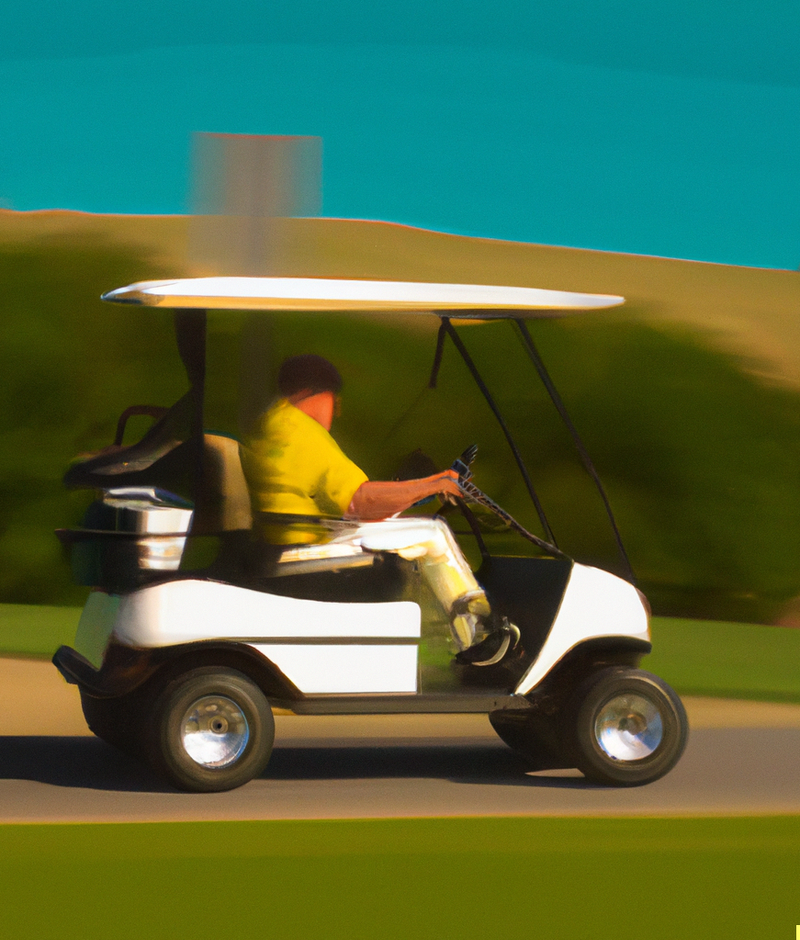
Image Source: cdn.sanity.io
Max Speed: How Fast Does A Gas Golf Cart Go Really?
So, just how fast does a gas golf cart go? A standard, factory-built gas golf cart usually travels at a standard gas golf cart speed of around 12 to 19 miles per hour (mph). This speed is set by the manufacturer for safety and to meet the typical needs of a golf course or similar low-speed environment.
Let’s take a deeper look at gas golf cart speed. It’s not just one number. Speed changes based on many things. We’ll cover the typical speed you can expect, the fastest they can go, what slows them down or speeds them up, and how they compare to electric carts.
Perceiving Gas Golf Cart Speed
Thinking about golf cart speed needs a few points of view. Is it the speed right out of the factory? Is it the speed people actually drive them? Or is it the very fastest they can go with changes?
Standard Golf Cart Speed
Most gas golf carts come from the factory set to a specific speed. This speed is often controlled by a part called a governor. The governor is like a simple speed limiter. It stops the engine from turning too fast.
- Typical Factory Range: 12 mph to 15 mph for many models.
- Some Models: A few might be set slightly higher, up to 19 mph, especially utility models or those meant for larger properties.
This standard gas golf cart speed is chosen for good reasons. It helps prevent accidents on crowded golf courses or other paths. It also keeps the engine and other parts from wearing out too quickly.
Average Gas Golf Cart Speed
The average gas golf cart speed you see in real life might be a bit different from the factory setting. On a flat path with one person and no extra weight, a cart might hit its factory max speed. But if you add passengers, go up a hill, or are on rough ground, the speed will be less.
So, the average speed during typical use on a golf course might be closer to 10-15 mph. If used on flat ground for transport, it might average closer to its top governed speed.
Top Speed of a Gas Golf Cart
The top speed of a gas golf cart is the fastest it can go. For a standard cart right from the factory, the top speed is limited by the governor. This is the speed we talked about earlier, usually between 12 and 19 mph.
But what if the governor is changed or removed? Or what if other parts are upgraded? Then, the potential max speed gas golf cart can reach goes up.
- With governor changes: A simple adjustment can often push the speed to 20-25 mph.
- With performance upgrades: Things like changing engine parts, clutches, or gears can make a gas cart go much faster, sometimes 30 mph or even more.
However, it’s important to know that pushing a cart past its designed speed can be unsafe and can damage the cart. The frame, brakes, and suspension are not built for high speeds like a car.
Inspecting What Affects Gas Golf Cart Speed
Many things play a role in how fast a gas golf cart can go. Think of it like how a car’s speed changes based on different conditions.
Engine Power and Health
The heart of a gas golf cart is its engine. Gas golf carts use small internal combustion engines.
- Engine Size: Bigger engines generally make more power. More power usually means higher potential speed, especially when going uphill or carrying weight. The golf cart engine speed (how fast the engine turns, measured in revolutions per minute or RPM) is key. The governor limits this engine speed.
- Engine Health: A well-tuned engine runs better and faster. This means having clean fuel filters, a good air filter, properly set spark plugs, and fresh oil. An engine that isn’t running right will lose power and speed.
- Compression: Over time, engine parts wear out. If the engine loses compression, it won’t make as much power. This directly affects the cart’s speed and ability to climb hills.
Weight On Board
This is a big factor. Golf carts are made to carry a few people and maybe golf bags.
- Passengers and Cargo: The more weight you put in the cart, the harder the engine has to work. This slows the cart down, especially when starting or going up even small hills.
- Cart Weight: Even the base weight of the cart itself matters. Carts with extra features or lift kits might be heavier and slightly slower unless other parts are upgraded.
The Ground You’re On
The surface and slope make a big difference.
- Flat Ground: This is where a golf cart will reach its fastest speed, assuming the ground is smooth.
- Hills: Going uphill significantly reduces speed. The steeper the hill and the more weight in the cart, the slower it will go.
- Terrain Type: Driving on grass, sand, or rough paths creates more resistance than driving on pavement. This extra resistance slows the cart down.
Tire Size and Type
The wheels and tires on a golf cart affect speed in a few ways.
- Tire Pressure: Tires with too little air cause more drag and can slow the cart down.
- Tire Size: Bigger tires mean the wheel travels further with each turn. If the engine RPM and gear ratio stay the same, bigger tires will increase the potential top speed. However, they also require more power to get moving, which can make the cart slower on hills or with weight. This is a trade-off.
- Tire Tread: Knobby off-road tires create more resistance on pavement than smooth golf course tires.
Cart Condition and Upkeep
Keeping the cart in good shape is key to its speed.
- Belts: Gas carts use belts to transfer power from the engine. Worn, loose, or damaged belts can slip, causing a loss of power and speed.
- Clutch: The clutch system helps the cart shift “gears” (they use a variable clutch system, not a traditional transmission). If the clutch is worn or dirty, it won’t work properly, leading to slow acceleration and reduced top speed.
- Brakes: Brakes that are dragging even a little bit will slow the cart down and hurt fuel economy.
- Lubrication: Moving parts, like linkages and bearings, need to be greased. Parts that don’t move freely can create drag.
Altitude
Less air at higher altitudes means less oxygen for the engine to burn fuel. This reduces engine power.
- Higher Elevation: Gas engines lose power at higher altitudes. A golf cart that goes 18 mph at sea level might only go 15 mph in the mountains.
These are all factors affecting golf cart speed. Ignoring any of them can mean your cart doesn’t go as fast as it could or should.
Increasing Gas Golf Cart Speed
Many people want to know how to increase gas golf cart speed. There are several ways to do this, but it’s important to know the risks and potential downsides.
Simple Adjustments
- Governor Adjustment: This is the most common way to get a little more speed. The governor cable or linkage can often be adjusted to allow the engine to reach a higher RPM before the governor limits it. This can often boost speed by 3-7 mph, taking a typical 15 mph cart up to 18-22 mph.
- Caution: Pushing the engine past its intended factory RPM can cause faster wear or even damage.
- Proper Maintenance: As mentioned before, a well-tuned cart is a faster cart. Cleaning the carburetor, replacing filters, changing spark plugs, and ensuring belts and clutch are in good shape can restore lost speed or help the cart reach its factory maximum consistently.
- Correct Tire Pressure: Making sure tires are filled to the right pressure reduces rolling resistance.
Performance Upgrades
For more significant speed gains, parts often need to be replaced or modified.
- Performance Clutch: Upgrading the clutch system can help the engine transfer power more effectively, leading to better acceleration and slightly higher top speed, especially with other modifications.
- High-Speed Gears: Replacing the gears in the rear axle (transaxle) is a major way to increase top speed. High-speed gears change the ratio so that for the same engine RPM, the wheels turn faster.
- Consideration: This will make the cart slower when climbing hills or starting from a stop, as the engine has to work harder to turn the faster gears. It’s a trade-off between top speed and low-end power.
- Engine Modifications: This can range from upgrading the carburetor or exhaust to installing a completely different, more powerful engine. These modifications can lead to significant speed increases but are often complex and expensive.
- Removing the Governor: While possible, completely removing the governor is risky. It allows the engine to rev as high as it can, which can quickly lead to engine damage if not done carefully and usually with other reinforcing modifications. This is not recommended for standard engines.
- Larger Tires: As mentioned earlier, larger tires (with the same gearing and engine speed) result in higher speed. However, this also puts more strain on the engine and clutch. Lift kits are often needed to fit larger tires.
Table: Common Speed Increase Methods and Effects
| Method | Expected Speed Boost | Difficulty | Cost | Notes |
|---|---|---|---|---|
| Governor Adjustment | Moderate (3-7 mph) | Easy/Medium | Low | Risk of engine wear if set too high |
| Routine Maintenance | Restore Lost Speed | Easy/Medium | Low | Essential before any other mods |
| Performance Clutch | Minor/Moderate | Medium | Medium | Improves acceleration too |
| High-Speed Gears | Significant (5-10+ mph) | Hard | High | Reduces hill climbing ability |
| Engine Upgrades | Significant (10-20+ mph) | Hard | High | Can require other drivetrain upgrades |
| Larger Tires | Moderate (3-7 mph) | Medium | Medium | Often requires lift kit, adds engine strain |
It’s important to research and understand the potential impact of any modification on the cart’s safety, lifespan, and legality before attempting to increase gas golf cart speed.
Gas Versus Electric Golf Cart Speed
Another common question is about gas vs electric golf cart speed. How do they stack up against each other?
Acceleration
- Gas: Gas carts typically build speed more like a car. They start a bit slower and pick up speed as the engine RPM increases.
- Electric: Electric carts offer instant torque. They tend to feel quicker off the line and accelerate smoothly and quickly up to their top speed.
Top Speed
- Gas: As we’ve seen, standard gas carts usually top out around 12-19 mph. With modifications, their max speed gas golf cart can be much higher (30+ mph).
- Electric: Standard electric carts are often set to a similar speed range, 12-19 mph. However, modifying electric carts for speed is also possible, often by changing controllers, motors, or batteries. Performance electric carts can also reach 20-30 mph or even higher.
Speed Drop on Hills/with Weight
- Gas: Gas carts tend to maintain speed better on hills or with heavy loads compared to standard electric carts of similar power. The engine provides consistent torque as long as it’s running properly.
- Electric: Standard electric carts can slow down more noticeably on inclines or with extra weight as they draw more power from the batteries. However, upgraded electric systems can also handle loads and hills very well.
Consistency
- Gas: A gas cart’s speed performance is usually consistent as long as it has fuel, regardless of how long you’ve been driving.
- Electric: An electric cart’s performance, including top speed, can decrease as the batteries drain. A fully charged electric cart will typically perform better than one near the end of its charge.
In terms of pure potential top speed, a heavily modified gas cart can sometimes reach higher speeds than a heavily modified electric cart, but performance electric systems are quickly closing the gap. For standard carts, the gas vs electric golf cart speed is often quite similar, designed for similar low-speed uses.
Rules About Golf Cart Speed
Golf carts are not cars, and where you can drive them and how fast is often limited by rules. These rules create a golf cart speed limit.
On the Golf Course
Golf courses are the primary place for these vehicles. Speed on the course is usually limited by:
- Cart Governor: The built-in speed limiter is the main control.
- Course Rules: Some courses might have their own rules, asking drivers to go slower, especially near greens or clubhouses.
- Safety: Common sense dictates a low speed due to other players, walkers, and the course layout.
The typical golf cart speed limit on a golf course is whatever the cart’s factory setting allows, usually 12-15 mph.
In Communities or Private Property
In planned communities, retirement villages, or on large private properties, golf carts are often used for getting around.
- Community Rules: Many communities have their own speed limits for golf carts, often 15 mph or 20 mph. These are usually posted.
- State/Local Laws: Some places have specific laws about golf cart use on private roads within a community.
On Public Roads (Street Legal Carts)
This is where speed limits become more formal and strict. In places where golf carts are allowed on public roads (often called Low-Speed Vehicles or LSVs if they meet certain safety standards), there are clear rules.
- LSV Definition: Many states define LSVs as vehicles capable of speeds greater than 20 mph but not greater than 25 mph. They must also have specific safety features like seat belts, mirrors, turn signals, headlights, and brake lights.
- Road Restrictions: LSVs are usually only allowed on roads with posted speed limits of 35 mph or less.
- How fast are street legal golf carts? Because of the LSV definition, their speed is capped. The max speed gas golf cart (or electric) that is street legal is typically 25 mph. This is enforced by the manufacturer to meet the LSV classification rules. Modifying a street legal cart to go faster than 25 mph can make it illegal to drive on the street.
Understanding the golf cart speed limit is crucial for safe and legal operation, especially outside of a dedicated golf course environment.
Deciphering Golf Cart Engine Speed and How it Relates to Ground Speed
Let’s look a bit closer at the connection between the engine and how fast the wheels turn. The golf cart engine speed is measured in RPM (Revolutions Per Minute). The engine turns the clutch system, which turns a belt, which turns the transaxle (the rear axle with gears). The transaxle’s gears then turn the wheels.
- Governor’s Role: The governor limits the maximum engine RPM. If the governor is set to limit the engine to, say, 4000 RPM, the engine won’t go faster than that, no matter how much you press the gas pedal.
- Gearing: The transaxle has gears inside. A specific ratio of gears means that for every certain number of turns of the driveshaft coming from the clutch, the wheels turn a smaller number of times. For example, a ratio of 12.5:1 means the driveshaft turns 12.5 times for the wheels to turn once.
- Tire Size: Once the wheel turns, the size of the tire determines how far the cart moves. A larger tire covers more distance per rotation.
So, the final speed comes from this chain:
Engine RPM -> Clutch/Belt -> Transaxle Gear Ratio -> Wheel RPM -> Tire Size -> Ground Speed.
Increasing golf cart engine speed (by adjusting the governor) directly increases wheel speed if the gearing and tire size stay the same. Changing the gear ratio in the transaxle changes how many times the wheels turn for a given engine speed. Changing tire size changes how far the cart travels for a given wheel speed.
This explains why adjusting the governor, changing gears, or changing tire size are the main ways to alter a golf cart’s top speed.
The Quest for Max Speed Gas Golf Cart
For some, the max speed gas golf cart is about pushing the limits. While factory carts are slow by design, the potential for speed with modifications is real.
- Mild Modifications: Adjusting the governor and ensuring peak engine performance might get you into the low 20s mph. This is often enough for use in larger communities or on trails.
- Moderate Modifications: Adding performance clutches and larger tires can help acceleration and add a few more mph, potentially reaching 25-28 mph.
- Significant Modifications: Installing high-speed gears, engine upgrades, or even engine swaps (like putting a small motorcycle engine in a golf cart frame) can result in speeds of 30 mph, 40 mph, or even higher. These are not standard golf carts anymore; they are custom performance machines built for speed, not for typical golf course use.
It’s crucial to remember that going faster than the cart was built for requires upgrading other systems too. Brakes need to be stronger to stop at higher speeds. The suspension needs to handle bumps at speed. The frame needs to be strong enough. Safety should always be the top concern with high-speed modifications.
Summarizing Gas Golf Cart Speed
Let’s recap the different speeds we’ve discussed:
- Standard Gas Golf Cart Speed: Typically 12-19 mph from the factory, limited by a governor.
- Average Gas Golf Cart Speed: Real-world speed during normal use, often lower than the maximum due to weight, terrain, etc., perhaps 10-15 mph on a golf course.
- Top Speed of a Gas Golf Cart (Stock): Limited by the governor, usually 12-19 mph.
- Top Speed of a Gas Golf Cart (Modified): Can range from 20 mph with simple adjustments to 40+ mph with major performance upgrades. The max speed gas golf cart potential is quite high but requires significant changes and sacrifices in other areas (like cost, reliability, hill climbing).
- Golf Cart Speed Limit (General): Varies by location. Often 15-20 mph in communities.
- How Fast Are Street Legal Golf Carts: Usually capped at 25 mph to meet Low-Speed Vehicle (LSV) requirements.
The golf cart engine speed, gearing, tire size, and overall condition are the mechanical factors determining speed, while weight, terrain, and rules dictate the practical speed in use.
Ultimately, a gas golf cart is designed for lower speeds where torque and consistent power are more important than outright velocity. While they can be made to go much faster, their original purpose and design are centered around a more leisurely pace.
Frequently Asked Questions (FAQ)
Can a standard gas golf cart go over 20 mph?
A standard, factory-set gas golf cart is usually limited by a governor to a standard gas golf cart speed of 12-19 mph. It typically cannot go over 20 mph without adjusting or changing the governor or other parts.
Is a gas golf cart faster than electric?
Out of the box, the gas vs electric golf cart speed is often similar, both usually limited to 12-19 mph. Gas carts may maintain speed better on hills or with loads. Heavily modified gas carts can potentially reach higher top speeds than heavily modified electric carts, but performance electric systems are very powerful now.
How can I make my gas golf cart go faster?
You can increase gas golf cart speed by adjusting the governor, performing proper maintenance, or making performance upgrades like changing clutches, gears, or engine parts. Be aware that modifications can affect safety, lifespan, and legality.
What is the average speed of a gas golf cart?
The average gas golf cart speed during typical use on a golf course or in a community is likely between 10 mph and 15 mph, depending on terrain, load, and whether it’s able to reach its governed top speed.
What is the top speed of a gas golf cart without a governor?
Without a governor, the golf cart engine speed is no longer limited. The actual top speed of a gas golf cart then depends on the engine’s maximum safe RPM, the gearing, and tire size. This could range from 25 mph to potentially much higher (40+ mph) if other performance parts are added, but running an engine without a governor is very risky unless the engine is built for it.
Are there speed limits for golf carts?
Yes, there are often golf cart speed limits. On golf courses, the cart’s built-in governor acts as the limit. In communities, there might be posted speed limits. How fast are street legal golf carts is specifically limited, often to 25 mph, to meet safety and classification rules for public roads.
What factors affect how fast a golf cart goes?
Many factors affecting golf cart speed include engine health and power (golf cart engine speed), the weight of passengers and cargo, the terrain (hills, surface type), tire size and pressure, cart maintenance (belts, clutch), and altitude.
What is a typical max speed gas golf cart for street use?
For street use, a cart needs to be street legal (an LSV). The max speed gas golf cart that qualifies as an LSV is typically capped by the manufacturer at 25 mph. Going faster requires the vehicle to meet different, stricter automotive standards.