
Image Source: www.hirekogolf.com
Guide: How Do You Measure Golf Club Shaft Length Correctly
What is golf club shaft length? It’s how long your golf club is from the very end of the grip to the bottom of the club head. This measurement is very important. Why is it important? It helps you hit the ball well. It affects your swing, how accurate you are, and how comfortable you feel. Can I measure it myself? Yes, you can. You just need the right tools and steps. Who needs to measure it? Anyone who plays golf. If you want to play better or get clubs made just for you, knowing how to measure is key. This golf club length measurement guide will show you exactly how.
Why Correct Shaft Length Matters So Much
The length of your golf club is not just a number. It makes a big difference in your game. Think of it like this: if your shoes are too big or too small, you can’t run well. Golf clubs are similar. The right length helps you stand correctly. It lets your arms swing freely. This means you hit the ball in the middle of the clubface more often.
If a club is too long for you, you might stand too far from the ball. You might also stand too upright. This can make you swing the club on a path that is too flat. You might hit the ground before the ball. This is called a “fat” shot. Or, you might miss the ground and hit the top of the ball. This is a “thin” shot. Both lead to bad shots.
If a club is too short, you might bend over too much. You might stand too close to the ball. This can make you swing too steeply. You might hit the ball with the heel or toe of the club. This also makes the ball go off target.
Having the proper golf club length means you can keep your balance easily. It lets your body turn correctly. This leads to a strong, smooth swing. It helps you hit the ball with more power and better aim. It also helps prevent pain. Playing with clubs that are too long or too short can strain your back, arms, or wrists. Over time, this can cause injuries. Good club length helps you enjoy the game more. It lets you play pain-free for longer. It truly helps your game.
Tools You Will Need
Measuring your golf clubs is not hard. But you need the right tools. Having them ready makes the job easy and correct. Here is what you need:
- A Golf Club Length Ruler or Tape Measure: This is the most important tool. A proper golf club length ruler is best. It is designed for this job. It has a flat end. This end sits against the club’s sole. If you don’t have one, a good quality tape measure will work. Just make sure it is stiff enough. A flimsy tape measure can bend. This will give you a wrong reading.
- A Flat, Level Surface: You need a floor that is perfectly flat. A garage floor, a kitchen floor, or a solid workbench works well. Do not measure on carpet or uneven ground. The club must lie flat.
- A Square or Carpenter’s Square (Optional but Recommended): This tool helps you get a very accurate reading. It helps you make sure the ruler is straight. It helps you get a true vertical measurement. This is important for drivers.
- A Pencil or Marker (Optional): Sometimes it helps to mark the spot on the ruler. This ensures you read the number correctly.
These tools are usually easy to find. Get them ready before you start measuring. This will save you time. It will also help you get the most accurate numbers.
The Standard Way to Measure Golf Club Shaft Length (The “Sole-to-Butt” Method)
This is the most common way to measure golf clubs. Golf companies use this method. Club fitters use this method. It is called the “sole-to-butt” method. It makes sure everyone measures in the same way. This helps avoid confusion. Follow these steps carefully:
Prepare Your Workspace
First, find a flat, hard surface. This could be a garage floor or a solid table. Make sure there are no bumps or dips. Clean the area. Any dirt or small objects under the club can throw off your measurement. Lay your golf club down on this flat surface. The club head should be flat on the ground. The grip end should be up in the air.
Position the Club Correctly
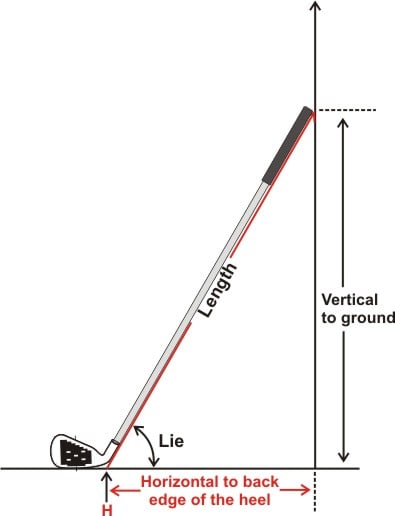
Place the club so its sole sits flat on the measuring surface. The sole is the bottom part of the club head. For most clubs, like irons, the leading edge of the sole should be flat on the ground. The club should be in its normal playing position. This means the shaft should make an angle with the ground. This angle is called the lie angle. Do not try to hold the club straight up and down. That is not how it is played. It also gives a wrong length.
Place Your Ruler
Now, take your golf club length ruler. If you have a special golf club ruler, one end will be flat. Place this flat end on the ground, touching the heel of the club head. The heel is the part of the club head closest to the shaft. The ruler should be flat against the ground. It should be parallel to the shaft. Make sure the ruler is straight. It should line up with the shaft’s center line. If you are using a regular tape measure, extend it. Place the zero mark on the ground. Make sure it touches the heel.
Take the Measurement
With the ruler in place, read the number at the very end of the grip. This is the butt end of the club. Look at the very top of the grip cap. That is where you take the measurement. Read the number in inches. Write it down. Be very precise. Even a quarter of an inch can make a difference in how a club feels.
Some people make a mistake here. They measure to the start of the grip. Or they measure to the end of the shaft under the grip. Do not do this. Always measure to the absolute end of the grip cap. This ensures you follow the golf club length measurement guide standards.
Repeat this process for all your clubs. This will give you an accurate idea of your club lengths.
Measuring Specific Clubs: Different Strokes for Different Folks
While the “sole-to-butt” method is standard, some clubs have small differences. Knowing these details helps you get the most accurate measurements.
Measure Golf Iron Shaft
Irons are usually the easiest clubs to measure. You use the standard sole-to-butt method. Lay the iron down. Make sure the sole of the club is flat on the ground. The face of the iron should point straight up. The shaft will naturally be at its lie angle. Place your ruler on the ground, touching the heel. Read the measurement at the very top of the grip.
It is very important that the iron lies correctly. If the toe of the club is up, or the heel is up, your measurement will be wrong. The entire bottom of the iron head must be flat on your measuring surface. This ensures you get a true length based on its designed lie angle. This is key when you measure golf iron shaft length.
Golf Driver Shaft Length Guide
Drivers are a bit trickier than irons. This is because they have a very large club head. The driver head also has a curved sole. This makes it hard to lay perfectly flat.
For drivers, you still use the sole-to-butt method. Lay the driver on its side. The sole should be flat on the ground. The face of the driver should be straight up. Some people find it easier to stand the driver upright. If you do this, make sure the club is at its natural lie angle. Then, measure from the ground to the grip cap.
A better way for drivers, especially if you want to be very exact, is to use a square. Place the driver on a flat surface. Position the club as if you were about to hit a ball. This means the center of the sole should be flat on the ground. Then, take a carpenter’s square. Place one side of the square on the ground. Slide it until it touches the heel of the driver head. The other side of the square will be straight up. Now, place your ruler against this upright part of the square. Measure straight up to the very end of the grip. This way is more precise for the driver’s unique shape. This is a very helpful golf driver shaft length guide.
Wedges and Putters
Wedges are measured just like irons. Lay them flat. Make sure the sole is flush with the ground. Measure from the heel to the grip cap.
Putters are measured differently. They are usually measured from the center of the sole to the top of the grip. For putters, you do not worry about the lie angle as much for length measurement. Just hold it upright or lay it flat. Make sure the ruler is straight up from the center of the sole. Many putters are designed to be played more upright. Their length affects your posture when putting.
Interpreting the Numbers: What Length is Right for You?
Once you have your club lengths, what do they mean? How do you know if they are right for you? This part explains that.
Standard Golf Club Shaft Length
There are general standard golf club shaft length guidelines. These are for average male and female golfers. They are a starting point. Your personal best length might be different.
Here is a general golf club length chart for men and women:
| Club Type | Men’s Standard Length (Inches) | Women’s Standard Length (Inches) |
|---|---|---|
| Driver | 45 – 45.75 | 43 – 44 |
| 3-Wood | 43 | 41.5 |
| 5-Wood | 42 | 40.5 |
| 3-Hybrid | 40 | 39 |
| 4-Iron | 38 | 37 |
| 5-Iron | 37.5 | 36.5 |
| 6-Iron | 37 | 36 |
| 7-Iron | 36.5 | 35.5 |
| 8-Iron | 36 | 35 |
| 9-Iron | 35.5 | 34.5 |
| Pitching Wedge | 35.25 | 34.25 |
| Sand Wedge | 35 | 34 |
| Lob Wedge | 35 | 34 |
| Putter | 33 – 35 | 33 – 35 |
Note: These are common factory lengths. Individual fit can vary.
You will notice irons usually get shorter by about half an inch as the number goes up. A 5-iron is shorter than a 4-iron. This makes sense. Shorter clubs give you more control. Longer clubs give you more distance.
How to Measure Golf Club for Height
Your height is a factor in club length. But it is not the only factor. Your arm length also plays a big role. A tall person with long arms might need shorter clubs than a tall person with short arms. The key measurement here is your “wrist-to-floor” distance.
Steps to Measure Wrist-to-Floor:
- Stand straight up.
- Let your arms hang naturally by your sides. Do not stretch them.
- Have someone measure from the crease of your wrist (where your hand meets your arm) down to the floor. Use a ruler or tape measure for this.
- Write this number down in inches.
Once you have your wrist-to-floor measurement, you can use general charts. These charts suggest club length changes based on your wrist-to-floor number. They also use your overall height.
For example:
* A 5’10” person with an average wrist-to-floor (about 34-35 inches) might use standard length clubs.
* A 5’10” person with very short arms (say, 32 inches wrist-to-floor) might need clubs that are 0.5 to 1 inch longer. This helps them not bend over too much.
* A 5’10” person with very long arms (say, 36 inches wrist-to-floor) might need clubs that are 0.5 to 1 inch shorter. This helps them not stand too upright.
This static measurement (wrist-to-floor and height) is a good starting point. It gives you a basic idea of how to measure golf club for height. However, it is not the whole story. Your swing style, posture, and athletic ability also matter a lot. That’s where professional fitting comes in.
When to Seek Professional Golf Club Fitting Measurements
While DIY measurements are helpful, a professional fitting is superior. It offers a precise fit. This fit boosts your game more than anything else.
A golf fitter does not just look at your height. They watch you swing. They use special tools. These tools measure many things about your swing. This is called dynamic fitting.
Here is what a professional fitting typically involves:
- Static Measurements: They start with your height and wrist-to-floor measurement. This gives them a basic idea of your physical size.
- Swing Speed: They measure how fast your club head moves. Faster swingers might benefit from different shaft flex. This can also affect ideal length.
- Swing Plane and Path: They look at how your club moves during your swing. Do you swing too flat or too upright? Do you come from outside or inside the target line? Club length can influence these.
- Ball Data: They use launch monitors. These machines track the ball. They show ball speed, launch angle, spin rate, and dispersion. This data helps them see how different club lengths affect your shots.
- Posture and Balance: They watch how you stand. They check your balance during the swing. A club that is too long or too short will force a bad posture. It will also affect your balance.
- Lie Angle: This is crucial for irons. It is the angle between the shaft and the ground at impact. If the club is too long or short, your lie angle might be off. This makes the ball go left or right of target. Fitters can bend irons to change their lie angle. This corrects shot direction.
A professional fitter uses all this data. They help you find the exact club length. This length makes your swing more natural. It helps you hit the ball straighter and farther. It makes your game more consistent. They can help you get custom golf club shaft length. This means your clubs are made or adjusted just for you. This is true golf club fitting measurements.
Think of it as getting a custom suit. A ready-made suit might fit okay. But a custom suit fits perfectly. Custom-fit clubs are like that. They fit your body and your swing perfectly. This can truly change your game.
Deciphering a Golf Club Length Chart
Golf club length charts are helpful. They give you a general idea of lengths. But it’s important to know how to use them. These charts are general guidelines. They are not strict rules.
Most golf club length chart entries show “standard” lengths. These are for an “average” golfer. What is an average golfer? Usually, it means a male golfer around 5’9″ to 5’11” with average arm length. For women, it’s around 5’4″ to 5’6″ with average arm length.
How to Use a Chart:
- Find Your Height: Look for your height on the chart.
- Look at Wrist-to-Floor: Some charts also include wrist-to-floor measurements. Find yours.
- See the Suggested Length: The chart will then suggest if you need standard length, or if you need clubs that are longer (+) or shorter (-) than standard.
Example of a Simple Chart Interpretation:
| Golfer Height | Wrist-to-Floor (approx) | Suggested Club Length vs. Standard |
|---|---|---|
| Below 5’0″ | Below 30″ | -1.5 inches |
| 5’0″ – 5’4″ | 30″ – 32″ | -1.0 inches |
| 5’5″ – 5’7″ | 32″ – 33.5″ | -0.5 inches |
| 5’8″ – 5’11” | 33.5″ – 35″ | Standard |
| 6’0″ – 6’2″ | 35″ – 36.5″ | +0.5 inches |
| 6’3″ – 6’5″ | 36.5″ – 38″ | +1.0 inches |
| Above 6’5″ | Above 38″ | +1.5 inches |
Note: This is a simplified chart for illustration. Actual fitting charts are more detailed.
If a chart says you need clubs that are “+0.5 inches,” it means you should add half an inch to the standard golf club shaft length for each club. For example, if a standard 7-iron is 36.5 inches, you would want a 37-inch 7-iron.
Remember, these charts are static. They do not account for your swing. They do not show if you bend your knees more or less. They do not show if you have a very upright or flat swing. So, use charts as a guide. They help you narrow down options. But for the best fit, a dynamic fitting is always the answer.
Common Mistakes to Avoid
Measuring golf clubs seems simple. But it is easy to make small errors. These errors can lead to wrong length clubs. Knowing what to avoid will help you get accurate results.
- Measuring on Uneven Ground: This is a big one. If your floor has a slight slope, or if you measure on carpet, your readings will be off. The club must lie perfectly flat. The ruler must be flat against the ground too.
- Not Accounting for Lie Angle: Especially with irons, the lie angle matters. The sole of the club must be flat on the measuring surface. Do not lift the toe or the heel. This changes the effective length. The club should be at its natural playing position when measured.
- Using a Flexible Tape Measure Incorrectly: A soft, cloth tape measure can bend. It can sag. This makes it hard to get a straight line. Use a stiff metal tape measure or a proper golf club length ruler. When using a tape measure, make sure it is taut. Make sure it goes straight from the heel to the grip cap.
- Ignoring the Grip Cap: Always measure to the very top of the grip cap. Do not stop at the shaft. Do not stop at the grip material. The grip cap is the final point of measurement. This is the industry standard.
- Measuring Drivers from the Toe: Drivers have a big, rounded head. Do not measure from the toe (the part farthest from the shaft). Always measure from the heel. The heel is the part closest to the shaft. This is where the shaft enters the club head. For the most accurate driver measurement, use a square as described earlier.
- Holding the Club Straight Up: Some people try to hold the club straight up and down. Then they measure from the floor. This is wrong. Golf clubs are not played straight up. They have an angle (lie angle). This method gives you a longer, incorrect number. Always measure with the club at its natural lie angle, with the sole flat on the ground.
- Not Repeating Measurements: Do not measure just once. Measure each club two or three times. This helps you check your work. If you get different numbers, measure again. Take the most common reading. This helps ensure accuracy.
Avoiding these common errors will make your measurements much more reliable. This helps you determine your proper golf club length more accurately.
Maintaining Your Club’s Length
Once you have your club lengths sorted, it’s good to keep them that way. Clubs can change slightly over time.
- Check for Wear and Tear: Over time, heavy use can slightly affect clubs. But it’s usually not enough to change the length. What can change is the grip.
- Re-gripping Can Subtly Affect Length: When you get new grips, the new grip cap might be slightly thicker or thinner. This can change the overall length by a tiny bit. It’s usually very small (a fraction of an inch). But if you are very precise, it is worth noting. Most golfers do not need to re-measure after every re-grip. But if you feel a difference, you can always check.
- Shaft Adjustments: If you get a club fitted, the fitter might cut the shaft. Or they might add a shaft extension. These are permanent changes. You should only have these done by a pro. Do not try to cut a shaft yourself unless you know what you are doing. It can ruin the club.
Knowing your clubs’ lengths is a step towards better golf. Regular checks and correct measurements help ensure your tools are right for the job.
Frequently Asked Questions (FAQ)
Can a golf club be too long for me?
Yes, absolutely. A club that is too long will make you stand too far from the ball. It can make you feel off-balance during your swing. You might hit the ball with the heel of the club. This leads to shots that go right (for right-handed golfers). It can also make you swing too flat. This makes it hard to hit the ball squarely. It often results in “fat” shots (hitting the ground before the ball) or “thin” shots (hitting the top of the ball).
Can a golf club be too short for me?
Yes, a club can also be too short. If your club is too short, you will bend over too much. You might stand too close to the ball. This can make you hit the ball with the toe of the club. This leads to shots that go left (for right-handed golfers). It can also cause a very steep swing. This might lead to inconsistent contact. Playing with a club that is too short can also put strain on your back and neck. This is because you are forced into an unnatural posture.
Does shaft material affect length measurement?
No, the material of the shaft (like steel or graphite) does not change how you measure its length. The measurement method is the same. However, shaft material does affect how the club feels. It affects how it performs. It affects swing speed and ball flight. But it does not change the physical length measurement itself.
How much does club length affect distance?
Club length can affect distance, but not as much as you might think. Longer clubs can generate more clubhead speed. This can lead to more distance. For example, a driver is the longest club. It is designed for maximum distance. However, if a club is too long for you, you will not hit the center of the clubface. Off-center hits lose a lot of power. They also lose accuracy. So, a club that is slightly shorter but allows you to hit the sweet spot every time will give you more effective distance. It will also be much straighter. Accuracy and consistent contact are more important than an extra inch of shaft.
Should I adjust my club length based on my swing speed?
Swing speed primarily affects the flex of the shaft, not directly the length. Faster swingers usually need stiffer shafts. Slower swingers often need more flexible shafts. While shaft length can influence swing speed slightly, your physical build (height, arm length) and your natural swing mechanics are the main factors for club length. A professional fitter will consider both your swing speed and your physical dimensions to recommend the best shaft length and flex for you. This creates truly custom golf club shaft length for your game.