
How do you measure yourself for golf clubs? You can start by taking a few simple measurements at home. These include your total height and your wrist-to-floor distance. This basic process is called static golf club fitting. It’s a simple way to get a starting idea of the club lengths you might need. It’s a good first step to help you find a right fit for your clubs, but it’s just one part of getting fully fitted.
Getting clubs that fit your body is super important for playing good golf. Using clubs that are too long or too short can make you change your swing in bad ways. This can lead to poor shots, not hitting the ball well, and even injuries. Knowing your basic measurements is the first step toward finding clubs that feel good and help you hit the ball better. While a full golf club fitting with a pro is the best way to go, doing some measuring yourself gives you a good starting point and helps you understand the process.
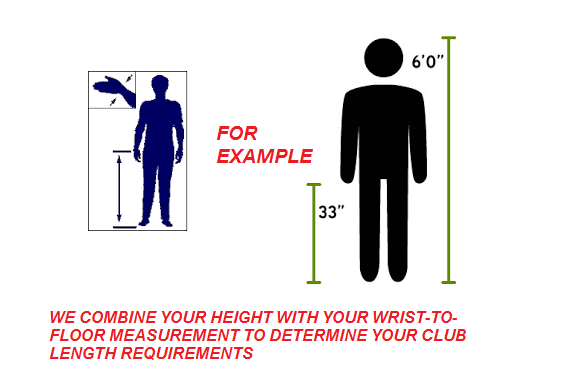
Image Source: agxgolf.com
Why Size Matters for Better Golf
Think about wearing shoes that are the wrong size. They feel bad, make it hard to walk well, and can hurt your feet. Golf clubs are similar. If your clubs don’t fit you, they can make golf harder than it needs to be.
When your clubs are the right fit:
- You can stand in a good position: You don’t have to bend over too much or stand too straight up. This helps your body move correctly during the swing.
- You can make a natural swing: You won’t have to adjust your swing path or tempo to make up for a club that’s too long or too short.
- You hit the ball better: A proper fit helps you make solid contact more often, sending the ball straighter and farther.
- You feel more in control: The club feels balanced and easy to swing.
- You can avoid bad habits: Poorly fitted clubs often cause golfers to develop strange swings to compensate. The right fit helps you build a solid, repeatable swing.
Starting with DIY golf club measurement helps you see why different people need different club sizes. It shows you that standard golf club length isn’t right for everyone.
Two Ways to Get Fitted (Static and Dynamic)
There are two main ways to figure out what size golf clubs you need:
- Static Fitting: This is what you can do at home. It uses your body measurements while you are standing still. Key numbers are your total height and your wrist to floor measurement golf. It also looks at your hand size for grip. This gives you a starting point based on your body’s structure. It’s the simplest form of golf club size guide.
- Dynamic Fitting: This is done with a trained club fitter. They watch you swing the club. They use technology to measure things like your swing speed, how the club hits the ball (impact), the angle of the club head on the ground (lie angle), and how the shaft bends (shaft flex). This type of golf club fitting is much more detailed and takes into account how you actually swing the club, not just how you stand.
Static golf club fitting is a great first step. It’s easy and free to do yourself. But remember, it only tells part of the story. Your swing is unique, and that’s where dynamic fitting really helps.
Key Numbers to Find Yourself
To do your own basic DIY golf club measurement, you need a few numbers:
Your Height Matters
Your total height is the most basic number used in golf club size guide charts. It’s the simplest way to guess a starting club length. While not perfect on its own, it’s the first piece of information people often look at. A taller person usually needs longer clubs than a shorter person.
Getting Your Wrist to Floor Number
This is a very important measurement for figuring out club length, especially for irons. It helps tell how far your hands are from the ground when you stand in a relaxed, athletic position. This measurement can be different even for two people who are the same height, because of arm length or how they naturally stand. Wrist to floor measurement golf is a key part of static golf club fitting.
Finding Your Hand Size
Club length is important, but the size of the grip on the club is also critical for comfort and control. Grips come in different sizes (standard, midsize, jumbo, etc.). Using the right golf grip size helps you hold the club correctly without having to squeeze too hard. This leads to a more relaxed swing and better feel.
Taking Your Measurements Step-by-Step (DIY Golf Club Measurement)
Ready to measure yourself? Here’s how to do the basic static golf club fitting steps at home. You’ll need a friend or family member to help you get accurate numbers.
Step 1: Get Ready
- Find a flat, hard surface. Standing on carpet can make the numbers less accurate.
- Take off your shoes. You want to measure as if you were wearing golf shoes, which add a little bit of height, but measuring barefoot is a standard way to get a baseline. Professional fitters often have you wear golf shoes.
- Wear comfortable clothes that let you stand naturally.
- Have a metal measuring tape (a retractable one) or a yardstick/ruler and a pencil to mark numbers.
- Have your helper ready.
Step 2: Measure Your Height (Golfer height for club length)
This is simple, but do it carefully.
- Stand with your back against a wall.
- Make sure your heels are against the wall and your shoulders are touching it too.
- Stand up straight, looking forward. Keep your chin level.
- Have your helper place a ruler or a flat object horizontally on top of your head, against the wall.
- Have them mark the wall lightly with a pencil at the bottom edge of the ruler.
- Use the measuring tape to measure from the floor up to the pencil mark.
- Write down this number in inches or centimeters. This is your golfer height for club length.
Step 3: Measure Wrist to Floor (Wrist to floor measurement golf)
This measurement is often considered more important than just height when deciding iron length in static fitting.
- Stand on a flat, hard surface (barefoot is fine for consistency).
- Stand tall with your arms hanging relaxed at your sides. Do not try to reach your hands down. Just let them hang naturally.
- Look straight ahead. Maintain good posture, but don’t be stiff.
- Have your helper use the metal measuring tape.
- They should place the end of the tape measure on the floor directly below the point where your wrist bends (the crease closest to your hand).
- They should run the tape measure straight up to that wrist crease.
- Make sure the tape is straight up and down, not angled.
- Have them read the number at the wrist crease.
- Write down this number in inches or centimeters. This is your wrist to floor measurement golf.
It’s a good idea to take both height and wrist-to-floor measurements two or three times to make sure they are consistent. Sometimes the wrist-to-floor measurement can vary slightly depending on how you are standing.
Step 4: Measure Your Hand for Grips (Golf grip size)
Finding the right golf grip size prevents you from using too much hand tension.
- Hold your left hand out flat (if you are a right-handed golfer). Your fingers should be together. If you are left-handed, use your right hand.
- Have your helper measure two things:
- Measurement 1: The length from the crease of your wrist (where your hand meets your arm) to the tip of your longest finger.
- Measurement 2: The distance from the bottom crease of your palm (near your wrist) across your palm to the top crease of your index finger (where your finger meets your palm). This is your palm width.
- Some golf grip size guides use just the wrist-to-fingertip length, while others use both length and palm width.
- Write down these numbers.
Using Your Numbers (Golf Club Size Guide / Chart)
Now that you have your height, wrist-to-floor measurement, and hand size, you can use this information with a golf club size guide or golf club fitting chart. Remember, these charts provide suggestions and starting points, not final answers.
What the Charts Tell You (Golf club fitting chart)
Most simple charts use either height or wrist-to-floor measurement to suggest how much longer or shorter your irons should be compared to the standard golf club length.
Here is a simplified example of what a height-based chart might look like for suggesting iron length adjustments (these are general guidelines and can vary by manufacturer and fitting philosophy):
h5 Example Height Chart for Iron Length
| Golfer Height (ft’in” / cm) | Suggested Iron Length Adjustment (inches) |
|---|---|
| Under 5’0″ / Under 152 cm | -2 inches |
| 5’0″ – 5’3″ / 152 – 160 cm | -1.5 inches |
| 5’3″ – 5’6″ / 160 – 168 cm | -1 inch |
| 5’6″ – 5’9″ / 168 – 175 cm | -0.5 inches |
| 5’9″ – 6’0″ / 175 – 183 cm | Standard Length |
| 6’0″ – 6’3″ / 183 – 191 cm | +0.5 inches |
| 6’3″ – 6’6″ / 191 – 198 cm | +1 inch |
| Over 6’6″ / Over 198 cm | +1.5 inches or more |
Here is a simplified example of a wrist-to-floor chart for suggesting iron length adjustments (again, general guidelines):
h5 Example Wrist-to-Floor Chart for Iron Length
| Wrist to Floor (inches / cm) | Suggested Iron Length Adjustment (inches) |
|---|---|
| Under 29″ / Under 74 cm | -2 inches |
| 29″ – 31″ / 74 – 79 cm | -1.5 inches |
| 31″ – 33″ / 79 – 84 cm | -1 inch |
| 33″ – 35″ / 84 – 89 cm | -0.5 inches |
| 35″ – 37″ / 89 – 94 cm | Standard Length |
| 37″ – 39″ / 94 – 99 cm | +0.5 inches |
| 39″ – 41″ / 99 – 104 cm | +1 inch |
| Over 41″ / Over 104 cm | +1.5 inches or more |
For grip size, charts typically look something like this, combining hand length and palm width:
h5 Example Grip Size Chart
| Hand Measurement (inches / cm) | Suggested Grip Size |
|---|---|
| Wrist Crease to Fingertip: Under 7″ / 17.8 cm OR Palm Width: Under 3″ / 7.6 cm | Undersize |
| Wrist Crease to Fingertip: 7″ – 7.5″ / 17.8 – 19 cm AND Palm Width: 3″ – 3.5″ / 7.6 – 8.9 cm | Standard |
| Wrist Crease to Fingertip: 7.5″ – 8″ / 19 – 20.3 cm AND Palm Width: 3.5″ – 4″ / 8.9 – 10.2 cm | Midsize |
| Wrist Crease to Fingertip: Over 8″ / Over 20.3 cm OR Palm Width: Over 4″ / Over 10.2 cm | Jumbo / Oversize |
Note: These charts are examples. Actual fitting charts used by manufacturers or fitters may be more detailed or use slightly different ranges.
Checking Standard Lengths (Standard golf club length)
A golf club size guide chart tells you the adjustment needed compared to a standard length. But what is standard?
Standard golf club length is generally set for a golfer around 5’9″ (175 cm) tall with average build and proportions. The exact length varies a little between manufacturers and club types.
Here are rough examples of standard golf club length:
h5 Approximate Standard Golf Club Lengths
| Club Type | Approximate Standard Length (inches) |
|---|---|
| Driver | 45 – 46 inches |
| 3 Wood | 43 inches |
| Hybrid | 40 – 42 inches |
| 4 Iron | 38 – 38.5 inches |
| 7 Iron | 37 inches |
| Pitching Wedge | 35.5 – 36 inches |
| Sand Wedge | 35.25 – 35.75 inches |
| Putter (most common) | 33 – 35 inches |
So, if a chart suggests you need clubs +1 inch longer, and the standard golf club length for a 7 iron is 37 inches, your suggested length would be 38 inches.
How Height and Wrist-to-Floor Work Together
You might notice that your height chart suggestion and your wrist-to-floor chart suggestion are different. This is common!
- Height: Gives a general idea based on your total size.
- Wrist-to-Floor: Gives a better idea of how far your hands are from the ground when you’re standing near the ball, which is more directly related to the angle of the club shaft needed.
Professional fitters often give more weight to the wrist to floor measurement golf for iron length than just height alone. However, height is still important for things like driver length and overall feel. If the two charts give very different suggestions, it means your body proportions might be different from average (e.g., long arms for your height, or short arms). This highlights why static golf club fitting is just a starting point.
When DIY Is Just the Start (Static Golf Club Fitting Limits)
Doing your own DIY golf club measurement using static golf club fitting steps is helpful. It gives you numbers and a basic idea of what might work. But it has real limits.
- It doesn’t see your swing: The biggest limit is that it doesn’t watch you hit a golf ball. Your swing path, how you stand over the ball when swinging, your posture during the swing, and how fast you swing all affect what clubs are right for you.
- It doesn’t measure lie angle: Lie angle is the angle of the club head’s sole (bottom) relative to the shaft when the club is on the ground. If the club is too upright or too flat for your swing, it makes the ball go left or right, even if you made a good swing. Static fitting can suggest a lie angle based on wrist-to-floor, but only hitting balls lets a fitter see if that angle works with your swing.
- It doesn’t measure shaft flex: Golf shafts come in different flexes (Ladies, Senior, Regular, Stiff, Extra Stiff). The right flex depends mostly on your swing speed. A shaft that’s too stiff or too flexible will hurt your distance and accuracy. Static fitting doesn’t tell you anything about the right shaft flex.
- It doesn’t measure swing speed or ball speed: These are key factors in determining the right shaft flex and club loft (the angle of the club face).
- It doesn’t account for your ‘athletic posture’: While you stand naturally for the wrist-to-floor measurement, your actual posture when setting up to hit a ball might be slightly different. A professional fitter watches this.
- It’s hard to be perfectly accurate: Measuring yourself or having a non-expert friend do it can lead to small errors that might matter.
So, while you can use your DIY golf club measurement and a golf club fitting chart to get an idea or perhaps order used clubs based on length adjustments, it’s not the same as a professional fitting.
Why Professional Fitting Is Best (Comprehensive Golf Club Fitting)
For any golfer serious about playing their best, a full golf club fitting with a certified professional is highly recommended. This is where dynamic fitting comes in.
A professional fitting session usually involves:
- Talking about your game: The fitter asks about your goals, strengths, weaknesses, and how you play.
- Taking static measurements: They will also take your height, wrist to floor measurement golf, and hand size, but they use this as a starting point.
- Watching you swing: You hit golf balls, usually off a mat, using special clubs that the fitter can easily adjust.
- Using technology: They use launch monitors (like TrackMan or Foresight GCQuad) that measure everything about your swing and the ball’s flight – swing speed, ball speed, launch angle, spin rate, club path, face angle, and more.
- Checking lie angle dynamically: They use tape on the sole of the club and a special board to see where the club is hitting the ground during your swing. This is crucial for finding the right lie angle.
- Testing different shafts: They will have many different shafts to try with club heads to find the best flex, weight, and bend profile for your swing speed and feel.
- Trying different club heads: They might test different models of club heads (irons, woods) to see which ones perform best for you in terms of forgiveness, launch, and spin.
- Checking grip size and type: They confirm the best golf grip size and might suggest different grip materials or textures based on your preference and how much moisture is on your hands.
- Giving recommendations: Based on all this data and watching your swing, they recommend specific club heads, shafts, lengths (measuring golf club length precisely), lie angles, lofts, and grips.
This comprehensive process addresses all the factors that static golf club fitting misses. It finds the right fit not just for your body size, but for your unique swing. This can lead to major improvements in consistency, distance, and accuracy.
DIY vs. Pro: Choosing Your Path
So, should you rely on your DIY golf club measurement and a golf club fitting chart, or go straight to a professional?
-
Choose DIY if:
- You are a complete beginner and just need a rough idea.
- You are buying a very inexpensive set of used clubs and just want to make sure they aren’t wildly the wrong size.
- You are just curious about your numbers.
- You want to do some initial research before considering a professional fitting.
-
Choose Professional Fitting if:
- You are buying new clubs (especially a full set or key clubs like driver and irons).
- You want to improve your game seriously.
- You are struggling with consistency or hitting the ball off-line (this could be a swing issue, but also a club fit issue like lie angle).
- You have been playing with hand-me-down or old clubs and think fit might be holding you back.
- You have unusual body proportions.
- You want to make sure you are spending your money wisely on equipment that truly helps you.
Using your DIY golf club measurement can be a good first step. It helps you understand the basic ideas behind golf club size guide and measuring golf club length. But for the best results and to truly get the right fit, a professional golf club fitting is the way to go. Think of DIY as a first guess and professional fitting as the precise answer tailored just for you.
Wrapping Up: Get the Right Fit!
Finding golf clubs that fit you well is like finding shoes that are the right size – it makes everything easier and more comfortable. While DIY golf club measurement using static golf club fitting methods like checking your height and wrist to floor measurement golf can give you a basic idea and introduce you to the world of golf club size guide and golf club fitting chart, it’s just a starting point.
Using your numbers to check against standard golf club length and seeing suggested adjustments helps you understand if you might need clubs that are shorter or longer than average. You can also measure your hand to get an idea of the correct golf grip size.
However, your golf swing is unique. Factors like your swing speed, the angle you swing the club, and how you release the club head all play a big role in what shaft flex, lie angle, and even head design are best for you. Only a full golf club fitting with a trained professional who watches you hit balls can figure these things out accurately.
So, measure yourself at home to start! It’s informative and easy. But if you’re serious about improving your game and want equipment that truly matches your body and swing, invest in a professional fitting. Getting the right fit for your golf clubs is one of the best things you can do for your golf game.
Questions People Ask (FAQ)
h4 Can I just use my height to figure out what clubs I need?
Height is a starting point, but it’s not the only thing that matters. Your arm length, shown by your wrist to floor measurement golf, is often more important for iron length. People the same height can have different arm lengths. Using both height and wrist-to-floor gives a better idea than height alone. But remember, neither static measure sees your swing.
h4 What is standard golf club length for a full set?
Standard golf club length refers to the lengths for a golfer of average height (around 5’9″) and build. There isn’t one single “standard length” for a whole set; each club type (driver, irons, wedges) has its own standard length. A standard 7-iron is usually around 37 inches, while a standard driver is typically 45-46 inches. These are base lengths that are adjusted during fitting.
h4 How do I know if my golf grip size is right?
A grip that’s too small can make you squeeze the club too hard with your hands, which adds tension and hurts your swing. A grip that’s too big can make it hard to properly release the club head. When holding the club with your lead hand (left hand for right-handed golfers), if your fingers dig into your palm, the grip might be too small. If there’s a large gap between your fingers and palm, it might be too big. Measuring your hand length and palm width and using a golf grip size chart is a good static starting point. A professional fitter can also check this when you swing.
h4 Is static golf club fitting good enough for beginners?
Static golf club fitting is a good first step for anyone, including beginners. It helps make sure you’re not starting with clubs that are way off in length or grip size. This can prevent you from developing bad habits right away. However, as a beginner improves and develops their swing, a dynamic fitting becomes very helpful to match clubs to their evolving swing.
h4 What if my measurements fall between sizes on a golf club fitting chart?
If you are between sizes on a golf club size guide, it usually means the suggestion could go either way. For example, if you are exactly 5’9″ or 37″ wrist-to-floor, you are likely standard. If you are between standard and +0.5 inches, it might depend on which measurement (height or wrist-to-floor) you prioritize, or it might mean you are right on the edge. This is another situation where a professional fitting is best, as they can see what length actually performs best for you when you swing.
h4 Does measuring golf club length happen from the heel or the toe?
When measuring golf club length, it’s typically measured from the end of the grip cap straight down the back of the shaft to the point where the sole of the club rests on the ground when the club is at its playing address position angle (usually around a 60-degree lie angle). This can be a bit tricky to do perfectly yourself, but professional fitters have tools to measure club length accurately.