
Do you want to know how golf launch monitors work? These clever tools measure your swing. They also track your golf ball. They help you get better at golf. Yes, golf launch monitors can greatly help your game. They give you numbers about your shots. This data shows you what you need to change. They are used by pros and everyday players. This guide will show you the science behind these amazing devices.
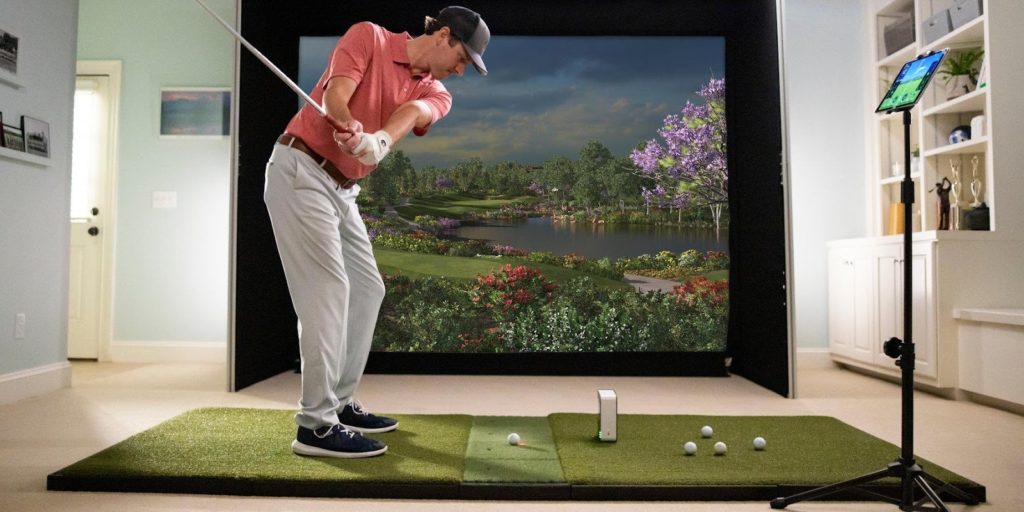
Image Source: www.hagginoaks.com
What are Golf Launch Monitors?
Golf launch monitors are high-tech tools. They measure what happens when you hit a golf ball. They use different ways to do this. Some use radar waves. Others use fast cameras. They gather facts about your swing. They also track the ball’s first flight.
These facts help you learn about your golf game. You can see how fast your club moves. You can see how fast the ball goes. You can also see how much the ball spins. These numbers help you make changes. They help you hit the ball farther and straighter. Many golfers use them indoors. They also use them outside. Launch monitors are key tools for golf training. They are also vital for golf simulators.
How They Boost Your Game
Launch monitors give you real facts. You no longer guess what happened. You see the exact numbers. This helps you fix problems quickly. For example, if your ball goes too high, the monitor will show you. You can then change your swing. This leads to better shots. Better shots mean lower scores.
Delving into Radar Golf Launch Monitor Technology
Radar is a common way to measure golf shots. These devices are often small. You can put them on the ground. They send out radio waves. These waves hit the golf ball and club. Then, they bounce back to the device. This is called Doppler radar.
How Doppler Radar Works
Think of a police radar gun. It works the same way. It sends a wave. The wave hits your car. It bounces back. If your car moves, the wave changes. This change tells the gun your speed.
A golf radar launch monitor does the same thing. It sends out a steady radio wave. This wave hits the golf club. It also hits the golf ball. As the club and ball move, they change the wave. The monitor “hears” this change. This change is called the Doppler shift. A bigger shift means faster speed.
The monitor can tell many things from this shift. It knows the club’s speed. It knows the ball’s speed. It also knows the angle of the ball’s flight.
What Radar Monitors Measure
Radar launch monitors are great at outdoor use. They track the ball for a long time. This helps them get good data.
Here are some key facts radar monitors track:
- Club Head Speed: How fast your club moves at impact.
- Ball Speed: How fast the ball leaves the club.
- Launch Angle: How high the ball goes up from the ground.
- Spin Rate: How much the ball spins in the air.
- Carry Distance: How far the ball flies before it lands.
They use these facts to figure out other things. For example, they can guess your club path. They can also estimate your spin axis. These monitors are strong. They work well in many weather conditions.
Table 1: Radar Launch Monitor Data Points
| Data Point | Description | Measured By Radar |
|---|---|---|
| Club Head Speed | Speed of the club at impact | Doppler shift from club |
| Ball Speed | Speed of the ball after impact | Doppler shift from ball |
| Launch Angle | Upward angle of the ball at launch | Ball trajectory tracking |
| Spin Rate | How fast the ball rotates | Changes in ball’s flight path |
| Carry Distance | Distance ball travels in the air | Calculated from speed, angle, spin |
| Total Distance | Carry plus roll | Calculated |
| Spin Axis | Direction of the ball’s spin | Ball flight analysis |
| Club Path | Direction the club moves through impact | Can be inferred from ball data |
| Face Angle (to Path) | Angle of the club face at impact | Can be inferred |
Radar technology is good for outdoor settings. It does not need much light. It can track the ball over a long distance. This helps calculate very accurate carry distances. Some high-end radar systems use multiple radar units. This helps them get even more precise data. It helps them track both the club and ball in detail.
Exploring Photometric Launch Monitor Operation
Photometric launch monitors use cameras. They are different from radar types. These monitors use very fast cameras. They take many pictures of the golf ball. They also take pictures of the club. They do this right when you hit the ball.
How High-Speed Cameras Work
Imagine a video camera. But this camera takes thousands of pictures every second. That’s what a photometric launch monitor does. It sets up near the hitting area. Often, it sits behind or above the ball.
When you swing, the cameras start recording. They capture images of the ball. They also capture images of the club. They do this just before, during, and after impact. The cameras are so fast, they see every tiny detail.
The monitor then “sees” the golf ball. It looks for markings on the ball. Many systems like balls with special dots. Or they like balls with clear logos. These markings help the camera track the ball’s movement. They also help it measure the ball’s spin.
What Photometric Monitors Measure
Photometric monitors are very good at seeing ball spin. They are also good at seeing club face angles. This makes them popular for indoor use. They need good light to work best.
Here are some key facts photometric monitors track:
- Ball Speed: How fast the ball leaves the club.
- Launch Angle: How high the ball goes up from the ground.
- Spin Rate: How much the ball spins. They see both backspin and sidespin.
- Spin Axis: The exact tilt of the ball’s spin.
- Club Face Angle: Where the club face points at impact.
- Club Path: The direction the club travels through impact.
These monitors give very detailed pictures of impact. They are excellent for fine-tuning your swing. They show you exactly how the club hit the ball.
Table 2: Photometric Launch Monitor Data Points
| Data Point | Description | Measured By Cameras |
|---|---|---|
| Ball Speed | Speed of the ball after impact | Image analysis of ball travel |
| Launch Angle | Upward angle of the ball at launch | Ball trajectory images |
| Spin Rate | How fast the ball rotates | Marks on ball, image analysis |
| Spin Axis | Direction of the ball’s spin | Image analysis of ball rotation |
| Club Face Angle | Angle of the club face at impact | Images of club face |
| Club Path | Direction club moves through impact | Images of club head |
| Carry Distance | Distance ball travels in the air | Calculated from speed, angle, spin |
| Total Distance | Carry plus roll | Calculated |
Photometric systems shine in capturing detailed ball and club data. They can pinpoint minute details of impact. This helps golfers understand exactly why a shot went wrong. They are often used in golf simulator setups due to their precision in a confined space.
Key Metrics Measured by Launch Monitors
Both radar and photometric launch monitors collect many facts. These facts are key to improving your golf game. They help you understand your swing. They also help you understand ball flight.
Grasping Golf Ball Spin Measurement
Golf ball spin is very important. It affects how high the ball flies. It also affects how far it goes. And it impacts how much the ball curves.
- How Radar Measures Spin: Radar units track the ball’s flight. They look for tiny changes in its path. These changes are due to spin. The radar sees how the ball slows down. It also sees how it curves. From this, it figures out the spin rate. Some advanced radar units can see very small changes. This helps them get better spin numbers.
- How Photometric Measures Spin: Photometric units are great at measuring spin. They use the fast cameras. They look at the markings on the golf ball. As the ball spins, these marks move. The cameras track how fast they move. This gives a very exact spin rate. It shows both backspin (how the ball rotates backwards) and sidespin (how it rotates left or right).
Spin numbers are key. Too much backspin makes the ball fly too high. Too little makes it drop too fast. Sidespin makes the ball hook or slice. Knowing your spin helps you hit straighter shots.
Deciphering Club Path Analysis
The club path is the direction your club moves. This is measured right through impact. Did your club swing from inside to out? Or from outside to in? This direction changes how the ball starts. It also affects the spin.
- How Radar Measures Club Path: Radar units often infer club path. They see how the ball launched. They see its speed and spin. Then, they use math models. These models guess the club path. Some high-end radar units use multiple radar antennas. They can track the club head directly. This gives more accurate club path data.
- How Photometric Measures Club Path: Photometric monitors are very good at this. Their fast cameras see the club head itself. They track its movement. They see the exact line it takes through impact. This gives a direct reading of the club path. This is a big plus for these systems.
A good club path helps you hit the ball square. It helps you hit it on target. Learning your club path helps you fix hooks and slices.
Pinpointing Launch Angle Tracking Devices
Launch angle is how high the ball goes up. This is measured right when it leaves the club. A good launch angle helps you get maximum distance. It helps you hit the ball far.
- How Radar Measures Launch Angle: Radar tracks the ball right away. It sees the ball’s initial upward movement. It does this over a few feet. It calculates the angle from this early flight. Since radar tracks the ball far, it gets a solid read.
- How Photometric Measures Launch Angle: Photometric cameras also track the ball’s first move. They see the ball go up. They measure the angle from the pictures they take. Both types of monitors are good at this.
The right launch angle is different for everyone. It depends on your club speed. It also depends on the club you use. Knowing your launch angle helps you choose the right club. It also helps you adjust your swing. This helps you get the best distance for each shot.
Calculating Carry Distance Launch Monitors
Carry distance is how far the ball flies in the air. It does not count any roll. This is one of the most important numbers. It tells you how far you hit the ball in the air.
- How Launch Monitors Calculate Carry Distance: Launch monitors do not just measure carry. They calculate it. They use all the facts they gathered. They use ball speed. They use launch angle. They use spin rate. They also use spin axis. Then, they use math formulas. These formulas are based on physics. They figure out how far the ball will fly through the air. They take into account air resistance. They also consider other forces.
- Environmental Factors: Some advanced monitors let you add factors. For example, wind speed. Or elevation. This makes the carry distance even more real.
Knowing your exact carry distance is vital. It helps you pick the right club on the course. It helps you hit greens more often. It takes the guesswork out of yardages.
How Launch Monitors Power Golf Simulators
Golf simulators let you play golf indoors. You hit a real ball into a screen. The screen shows a virtual golf course. Launch monitors are the heart of golf simulators. They make it all possible.
Golf Swing Data Capture
When you hit the ball, the launch monitor does its job. It captures all the data. It gets the ball speed. It gets the launch angle. It gets the spin. It also gets your club path and face angle. All these numbers are captured very fast.
Ball Flight Simulation Software
The launch monitor then sends all this data. It sends it to a computer. The computer has special software. This is called ball flight simulation software. This software takes the numbers. It uses them to draw the ball’s flight. It shows it on the screen.
The software uses advanced math. It makes the ball fly just like it would outside. It shows hooks, slices, and fades. It shows high shots and low shots. The software makes the virtual golf course feel real. It also makes the ball flight look real.
The launch monitor is the “eyes” of the simulator. The software is the “brain.” Together, they create a full golf experience. You can play famous courses. You can practice on a virtual range. This setup helps you get better. You can play any time. You can play in any weather.
Many golfers now have golf simulators at home. They help them practice all year. They also help them have fun. The accuracy of the launch monitor makes the simulator useful. It makes it a real practice tool.
Launch Monitor Sensor Types
We have talked about radar and cameras. These are the main sensor types. But there are other sensors that can help. Some launch monitor systems use a mix of sensors. This gives more data. It makes the system more accurate.
Radar Sensors
As discussed, these send out radio waves. They measure changes in these waves. They track the club and ball. They are good for outdoor use. They work well in different light.
Camera Sensors (Photometric)
These use high-speed cameras. They take many pictures. They look at the golf ball and club. They are very good at details. They need good light to work best. They are often used indoors.
Infrared Sensors
Some systems use infrared light. These often have infrared sensors around the hitting area. They create a grid of infrared beams. When the club or ball passes through, they break the beams. This helps measure speed and direction. These are often used for club data. Or for ball speed on impact.
Pressure Mats
Some launch monitors use pressure mats. You stand on this mat. It has sensors inside. When you swing, your weight shifts. The mat measures this shift. It helps show how you use your body. It can show your balance. It can show your weight transfer. This data helps you make better swings. It helps you get more power.
Other Sensors
Some very advanced systems use other sensors. They might use magnetic sensors. These can track the club. They can also use acoustic sensors. These can hear the impact sound. Each sensor type adds more facts. They help create a full picture of your golf swing.
The mix of sensor types makes launch monitors powerful. They give you a lot of facts. These facts help you improve your game. They show you exactly what is happening.
Selecting the Right Launch Monitor
Choosing a launch monitor depends on your needs. Think about where you will use it. Will you use it mostly outside? Or inside? Think about what facts you want to know. Also, think about your budget.
- For Outdoor Use: Radar units like the FlightScope Mevo+ or Trackman are strong choices. They track the ball well over long distances.
- For Indoor Use/Simulators: Photometric units like the Foresight GCQuad or SkyTrak work great. They give very detailed club and ball data. They need less space to track.
- For Both: Some units are good for both. They may use a mix of technologies. Or they are designed to work well in different settings.
Think about the facts you need most. Do you want to see exact club path? Or just ball speed? Knowing what you want helps you choose.
Frequently Asked Questions (FAQ)
Q1: What is the most important data point from a launch monitor?
A: The most important data point depends on your goal. For overall distance, ball speed, launch angle, and spin rate are key. For fixing a slice or hook, club path and face angle are vital. For a beginner, ball speed and carry distance are good starting points.
Q2: Can a launch monitor help me increase my club head speed?
A: Yes, a launch monitor can help. It shows you your current club head speed. When you try different swings, you see if your speed goes up or down. This helps you find ways to swing faster. It gives instant feedback.
Q3: Do I need special golf balls for a launch monitor?
A: For radar launch monitors, no, you don’t need special balls. Any golf ball works. For photometric launch monitors, some systems prefer balls with clear logos or dots. This helps the cameras track spin better. Check the monitor’s guide to be sure.
Q4: How accurate are launch monitors?
A: Modern launch monitors are very accurate. High-end models are extremely precise. Their numbers are very close to real-world results. Mid-range models also offer good accuracy for most golfers. Their accuracy depends on the technology used. Also, it depends on proper setup.
Q5: Can launch monitors work on a golf driving range?
A: Yes, many launch monitors are made for driving ranges. Radar units are especially good outdoors. They can sit behind you. They track the ball far down the range. Photometric units can also work. But they may need a mat to hit off. They also need good light.
Q6: Is a launch monitor the same as a golf simulator?
A: No, they are not the same. A launch monitor is a device that measures your shot. A golf simulator is a full setup. It includes a launch monitor, a projector, a screen, and software. The launch monitor feeds data to the simulator. The simulator then shows the ball flight on the screen. So, a launch monitor is a part of a golf simulator.
Launch monitors are powerful tools. They give you real facts about your game. They help you practice smarter. They help you play better golf.