
Ever wonder what that colorful liquid is in your car’s engine? It’s called coolant, and it’s super important for keeping your engine from overheating. Think of it like your car’s personal air conditioner, working hard to keep everything running smoothly, especially on hot days or during long drives. But choosing the right coolant can feel like a puzzle. There are so many types and colors, and getting it wrong can lead to big problems and costly repairs down the road.
This is where we step in! By the end of this post, you’ll understand exactly why coolant is so vital and how it protects your engine. We’ll break down the different types of coolant, explain what those colors actually mean, and help you figure out which one is best for your specific car. No more guessing games or confusing labels – you’ll be empowered to make the smartest choice for your vehicle’s health.
Top Car Coolant Recommendations

- Contains Alugard Plus for compatibility with all ethylene glycol-based coolants in automobiles and light duty trucks
- Fights corrosion, scaling and rust while protecting all cooling system metals (including aluminum)
- High-quality additives protect against leaks and won’t harm gaskets, hoses, plastics or original vehicle finish
- Pre-mixed yellow formula is ready-to-use in a 50/50 ratio with deionized water to protect all modern engine components from winter freezing (-34F) and summer boiling (265F).
- Contains 30 – 50 ppm of denatonium benzoate as a bittering agent


- 5 year/150, 000 mile . Silicate-free, long-life, phosphate Hybrid Organic Acid Technology chemistry
- Formulated to replace the OEM fluid in Asian make vehicles such as Honda, Nissan, KIA, Hyundai and others requiring a blue, silicate free HOAT antifreeze/coolant
- The long life formula provides protection for all cooling system metals from rust and corrosion. The silicate free, borate free formula helps protect against harmful scale and deposits
- Meets the following OEM and industry specifications: Hyundai/KIA MS 591-08, Mitsubishi ES-64217, JIS K 2234-1994, Ford WSS-M97B55-A, ASTM 3306, ASTM D4985, Federal Specification A-A-870A
- Contains 30 – 50 ppm of denatonium benzoate as a bittering agent

- Formulated to replace the OEM fluid in Asian make vehicles such as Toyota , Lexus , Scion and others requiring a red, silicate free HOAT antifreeze/coolant
- 5 year/150, 000 mile . Silicate-free, long-life, phosphate Hybrid Organic Acid Technology chemistry
- The long life formula provides protection for all cooling system metals from rust and corrosion. The silicate free, borate free formula helps protect against harmful scale and deposits
- Meets the following OEM and industry specifications: JIS K 2234-1994, Hyundai/KIA MS 591-08, Mitsubishi ES-64217, Ford WSS-M97B55-A, ASTM 3306, ASTM D4985, Federal Specification A-A-870A
- Note: Please check the vehicle specification before purchasing the item.
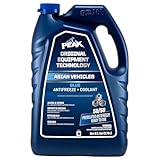
- 1 GALLON ENGINE ANTIFREEZE/COOLANT: Fully compatible with other extended life antifreeze/coolants. This item contains a bittering agent called Denatonium Benzoate.
- PROTECTS: Advanced formulation prevents rust & corrosion protecting all engine cooling system components
- DESIGNED FOR ASIAN VEHICLES: Recommended for use with Acura, Honda, Infiniti, Mitsubishi, Nissan, Subaru, and Suzuki vehicles that require a BLUE Phosphate-enhanced Organic Acid Technology (POAT) formula
- GUARANTEED: When installed as part of a complete flush and fill, PEAK guarantees this coolant will provide service life protection of up to 150,000 miles or 5 years.
- 50/50 PREDILUTED FOR QUICK TOP OFFS: Already diluted to make topping off your cooling system a breeze

- 1-GAL. EXTENDED LIFE PREDILUTED ANTIFREEZE/COOLANT: Engineered to support any vehicle's engine cooling system to enhance performance and optimize protection for years to come
- 15+ YEARS/500,000+ MILES GUARANTEED: Provides year-round protection and cooling for your engine system for over 15 years or 500,000 miles of service guaranteed when proper cooling system maintenance is followed
- PROPRIETARY CHEMISTRY: Designed to clean component surfaces while also protecting against the formation of heat-insulating films or coatings that impair heat-transfer and are major contributors of lost coolant flow and overheating
- 50/50 PREDILUTED FORMULA: Already prediluted and compatible with all coolant colors and technologies to make cooling system top offs easy to perform
- ULTIMATE PROTECTION: Earned a perfect 10 score in industry standard water pump protection testing (ASTM D2809) and meets the performance requirements of ASTM D6210, D3306 and D4985

- 1 GALLON ENGINE ANTIFREEZE/COOLANT: Fully compatible with other extended life antifreeze/coolants. This item contains a bittering agent called Denatonium Benzoate.
- PROTECTS: Advanced formulation prevents rust & corrosion protecting all engine cooling system components
- DESIGNED FOR NORTH AMERICAN VEHICLES: Recommended for use with Ford, Chrysler, and GM vehicles that require an orange organic acid technology formula
- GUARANTEED: When installed as part of a complete flush and fill, PEAK guarantees this coolant will provide service life protection of up to 400,000 miles or 15 years.
- 50/50 PREDILUTED FOR QUICK TOP OFFS: Already prediluted to make topping off your cooling system a breeze

- Heavy duty formula meets the harsher demands of heavy-duty diesel engines such as Cummins, DDC, MACK, Navistar and Paccar
- Pre-charged with corrosion, scale and rust inhibitors so that radiators, water pumps and other metal cooling system parts stay clean, and your antifreeze flows and functions properly.
- Protects all cooling system metals including aluminum and won’t harm gaskets, hoses or original vehicle finish
- Pre-mixed green solution is ready-to-use and comes in a 50/50 ratio with deionized water to eliminate the guesswork
- 3 year/150,000 mile guarantee protects against engine failure caused by freeze-ups or boil-overs

- Universal formula for both automotive and heavy duty diesel engines
- Excellent heat transfer properties and superior anti-foam characteristics
- Superior corrosion protection for aluminum, brass, copper, solder, steel, and cast iron
- Compatible with cooling system filters; heavy duty diesel supplemental coolant additives; conventional brands of coolant
- Pre-diluted with 50/50 ratio of antifreeze to deionized water
Choosing the Right Car Coolant: Keep Your Engine Happy
Your car’s engine works hard. It gets hot! Coolant, also known as antifreeze, is like the engine’s personal bodyguard, keeping it from overheating in the summer and freezing in the winter. Picking the right coolant is super important for your car’s health. Let’s dive into what you need to know.
1. Key Features to Look For
When you’re shopping for coolant, keep these features in mind:
- Type of Coolant: This is the most crucial feature. Coolants come in different colors and formulas. You absolutely must use the type recommended by your car’s manufacturer. Using the wrong type can cause serious damage.
- Corrosion Protection: Good coolant protects your engine’s metal parts from rust and corrosion. This helps your engine last longer.
- Freezing and Boiling Point: Coolant raises the boiling point of your engine’s water and lowers its freezing point. This is its main job! Make sure it offers protection for the temperatures in your area.
- Concentrate vs. Pre-mixed: Concentrated coolant needs to be mixed with distilled water. Pre-mixed coolant is ready to go. Pre-mixed is easier for most people.
2. Important Materials
Coolant is a special mix of chemicals. The main ingredient is usually ethylene glycol or propylene glycol. These are the parts that stop freezing and boiling.
- Ethylene Glycol: This is very common and works well. It’s also a bit more toxic if swallowed.
- Propylene Glycol: This is less toxic than ethylene glycol. It’s often used in newer cars or where safety is a bigger concern.
Coolant also has corrosion inhibitors. These are special additives that protect your engine’s metal. Different brands use different inhibitor packages.
3. Factors That Improve or Reduce Quality
What makes a coolant great or not so great?
- Quality of Additives: High-quality corrosion inhibitors make a big difference. They offer better protection for your engine. Cheaper coolants might use fewer or less effective additives.
- Correct Formulation: Using the coolant type your car needs is vital. The wrong formula can cause leaks, clog your cooling system, or even damage seals. This is a major quality reducer.
- Brand Reputation: Some brands have a long history of making reliable automotive products. Sticking with trusted brands often means better quality.
- Expiration Date: Coolant doesn’t last forever. Over time, the additives break down. Always check the expiration date on the container. Old coolant won’t protect your engine properly.
4. User Experience and Use Cases
How do people use and experience coolant?
- Routine Maintenance: Most car owners top off their coolant or completely flush and replace it during scheduled maintenance. This is a common use case.
- Emergency Top-Ups: If you notice your engine is running hot or your coolant level is low, you might need to add coolant. It’s good to keep a bottle of the correct type in your car.
- Extreme Climates: People in very hot or very cold areas rely heavily on their coolant to keep their engines running smoothly.
- Ease of Use: Pre-mixed coolant is very user-friendly. Concentrated coolant requires careful mixing with distilled water, which can be a bit more work.
The Ultimate Buying Guide: Your Car’s Coolant Companion
Q: What are the main Key Features I should look for?
A: You should look for the correct type of coolant for your car, good corrosion protection, and the right freezing and boiling point protection for your climate. Also, decide if you want concentrate or pre-mixed.
Q: Are there different colors of coolant? Do they matter?
A: Yes, there are different colors, like green, orange, pink, and blue. The color often tells you the type of coolant. Always check your car’s manual to know which color and type your car needs. Mixing colors is usually a bad idea.
Q: What are the most important materials in coolant?
A: The most important materials are ethylene glycol or propylene glycol, which prevent freezing and boiling. It also contains corrosion inhibitors to protect your engine.
Q: Can I just use water instead of coolant?
A: No, you absolutely should not just use water. Water freezes and boils too easily, and it doesn’t protect your engine from rust. Coolant is a special blend that water can’t replace.
Q: What happens if I use the wrong type of coolant?
A: Using the wrong type of coolant can cause serious problems. It can lead to leaks, damage seals, clog up your cooling system, and cause your engine to overheat. It’s very important to use the correct type.
Q: How often should I change my coolant?
A: This depends on your car and the type of coolant. Most manufacturers recommend changing it every 30,000 to 100,000 miles, or every 2 to 5 years. Check your car’s owner’s manual for the specific recommendation.
Q: What’s the difference between concentrate and pre-mixed coolant?
A: Concentrated coolant is pure antifreeze and needs to be mixed with distilled water. Pre-mixed coolant is already mixed with water and is ready to use. Pre-mixed is usually easier for most people.
Q: How can I check my coolant level?
A: Your car has a coolant reservoir, usually a translucent plastic tank near the engine. Look for the “MIN” and “MAX” lines on the side. The coolant level should be between these lines when the engine is cool. Never open the radiator cap when the engine is hot!
Q: Does coolant expire?
A: Yes, coolant does expire. The protective additives break down over time. Always check the expiration date on the bottle before you buy or use it. Old coolant won’t protect your engine properly.
Q: Where can I find out what type of coolant my car needs?
A: The best place to find this information is in your car’s owner’s manual. It will clearly state the recommended type, color, and even the specific brand or specification your car needs.