
Image Source: img.kentfaith.com
Yes! Can You Use A Hunting Rangefinder For Golf?
Yes, you can use a hunting rangefinder for golf. Many hunters find that their rangefinders work well on the golf course. However, there are some key differences between hunting and golf rangefinders. These differences can affect how well a hunting unit works for your golf game. We will look at what makes each type special. We will also see if a hunting rangefinder can be a good choice for golf.
What is a Rangefinder?
A rangefinder is a tool. It uses a laser to measure how far away an object is. People use them in many sports and activities. Hunters use them to find the distance to an animal. Golfers use them to find the distance to the flag. This helps them pick the right club.
How Rangefinders Help in Different Sports
In hunting, knowing the exact distance is key. It helps a hunter aim true. They need to know if an animal is 100 yards or 300 yards away. This changes how they shoot.
For golf, distance is also very important. A golfer needs to know how far the hole is. This tells them which club to use. If the hole is 150 yards away, they might use an 8-iron. If it is 200 yards, they might use a hybrid club. A rangefinder gives them this exact number.
Golf Rangefinder vs Hunting Rangefinder: A Closer Look
Many wonder about the core differences between hunting and golf rangefinders. While both use laser technology, they are built for different tasks. This means their features vary a lot. Let us break down these differences. This will give a good hunting rangefinder golf comparison.
Key Design Choices
Golf rangefinders are made to spot small targets. Think of a tiny flagstick in an open field. They often have special modes for this. Hunting rangefinders are built to find larger targets, like a deer, often in dense woods. They need strong optics to see through brush.
Target Prioritization
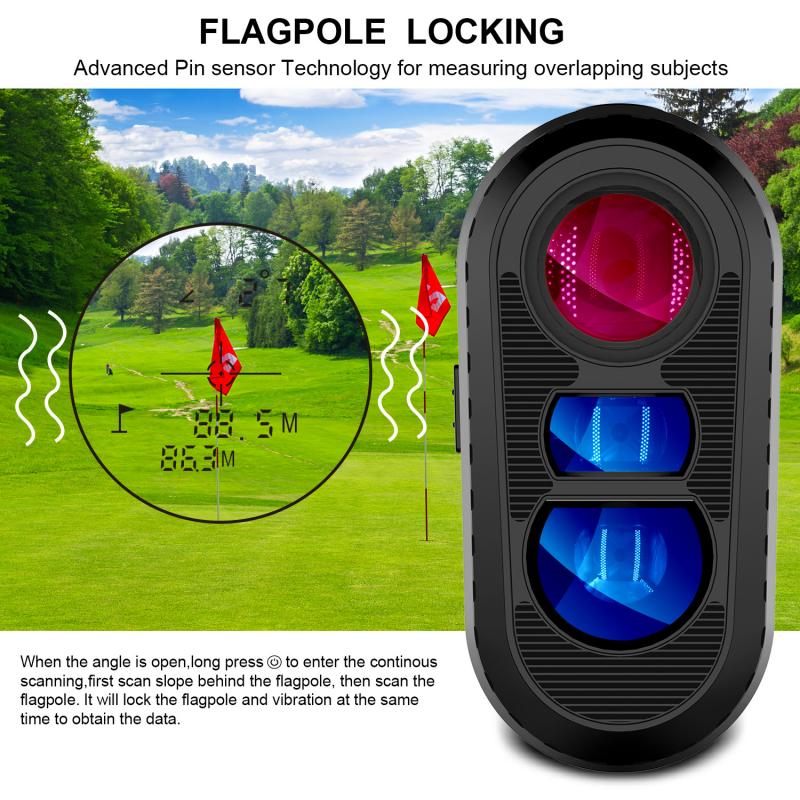
For golf, the main goal is often the flag. A golf rangefinder will try to lock onto the nearest target. This is usually the flagstick, even if trees are behind it. This is called “flaglock hunting rangefinder golf” in some hunting models, but it is standard for golf units.
Hunting rangefinders do not always do this. They might give you the distance to the closest tree. Or they might give the distance to something far away. It depends on how you aim. They do not have a strong “first target” or “pin-seeking” mode like golf models.
Slope Feature and Legality
Many golf rangefinders have a “slope” feature. This feature changes the distance reading. It accounts for uphill or downhill shots. If the hole is uphill, it makes the shot play longer. If it is downhill, it plays shorter. This feature is very helpful.
However, a rangefinder with slope is not allowed in golf tournaments. Rules say you cannot use it if it helps you pick a club based on slope. Most golf rangefinders let you turn off the slope feature. This makes them legal for play.
Hunting rangefinders often have a form of slope. It might be called “angle compensation” or “true ballistic range.” This helps hunters shoot more accurately on hills. This slope feature hunting rangefinder golf use means you might need to check if you can turn it off. If you cannot, it might not be legal for golf tournaments.
Magnification and Clarity
Both types of rangefinders have magnification. This lets you see targets better. Golf rangefinders usually have lower magnification, like 6x. This is enough for seeing a flag.
Hunting rangefinders often have higher magnification, like 8x or even 10x. This helps hunters see animals far away. Higher magnification can make it harder to hold steady for a small golf flag. It can also make it harder to quickly find the flag.
Speed and Ease of Use
Golfers need fast readings. They want to aim, press a button, and get a number right away. Golf rangefinders are made for quick use on the course.
Hunting rangefinders can be slower. They might take a moment longer to get a reading. This is fine for hunting, where speed is less vital. But on a busy golf course, it can slow down play.
Price Point
Generally, golf rangefinders can be more expensive. They have specialized features like pin-seeking. Hunting rangefinders can range widely in price. Some simple ones are cheap. Advanced ones with ballistic calculators can be very costly.
Table: Golf Rangefinder vs Hunting Rangefinder Differences
Here is a table to show the main differences:
| Feature | Golf Rangefinder | Hunting Rangefinder |
|---|---|---|
| Main Target | Small, fixed objects (flagstick, pin) | Various sized objects (animals, trees, rocks) |
| Targeting Mode | Pin-seeking, Flaglock, First Target Priority | General scan, Last Target Priority, Basic |
| Slope Compensation | Common, often switchable for tournament play | Common (angle compensation, true ballistic range) |
| Magnification | Typically 6x (stable for small targets) | Often 6x-10x (for longer distances and detail) |
| Speed | Fast, quick readings for paced play | Can be slower, less emphasis on instant readings |
| Durability/Weather | Good, built for golf course conditions | Very rugged, built for harsh outdoor environments |
| Range (Max) | Up to 400-800 yards for flag, 1000+ for trees | Often 1000+ yards, sometimes 1500+ for deer/large |
| Ergonomics | Compact, easy to hold with one hand | Can be larger, fits hunter’s grip |
| Cost | Mid to high range | Low to very high (with ballistic calculators) |
Can Hunting Rangefinders Be Used for Golf?
Yes, hunting rangefinders can be used for golf. Many people do use them. They offer a way to measure distance. This is the main job of any rangefinder. If you already own one for hunting, it saves you money. You do not need to buy a second device.
However, it is not always ideal. The main issues come from features. Some hunting rangefinders struggle to pick out the flag. They might give you the distance to a tree behind the green. This can be frustrating.
For casual golf or practice rounds, a hunting rangefinder can be fine. For serious play or tournaments, you might want a golf-specific unit. Especially if you need true pin-seeking or switchable slope.
Grapsing the Benefits of Using a Hunting Rangefinder for Golf
There are good reasons to use a hunting rangefinder for golf. If you are a hunter and a golfer, it makes sense.
Cost Savings
The biggest benefit is cost. If you already own a hunting rangefinder, you do not need to buy a new golf one. High-quality rangefinders can be expensive. Using one for both sports saves you money.
Versatility
A good hunting rangefinder can be a versatile tool. It works for hunting. It works for golf. It might even work for other activities. Think of target shooting or scouting land. This makes it a smart buy if you do many outdoor activities.
Robust Build
Hunting gear is often built tough. It needs to stand up to bad weather. It needs to survive drops and bumps. This means a hunting rangefinder is usually very durable. It can handle being in a golf cart or falling out of your bag.
Deciphering the Challenges of Using a Hunting Rangefinder for Golf
While possible, using a hunting rangefinder for golf has its downsides. Knowing these helps you decide if it is right for you.
Targeting Small Objects
This is the biggest challenge. Golf flags are thin. Hunting rangefinders are not always made to pick out such small targets. They might struggle. They might give you a reading to something else. This can be very annoying on the course.
Lack of Pin-Seeking Technology
Most hunting rangefinders lack pin-seeking. This is a special feature in golf rangefinders. It locks onto the closest target. This ensures you get the distance to the flag, not a tree behind it. Without it, you might need to aim very carefully. You might need to take multiple readings.
Slope Feature Legality Issues
As noted, many hunting rangefinders have angle compensation. This is like a slope feature. If you cannot turn it off, the device is not legal for tournament play. This is a big problem if you plan to play in competitions. Always check the rules of the event.
Higher Magnification
While useful for hunting, higher magnification can be a problem in golf. It makes it harder to hold the rangefinder steady. It makes the flag appear shaky. This can make it tough to get a quick, accurate reading.
Hunting Rangefinder for Golf Review: What to Look For
If you want to use a hunting rangefinder for golf, look for specific features. These features will make it much more useful on the course.
Scan Mode
A good scan mode is helpful. It lets you sweep the area. The rangefinder gives continuous readings. This can help you find the flag. It lets you range trees, bunkers, or other points of interest.
Flag Lock or First Target Priority
Some hunting rangefinders do have a form of “first target priority.” This is like flag lock. It finds the closest object in the laser’s path. If a hunting rangefinder boasts this feature, it will work much better for golf. Check reviews carefully. See if users say it picks up small objects well.
Switchable Slope
This is crucial for tournament play. Look for a hunting rangefinder where you can turn the slope or angle compensation feature off. This makes it legal for competitive rounds. If it cannot be turned off, it is only good for practice.
Clear Optics
Good glass is always important. Clear optics help you see the target better. This is true for both hunting and golf. Look for rangefinders with bright, clear views. This makes it easier to spot the flagstick, even from far away.
Ergonomics and Size
Consider how it feels in your hand. Golfers use their rangefinders often. A compact, easy-to-hold design is best. Hunting rangefinders can sometimes be bulkier. Make sure it fits comfortably in your hand.
Best Dual-Purpose Rangefinder: Finding the Hybrid Hero
Is there a rangefinder that works great for both hunting and golf? Yes, some models try to do both well. These are often higher-end units. They combine the best features of both types.
Features of a Good Dual-Purpose Unit
- Switchable Slope: This is non-negotiable. It lets you use it legally for golf. It still gives you angle compensation for hunting.
- Excellent Optics: Clear, bright views are a must. This helps in low light for hunting. It helps in bright sun for golf.
- Fast Ranging Speed: You want quick readings for golf. This speed also helps for hunting.
- Reliable Pin-Seeking/First Target Priority: The rangefinder must be able to lock onto small targets. This is key for golf. It also helps in hunting to range a specific branch or rock.
- Durable and Weatherproof: It needs to stand up to all outdoor conditions. This means rain, dust, and bumps.
- Reasonable Magnification (6x-7x): This range is good for both. It gives enough power for hunting. It is still easy to hold steady for golf.
Brands to Consider for Dual Use
Some brands make rangefinders that bridge the gap. Look at models from Vortex, Leupold, and Bushnell. They often have lines that cater to both sports. Some models might even be marketed as “outdoor” rangefinders. This means they are designed for varied use. Read product descriptions carefully. Look for mentions of “golf mode” or “flag capture.”
Hunting Rangefinder Golf Mode: Does it Exist?
Sometimes, yes. Some newer hunting rangefinders have added a “golf mode.” This is rare but becoming more common. This mode usually adds pin-seeking or flaglock. It might also have a simpler display for golf.
If a hunting rangefinder has a true “golf mode,” it makes it a very strong dual-purpose tool. This mode means the maker thought about golfers. It usually means it can handle the small flag target. Check product specs or reviews to see if a model you like has this feature.
Tips for Using a Hunting Rangefinder for Golf
If you decide to use your hunting rangefinder for golf, here are some tips:
- Practice Ranging the Flag: Before a game, spend time on the practice green. Get a feel for how your rangefinder picks up the flag. Learn its quirks.
- Aim Carefully: Since most hunting rangefinders lack pin-seeking, aim dead center at the flagstick. If it gives a high reading, try aiming a bit lower on the flag.
- Take Multiple Readings: If unsure, take a few readings. The one that appears most often is likely correct. This helps overcome the lack of advanced targeting.
- Check for Slope Deactivation: Always check if your slope feature is off for competitive play. Do this before you start your round.
- Use a Steady Hand: Higher magnification means more shake. Brace your elbows. Hold the rangefinder against your face for more stability.
- Scan the Area: Use the scan mode. Sweep from behind the flag to the flag. This can sometimes help the rangefinder find the closest target.
- Know Your Yardage Markers: Use course markers as backup. If your rangefinder gives a strange number, compare it to the course’s posted distances.
The Verdict: Is It a Good Idea?
Using a hunting rangefinder for golf is possible. It can save you money. It gives you a basic distance. For casual golfers or those on a budget, it is a valid choice.
However, if you are serious about golf, a dedicated golf rangefinder is usually better. It will be faster, more accurate for golf targets, and easier to use. It will also have specific golf features like reliable pin-seeking.
Think about your needs. How often do you play golf? How serious are you? Do you play in tournaments? Your answers will help you decide if a hunting rangefinder is enough for your golf game. Or if you need a golf-specific unit.
Frequently Asked Questions (FAQ)
Q1: Will a hunting rangefinder be accurate enough for golf?
A1: Yes, most hunting rangefinders are very accurate for distance. The main issue is not accuracy of the measurement. It is finding the right target. They might struggle to lock onto a small golf flag. They might give you the distance to a tree behind the flag.
Q2: What is “flaglock” or “pin-seeking”?
A2: Flaglock or pin-seeking is a special feature. It is found on golf rangefinders. It locks onto the nearest object in the laser’s path. This ensures you get the distance to the flagstick. It ignores objects behind it, like trees or hills.
Q3: Can I use a hunting rangefinder with angle compensation in a golf tournament?
A3: No, if you cannot turn off the angle compensation (slope) feature. Most golf rules state that devices that help you pick a club based on slope are not allowed in tournaments. Always check the rules of the specific tournament you are playing in.
Q4: Are hunting rangefinders more durable than golf rangefinders?
A4: Often, yes. Hunting rangefinders are built for tough outdoor use. They are designed to withstand harsh weather, drops, and bumps. This makes them very durable. Golf rangefinders are also durable but often less rugged.
Q5: Is there a specific “golf legal hunting rangefinder” model?
A5: There is no specific model marketed this way. But any hunting rangefinder can be “golf legal” if it meets two conditions. First, it must not have a slope feature that cannot be turned off. Second, it must not give club recommendations or similar help. So, look for a hunting rangefinder with a switchable slope feature.
Q6: How far do hunting rangefinders range?
A6: Hunting rangefinders usually have a longer max range. They can range objects up to 1000 yards or even 1500+ yards. This is more than enough for any golf course. Golf rangefinders usually range flags up to 400-800 yards. They can range larger targets (like trees) over 1000 yards.