
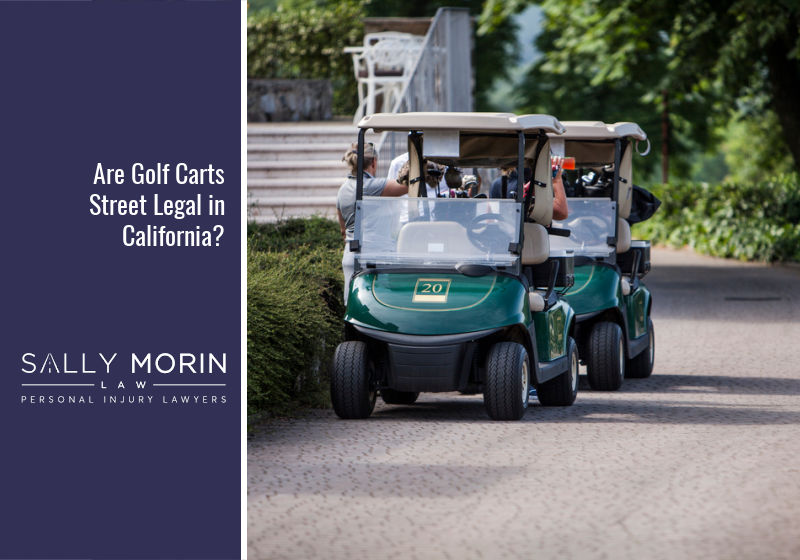
Image Source: www.sallymorinlaw.com
Street Legal? Can You Drive Golf Carts On The Street?
Can you drive golf carts on the street? This is a question many people ask, especially in sunny towns or neighborhoods where golf carts seem like an easy way to get around. The quick answer is: maybe. It really depends on where you live and what kind of cart you have. Standard golf carts are not usually allowed on regular public roads. But special carts called Low-Speed Vehicles (LSVs) often are, if they meet certain rules. Street legal golf cart laws change a lot from place to place. So, knowing the golf cart rules by state and even by town is key before you drive off your property.
Different Types of Carts: Not All Are Created Equal
When people say “golf cart,” they usually mean the kind you see on a golf course. These carts are made for smooth, grassy areas. They go slowly and don’t have much safety gear.
But there is another type of cart. It looks like a golf cart but is built differently. This is a Low-Speed Vehicle, or LSV. LSVs are made to drive on streets. They have special features that make them safer for mixing with cars. Knowing the difference between a standard golf cart and an LSV is the first step to figuring out if you can drive it on the road.
Standard Golf Carts: Made for the Course
Think about a regular golf cart. It’s open, simple, and quiet. It’s great for moving golfers and clubs from one hole to the next.
Here is what you usually find on a standard golf cart:
- A motor (electric or gas).
- Basic steering wheel and pedals.
- Seats for two to six people.
- A place for golf clubs.
What they usually don’t have is a lot of safety stuff you find on a car. They don’t need much safety gear because they are driven away from regular traffic. They stay on paths made just for them or on private land.
Low-Speed Vehicles (LSVs): Built for the Street
LSVs are different. They are made to follow certain safety rules. These rules come from both the federal government and individual states. LSVs are sometimes called Neighborhood Electric Vehicles (NEVs), especially if they run on electricity.
To be an LSV, a vehicle must meet several requirements. The main one is speed. An LSV can go faster than a golf cart but not as fast as a regular car.
Here are the key things about LSVs:
- They can go between 20 and 25 miles per hour. Not slower than 20 mph, and not faster than 25 mph.
- They must have certain safety parts. These parts help them be seen and driven safely on public roads.
- They must have a Vehicle Identification Number (VIN). This is like a car’s fingerprint. It helps track the vehicle.
Because they meet these rules, LSVs are allowed on many public streets. But there are still limits, as we will see.
Federal Rules vs. State Rules
The U.S. government has rules for LSVs. They say what an LSV is and what safety gear it needs to have to be sold as an LSV. This covers LSV requirements street driving.
However, the federal government does not say where you can drive them. That job belongs to each state. And within states, cities and towns can add their own rules too.
This is why finding out if your cart is street legal is tricky. You have to check rules at a few different levels:
- Federal: Does your cart meet the definition of an LSV?
- State: Does your state allow LSVs on its roads? Which roads? What are the rules for driving them?
- Local: Does your city or town have extra rules or bans on certain streets?
Golf cart regulations public roads are a patchwork of these different rules.
Grasping LSV Requirements for Street Driving
To be driven on public streets where LSVs are allowed, a vehicle must be made or changed to meet the LSV standard. This means adding specific safety items. These items are like miniature versions of what you find on a car. They help the LSV be visible and follow traffic laws.
Here is the usual list of golf cart safety equipment street use requires for an LSV:
- Headlights: To see the road at night and be seen by others.
- Taillights: Red lights in the back so others know you are there.
- Brake Lights: Lights that turn on when you push the brake pedal.
- Turn Signals: Flashing lights (front and back) to show which way you plan to turn.
- Horn: To honk and warn others.
- Reflectors: Parts that bounce light back, making you more visible.
- Side Mirrors and Rearview Mirror: To see traffic around you.
- Seatbelts: One for every person in the cart.
- Windshield: A front window, often made of safety glass.
- Vehicle Identification Number (VIN): A unique code for the vehicle.
- Parking Brake: To keep the cart from rolling when parked.
- Speed Capability: Must be built to go at least 20 mph but no more than 25 mph.
If a cart does not have all these things, it is probably not a legal LSV. You cannot just add turn signals to a golf cart and call it street legal in most places. The cart itself often needs to be made to meet safety standards from the start.
Deciphering Golf Cart Rules by State
This is where things get complicated. Golf cart rules by state are very different across the country. What is okay in one state might be completely against the law in another.
Some states are more friendly to golf carts and LSVs on the road. Others are very strict.
Here are some ways states handle golf carts and LSVs:
- LSVs Allowed, Golf Carts Not: Many states allow LSVs (the ones that meet the safety rules and speed limits) on roads with speed limits below a certain level, like 35 mph. Standard golf carts are usually not allowed at all on public streets in these states.
- Specific Areas Allowed: Some states let cities or counties decide. This means golf carts (sometimes even standard ones) might be allowed in certain places, like beach towns, retirement communities, or on specific roads within residential areas. Driving golf carts residential areas might be okay in some towns but not others, even in the same state.
- Total Ban on Public Roads: A few states have very strict rules. They might not allow any golf carts or even LSVs on public roads, except maybe to cross a street.
- Special Permits or Designations: Some states or towns have ways to get a special permit for a golf cart. This might require adding some safety features, but it’s still not a full LSV conversion. These permits often limit where the cart can be driven (e.g., only within a certain small area).
Let’s look at a few examples of how states differ (these are general examples, always check the specific law for your state and town):
| Feature/Rule | Example State A (e.g., Arizona) | Example State B (e.g., Florida – varies locally) | Example State C (e.g., Massachusetts) |
|---|---|---|---|
| LSV Allowed? | Yes, widely on roads up to 35 mph. | Yes, widely on roads up to 35 mph, often more permissive. | Yes, generally on roads up to 30 mph, but with state-set rules. |
| Standard Golf Cart Allowed on Street? | Generally No, unless on a specific crossing or path. | Often Yes, in certain cities/counties with local rules and permits. | Generally No, treated like recreational vehicles, not for public roads. |
| Safety Gear Needed | Full LSV equipment (lights, signals, belts, etc.) | Full LSV equipment for LSVs; May require some gear for permitted carts. | Full LSV equipment for LSVs. |
| Registration/Title | Required for LSVs. | Required for LSVs; Often required for permitted golf carts too. | Required for LSVs. |
| Insurance | Required for LSVs. | Required for LSVs; Often required for permitted golf carts. | Required for LSVs. |
| Driver’s License | Required (standard car license). | Required (standard car license). | Required (standard car license). |
| Speed Limit for Cart | 25 mph max (LSV speed). | 25 mph max (LSV speed); Permitted carts vary by local rule (often lower). | 25 mph max (LSV speed). |
| Road Speed Limit Restriction | Allowed on roads up to 35 mph. | Often allowed on roads up to 35 mph or lower, varies locally. | Allowed on roads up to 30 mph. |
This table shows just how much variation there is. You can see why simply asking “are golf carts street legal” doesn’t give a clear answer without knowing where you mean. Low speed vehicle regulations are different everywhere.
Getting Your Cart Street Legal: Is It Possible?
If you have a standard golf cart, can you make it street legal? Often, the answer is no, not truly. You can add many of the safety parts (lights, signals, horn). Many companies sell “street legal kits” for golf carts.
However, adding parts does not magically turn a golf cart into an LSV in the eyes of the law in most places. An LSV is built to meet safety standards for its frame, brakes, and other systems. A golf cart is not.
In many states, even if you add all the lights and seatbelts, your cart will still be classified as a golf cart. It will not get an LSV title or registration. This means it cannot be driven on public roads where only registered vehicles are allowed.
Some states or local areas do have ways to get a permit for a modified golf cart to use on certain, low-speed roads. This is less about making it a full LSV and more about getting special permission for limited use.
If you want to drive on the street regularly, the surest way is to buy a vehicle that is sold as an LSV from the start. These vehicles come with a VIN and are made to meet the rules.
Golf Cart License Requirements and More
Driving a golf cart or LSV on public roads usually comes with rules similar to driving a car.
- Driver’s License: In almost all places that allow golf carts or LSVs on the street, the driver must have a valid standard driver’s license. A learner’s permit is often not enough. The age to drive might be the same as for a car (e.g., 16 or older). This covers golf cart license requirements.
- Registration and Title: LSVs must usually be registered with the state’s motor vehicle department. This is like registering a car. Standard golf carts, even if allowed in specific local areas, might also need a special local permit or registration. You might also need a title proving you own the vehicle.
- Insurance: Most places require insurance for LSVs driven on public roads. This is important liability insurance in case of an accident. Some places might also require insurance for golf carts with local permits.
- Following Traffic Laws: When driving any vehicle on the street, even an LSV or permitted golf cart, you must follow all traffic laws. This means stopping at stop signs, obeying traffic lights, following speed limits (even though your cart can’t go very fast), and not driving while impaired.
Ignoring these rules can lead to tickets, fines, or worse, especially if you are in an accident.
Where Standard Golf Carts CAN Go
If standard golf carts are often not allowed on public streets, where can you drive them?
- Golf Courses: This is what they are made for.
- Private Property: You can drive on your own land or the land of someone who gives you permission.
- Designated Paths: Some communities, like large retirement villages or planned neighborhoods, have special paths just for golf carts. These are not public roads in the traditional sense.
- Specific Community Roads: In some places, especially coastal towns or islands, local rules might allow golf carts on certain low-speed streets within a defined area. This is usually under strict local rules and often requires a local permit.
- Crossing Streets: Some states or towns might allow a golf cart to cross a public street from one approved area to another. But this is usually only allowed at specific points and after yielding to all other traffic.
It’s important to know the difference between a public street and a private road or path within a community. Private roads might have their own rules that allow golf carts, even if state law bans them on public roads.
Safety First on Public Roads
Even if your cart is street legal (it’s a registered LSV) or you have a local permit, driving on public roads comes with risks.
- Speed Difference: LSVs go a maximum of 25 mph. Regular cars often go 35, 45, or faster. This speed difference is a major danger. Other drivers might not expect a slow-moving vehicle.
- Size and Visibility: Golf carts and LSVs are small and low to the ground. They can be hard for drivers of larger vehicles to see.
- Lack of Protection: There is little protection in an open golf cart or LSV in a crash with a car.
- Distracted Drivers: Cars are common on roads. Drivers are used to looking for them. They might not be looking as carefully for a golf cart or LSV.
If you do drive a street-legal cart, drive defensively. Be extra careful. Assume other drivers don’t see you. Stay on the lowest speed roads possible. Avoid busy times or bad weather.
Finding the Rules for Your Area
How do you find out the exact golf cart regulations public roads in your state and town?
- State Department of Motor Vehicles (DMV) Website: Look for sections on “Low-Speed Vehicles,” “Neighborhood Electric Vehicles,” or sometimes under golf cart rules.
- State Traffic Laws: Search your state’s laws online. Look for terms like “low-speed vehicle,” “golf cart,” and rules about vehicle types allowed on public roads.
- City or County Website: Local governments often post their ordinances online. Look for traffic laws, vehicle rules, or specific golf cart regulations for your city or county.
- Local Police Department: You can call the non-emergency number and ask about rules for driving golf carts or LSVs on local streets. They can often tell you if it’s allowed and where to find the rules.
Do this research before you drive your cart on any public road. Do not just assume it is okay because you see others doing it. They might be driving illegally, or they might have a special permit or a true LSV.
Interpreting Low Speed Vehicle Regulations
Low speed vehicle regulations cover more than just where you can drive. They also include how the vehicle must be built and kept up.
Key parts of LSV rules often include:
- Manufacturing Standards: LSVs must be made following certain safety rules set by the government (like crash test standards, even if simplified for slow speeds). This is why adding a kit to a golf cart often isn’t enough.
- Regular Maintenance: Like any vehicle, LSVs need brakes, tires, and lights that work correctly.
- Load Limits: Don’t overload the cart with too many people or too much weight. This affects steering and braking.
- Passenger Rules: Often, all passengers must be seated and use seatbelts if required.
- Usage Restrictions: LSVs are typically only allowed on roads with posted speed limits of 35 mph or lower. They are almost never allowed on highways or interstates.
These rules are in place to try and make driving LSVs safer, given their limitations compared to regular cars.
Can I Drive My Golf Cart On The Road? Recap
Let’s bring it all together. Can I drive my golf cart on the road?
- Identify Your Vehicle: Is it a standard golf cart or a real Low-Speed Vehicle (LSV) with a VIN and all the safety gear made by the factory?
- Check State Law: Does your state allow LSVs on public roads? If so, on which roads (speed limits)? Does your state have any exceptions or permits for standard golf carts in certain areas?
- Check Local Law: Does your city or county have extra rules? Do they ban LSVs or golf carts where the state allows them? Do they offer special permits for golf carts?
- Meet All Requirements: If driving is allowed, do you meet all the requirements? Do you have a driver’s license? Is the vehicle registered and insured? Does it have all the required safety equipment?
If the answer to any of these is no, you likely cannot legally drive your cart on the street. If it’s a standard golf cart and not specifically allowed by a local rule or permit, assume you can’t drive it on public roads.
Frequently Asked Questions (FAQ)
Here are some common questions people ask about driving golf carts on the street.
Q: Do I need a driver’s license to drive a street legal golf cart (LSV)?
A: Yes, in almost all places, you need a valid, standard driver’s license to drive an LSV or a permitted golf cart on public roads. Golf cart license requirements are usually the same as car license requirements.
Q: Do I need insurance for a street legal golf cart?
A: Yes, LSVs driven on public roads usually require vehicle insurance, similar to a car. If your local area allows standard golf carts with a permit, they might require insurance too.
Q: What is the maximum speed for a street legal golf cart?
A: True Low-Speed Vehicles (LSVs) are built to go between 20 and 25 miles per hour. Their speed is limited by the manufacturer.
Q: Can I drive my street legal golf cart on any road?
A: No. LSVs are typically limited to roads with posted speed limits of 35 mph or sometimes 30 mph, depending on the state or local rules. They are not allowed on highways or interstates.
Q: What safety equipment is required for a street legal golf cart (LSV)?
A: An LSV needs headlights, taillights, brake lights, turn signals, a horn, reflectors, mirrors (side and rearview), seatbelts, a windshield, a parking brake, and a VIN. This is the standard golf cart safety equipment street use demands.
Q: Can I add a kit to my golf cart to make it street legal?
A: Adding safety parts helps, but in most states, it does not change a standard golf cart into a legal LSV. LSVs have to meet federal safety standards during manufacturing. Some local areas might offer permits for modified golf carts for limited use, but this is not the same as being a full LSV.
Q: Are electric and gas golf carts treated differently by law?
A: For street legal purposes (LSV status), the type of motor usually doesn’t matter. What matters are the safety features, speed limit, and how the vehicle is classified and registered. However, local rules might sometimes have different parking or usage rules based on the motor type.
Q: What happens if I drive a golf cart illegally on the street?
A: You can get a traffic ticket and face fines. The cart could be impounded. If you are in an accident, you could be held responsible, and your insurance (or lack of it) could be a major problem.
Q: I live in a neighborhood where everyone drives golf carts on the street. Does that make it legal?
A: Not necessarily. What people commonly do is not always the same as what the law allows. Always check the actual laws and rules for your area, don’t just follow what others do.
Q: How can I tell if a golf cart I want to buy is truly street legal (an LSV)?
A: Look for a Vehicle Identification Number (VIN). Check the manufacturer’s certificate of origin or sticker to see if it is certified as a Low-Speed Vehicle or Neighborhood Electric Vehicle. It should have all the required safety equipment already installed from the factory.
Finding out the rules for your specific location is always the best step. Do your homework before taking your cart onto the street.