
As an Amazon Associate I earn from qualifying purchases.
Choosing an Ai Coding book can be difficult because the options cover very different subjects. Some introduce AI-assisted programming, while others focus on agents, Python, or foundation models.
Start by matching the book’s subject to your current level and goals. A beginner-friendly guide is not the same choice as a specialised book about Claude Code, AI agents, or application engineering.
These five picks were selected from the listed titles for their distinct focus and audiences. They avoid simple format or variant comparisons by covering different parts of the AI coding landscape.
This guide explains who each book suits, what sets it apart, and how to choose between practical coding guidance, agent development, and broader AI engineering topics.
Our Top 5 Ai Coding Picks at a Glance
| Product | ||
|---|---|---|
 |
Wiley Coding with AI For Dummies Beginners learning AI-assisted coding |
Check Price |
 |
Packt Agentic Coding with Claude Code Claude Code users |
Check Price |
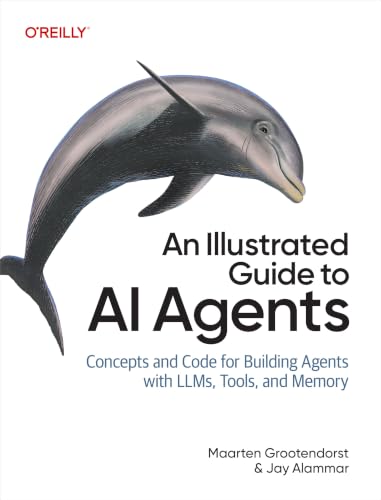 |
O’Reilly Illustrated Guide to AI Agents Agent builders learning core concepts |
Check Price |
 |
Manning Coding with AI: Examples in Python Python-focused learners |
Check Price |
 |
O’Reilly AI Engineering Foundation-model application engineers |
Check Price |
Top 5 Ai Coding: Detailed Reviews
1. Wiley Coding with AI For Dummies
Ai Coding beginners get an approachable introduction in Coding with AI For Dummies, Wiley’s entry-level guide to AI-assisted programming. Its main strength is accessibility: it helps you understand the basic concepts and terminology without assuming deep prior knowledge. That makes it useful for building confidence before you tackle more specialised material. The book is best understood as a starting point rather than a detailed technical reference, giving you a foundation for understanding how AI fits into software development and what to learn next.
What We Like:
- It offers an accessible entry point for beginners exploring AI-assisted coding.
- It focuses on core concepts and terminology, helping you follow later technical discussions.
- Its For Dummies format suits readers who want a less intimidating introduction.
- It can help you identify which AI coding topics deserve deeper study.
- It provides a broad foundation before you move to specialised books or tools.
What Could Be Improved:
- Its beginner focus may feel too basic if you already use AI coding tools confidently.
- It is not tailored to a specific language, agent framework, or coding assistant.
- Readers seeking advanced implementation guidance will need a more specialised follow-up.
Buy it if you are new to AI-assisted coding and want a clear place to start, especially if unfamiliar terminology makes the subject feel inaccessible. Skip it if you already understand the fundamentals or need hands-on depth with Python, Claude Code, AI agents, or foundation-model applications.
2. Packt Agentic Coding with Claude Code
Agentic Coding with Claude Code: The everyday developer’s guide to agentic coding with Claude Code is a Packt Publishing guide for developers who want to explore agentic workflows through Claude Code. For Ai Coding readers, its narrow subject is the main attraction: rather than presenting a broad survey of AI tools, it centers on using Claude Code in everyday development. The title signals practical, developer-oriented coverage, but the supplied product information does not list specific chapters, examples, or technical prerequisites. Treat it as a focused companion, not a general introduction to AI-assisted programming.
What We Like:
- Its dedicated Claude Code focus keeps the subject clear and relevant.
- The emphasis on agentic coding suits developers exploring AI-led workflows.
- Its everyday-developer framing should make the topic feel practical rather than purely theoretical.
- It avoids spreading attention across multiple coding assistants.
- The focused scope may help Claude Code users choose a more targeted learning resource.
What Could Be Improved:
- Its Claude Code focus limits its usefulness if you work with other AI coding assistants.
- It may be too narrow for beginners seeking a broad introduction to AI-assisted programming.
- The available product information does not specify chapters, examples, or technical prerequisites.
Buy it if you already use Claude Code or specifically want to understand agentic coding workflows around that tool. Skip it if you need broad AI coding coverage, language-specific instruction, or guidance that applies across several assistants. Its value depends on how closely your work matches its narrow focus.
3. O’Reilly Illustrated Guide to AI Agents
An Illustrated Guide to AI Agents is an O’Reilly book for Ai Coding readers who want to understand how LLM-based agents are assembled. It explains the roles of language models, tools, and memory, then connects those ideas to concepts and code for building agents. In use, that gives you a clearer mental model of an agent’s core components and how they work together. Its focused scope suits agent builders, but it is less useful if you want a broad introduction to AI-assisted programming or general software development.
What We Like:
- It clearly separates LLMs, tools, and memory, making an agent’s main building blocks easier to distinguish.
- The illustrated format can make abstract agent concepts easier to follow.
- It connects explanations with code, helping you relate ideas to implementation.
- Its focused subject matter suits readers building or studying LLM-powered agents.
- The book’s scope keeps attention on agent fundamentals rather than unrelated coding topics.
What Could Be Improved:
- Its narrow agent focus may not cover everyday AI-assisted coding workflows.
- Readers seeking a broad survey of AI engineering or Python coding will need another book.
- It may be too specialized if you only want practical advice for using AI in routine programming tasks.
Buy it if you are learning to build LLM-based agents and want a structured explanation of tools, memory, and core concepts. Skip it if your goal is general AI-assisted coding, Python practice, or a wider foundation in AI engineering rather than agent development.
4. Manning Coding with AI: Examples in Python
Manning’s Coding with AI: Examples in Python is a practical book for learning Ai Coding through Python-based examples. Its defining feature is the use of Python to frame the subject, giving you a familiar programming language for following the material and applying ideas in your own practice. That focus can make AI-assisted coding concepts easier to approach if Python is already part of your workflow. It is best understood as an example-led learning resource rather than a broad survey of every programming language or development environment.
What We Like:
- Python examples give the subject a consistent, approachable foundation.
- The example-led format can help you connect ideas with practical coding work.
- It suits learners who want to study AI coding through a familiar language.
- The focused scope may make it easier to build a structured learning routine.
- Manning’s title is clearly aimed at readers seeking hands-on Python context.
What Could Be Improved:
- The Python focus may limit its usefulness if you mainly work in another language.
- Readers seeking broad coverage across languages or tools may find the scope narrow.
- It may be less suitable if you want a language-independent introduction first.
Buy it if you want to learn AI coding through Python examples and prefer a focused, practice-oriented path. Skip it if Python is not part of your work, or if you need broad coverage of multiple languages, platforms, and AI development approaches in one book.
5. O’Reilly AI Engineering
AI Engineering: Building Applications with Foundation Models is an O’Reilly book for developers building software around foundation models. Its broad application-building focus makes it more useful for understanding how model capabilities fit into a larger product than for learning basic coding syntax. For Ai Coding, that distinction matters: the emphasis is on engineering model-powered applications rather than treating generated code as the entire development process. It should suit readers who want a foundation for planning and building these systems, though it is less targeted than a language-specific or tool-specific coding guide.
What We Like:
- It focuses on building complete applications, not just generating snippets.
- The foundation-model emphasis keeps the subject relevant across different model-based products.
- Its broad scope can help you connect model capabilities with wider software-engineering decisions.
- It suits developers who want principles that extend beyond one coding assistant or programming language.
- The application-building angle makes it a sensible step beyond introductory AI-assisted coding.
What Could Be Improved:
- Its broad focus may feel less useful if you want hands-on instruction in one programming language.
- It is not the best fit for beginners who first need basic coding or AI-assistant guidance.
- Readers seeking detailed instruction for a specific coding tool may need a more specialised book.
Buy it if you are a developer moving from experimenting with foundation models to building real applications around them. It is especially suitable when you want broad engineering perspective rather than a narrow tutorial. Skip it if you need beginner coding lessons, Python-first examples, or step-by-step guidance for one particular AI coding tool.
How to Choose an Ai Coding Book
The right Ai Coding book should match the way you plan to learn and work. Before buying, identify your current programming level, preferred language, interest in AI tools, and the kind of software you want to build. A clear match matters more than choosing the most advanced-sounding title.
Choose the right learning level
Beginners usually benefit from explanations that introduce AI-assisted coding without assuming deep software experience. If you already write code, you may get more value from material that focuses on agents, application design, or foundation-model concepts. A book that starts too far above your level can leave you with terminology but little usable understanding.
Match the book to your tools
AI coding workflows differ depending on the assistant or development environment you use. If a book focuses on a particular tool, check that it matches your intended workflow before buying. Tool-specific guidance can be practical, but it may be less useful if you plan to work with another assistant or want principles that transfer across platforms.
Check the programming language
Examples are easier to follow when they use a language you already know or genuinely want to learn. Python-focused material may suit you if Python is central to your plans, while a broader conceptual guide may make more sense if you want to understand how AI systems fit into software development without committing to one language. Do not choose based on language alone; the book’s audience and subject should also fit your goals.
Decide how deep you need to go
Some readers need an accessible starting point, while others want core concepts for building AI agents or engineering applications around foundation models. Consider whether you want guidance for immediate coding tasks, a conceptual foundation, or a path toward designing AI-powered software. Also think about how much theory you are willing to study, since a deeper book may reward patience but feel less direct for quick, task-focused learning.
Which Ai Coding Book Should You Choose?
Wiley’s Coding with AI For Dummies is the best overall pick for beginners because it offers the clearest starting point for AI-assisted coding. Packt’s Agentic Coding with Claude Code is the best alternative if you already use Claude Code and want guidance centred on that workflow. Choose O’Reilly’s Illustrated Guide to AI Agents, Manning’s Python-focused book, or O’Reilly AI Engineering instead when your goals are more specialised than general entry-level learning.