
Image Source: www.golfdistillery.com
Achieve Perfect Contact: How To Keep Head Down In Golf Swing
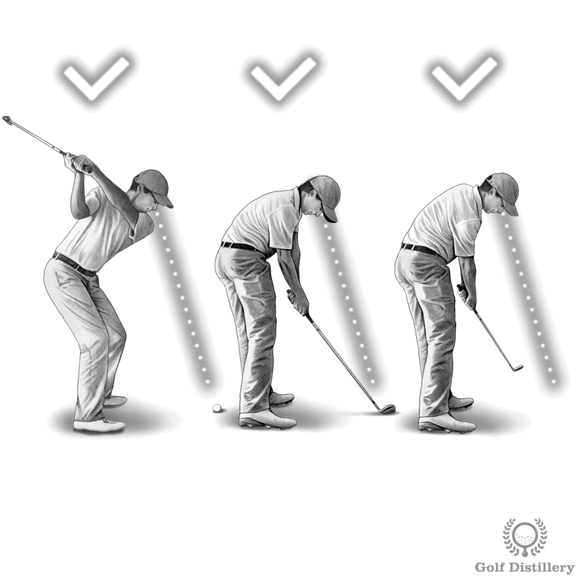
How do you keep your head down in a golf swing? You keep your head in place, mostly focused on where the ball was, as your body turns through the shot. This helps you stay steady and hit the ball well. It is not about gluing your head down. It is about letting your body turn while your head stays focused on the area of impact. A good golf swing head position is key for consistent ball striking golf. It helps you hit the center of the clubface.
Why Your Head Position Matters
Your head is a big part of your body. It weighs a lot. Where it is during the swing matters a great deal. It affects your golf swing balance. If your head moves too much, your body moves too much. This makes it hard to hit the ball in the same spot every time.
Keeping your head steady, or at least your eye focus on the ball, helps your body turn correctly. It helps you keep your golf swing posture. When you keep your head steady, it helps your lower body and upper body work together. This leads to better contact with the ball.
Many golfers try hard to hit the ball. They want to see where it goes right away. This often causes them to lift their head up too soon. This is called looking up too early golf. It is a common mistake.
The Cost of Looking Up Too Early
When you look up too early, several bad things can happen.
- Your body stands up straighter. This changes your angle to the ball.
- Your arms might pull in. This makes you hit the ball with the wrong part of the club.
- You can lose your golf swing balance.
- The club can come up too high as it reaches the ball.
All these things can lead to poor shots. You might miss the ball completely. You might hit it thin (the leading edge hits the middle of the ball). You might hit it fat (the club hits the ground before the ball). A very common result of looking up too early golf is topping the golf ball.
How to Stop Topping the Golf Ball
Topping the golf ball happens when the club hits the top half of the ball. This sends the ball rolling along the ground instead of flying in the air. It feels bad and does not go far.
Why does topping happen? Often, it is because your body comes up during the downswing. Your head lifts, your shoulders rise, and your club gets higher off the ground at impact.
To stop topping the golf ball, you need to learn to stay at your setup angle through the swing. Your head plays a big role in this. Keeping your head position steady helps you stay down through the hit.
The Right Way to Think About Head Position
Do not think you must keep your head perfectly still or glued to the ground. The head does move a little. It will turn with your body. Think of keeping your eyes on the ball for as long as possible. Or think of keeping the back of your head in the same spot you started.
The main point is not to lift your head up or away from the ball area too soon. Let your body turn. Let your head follow the turn, but do not lift it up.
Think of your head as the center point of a wheel. The wheel turns around the center. Your body turns around your spine, and your head is at the top of your spine. It should turn with your body, not pull away from the center of the turn.
Setting Up for Success: Golf Swing Posture
Hitting the ball well starts before you even swing. Your golf swing posture is very important. Good posture helps you turn correctly and makes it easier to keep your head in a good spot.
Here is how to get good golf posture:
- Stand tall with your feet about shoulder width apart.
- Bend from your hips, not your waist. Let your back stay mostly straight. Imagine someone is pulling a string from the top of your head.
- Let your arms hang down naturally. The club should rest on the ground in front of you.
- Your knees should be slightly bent, not locked.
- Your weight should feel balanced over the balls of your feet.
When you have good posture, your head is naturally positioned over or slightly behind the ball. This golf swing head position puts you in a good place to start the swing. It also helps you maintain spine angle golf.
Grasping Spine Angle
Your spine angle is the bend in your back from your hips. This angle is set at address (when you stand over the ball). Maintain spine angle golf means keeping this angle through your swing until after you hit the ball.
Why is keeping your spine angle important?
- It helps the club swing on the correct path towards the ball.
- It helps you hit down on the ball slightly, which is needed for good contact, especially with irons.
- It stops your body from standing up too soon.
When you lift your head up too early, it almost always causes your body to stand up. This makes you lose your spine angle. This leads to poor contact like topping or hitting thin shots. Keeping your golf swing head position steady helps you maintain spine angle golf.
Early Extension and Your Head
Early extension golf swing is when your lower body moves towards the ball and your spine angle becomes more upright during the downswing. It is like standing up out of your golf posture too soon.
Early extension golf swing is a major cause of bad shots. It often happens because:
- You use your hands and arms too much instead of turning your body.
- You lose your posture or maintain spine angle golf.
- You lift your head or look up too early.
See how these things are linked? If you lift your head, your body tends to follow, causing early extension golf swing. This makes it very hard to hit the ball well. Your body is moving up and closer to the ball at the wrong time.
To fix early extension golf swing, you need to work on several things, including keeping your golf swing head position steady and focused on the impact area. This helps you rotate your body instead of standing up.
Staying Down Through Impact
The feeling of staying down through impact golf is crucial. It means your body keeps its angle and rotation as the club hits the ball and for a moment after. Your head should stay focused on the spot where the ball was.
Imagine there is a camera filming the spot where the ball sits. Your head should stay looking at that camera spot until the club has gone past it. You should hear the sound of the hit before your head starts to come up naturally as part of your follow-through.
This does not mean your head stays perfectly still. It will turn. But it should not lift up or pull away from the target line too soon.
Staying down through impact golf helps you:
- Hit the ball first, then the ground (for irons).
- Use the big muscles of your body to power the swing.
- Keep the club on plane through the hitting zone.
- Get that solid feeling of hitting the ball well.
Simple Drills to Help Keep Your Head Down
Here are some simple ways to practice keeping your head in a good position and staying down through impact golf.
The Golf Headcover Drill
This is a classic drill. It is simple and works well.
- Get a soft headcover.
- Place it on the ground just behind your head when you are in your golf posture.
- Make practice swings without hitting a ball.
- Try to keep the back of your head touching or close to the headcover throughout your swing, especially through the downswing and impact.
This golf headcover drill helps you feel if your head is lifting up or moving back during the swing. It teaches you to maintain spine angle golf and resist early extension golf swing.
The “Look at the Tee” Drill
This is a very basic drill.
- Place a tee in the ground.
- Address the tee as if it were a ball.
- Make practice swings, focusing your eyes only on the tee spot.
- After you finish your swing, check if your eyes are still looking at the spot where the tee was.
This drill trains your eyes and your head to stay focused on the impact area. It helps prevent looking up too early golf.
The “Hold Your Finish” Drill
Poor golf swing balance often causes golfers to lift their head or body too soon. If you are off balance, your natural reaction is to stand up to regain balance.
- Hit shots, but make sure you hold your finish position for a count of three seconds after the ball is gone.
- Your body should be facing the target, most of your weight on your lead foot, and your head looking down the target line.
- If you cannot hold the finish for three seconds without falling over, your golf swing balance is off.
Working on golf swing balance helps you trust that you can stay in your posture and rotate fully without needing to stand up. This supports better head position and staying down through impact golf.
The “Slow Motion” Drill
Swing in slow motion, focusing on how your body moves.
- Take half or three-quarter swings at a very slow speed.
- Pay attention to your head position. Is it staying steady relative to your body’s turn?
- Watch in a mirror if possible to see if you are lifting your head or standing up.
Slow motion practice helps you feel the correct movement and see if you are lifting your head or losing your posture. It helps you build the feeling of staying down through impact golf.
Deeper Dive: Head Position in Each Swing Phase
Let’s look at how your head should behave during different parts of the golf swing.
Address and Setup
- Golf swing posture is key here. Set your bend from the hips.
- Your head should be over or slightly behind the ball, depending on the club. With a driver, it’s often slightly behind. With irons, it’s usually more over the ball.
- Your eyes should be focused on the back of the ball.
- Your head should feel like a natural extension of your spine angle.
Backswing
- As you start your backswing, your body turns away from the target.
- Your head should turn with your body. Your nose might point more towards the ball or even slightly away from the target.
- Your head should not lift up or move sideways much away from the target. A little movement is okay, but big sway or lift is bad.
- Maintain your original height and angle. This helps maintain spine angle golf.
Top of Backswing
- At the top of your backswing, your body is fully turned.
- Your head has turned with it. Your eye focus should still be on the ball area.
- Your head should not be higher than it was at address. You should still be in your bent-over posture.
- This position sets you up for a good downswing and helps avoid early extension golf swing.
Downswing
- This is where many people lift their head. Do not!
- As you start the downswing, your lower body leads the way.
- Your head should stay focused on the ball area. It should not lift up.
- Think of keeping your head the same height as you turn through.
- This helps you maintain spine angle golf and get the club hitting down or level through the ball.
Impact
- This is the moment of truth. The club hits the ball.
- Your head should still be focused on the ball spot.
- Your body is turning fast now. Your head will be turning with it.
- You should still be in your bent-over posture, similar to how you started. This means staying down through impact golf.
- If you lift your head here, you will likely hit the ball poorly (topping the golf ball or hitting it thin).
Follow-Through
- After you hit the ball, your head can start to come up and turn towards the target.
- Let this happen naturally as your body completes its turn.
- Your head should be the last part of your body to turn and look at the target.
- Hold your finish to check your golf swing balance.
Feeling vs. Reality
Many golfers feel like they are keeping their head down, but they are actually lifting it. Or they feel like they are lifting it, but they are actually doing okay.
Video is your friend here. Ask a friend to film your swing from the side. Watch it back. See what your head is really doing. Are you looking up too early golf? Are you losing your golf swing posture? Are you standing up (early extension golf swing)? Seeing it can help you understand the problem better.
Sometimes, the feeling you need to correct a problem feels wrong at first. For example, trying to keep your head down might feel like you are stuck or off balance. But with practice, this feeling will become normal, and you will gain consistent ball striking golf.
Building the Body for Good Head Position
Good golf swing balance and the ability to maintain spine angle golf come from having a strong core and good flexibility. If your body cannot turn correctly while staying in posture, you will struggle to keep your head steady.
Simple exercises can help:
- Core Strength: Planks, crunches, and exercises that work your stomach and back muscles. A strong core helps you stay stable during the swing.
- Flexibility: Stretches for your back, hips, and shoulders. Good flexibility allows you to make a full turn without having to stand up or lift your head. The “cat-cow” stretch is great for spine flexibility. Hip flexor stretches help you turn better.
- Balance: Standing on one leg, or using a balance board. Practice swinging slowly while keeping your balance.
Work on these areas, and you will find it easier to keep your head in the right place naturally, leading to consistent ball striking golf.
Common Mistakes and Fixes
Here is a quick look at some common problems related to head position and how to fix them.
| Problem | What It Looks Like | Why It Happens Often | Simple Fixes |
|---|---|---|---|
| Looking Up Too Early | Head snaps up right after or at impact. Body lifts. | Wanting to see where the ball went. Poor balance. | Focus on keeping eyes on ball spot. Use the “Look at the Tee” drill. |
| Losing Spine Angle | Body stands up during downswing or at impact. | Poor posture at setup. Lack of body turn. Early extension golf swing. | Start with good golf swing posture. Focus on bending from hips. Use the Golf headcover drill. |
| Early Extension | Hips move towards the ball. Body stands up. | Trying to power the swing with arms. Losing posture. Looking up too early. | Focus on turning hips instead of pushing them forward. Keep head height steady. |
| Topping Golf Ball | Hitting the top half of the ball. Ball rolls. | Club getting too high at impact. Often caused by standing up or early extension. | Fix posture and spine angle. Practice staying down through impact golf. Use slow swings. |
| Poor Golf Swing Balance | Swaying or falling during the swing or at finish. | Not centered over feet. Over-swinging. Losing posture. | Work on balance exercises. Make smoother swings. Hold your finish. |
| Not Staying Down Through Impact | Body lifts up right before or at impact. | Trying to lift the ball up. Looking up too early. | Focus on rotating through the ball while keeping original body height. Use drills that make you stay down. |
Interpreting Feedback
When you practice, pay attention to what you feel and what the ball does.
- If you are topping the golf ball, you are likely coming up too early or losing your spine angle. Focus on staying down.
- If you are hitting fat shots (hitting the ground behind the ball), your head might be dropping too low, or you might be swaying back too much. But it could also be other reasons.
- If your shots feel weak or off-center, your balance might be off, or your timing is bad because you are standing up.
Work with a pro if you can. They can watch your golf swing head position and body movement and give you specific tips.
The Payoff: Consistent Ball Striking
When you learn to keep your golf swing head position steady and focused on the ball area, allowing your body to turn and maintain spine angle golf, good things happen.
- You stop topping the golf ball.
- You hit the center of the clubface more often.
- You get better control over where the ball goes.
- Your shots go farther because you are hitting them solid.
- You gain consistent ball striking golf.
It takes practice. It takes patience. But learning to keep your head in the right place and staying down through impact golf is one of the most important things you can do to improve your golf game.
Think of it this way: the ball is not going anywhere until the club hits it. Your job is to make sure the club hits the ball squarely. By keeping your focus on the ball area and letting your body turn around that focus point, you give yourself the best chance for perfect contact. Do not rush to see the result. The result will be much better if you finish your swing correctly.
Keep practicing the drills. Keep working on your golf swing posture and golf swing balance. Soon, staying down through impact golf and achieving consistent ball striking golf will feel natural.
Frequently Asked Questions (FAQ)
Is it bad if my head moves at all during the swing?
No, your head is not a statue. It will turn as your body turns. The goal is to avoid lifting it up or swaying it too much side-to-side too early. Focus on keeping your head’s height and focus on the ball area steady until after impact.
How long should I keep my eyes on the ball spot?
Try to keep your eyes focused on the spot where the ball was until your body turn naturally brings your head up in the follow-through. This usually means looking at the spot for a moment after the ball is gone. Hear the hit first, then look up.
Can keeping my head down too much hurt my swing?
Yes, if you try to force your head down and stop it from turning, it can hurt your body’s rotation. This can cause strain and limit your power. The idea is to let your head turn with your body while staying at the same height and focused on the ball area. Do not fight the natural turn.
Does head position affect driving differently than iron shots?
With a driver (hitting off a tee), your setup often has your head slightly behind the ball. This helps you hit slightly up on the ball. With irons (hitting off the ground), your head is usually more over the ball, helping you hit down on it. The main principle is the same for both: keep your head height stable and focused on the ball area through impact.
What is the easiest way to check my head position?
The easiest way is to film yourself swinging from the side view. This lets you see exactly what your head and body are doing during the swing. You can see if you are lifting up, swaying, or losing your posture. Using a mirror during practice swings also helps.
How does balance help keep my head down?
Good golf swing balance lets your body rotate correctly without needing to make sudden movements to stay upright. If you are off balance, you are more likely to stand up or lift your head to regain stability. Working on balance makes it easier to stay in your posture and keep your head steady.
Is the Golf headcover drill only for your head?
The golf headcover drill is mainly about checking if the back of your head is lifting or moving back. But by keeping your head steady with the headcover, it naturally encourages you to maintain spine angle golf and prevents early extension golf swing, which helps many parts of your swing.
Does keeping my head down help with power?
Yes, indirectly. Keeping your head steady helps you maintain spine angle golf and rotate your body correctly. This allows you to use your bigger muscles (core, hips, shoulders) to generate power. Standing up or lifting your head too early often causes you to use only your arms, which costs you power and consistent ball striking golf.