
A fade in golf is when the ball starts slightly left of your target and curves gently back to the right (for a right-handed golfer). A slice is a much bigger, unwanted version of this curve. You want to fix your fade, maybe even learn how to hit a draw (a gentle curve from right to left). You can fix a fade by changing two main things: your swing path and your clubface angle at impact. Often, people slice or fade because their club moves from outside the line to inside the line through the ball (an outside-in swing path) and the club face is open (pointing right of the path) when they hit it. Making simple changes to your setup, grip, and swing movement can help you get rid of this slice for good.
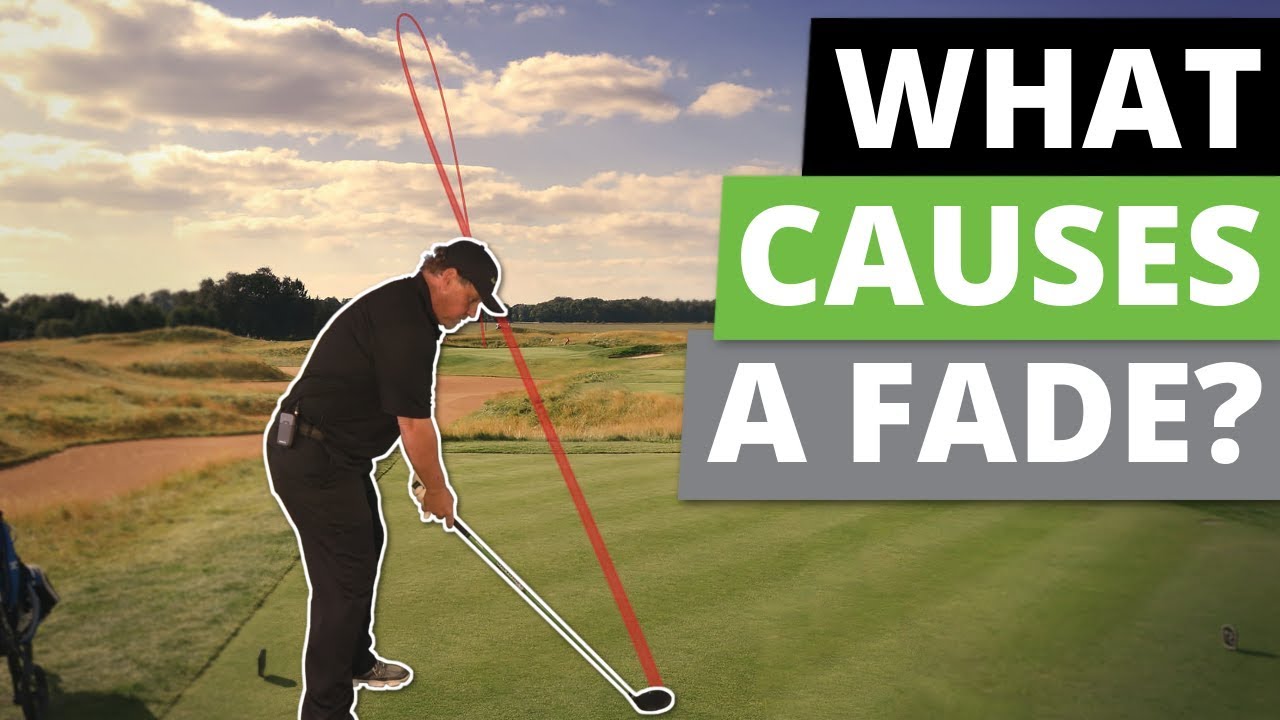
Image Source: i.ytimg.com
Why the Ball Curves Right
The way the golf ball spins makes it curve. Spin happens because of how your club hits the ball. Two main things matter:
- The direction the club swings. This is your swing path.
- Where the club face is pointing when you hit the ball. This is your clubface angle.
Think of the clubface angle as the steering wheel and the swing path as the direction you are driving. The clubface angle has the biggest effect on where the ball starts. The swing path, compared to the clubface angle, mostly affects how the ball curves.
If your clubface is open when you hit the ball, the ball will start to the right (for a righty). If your swing path is moving from outside-to-in, this makes the ball spin to the right. An outside-in path with an open clubface is the main reason for a slice. An outside-in path with a clubface square to that path might cause a pull-slice. An outside-in path with a clubface slightly closed to that path might cause a pull. A fade is usually an outside-in path or a path that’s only slightly inside-out, combined with a clubface that is open relative to that path.
To fix a slice or a fade, you need to change this. You want the ball to start where you aim or slightly left and curve little or not at all. To do this, you need to change your swing path and your clubface angle at impact position.
Looking at Your Swing Path
Your swing path is the direction your club head moves during the swing, especially right before, during, and right after you hit the ball. Imagine a line going from the ball towards your target.
- Outside-in swing path: The club comes from outside this line (away from you) and moves across the line towards the inside (towards you) after hitting the ball. This is like slicing bread from the outside edge inwards. This path often causes slices and fades.
- Inside-out swing path: The club comes from inside this line (towards you) and moves across the line towards the outside (away from you) after hitting the ball. This is like hitting a baseball from the inside corner of the plate towards the opposite field. This path helps hit a draw.
- In-to-in swing path: The club stays mostly on the line, coming from inside and going back inside after impact. This is the ideal path for straight shots.
Most slices come from an outside-in swing path. Why do people do this?
- Trying too hard to hit the ball towards the target.
- Starting the downswing with the upper body or shoulders.
- Having a steep golf swing plane.
To fix a slice, you must learn an inside-out swing path. This feels strange at first. It might feel like you are hitting the ball out to the right. But if your clubface is pointing correctly, this path will make the ball start right and curve back left (a draw) or start straight and stay straight.
Seeing the Clubface Angle
The clubface angle is where the club face points when you hit the ball.
- Open clubface: The club face points to the right of the swing path. This adds right-to-left spin (slice or fade).
- Closed clubface: The club face points to the left of the swing path. This adds left-to-right spin (draw or hook).
- Square clubface: The club face points in the same direction as the swing path. This creates minimal spin (straight shot).
If you have an outside-in swing path, an open clubface makes the slice worse. If the clubface is square to your outside-in path, the ball might start left and slice back. This is a pull-slice.
To stop slicing, you need the clubface to be square or slightly closed relative to your swing path at impact position. If you are changing your path to inside-out, you might need to keep the face square to that new path to hit a draw, or slightly open to hit it straight.
Getting the Grip Right
How you hold the club – your golf grip – is very important. It affects your clubface angle. Many people who slice have a weak grip.
- Weak Grip: Your hands are turned too much to the left on the club (for a righty). From your view down, you might see only one knuckle on your left hand or none. Your right hand is too much on top. This grip makes it hard to close the clubface through impact position. The face stays open.
- Neutral Grip: You see about two knuckles on your left hand. The “V” shape made by your left thumb and forefinger points towards your right shoulder. Your right palm faces the target.
- Strong Grip: Your hands are turned more to the right. You see three or more knuckles on your left hand. The “V” points more towards your right ear. This grip helps you close the clubface easily.
Golf grip changes are often the first step to fix a slice. Try a slightly stronger grip. This lets your hands and wrists turn the clubface square or closed more easily as you swing through the ball. Don’t make it too strong at first. Just a little change can make a big difference. See how it feels and where the ball goes.
h4 Working on Your Grip
Here is how to check and change your grip:
- Hold the club up in front of you.
- Put your left hand on the grip first. Place the grip more in your fingers than your palm.
- Look down at your left hand. How many knuckles do you see? For a stronger grip, turn your hand slightly to the right until you see two or three knuckles.
- The pad of your left hand should be on top of the grip. Your thumb should be slightly to the right of the top center.
- Now add your right hand. The grip should rest in your fingers.
- Cover your left thumb with the palm of your right hand.
- The “V” made by your right thumb and forefinger should point roughly to your right shoulder or slightly further right for a stronger grip.
- Your hands should work together. You can interlock fingers, overlap, or use a ten-finger grip. Find what feels comfortable and secure.
Practice just holding the club this new way. Swing slowly. Feel how the clubface wants to turn over as you swing through.
Changing Your Swing Path to Inside-Out
This is a big one for fixing a slice. You need to stop coming over the top (the outside-in swing path). You need to drop the club inside on the way down. This creates an inside-out swing.
h4 Why Outside-In Happens
- Starting the downswing by turning your shoulders hard towards the target.
- Lifting the club too much on the backswing (a steep golf swing plane).
- Trying to hit the ball hard by swinging from the top.
h4 How to Get Inside-Out
Getting an inside-out swing feels different. It feels like the club head is dropping behind you on the way down. Then it feels like you are swinging out towards right field (for a righty).
- Feel the transition: At the top of your backswing, feel your lower body start the move first. Your hips turn slightly. Let your arms drop down instead of swinging out. Imagine dropping the club into a slot behind you.
- Swing out to the right: Instead of swinging towards the target line right away, try to swing the club head out towards the right of the target line after hitting the ball. Imagine hitting the ball and trying to make the club head move towards first base if you were on a baseball field.
- Use alignment sticks: Put an alignment stick on the ground just outside the ball, parallel to your target line. If you hit it, you are coming over the top (outside-in). Put another stick inside the ball, angled slightly out. Try to swing the club head between the ball and the inside stick.
- Focus on your turn: Make sure you are turning your body correctly in the backswing. Your back should face the target at the top. This coil helps create space for the club to drop inside on the downswing.
Changing your swing path takes practice. Hit balls slowly at first, focusing only on the feel of the club dropping inside and swinging out. Don’t worry about where the ball goes yet. The feel is the most important thing.
The Role of the Golf Swing Plane
Your golf swing plane is the angle of your club during the swing. Think of it as swinging the club on a tilted window pane.
- Steep Plane: The club is swung more upright, like swinging parallel to a very steep hill. This often leads to coming over the top and an outside-in swing path.
- Flat Plane: The club is swung more around your body, parallel to a less steep hill.
- Shallow Swing: This is often used to describe dropping the club down onto a flatter plane on the downswing, even if your backswing was a bit steeper. A shallow swing helps create an inside-out swing path and avoids coming over the top.
h4 Getting a Shallower Swing
Learning a shallow swing is key to fixing an outside-in swing path.
- Feel the drop: At the top of your backswing, feel the club head drop down and back behind you. It should feel like your arms are falling slightly.
- Rotate your body: Don’t just swing your arms down. Your body turn helps bring the club through on the right path.
- Practice drills:
- Pump Drill: Swing to the top, stop, then pump your hands down a few inches while keeping your body coiled. This gets the feel of the club dropping inside. Then swing through.
- Walk Through Drill: Swing to the top, then take a step forward with your back foot as you swing through. This helps you get the feel of rotating and swinging out.
- Using a Headcover: Place a headcover about a foot behind the ball and slightly inside the target line. On your downswing, try to swing the club head under where the headcover is. If you hit the headcover, you are too steep or coming over the top.
A shallow swing on the way down makes it much easier to swing from the inside and hit the ball with power without slicing.
The Impact Position
Your impact position is the exact moment your club hits the ball. This is the most important moment in the swing for direction and spin. Even if your swing is not perfect, a good impact position can save the shot.
h4 What a Good Impact Position Looks Like
- Hands are ahead of the ball: For most iron shots, your hands should be slightly in front of the ball at impact. This helps you hit down on the ball and get good compression.
- Clubface is square or slightly closed: The club face should be pointing where you want the ball to start (or slightly left of that for a draw).
- Weight is on your front foot: Most of your weight should be on your lead leg (left leg for a righty) when you hit the ball.
- Body is rotating: Your lower body should be turning open towards the target.
h4 Fixing Impact to Stop the Fade
If you slice, your impact position often has:
- Hands behind the ball.
- Clubface open.
- Weight back on the rear foot.
- Shoulders open too early, leading to an outside-in path.
To fix a slice and get a better impact position:
- Practice hitting balls with your weight forward: Start with most of your weight on your front foot and try to keep it there through impact.
- Focus on lead wrist position: Keep the back of your lead wrist flat or even slightly bowed (bent forward) at impact. This helps keep the clubface square or closed.
- Use slow motion swings: Practice stopping your swing right at impact and checking your position. Are your hands forward? Is the clubface square? Is your weight forward?
- Feel the clubface closing: As you swing through, feel your hands rotating or rolling over slightly. This helps square the clubface.
Putting It Together: From Slice to Straight (or Draw)
To fix a slice permanently, you need to work on all these parts together:
- Change your grip: Start with a slightly stronger grip. This makes it easier to square the face.
- Change your swing path: Work on swinging from inside-out. Feel the club drop behind you and swing out towards the right.
- Shallow your swing: Focus on getting the club onto a flatter plane on the downswing.
- Control the clubface: With the new grip and path, practice squaring the clubface at impact position. You might need to feel like you are closing it actively at first.
- Improve impact position: Get your hands ahead and weight forward.
h3 How to Hit a Draw
Once you can hit the ball straight or with a slight fade, you might want to learn how to hit a draw. A draw is often seen as a powerful shot. It helps you reach longer distances or work the ball around trouble.
To hit a draw, you need two things:
- An inside-out swing path.
- A clubface angle that is slightly closed relative to that path.
This means the club face is still open to the target, but it is closed compared to the direction the club is swinging. This makes the ball start right of the target (because the face is open to the target line) and curve back left (because the face is closed to the path).
h4 Steps to Hit a Draw
- Setup: Aim your feet, hips, and shoulders slightly to the right of your target. This encourages an inside-out swing.
- Clubface: Aim the clubface directly at your target. This means the clubface is pointing left of your body alignment. This sets up the clubface to be slightly closed relative to your swing path.
- Swing Path: Make your normal swing, but focus on swinging along your body lines (to the right of the target). This creates the inside-out swing path.
- Clubface Control: Allow your hands to release and turn over through the ball. This helps close the clubface relative to your path.
Hitting a draw is the opposite of slicing. You are controlling the spin instead of fighting it. Learning how to hit a draw uses the same principles as fixing a slice, just with slightly different aims for path and face angle.
Practice Makes Perfect (or at Least Better)
Fixing a slice or fade and learning an inside-out swing takes practice. Don’t expect it to happen overnight.
h4 Useful Drills
- Alignment Stick Drill: Use sticks to check your swing path, as mentioned before. This gives you instant feedback on whether you are coming outside-in swing path or inside-out swing.
- Gate Drill: Put two headcovers or tees just outside the club head, one before and one after where the ball would be. Make them just wide enough for the club head to pass through. This helps you control the club path through the hitting zone.
- Towel Under Armpit: Tuck a towel under your lead armpit (left for righty). Try to keep it there through the swing. This helps keep your arms connected to your body turn and can help flatten the swing plane (shallow swing) and get the club coming from the inside.
- L-to-L Drill: Make swings where your lead arm and the club form an “L” shape on the backswing and again on the follow-through. Focus on releasing the club and letting the toe turn over past the heel after impact. This helps with clubface angle control.
h4 Table of Common Slice Causes and Fixes
| Problem | Cause | Fix | Related Concepts |
|---|---|---|---|
| Ball curves sharply right | Outside-in swing path, Open clubface | Learn inside-out swing, Strengthen golf grip changes, Square clubface angle at impact position | Golf swing plane, Shallow swing, Fix a slice |
| Ball starts left, then slices | Outside-in swing path, Square clubface (to path) | Learn inside-out swing, Square clubface angle to target (not path) at impact position | Golf swing plane, Shallow swing |
| Weak fade | Slight outside-in swing path, Slightly open clubface | Minor golf grip changes, Slightly more inside-out swing, Ensure square clubface angle | Shallow swing, Fix a slice |
| Ball hooks (curves left) | Inside-out swing path, Closed clubface | Weaken golf grip changes, Square clubface angle to path, Adjust swing path closer to in-to-in | How to hit a draw |
Important Points to Remember
- Focus on one thing: When practicing, try to work on only one change at a time (like your grip, then your path, then the clubface). Trying to change everything at once is hard.
- Start slow: Make practice swings without a ball. Feel the new movement. Then hit shots at half speed. Build up speed slowly.
- Get feedback: Watch videos of your swing. Use alignment sticks. Practice on a range where you can see the ball flight.
- Be patient: It takes time for new movements to feel normal. You will likely hit some bad shots as you learn. This is part of the process.
- Consider a lesson: A golf pro can quickly spot what you are doing wrong and give you specific drills for your swing.
Final Thoughts on Fixing Your Fade
Getting rid of your slice or fade is possible. It mostly comes down to two things: changing your swing path from outside-in swing path to inside-out swing and changing your clubface angle so it’s square or slightly closed at impact position. Your grip plays a big role in the clubface. Learning a shallow swing helps the path. By focusing on these areas, practicing the right drills, and being patient, you can fix a slice and maybe even learn how to hit a draw. This will make golf more fun and lead to lower scores.
Frequently Asked Questions
h4 What is the main reason for a slice?
The main reason for a slice for a right-handed golfer is an outside-in swing path combined with an open clubface angle at impact position. The club cuts across the ball with the face pointing right of that path, putting lots of slice spin on it.
h4 Can grip changes really fix a slice?
Yes, golf grip changes can definitely help fix a slice. A weak grip makes it hard to square the clubface angle at impact. A stronger grip makes it much easier to rotate the clubface closed as you swing through the ball, which helps fix the slice spin.
h4 What does “coming over the top” mean?
“Coming over the top” means starting your downswing by throwing your arms or shoulders out instead of letting them drop inside. This creates an outside-in swing path and a steep golf swing plane, which are major causes of slices.
h4 Is a shallow swing better than a steep swing?
For fixing a slice, a shallow swing is often better. It helps you get the club onto an inside-out swing path. A steep swing often leads to an outside-in swing path. Different swings work for different people, but for someone slicing, a shallower move on the downswing is usually helpful.
h4 What is the difference between a fade and a slice?
A fade is a gentle curve from left to right that is often controlled and sometimes wanted. A slice is a much larger, unwanted curve from left to right. A slice usually causes bigger problems with distance and accuracy than a fade. Fixing a slice involves bigger changes than simply controlling a fade.
h4 Does fixing a slice make me hit the ball further?
Often, yes. A slice puts a lot of spin on the ball, which can make it balloon up and lose distance. A straighter shot or a draw usually has less spin and a lower flight, which can roll further and give you more total distance. Learning to hit the ball more solidly with a square face at impact position also adds distance.
h4 How long will it take to fix my slice?
It takes time and practice. Some people see improvement quickly with grip changes. Changing your swing path and golf swing plane can take weeks or months of regular practice to become natural. Be patient and celebrate small improvements.