
The Ultimate Guide: How To Revive Golf Cart Batteries.
Is your golf cart slow? Does it not go as far as it used to? A golf cart battery not holding charge is a very common problem. This often means your batteries are tired. But don’t worry! A dead golf cart battery fix is often possible. Many batteries can be brought back to life. You can save money by reconditioning golf cart batteries instead of buying new ones. This guide will show you how to do it. We will cover what goes wrong and how to fix it. We will also help you keep your batteries strong for a long time.
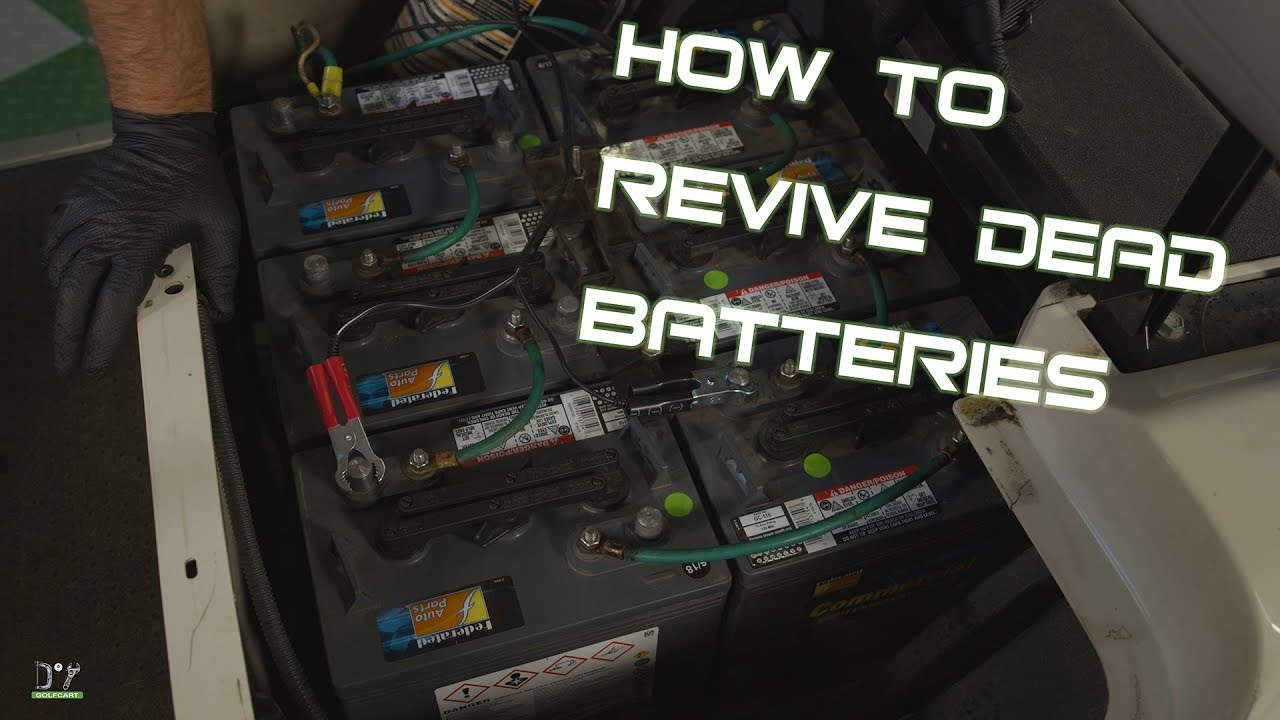
Image Source: i.ytimg.com
Why Golf Cart Batteries Fail (And How to Spot It)
Golf cart batteries are tough. But they do wear out. Knowing why they fail helps you fix them. It also helps you keep them healthy.
Common Signs of Trouble
Your golf cart tells you when its batteries are weak. Look for these signs:
- Short Ride Time: Your cart dies quickly. It does not go as far as before. This is a clear sign your golf cart battery not holding charge well.
- Slow Speed: The cart feels sluggish. It may struggle on hills.
- Dim Lights: Headlights or other lights look weak. The horn might sound weak too.
- Slow Charge Time: The charger runs for a long time. It still cannot get the batteries full. Or it charges quickly but drains fast.
- Hot Batteries: Batteries get very warm when charging or running.
- Low Voltage: Your golf cart battery low voltage is a big sign. Each 6-volt battery should show about 6.3 to 6.4 volts when full. A 12-volt battery should show about 12.6 to 12.8 volts. If they are much lower, they are weak.
- Foul Smell: A bad egg smell often means a battery is boiling. This is very bad.
Main Reasons Batteries Go Bad
Several things hurt golf cart batteries. Knowing them helps you stop problems.
- Sulfation: This is the biggest reason. It happens when lead sulfate crystals build up. These crystals form on the battery plates. They stop the battery from charging fully. They make the battery weak. Golf cart battery sulfation removal is key to reviving batteries.
- Lack of Water: Golf cart batteries need water. They are usually lead-acid batteries. The water mixes with acid. If water levels are low, the plates get dry. This harms the battery fast.
- Undercharging: Not charging batteries fully causes sulfation. This happens if you stop charging too soon. Or if your charger is too small.
- Overcharging: Charging too much can boil the water out. This hurts the battery plates. It makes the battery hot.
- Age: Batteries just get old. They have a certain life span. Most golf cart batteries last 4 to 6 years.
- Deep Discharges: Running batteries until they are completely empty is bad. It harms the plates. Try not to let your batteries get too low.
- Temperature: Very hot or very cold weather hurts batteries. Hot weather makes them work harder. Cold weather lowers their power.
Bringing Your Batteries Back to Life: The Revival Process
Reviving golf cart batteries is a hands-on job. It takes time and care. Always put safety first.
Safety First: Essential Precautions
Battery acid is strong. It can burn skin and eyes. It can also damage clothes. Gases from charging batteries can explode. Always be careful.
- Eye Protection: Wear safety glasses or goggles.
- Hand Protection: Use strong rubber gloves.
- Ventilation: Work in a place with fresh air. Do not work in a closed garage.
- No Sparks: Do not smoke or have open flames nearby. Remove metal jewelry. Sparks can ignite battery gases.
- Tools: Use insulated tools. This stops accidental shorts.
- Baking Soda: Keep a box of baking soda nearby. It helps clean up acid spills. It also neutralizes acid.
Initial Checks and Cleaning
Before any repair, check and clean your batteries.
- Turn Off the Cart: Make sure the golf cart is off. Put the tow/run switch to “tow.” This stops power.
- Clean Terminals: Battery terminals often get dirty. Use a wire brush or battery terminal cleaner. Clean off any white or green stuff. This dirt stops good power flow. A mix of baking soda and water works well too. Make sure the tops are clean and dry after cleaning.
- Check Water Levels: This is very important. Remove the caps on each battery cell. Look inside. The water level should be above the plates. It should be about 1/4 to 1/2 inch above the plates. If low, add distilled water only. Do not use tap water. Tap water has minerals that hurt batteries. Do not overfill.
- Test Each Battery: Use a multimeter. Test the voltage of each single battery. A fully charged 6-volt battery should read about 6.3-6.4 volts. A 12-volt battery should be 12.6-12.8 volts. Write down each reading. If one battery is much lower, it might be the problem. It could be dead.
Addressing Sulfation: The Core Issue
Sulfation is a big problem. It means hard crystals form on battery plates. These crystals stop the battery from working. They make the battery seem dead. Desulfating golf cart batteries helps break these crystals. There are a few ways to try golf cart battery sulfation removal.
What is Sulfation?
Think of battery plates as sponges. They soak up power. When a battery is not fully charged, tiny crystals form. These are soft lead sulfate crystals. They are normal. But if the battery stays empty, these crystals get hard. They cover the sponge. The sponge cannot soak up power anymore. This is hard sulfation.
Methods for Desulfation
-
Pulse Chargers:
- Many modern battery chargers for dead golf cart batteries have a “desulfation mode.” These chargers send quick, high-frequency pulses. These pulses help break down the sulfate crystals.
- How to Use: Connect the charger to your battery pack. Select the desulfation mode. Let it run. This can take many hours, even days. It is a slow process.
- Pros: Safe, easy to use. Can work well for light to medium sulfation.
- Cons: Not always effective for very old or deeply sulfated batteries.
-
High-Voltage Charging (with Caution):
- This method is for more serious cases. It involves charging the battery pack at a slightly higher voltage than normal. This can force some sulfate crystals to break down.
- Warning: This method can be risky. It can boil batteries. It can damage them if done wrong. Only try this if you know what you are doing. Always monitor the batteries closely.
- How to Use: You need a charger that lets you set the voltage. Or you can briefly use a 12-volt charger on a 6-volt battery (for short times).
- Charge your full pack first.
- Identify the lowest voltage battery.
- Carefully connect a 12-volt charger to just that one 6-volt battery.
- Charge for only 15-30 minutes. Watch for heat or boiling.
- Re-test the single battery voltage. Do not overcharge.
- This is a “trickle” charge. It should only be done if the single battery cannot take a charge from the main charger.
- Pros: Can sometimes work when other methods fail.
- Cons: High risk of battery damage. Dangerous if not done right.
-
Epsom Salt Method (The “Epsom salt golf cart battery” trick):
- This is a popular home remedy. It uses Epsom salt (magnesium sulfate). The idea is that magnesium sulfate can help break down lead sulfate.
- Warning: This method is debated. It does not always work. Some say it can even hurt batteries long-term. Try it as a last resort.
- How to Use:
- Mix Solution: Mix 1/2 cup of Epsom salt (magnesium sulfate) with 1 gallon of warm distilled water. Stir until the salt dissolves completely.
- Drain Some Acid: Carefully remove battery caps. Use a battery hydrometer or turkey baster to remove about 1/2 inch of battery acid from each cell. Do not get acid on yourself. Put the acid in a safe, acid-proof container.
- Add Epsom Solution: Slowly pour the Epsom salt solution into each cell. Add just enough to cover the plates again. Do not overfill.
- Recharge: Replace the caps. Connect your battery charger. Charge the batteries fully. Let the charger run its full cycle.
- Monitor: After charging, check the battery performance. You may need to repeat this after a few charge cycles.
- Pros: Inexpensive. Can sometimes improve a deeply sulfated battery.
- Cons: Not always effective. Can leave residues. May shorten battery life. Requires careful handling of acid. Use with extreme caution.
The Reconditioning Process (reconditioning golf cart batteries)
Reconditioning aims to bring batteries back to good health. It often means cycling them. This involves charging and discharging them multiple times.
-
Deep Discharge (Controlled):
- After attempting desulfation, you might want to discharge the batteries. Do not let them go completely dead. Run your golf cart until it slows down a lot. Stop before it quits completely.
- Why? This helps to “exercise” the battery. It can help the plates to work better.
- Caution: Do not over-discharge. This is bad for batteries. Never discharge below 1.75 volts per cell. For a 6-volt battery, this means no lower than 5.25 volts.
-
Full Recharge:
- After a controlled discharge, fully recharge the battery pack. Let the charger run its full cycle. This includes the “float” or “maintenance” stage.
- Important: Use a smart charger. It should know when to stop charging.
-
Repeat Cycling:
- Repeat the charge-discharge-recharge cycle several times. Do this over a few days or weeks. This can help break down remaining sulfate. It also helps balance the batteries.
- Monitor the voltage of each battery after each full charge. Look for improvement.
Powering Up: Charging a Dead Battery
A truly dead golf cart battery can be hard to charge. Most smart chargers won’t start charging if the battery voltage is too low.
-
Using a Smart Battery Charger for Dead Golf Cart:
- Many new battery chargers have a “low voltage” or “repair” mode. This allows them to start charging a battery with very low voltage.
- Connect the charger. Select the right mode. Let the charger try to bring the voltage up.
- If your charger does not have this mode, you might need a “trick” charge.
-
The “Trick” Charge (Careful Jump Start):
- This is a temporary boost to raise voltage. It fools the smart charger into starting.
- You need: A working 12-volt battery (like a car battery) and jumper cables.
- Steps:
- Connect the positive (+) cable from the good 12V battery to the positive (+) terminal of the dead golf cart battery.
- Connect the negative (-) cable from the good 12V battery to the negative (-) terminal of the dead golf cart battery.
- Let them connect for just 5-10 minutes. This gives the dead battery a small voltage boost.
- Important: Do NOT try to start anything. Just transfer some charge.
- Remove the jumper cables.
- Immediately connect your golf cart charger to the whole battery pack. It should now “see” enough voltage to start charging.
- Caution: This is risky if done wrong. Do not touch the cables together. Do not over-jump. Only for short times.
Balancing the Charge: Equalization (how to equalize golf cart batteries)
Golf cart batteries are usually in a series. This means they are connected end-to-end. They work as one big battery. But they don’t always charge or discharge evenly. One battery might get weaker than the others. This makes the whole pack weak. Equalization helps.
What is Equalization?
Equalization is a controlled overcharge. It forces all battery cells to their highest possible voltage. This helps balance the charge across all batteries. It also helps remove mild sulfation.
When to Equalize:
* Once every 1 to 3 months.
* If one battery voltage is much lower than the others (0.15 volts or more difference).
* If your golf cart seems weak even after a full charge.
How to Equalize Safely:
- Check Water Levels: Always check water levels first. Add distilled water if needed. Make sure plates are covered.
- Fully Charge: Charge your battery pack completely. Let the charger finish its normal cycle.
- Start Equalization:
- Some smart chargers have an “equalize” button. Press it.
- If your charger does not have this, you might need a special equalization charger. Or you can manually do it if your charger allows setting voltage. (This is more advanced and risky).
- The charger will apply a higher voltage (usually 2.6-2.7 volts per cell) for a few hours.
- Monitor: Watch the batteries. They will bubble. This is normal. Look for excessive heat or boiling. If any battery gets very hot, stop.
- Stop: The equalization cycle usually ends on its own. If doing it manually, stop when all batteries are bubbling freely and their voltages are stable.
- Recheck Water: After equalization, recheck water levels. Add distilled water if needed.
Table: Troubleshooting Golf Cart Battery Voltage Readings
| Battery Voltage Reading (6V Battery) | Battery Voltage Reading (12V Battery) | Condition | What it Means | Action |
|---|---|---|---|---|
| 6.3 – 6.4V | 12.6 – 12.8V | Fully Charged / Healthy | Battery is in good shape. | Regular maintenance. |
| 6.0 – 6.2V | 12.0 – 12.4V | Partially Discharged | Needs charging. Could indicate mild sulfation if after full charge. | Recharge fully. Equalize if not improving. |
| 5.8 – 5.9V | 11.6 – 11.8V | Deeply Discharged | Battery is very low. Sulfation likely. | Attempt “trick” charge, then full charge. Desulfate. Equalize. |
| 5.0 – 5.7V | 10.0 – 11.4V | Severely Discharged | Significant sulfation. May be hard to revive. | Try desulfation methods (Epsom salt, pulse). “Trick” charge. |
| Below 5.0V | Below 10.0V | Very Low / Dead | Likely internal damage or very heavy sulfation. Revival is difficult. | Attempt all revival steps. Be ready for replacement. |
| Uneven Voltages (>0.15V difference) | Uneven Voltages (>0.3V difference) | Unbalanced Pack | One or more batteries are weaker than others. Affects whole pack performance. | Perform an equalization charge. Check individual batteries for damage. |
Making Batteries Last Longer: Preventative Care (extend golf cart battery life)
The best way to fix batteries is to stop them from breaking. Good care can greatly extend golf cart battery life.
-
Regular Cleaning:
- Keep battery tops and terminals clean. Use a mix of baking soda and water. Clean off any white or green powder. This powder is corrosion. It stops power flow.
- After cleaning, rinse with clean water. Dry everything well. You can put a thin coat of battery terminal protector on the posts.
-
Checking Water Levels:
- Check water levels every 2 to 4 weeks. This depends on how much you use the cart.
- Always use distilled water. Never use tap water. Tap water has minerals. These minerals ruin batteries.
- Fill the cells to about 1/4 to 1/2 inch above the plates. Do not overfill. Water expands when charging. Overfilling causes spills.
-
Proper Charging Habits:
- Charge After Every Use: Always charge your batteries after each use. Even if you only drove a short distance. Do not wait for them to get low.
- Full Charge Cycles: Let the charger complete its full cycle. Do not unplug it early. This often includes a “float” or “trickle” charge phase. This helps keep the batteries balanced.
- Avoid Overcharging: Use a smart charger. It turns off when batteries are full. Overcharging boils the water out.
- Avoid Undercharging: Not fully charging is bad. It causes sulfation.
- Charge in a Cool Place: Batteries charge best in a cool, dry place. Extreme heat can hurt them.
-
Avoid Deep Discharges:
- Do not run your golf cart until it dies. This seriously harms batteries.
- Charge batteries when they reach about 50% depth of discharge. Many carts have a battery gauge. Pay attention to it.
-
Temperature Control:
- Cold Weather: Batteries lose power in cold weather. Store your cart in a heated garage if possible. Charge them more often in cold weather.
- Hot Weather: High heat makes batteries work harder. It also speeds up water loss. Keep batteries cool. Do not charge in direct sunlight.
-
Check Battery Cables:
- Look at all battery cables. Make sure they are tight. Make sure they are not frayed or worn. Loose or bad cables cause problems. They create resistance. This makes batteries work harder.
-
Equalize Regularly:
- As mentioned before, equalize your batteries every 1-3 months. This balances them. It removes light sulfation. It helps extend golf cart battery life greatly.
When to Replace: Knowing When to Give Up
Sometimes, batteries are just too far gone. No amount of reconditioning will bring them back. Knowing when to replace them saves you time and frustration.
Signs of Irreversible Damage:
- Swollen Cases: If a battery case is bulging or swollen, it’s dead. This means internal damage or extreme heat. Replace it.
- Cracked Cases: Any cracks mean acid leaks. This is dangerous. Replace it.
- Strong Rotten Egg Smell: This is hydrogen sulfide gas. It means the battery is boiling internally. This usually points to a shorted cell or deep internal damage. Replace it immediately.
- Extreme Heat: If one battery gets much hotter than the others during charging or use, it likely has an internal short. Replace it.
- Persistent Low Voltage: If one battery consistently shows very low voltage (e.g., below 5 volts for a 6-volt battery) even after trying all revival methods, it’s likely dead.
- Rapid Self-Discharge: If a battery quickly loses its charge even when not in use, it has an internal short or severe damage.
- Old Age: Batteries have a life span. Most golf cart batteries last 4 to 6 years. If yours are much older, they may be at the end of their life.
Testing for Replacement:
- Load Test: A professional can do a load test. This puts a heavy drain on the battery. It checks how well it holds voltage under work. If a battery drops voltage too fast, it’s weak.
- Hydrometer Test: A hydrometer measures the acid strength in each cell. It tells you the battery’s state of charge.
- For a 6-volt battery, each cell should have a specific gravity of about 1.265 when fully charged.
- If one cell is much lower than the others (e.g., 50 points or more difference), that cell is probably bad. If one cell is bad, the whole battery needs replacing.
- If most cells are low, and don’t improve with charging, the whole pack is weak.
If one battery in a pack goes bad, it can affect the others. It’s often best to replace the whole set. Replacing just one old battery with a new one can make the new one work harder. This can make the new battery fail early. It’s like having one strong horse pulling with five weak ones. The strong horse will wear out faster.
Frequently Asked Questions (FAQ)
Q: Can I use tap water in my golf cart batteries?
No. Never use tap water. Tap water has minerals. These minerals build up on the battery plates. They can destroy the battery over time. Always use distilled water.
Q: How long does it take to revive a dead golf cart battery?
It varies. It can take hours to a few days for desulfation. The whole reconditioning process (cycling) can take weeks. It depends on how bad the battery is.
Q: Is Epsom salt safe for my golf cart batteries?
The Epsom salt golf cart battery method is debated. It is a last-resort fix. It might help some batteries. But some experts say it can shorten battery life. Use it with caution. Follow the steps carefully.
Q: My battery charger for dead golf cart won’t turn on. What’s wrong?
Most smart chargers need a minimum voltage to start. If your golf cart battery low voltage is too low, the charger thinks there is no battery. Try the “trick” charge method to boost the voltage slightly. Then connect your main charger.
Q: How often should I equalize my golf cart batteries?
It’s good to equalize your batteries every 1 to 3 months. This keeps them balanced. It helps remove mild sulfation. It helps extend golf cart battery life.
Q: What is the best way to extend golf cart battery life?
The best ways are:
1. Charge after every use.
2. Keep water levels correct with distilled water.
3. Keep terminals clean.
4. Avoid deep discharges.
5. Equalize regularly.
Q: Why is one of my golf cart batteries always lower in voltage?
This is a common issue. It means that battery is weaker. It might have more sulfation or internal damage. Equalizing how to equalize golf cart batteries can help. If it keeps happening, that battery may need replacement.
Q: Can I mix old and new golf cart batteries?
It is not recommended. An old battery will be weaker. It will make the new battery work harder. This can make the new battery fail sooner. It’s best to replace all batteries at once.
Q: What does “reconditioning golf cart batteries” really mean?
Reconditioning means trying to restore the battery’s ability to hold a charge. It often involves a mix of desulfation, controlled charging and discharging cycles, and equalization. It aims to reverse some of the wear and tear.
Q: Is a dead golf cart battery fix always possible?
No. If a battery has severe internal damage, cracked casing, or shorted cells, it cannot be fixed. It needs to be replaced. These steps are for batteries suffering from sulfation or imbalance.
Bringing your golf cart batteries back to life can be a rewarding project. It takes patience and the right steps. By following this guide, you can improve your cart’s performance. You can also save money. Remember to always work safely. Regular care is the best way to keep your batteries healthy for years to come.