
How many little dents are on a golf ball? Most golf balls have between 300 and 500 small dents, called golf ball dimples. There is no one set number for every ball. These dimples are key to how a golf ball flies through the air. They greatly affect its flight.
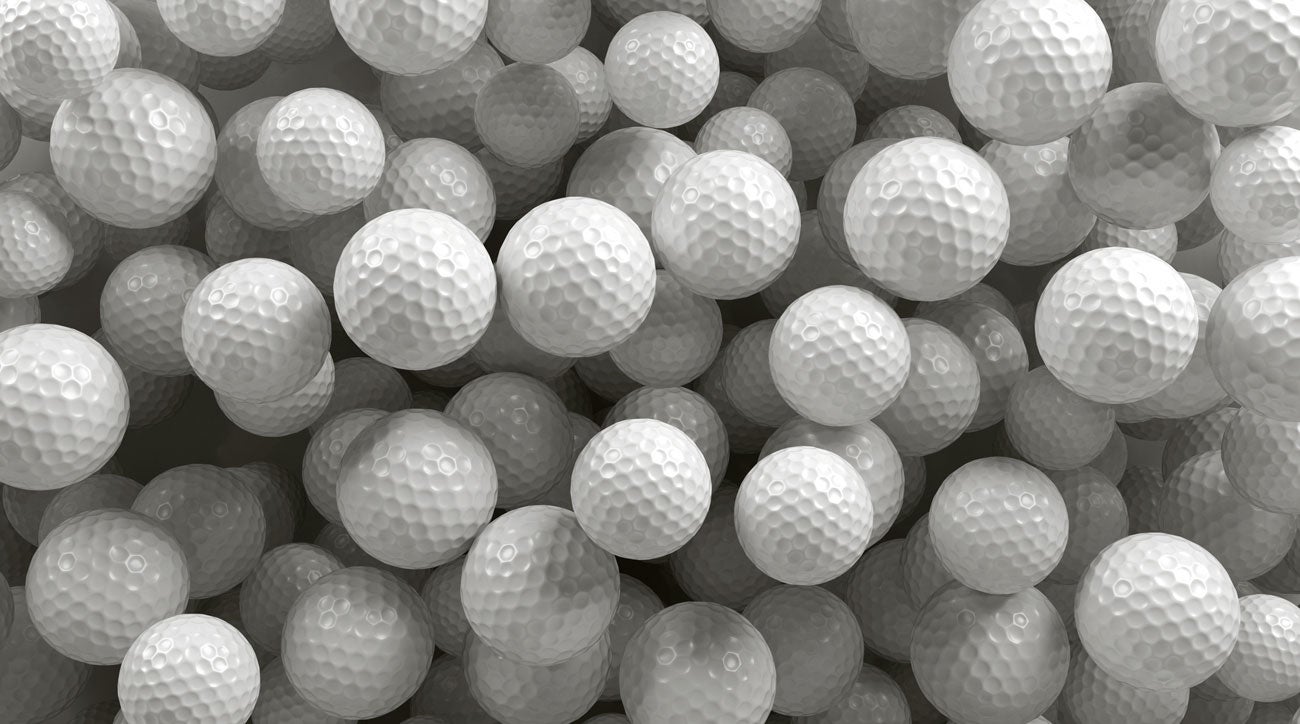
Image Source: golf.com
Why Golf Balls Have Dimples
Think about throwing a smooth ball, like a tennis ball, hard and far. It does not go very far. It falls fast. A smooth ball fights the air too much. Air holds it back. This is called drag.
Smooth balls have a big problem with air. When air flows around a smooth ball, it separates from the ball’s surface too soon. This leaves a big empty space behind the ball. This space is called a wake. This big wake pulls the ball back. It creates a lot of drag. This drag slows the ball down fast. It makes the ball drop quickly.
This is why why golf balls have dimples. Dimples change how air moves around the ball. They help the ball move through the air better. They make the ball go farther and fly straighter. This is all about aerodynamics golf ball. Aerodynamics is the study of how air moves around things.
The Purpose of the Dimples
The purpose of golf ball dimples is simple but smart. They make the air flow differently.
Around any object moving through the air, there is a thin layer of air near the surface. This is the boundary layer. On a smooth ball, this boundary layer stays smooth. It is called laminar flow. This smooth flow separates from the ball too soon. This causes that large, drag-creating wake.
Dimples do something different. They make the boundary layer messy. They make the air flow turbulent. Turbulent flow sounds bad, but here it is good. This turbulent air flow sticks to the ball’s surface longer. It follows the curve of the ball farther around the back.
When the air stays attached longer, the space behind the ball is smaller. The wake is much smaller. A smaller wake means less drag. Much less drag.
How Dimples Help Flight
Less drag is a big deal. With less drag, the ball slows down less as it flies. It can keep going faster for longer. This helps it travel much farther down the fairway.
Dimples also help the ball get lift. Lift is an upward force. It helps the ball stay in the air.
Think about a ball that is spinning backward. This happens when you hit a golf ball well. The top of the ball is spinning into the wind. The bottom is spinning away from the wind.
Dimples make this spin create lift. Air moving over the top of the spinning ball moves faster. Air moving under the ball moves slower. Faster moving air has lower pressure. Slower moving air has higher pressure. The higher pressure under the ball pushes up on the ball. This push is lift.
This lift helps the ball fly higher. It helps it stay in the air longer. This also makes the ball go farther.
So, how dimples affect flight is clear. They cut down drag. They add lift. These two things make the ball fly much, much farther than a smooth ball could.
The Number of Indentations
You might think all golf balls have the same number of dimples. But this is not true. There is no standard number of dimples set by the rules of golf.
The rules just say a golf ball must be a certain size and weight. It must also be made so it flies about the same no matter how you turn it. This means the dimple pattern is usually even all around the ball.
The average number of dimples on a golf ball is around 300 to 500. But this number can be lower or higher. Some balls have fewer than 300 dimples. Some have over 500.
Different Counts Exist
Why is there no single number? Ball makers test different designs. They find that different numbers and shapes of dimples work best for different goals.
Here are some examples of golf ball dimple count on some well-known golf balls (Note: these numbers can change with new models):
- Titleist Pro V1: Often around 352 dimples.
- Callaway Chrome Soft: Might have 332 or 348 dimples depending on the model.
- TaylorMade TP5: Often around 322 dimples.
- Bridgestone Tour B: Numbers vary by model, sometimes around 330.
- Srixon Z-Star: Often around 338 dimples.
As you can see, the number changes from one ball type to another. It even changes between different versions of the same ball. The exact golf ball dimple count is part of the ball’s design secret. Each company tries to find the best number and pattern.
The main point is that the exact number is not what matters most. What matters is how the dimples work together to make the ball fly well. The number is just one part of the design.
Observing Dimple Designs
It is not just the number of dimples that is important. The way they are placed matters too. The shape and depth of each dimple also play a big role. These things make up the dimple patterns.
Aspects of Dimple Patterns
Look closely at a golf ball. You will see the dimples are not just random holes. They are placed in a careful pattern. Here are some things that make up the pattern:
- Dimple Shape: Most dimples are round. But some balls use different shapes. You might see hexagons or other shapes. The shape affects how air flows into and out of the dimple.
- Dimple Size: Dimples are not all the same size on some balls. Some balls use a mix of large and small dimples. This mix can help control the airflow in different ways.
- Dimple Depth: How deep a dimple is also matters. A shallow dimple works differently than a deep one. Ball makers test different depths to find the best performance.
- Arrangement: The way the dimples are placed on the ball’s surface is key. Patterns are designed to cover the ball evenly. This makes sure the ball flies the same way no matter which side is facing forward. Most patterns are symmetrical.
Different dimple patterns create different flight paths. One pattern might help the ball fly higher. Another might help it bore through the wind. Ball companies design balls with specific players or shot types in mind. A dimple pattern good for a pro might not be best for a beginner.
Think of it like tire treads. Different treads work better in rain, snow, or dry conditions. Golf ball dimples are like treads for the air.
Early golf balls, made of wood or leather stuffed with feathers, had no dimples. They did not fly far. Later balls made of gutta-percha (a rubber-like material) were smooth. People noticed that balls that got beat up and had nicks flew farther. This led people to start adding marks on purpose. These marks became the first dimples. The science and design have come a long way since then.
Decoding the Science of Flight
Let us look closer at the science. This is where lift and drag golf ball concepts come in.
Dealing with Drag
Drag is the force that slows the ball down. There are a few types of drag.
One type is skin friction drag. This is air rubbing against the ball’s surface. Smooth surfaces have less skin friction drag than rough ones. So, on this point, dimples add a little drag because they make the surface rougher.
But the big problem for a smooth ball is form drag. This is drag caused by the shape of the object and the wake it leaves. This is where dimples make a huge difference.
As we said, dimples make the boundary layer turbulent. This turbulent air stays attached to the ball’s surface farther around the back. It delays the point where the air separates. This makes the wake much smaller.
Imagine pulling a boat with a big, square back end through the water. It creates a big wake and is hard to pull. Now imagine a boat with a smooth, pointed back end. It creates a small wake and is much easier to pull. Dimples make the golf ball act more like the boat with the smooth, pointed back end in terms of air flow.
Reducing this form drag is the main job of the dimples. They reduce the total drag on the ball by about half compared to a smooth ball. This lets the ball keep its speed much better.
Getting Lift
Lift is the upward force. It works against gravity. Backspin is needed for lift on a golf ball.
When a ball spins backward, the dimples on the top surface move forward relative to the air. The dimples on the bottom surface move backward relative to the air.
The forward-moving dimples on top help speed up the air flowing over the top. The backward-moving dimples on the bottom slow down the air flowing under the bottom.
Air flowing faster over the top creates lower pressure there (Bernoulli’s principle). Air flowing slower under the bottom creates higher pressure there. This difference in pressure pushes the ball up. This push is lift.
Dimples help create and use this pressure difference very well. They make the backspin much more effective at creating lift. This lift helps the ball stay airborne longer. This adds more distance.
Science in Design
Designing dimples is a mix of science and testing. Ball makers use wind tunnels. They shoot balls through the air and measure the forces on them. They use computers to model how air will flow over different dimple patterns.
They look at how different dimple patterns affect lift and drag golf ball. They try to find the pattern that gives the best balance. They want low drag and good lift. They also want the ball to fly straight.
Each ball design is a complex product of testing and science. The number of dimples is just one piece of a complex puzzle. The shape, size, and layout are just as important, if not more important.
Rules of the Game
Do the rules of golf say anything about dimples? Yes and no. The main golf rule makers are the USGA (in the United States) and the R&A (in the rest of the world).
They have rules for golf balls. These rules make sure all players are using balls that perform in a similar range. This keeps the game fair.
The rules set limits on:
- Size: A golf ball must be at least 1.68 inches across.
- Weight: A golf ball must weigh no more than 1.62 ounces.
- Shape: It must be mostly a ball shape. It must fly similarly no matter how it is oriented. This means the dimple pattern must be symmetrical.
But the rules do not say:
- How many dimples a ball must have.
- What shape the dimples must be.
- How deep the dimples must be.
This is important. It means ball companies are free to try new things with dimple design. They can use different dimple patterns and counts. This allows for new and better balls over time. The rules only care that the final product fits the size, weight, and symmetry needs.
Why the Numbers Differ
So, why does one ball have 332 dimples and another has 360? It comes down to design goals and how different patterns work with the ball’s other features.
A golf ball is made of layers. The cover, the core, and any layers in between all affect how the ball flies and feels. The dimples on the cover must work well with these inner parts.
Different dimple patterns are like tuning the ball.
- Some patterns might be designed for maximum distance for players with high swing speeds.
- Others might be made to help amateur players who do not hit the ball as hard. These might be designed to give more lift at lower speeds.
- Some patterns might affect how the ball spins. More spin helps control the ball on the green. Less spin might help reduce hooks and slices for some players.
Ball makers test many different dimple designs. They look for the one that gives the desired flight features for that specific ball model. The number of dimples is a result of this testing and design process. It is not a target number itself. It is just one feature that works with the pattern, shape, and depth to make the ball fly a certain way.
It is a mix of science, engineering, and maybe a little bit of art! Companies keep trying new things to make their balls perform better. This is why the golf ball dimple count varies so much.
Bringing it All Together
The journey of a golf ball through the air is amazing. It is a great example of physics at work. A small ball, hit hard, travels hundreds of yards. This is possible largely because of the small dents on its surface.
The idea seems simple: add dents. But the science behind it is complex. Golf ball dimples turn a poor flying object into an efficient one. They use aerodynamics golf ball principles to fight drag and create lift.
There is no single standard number of dimples. The average number of dimples is between 300 and 500. But the golf ball dimple count changes from ball to ball. This is because the purpose of golf ball dimples is not just to have dents, but to use those dents to make the ball fly right.
The number, the shape, the size, the depth – these all form the dimple patterns. These patterns are carefully designed. They determine how dimples affect flight. They control the lift and drag golf ball.
So, next time you pick up a golf ball, look closely at its surface. Each little dent is a tiny piece of engineering. It is part of the surprising truth about why a golf ball flies so well. It is not about having a specific number. It is about having the right number and the right pattern for that ball’s design. These small dents make a huge difference in the game of golf.
Frequently Asked Questions
Do more dimples make a golf ball better?
Not always. It is not just about having more dimples. It is about the right number working with the right dimple pattern, shape, and depth. A ball with fewer dimples but a good pattern might fly better than a ball with many dimples and a poor pattern. Ball makers test to find the best mix, not just the highest number.
Can dimples wear out?
Yes, the dimples on a golf ball can get damaged. Hitting trees, carts, or cart paths can scratch or dent the cover. Scratches or damage to the dimples can change how the air flows over the ball. This can make the ball not fly as well or as predictably.
Can I play with a ball that has damaged dimples?
You can, but the ball might not perform like a new one. Damage to the dimples changes the aerodynamics golf ball. This can affect distance and direction. If you are playing in a rule-bound game, a ball that is badly out of shape or cracked might not be allowed. But minor scrapes are usually okay. For best play, use a ball in good shape.
Who first thought of using dimples?
People noticed long ago that older, beat-up golf balls flew better than new, smooth ones. Makers started pressing patterns onto balls on purpose in the late 1800s and early 1900s. William Taylor of the William Gibson company is often named as one of the first to design and use a regular, scientific dimple pattern around 1908. So, it was not one single inventor, but a step-by-step finding over time.
Are all dimples round?
No, while most are round, some balls use dimples of other shapes. Hexagons are sometimes used. Different shapes can affect airflow in slightly different ways. Using mixed sizes of dimples on the same ball is also common now. This is all part of trying to make the best dimple patterns.