
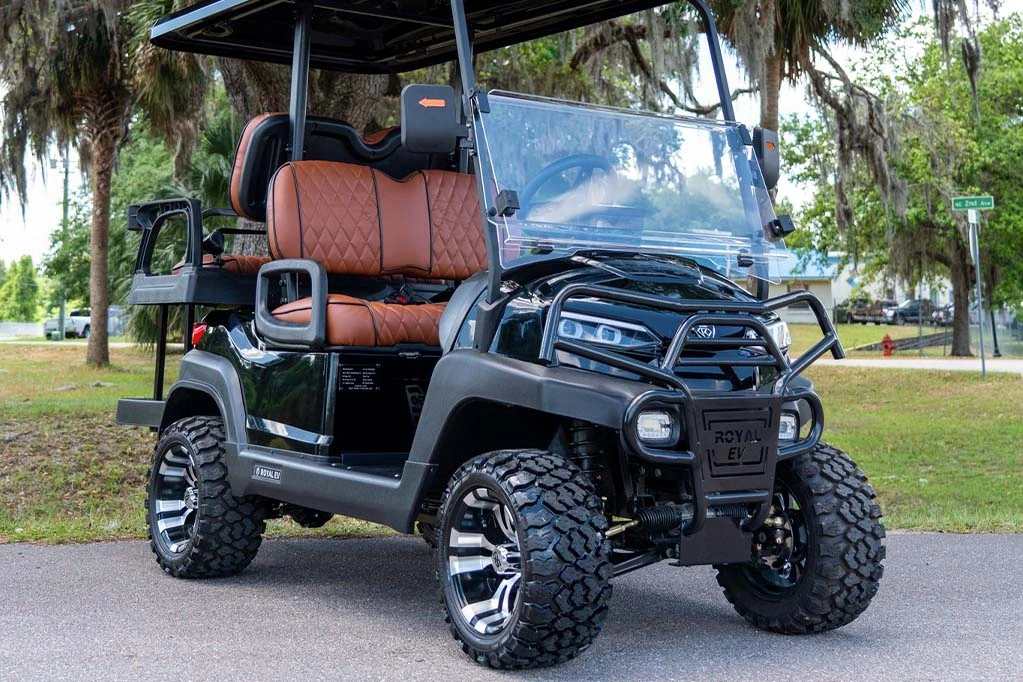
Image Source: royal-ev.com
State by State: Can A Golf Cart Be Street Legal?
Can a golf cart be street legal? Yes, a golf cart can be street legal, but whether it is allowed on public roads depends on many factors. These include federal rules, specific state laws, and even local city or county rules. The most common way a golf cart becomes street legal is by meeting federal low-speed vehicle (LSV) requirements. This means adding certain safety gear and often registering and titling the vehicle just like a car. Each state has different golf cart street legal requirements, so checking local laws is key.
Grasping the Basics: Federal vs. State Rules
When we talk about golf carts on public roads, two main sets of rules come into play: federal and state. Federal rules set a baseline for what a Low-Speed Vehicle (LSV) is. LSVs are a special class of vehicle. They are designed to go slow. They can drive on certain public roads. States then decide how they use these federal rules. They also add their own rules.
What is a Low-Speed Vehicle (LSV)?
A Low-Speed Vehicle, or LSV, is a type of vehicle. It weighs less than 3,000 pounds. It has a top speed of more than 20 mph but not over 25 mph. It is an important point to note. Most regular golf carts go about 15-20 mph. This means a standard golf cart usually does not meet the LSV speed rule. To become an LSV, a golf cart often needs changes. These changes help it go faster. They also add safety features. Many low speed vehicle regulations come from federal guidelines.
Crucial Equipment for Road Use
For a golf cart to become street legal, it must have certain safety parts. These parts make it safer for road travel. They help it follow the rules that cars must follow. Meeting these golf cart road legal equipment needs is a big step.
Essential Safety Features
Here is a list of common items needed for a street legal golf cart:
- Headlights: Must be bright enough to see at night. They need to light up the road ahead.
- Taillights: Must be red. They show the vehicle’s rear.
- Brake Lights: These turn on when you press the brake pedal. They tell drivers behind you that you are slowing down.
- Turn Signals: Both front and rear. They show which way you plan to turn.
- Reflectors: Often on the sides and rear. They make the cart easier to see, especially at night.
- Side Mirrors: One on the driver’s side. Another on the passenger’s side or one center rearview mirror. These help the driver see traffic around them.
- Windshield: A proper windshield is often needed. It must be made of safety glass. It protects the driver from wind and debris.
- Seatbelts: For all seats. They must be like car seatbelts. They keep people safe in a sudden stop or crash.
- Vehicle Identification Number (VIN): This is a unique number. It helps track the vehicle. It is like a car’s fingerprint.
- Horn: A working horn is needed. It helps warn others.
- Parking Brake: This holds the cart still when parked.
Some states may add more rules. For example, some might ask for a speed display. Others might want a warning triangle. Always check your state’s specific list.
Interpreting LSV Golf Cart Laws
LSV golf cart laws are key for road use. An LSV is not just a golf cart. It is a vehicle built or changed to meet certain rules. It can go on roads with speed limits of 35 mph or less. This speed limit is very common. Some states might have different speed limits. For example, some states allow LSVs on roads up to 45 mph. Others might limit them to 25 mph roads.
What Makes an LSV Different?
The main differences are speed and safety features. A golf cart straight from the golf course is not an LSV. It lacks the speed and safety gear. An LSV is built to handle road conditions. It must meet specific federal safety rules. These rules cover things like lights, brakes, and tires.
The Conversion Process: Making a Golf Cart Street Legal
Turning a regular golf cart into a street legal one is a project. This street legal golf cart conversion means adding all the needed safety parts. It also means making sure the cart meets speed rules. Many people buy conversion kits. These kits have the parts needed.
Steps for Conversion
- Check Your State’s Rules: Before you start, know what your state requires. This is the most important first step.
- Upgrade Speed (If Needed): If your golf cart goes less than 20 mph, you might need to make it faster. This could involve changing the motor or controller. Remember, the top speed cannot be over 25 mph for an LSV.
- Install Safety Equipment:
- Add headlights, taillights, brake lights, and turn signals.
- Install a horn.
- Put on side mirrors and a rearview mirror.
- Get a safety glass windshield.
- Install seatbelts for everyone.
- Ensure proper tires for road use.
- Get a VIN (If Not Present): Some states need a VIN for registration. If your cart does not have one, you might need to apply for a state-issued VIN.
- Get an Inspection: After changes, your cart will need an inspection. A state official or certified mechanic will check it. They make sure it meets all the rules.
- Apply for Title and Registration: If it passes, you can then apply for a title and registration.
This process can be complex. It is often best to have a professional help with some parts. Especially if you are not familiar with vehicle mechanics.
Navigating Golf Cart Registration Laws
Once your golf cart meets the safety and speed rules, you need to register it. Golf cart registration laws are like car registration laws. They vary by state. This step is key for legal road use.
General Steps for Registration
- Gather Documents: You will need proof of ownership. This might be a bill of sale. You might also need the manufacturer’s certificate of origin. If you converted it, you will need proof of inspection.
- Visit the DMV (or equivalent agency): Go to your state’s motor vehicle department.
- Fill Out Forms: Complete all needed forms for vehicle registration.
- Pay Fees: There will be fees for titling and registration.
- Receive License Plate: Your golf cart will get a license plate. It will also get a registration sticker. This plate must be displayed on the back of the cart.
Some states might not require a full registration for certain golf carts. This is true if they are only used in gated communities. Or on roads with very low speed limits. But for true street legal use, registration is almost always needed.
Scrutinizing Golf Cart Titling Requirements
Golf cart titling requirements go hand-in-hand with registration. A title proves who owns the vehicle. It is like a deed for a house. Not all states title golf carts. But most states title LSVs.
The Importance of a Title
- Proof of Ownership: A title shows you are the legal owner. This is vital if you sell the cart. Or if it is stolen.
- Registration Prerequisite: Many states need a title before you can register the vehicle.
- Insurance: Insurance companies often need a title to provide full coverage.
If your golf cart was never titled, you might need to apply for an initial title. This often needs a bill of sale and an inspection.
Securing Street Legal Golf Cart Insurance
Just like a car, a street legal golf cart needs insurance. Street legal golf cart insurance protects you. It protects others if there is an accident. Most states require minimum liability insurance for any vehicle on public roads.
Types of Coverage
- Liability Coverage: This is the most basic type. It pays for damages and injuries you cause to others.
- Collision Coverage: This pays for damage to your golf cart if it hits another vehicle or object.
- Comprehensive Coverage: This pays for damage to your golf cart from non-collision events. Examples include theft, fire, or vandalism.
- Uninsured/Underinsured Motorist: This covers you if an at-fault driver does not have enough insurance.
Many car insurance companies also offer golf cart policies. It is smart to compare quotes. Make sure your policy covers use on public roads. A standard homeowner’s policy might cover a golf cart on your property. But it usually does not cover road use.
Mastering Golf Cart Public Road Rules
Once your golf cart is street legal, it must follow golf cart public road rules. These rules are very much like car rules. You must obey speed limits. You must stop at stop signs. You must yield to pedestrians.
Key Road Rules
- Driver’s License: The driver must hold a valid driver’s license. This is almost always a requirement. A learner’s permit is usually not enough.
- Roads Allowed: LSVs can typically drive on roads with a speed limit of 35 mph or less. Some states or cities might allow them on 45 mph roads. Others might restrict them to 25 mph roads. Always check local signs.
- Lane Usage: Golf carts often must drive on the far right side of the road. Or in a bike lane if allowed.
- Passing: Do not pass in no-passing zones.
- Impaired Driving: It is illegal to drive a golf cart while drunk or under the influence. This is true for any vehicle.
- Child Seats: Child passenger safety laws apply. Children must be in proper car seats or boosters.
- Passengers: Do not carry more passengers than there are seats and seatbelts. People should not ride on laps or outside the cart.
- Crossing Major Roads: Some states allow golf carts to cross major roads. But they might not allow long drives on them.
Ignoring these rules can lead to tickets. It can also cause accidents. Always drive safely and responsibly.
Speed Limits for Street Legal Golf Carts
The golf cart speed limits street legal rules are important. For an LSV, the top speed is federally capped at 25 mph. This means the cart cannot go faster than this. It must be built to stay within this range.
Road Speed Limits
Even if your cart can go 25 mph, you might not be able to drive it on all roads. Most states limit LSV use to roads with posted speed limits of 35 mph or less. This is because faster roads pose a safety risk for slower vehicles. Some cities or towns may have even tighter rules. They might limit golf carts to roads with 25 mph limits only. Or they might restrict them to certain streets.
Always look for signs. These signs tell you the speed limit of the road. They might also tell you if golf carts are allowed.
State-by-State: A Look at Diverse Rules
The way states handle golf carts varies greatly. Some states are very golf cart friendly. Others are much stricter. This section gives a general idea of how different states approach the topic. It is vital to check your specific state’s Department of Motor Vehicles (DMV) website. Also check your local city or county rules.
Key Differences Across States
- LSV Adoption: Most states recognize the federal LSV definition. But some states have their own terms. They might call them “Neighborhood Electric Vehicles” (NEVs).
- Road Access: Some states allow LSVs on most roads under 35 mph. Others limit them to specific golf cart paths or gated communities.
- Driver’s License Requirement: Almost all states require a valid driver’s license.
- Titling and Registration: While common for LSVs, some states might be less strict for basic golf carts used in specific areas.
- Local Ordinances: Many towns and cities have specific rules. They might allow golf carts on certain streets. They might ban them on others. For example, coastal towns or retirement communities often have very permissive golf cart laws.
Here is a simplified look at how some states approach golf cart legality:
| State Example | General Approach to Golf Carts / LSVs | Key Features |
|---|---|---|
| Florida | Very golf cart friendly. | Recognizes LSVs. Many communities allow golf carts on public roads up to 35 mph. Specific “golf cart zones” are common. Drivers need a valid license. |
| Arizona | Moderate to friendly. | Allows LSVs (NEVs) on roads up to 35 mph. Requires title, registration, and insurance. Many retirement communities rely on them. |
| California | Specific rules for LSVs. | LSVs must meet federal standards. They can drive on roads up to 35 mph. Requires driver’s license, registration, and insurance. Local laws can be very strict or permissive. |
| Georgia | Generally permissive. | Allows LSVs on roads up to 35 mph. Known for golf cart friendly cities like Peachtree City, which has extensive golf cart paths. Requires driver’s license, registration, and insurance. |
| Texas | Varies by local jurisdiction. | State law allows local authorities to regulate golf carts on public roads. LSVs are recognized. Requires driver’s license, title, registration, and insurance. |
| New York | More restrictive. | LSVs (NEVs) are allowed. They need to meet federal safety rules. Can only drive on roads up to 35 mph. Generally, golf carts are not allowed on roads unless they are LSVs. |
| Michigan | Focus on local control. | State law lets local governments decide on golf cart use. Many local ordinances allow them on roads under 25 mph. Some places need permits. |
This table shows how much rules can change. It is not an exhaustive list for each state. Each state has its own unique rules. It’s important to dig deeper for your specific location.
Case Study: Peachtree City, Georgia
Peachtree City, Georgia, is famous for its golf cart use. It has over 90 miles of golf cart paths. These paths connect homes, schools, and stores. Golf carts are a primary way to get around. Here, golf carts (even non-LSV types) are widely used. They are treated almost like cars on their dedicated paths. But even here, rules apply. Drivers need a license. Carts need certain lights. This shows how local laws can create a unique environment for golf carts.
Case Study: Coastal Towns in Florida
Many Florida coastal towns allow golf carts on specific roads. These are often roads with lower speed limits. This helps with traffic. It also lets people enjoy the beach easily. These towns often have clear signs. They tell you where golf carts can and cannot go. They also have rules about lighting and drivers’ ages.
Tips for Golf Cart Owners
If you own a golf cart or plan to buy one, here are some helpful tips:
- Check Local Laws First: Before anything else, find out your state and local rules. These rules can change. Always use official sources.
- Consider an LSV: If you want to use your golf cart on public roads, an LSV is usually the best way to go. It offers the most legal road access.
- Budget for Conversion: Converting a golf cart to an LSV costs money. Plan for the parts, labor, and possible inspection fees.
- Get Proper Insurance: Do not drive without street legal insurance. It protects you financially.
- Drive Safely: Even if legal, golf carts are smaller and slower than cars. Drive carefully. Be aware of other traffic. Follow all road rules.
- Maintain Your Cart: Keep your golf cart in good working order. This includes checking lights, brakes, and tires regularly.
Conclusion
So, can a golf cart be street legal? The answer is a clear “yes,” but it comes with a lot of “ifs.” It hinges on meeting federal LSV rules. It also relies on following specific state and local laws. These laws cover everything from safety equipment to registration and insurance. The rules for golf cart street legal requirements are not the same everywhere. What is okay in one state might be illegal in another. Even within a state, rules can change from town to town. For any golf cart owner wanting to hit the open road, doing your homework is the most crucial step. Always confirm the rules for your specific area. Drive safely, and enjoy your street legal ride!
Frequently Asked Questions (FAQ)
Q1: What is the main difference between a regular golf cart and an LSV?
A: A regular golf cart is made for golf courses. Its top speed is usually 15-20 mph. An LSV (Low-Speed Vehicle) is a specific type of vehicle. It must go faster than 20 mph but not over 25 mph. It also needs many safety features like headlights, taillights, turn signals, seatbelts, and a VIN. These features make it road legal.
Q2: Do I need a driver’s license to drive a street legal golf cart?
A: Yes, in almost all states, you need a valid driver’s license to operate a street legal golf cart (LSV) on public roads. It is treated like any other motor vehicle.
Q3: Can I drive a street legal golf cart on a highway?
A: No, generally, street legal golf carts (LSVs) are not allowed on highways or roads with speed limits above 35 mph. Some specific state or local laws might allow them on roads up to 45 mph, but this is rare. Always check local road signs and rules.
Q4: How do I get my golf cart titled and registered?
A: You will usually need to visit your state’s Department of Motor Vehicles (DMV) or equivalent agency. You will need proof of ownership (bill of sale), a manufacturer’s certificate of origin, and an inspection report showing it meets LSV standards. You will fill out forms and pay fees. Your cart will then get a license plate and a title.
Q5: Is insurance required for a street legal golf cart?
A: Yes, most states require liability insurance for street legal golf carts (LSVs) on public roads. This is like car insurance. It protects you if you cause an accident. It is always wise to have full coverage.
Q6: What if my city or town has different rules than the state?
A: Local city and county ordinances can add to or change state laws regarding golf cart use. Always check both state laws and your specific local laws. If there is a conflict, the stricter rule usually applies. You must follow the rules for your exact location.