
Do you want to sink more putts? Learning to read a golf green is key. How to see golf putt line? You see the putt line by studying the green’s slopes, bumps, and grass direction. This guide will show you how. We will cover all you need to know. You will learn to read greens like a pro. This will help you get more putts in the hole.
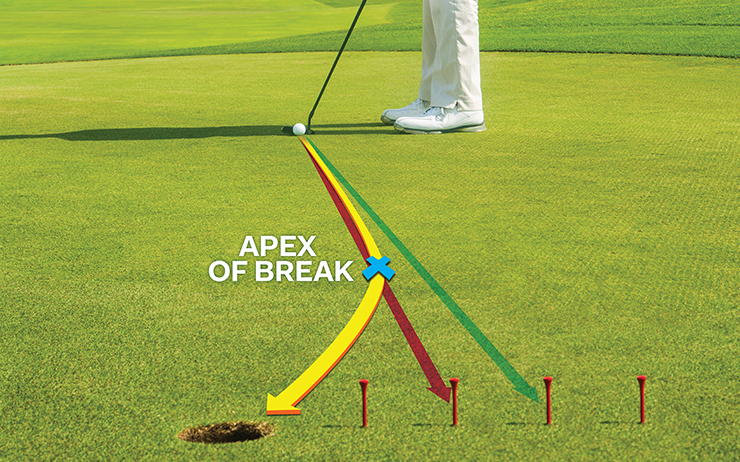
Image Source: golfdigestme.com
The Basics of Green Reading
Reading a golf green is a skill. It helps you guess where the ball will roll. The green is rarely flat. It has ups and downs. It tilts in ways you may not see at first. A good read means knowing these slopes. It means knowing how they will change your putt.
Why Green Reading Matters
Think about a long putt. The ball goes straight. Then, it turns. It goes right or left. This turn is called “break.” Break makes putts hard. If you know the break, you can aim right. You can hit the ball with the right speed. This helps you get closer to the hole. Often, it helps you sink the putt.
Key Elements of Green Reading
Many things make a putt break. You need to look at them all.
Here are the main parts:
- Slope: How much the green tilts.
- Contour: The hills and valleys on the green.
- Grain: The way the grass grows.
- Speed: How fast the green rolls.
All these parts work together. They tell your ball where to go. Learning them helps you get better.
Grasping Green Slopes
The slope of a green is the biggest factor. It pulls your ball. It makes the ball curve. A ball always rolls downhill. Even a slight slope can make a putt miss. You need to find the low point. Then, you can plan your shot. This helps you with golf green slope analysis.
Walk the Green
Your first step is to walk. Walk around your ball. Walk to the hole. Feel the ground. Is it higher on one side? Does it drop suddenly?
Walk these paths:
- From behind the ball: Look towards the hole.
- From behind the hole: Look back at your ball.
- From both sides of the putt: Look across the line.
This helps you see the whole picture. It shows you the ups and downs.
Use Your Feet
Your feet are good tools. They feel the slope. When you stand on a slope, you feel uneven. One foot might be higher. One foot might be lower. This tells you the direction of the slope. Try to feel this feeling. Remember it. It will help you read greens better.
Trust Your Eyes
Your eyes are important. Look at the green. Look for shadows. Shadows can show bumps. They can show dips. A bright green patch might be high. A dark patch might be low. The color of the grass can tell you things. It tells you about the slope. It tells you about the grain.
The Ball Roll Test
This test is simple. It helps you see the slope. Find a flat spot nearby. Drop your ball there. Watch where it rolls. If it rolls, the ground is not flat. It shows you the downhill direction. This can give you a clue. This helps you see the true slope. Do this if you are not sure.
Putting Green Break Estimation
Putting green break estimation means guessing how much the ball will curve. It’s not just about slope. It’s about speed and how far the ball rolls. The longer the putt, the more time the ball has to break. The faster the green, the more it breaks.
How Break Happens
Gravity pulls the ball down. If the ground tilts, gravity pulls the ball sideways. This makes the ball curve. It moves away from a straight line. You need to aim “uphill” or “against the slope.” This makes the ball start higher. Then it curves down to the hole.
Factors Affecting Break
Several things affect break.
Here they are:
- Slope amount: A steeper slope means more break.
- Putt speed: A slower putt breaks more. It has more time to curve.
- Putt length: Longer putts have more time to break.
- Green speed: Faster greens mean more break.
Think about all these things. They will help you guess the break.
Reading the High Side
Always look from the high side of the hole. This is the side where the ground slopes down. This view helps you see the slope best. It helps you see how much the putt will curve. The high side gives you the best view. It is where you should stand to read the putt.
The Plumb Bob Method
The plumb bob is a classic method. It uses your putter. Hold your putter up. Let it hang straight down. Close one eye. Line up your putter with the hole. The putter will appear to lean. It leans towards the low side. This shows you the break.
Steps for Plumb Bobbing:
- Stand behind your ball.
- Hold your putter lightly.
- Let it hang straight down.
- Close one eye (usually your dominant eye).
- Line up the shaft with the hole.
- Look at the green behind the shaft.
- If the hole seems to the left of the shaft, the green slopes left.
- If the hole seems to the right, the green slopes right.
This method takes practice. It works best on simple slopes.
Interpreting Green Contours and Undulations
Greens are not just simple slopes. They have hills and valleys. These are called contours and undulations. Understanding green contours means seeing these shapes. Reading green undulations means knowing how they change the ball’s path. These bumps and dips add to the break.
Spotting High and Low Spots
Look for rises and falls.
* High spots: These are like little hills. The ball will roll away from them.
* Low spots: These are like little valleys. The ball will roll into them.
These spots can make a putt break twice. It might break one way. Then it breaks the other way. This is called a “double break.”
False Flats
Sometimes a part of the green looks flat. But it is not. This is a “false flat.” It seems flat from far away. When you get closer, you see a small slope. Always check up close. Walk the green. Feel the slope with your feet. This helps find false flats. They can fool your eyes.
Double Breaks
A double break is tricky. The ball moves one way. Then it moves another way. This happens when the green changes slope. It might slope right, then left. You need to find the “turning point.” This is where the slope changes. Aim your ball to pass this point correctly. The break after this point is often the most important.
Mastering Green Reading Techniques
Many green reading techniques golf pros use. These methods help you find the right line. They help you guess the right speed. Using a mix of techniques is best. They give you a full picture.
Reading from All Sides
Do not just look from behind your ball. Look from every angle.
* From your ball: See the overall path.
* From the hole: Look back at your ball. This helps you see the final break.
* From the side: Stand next to the hole. Look across the green. This shows the side slopes.
The more angles you see, the better your read.
Low Point Method
This method is simple. Find the lowest point between your ball and the hole. The ball will always roll towards this low point. If the low point is to the right of your line, the ball will break right. If it’s to the left, it breaks left. This helps you see the main break. It is a quick way to find the biggest slope.
The Digital Approach
Some golfers use apps. These apps map the green. They show exact slopes. They use special tools. These are often used by pros. They are very accurate. They give you a heat map of the green. Red areas are high. Blue areas are low. This tells you the slope. But many golf rules do not allow these in play. Check the rules before you use them.
Golf Putt Break Secrets
Here are some pro secrets.
* Speed is king: Most pros say speed matters more than line. If your speed is wrong, the ball will not hold its line. A putt hit too hard will break less. A putt hit too soft will break more.
* Always aim high: When in doubt, aim a little higher. This is true on breaking putts. The ball is more likely to fall into the hole. If you aim too low, it will miss.
* Practice breaking putts: Don’t just practice straight putts. Practice putts that break. This builds your feel. It makes you better at reading the break.
* Look for the high side: As mentioned before, always check the high side of the hole. This helps you see the actual break.
The Aim Point Putting System
The Aim point putting system is a popular method. Many pros use it. It is a very exact way to read a putt. It uses your fingers to measure the break. It helps you find the precise spot to aim.
What is AimPoint?
AimPoint Express is a system. It lets you measure the break. You stand on the green. You hold up your fingers. You line them up with the hole. Your fingers show you how many inches of break there will be. It gives you an exact spot to aim.
How it Works
- Feel the slope: Stand halfway between your ball and the hole. Close your eyes. Feel the slope with your feet. Guess the percentage of slope.
- Hold up fingers: Extend your arm. Hold up 1, 2, or 3 fingers. This depends on the slope you felt.
- Find the aim point: Line up your fingers with the hole. Your fingers cover a spot on the green. This spot is your aim point.
- Put the ball: Hit the ball towards this aim point.
AimPoint needs practice. You need to learn the system well. It is a good tool for specific reads.
Why it Helps
AimPoint takes out guesswork. It gives you a clear target. It helps you trust your read. This builds confidence. It helps you hit the ball with the right speed. It makes putting more like a science.
The Influence of Green Grain
The grain of golf greens is important. Grain is the direction the grass grows. Grass does not grow straight up. It often leans one way. This lean affects your putt.
What is Grain?
Imagine brushing hair. It lies flat in one direction. Grass on a green is like that. It grows towards the sun. It grows towards water. It grows towards the lowest point of the green. This lean is the grain.
How to Spot Grain
You can spot grain in a few ways:
* Color: Grass growing with the grain looks shiny. It looks lighter green. Grass growing against the grain looks dull. It looks darker green.
* Footprints: Look at shoe prints. If the grass is pushed down easily, you are going against the grain. If it stands up, you are with the grain.
* Hole cup: Look closely at the edge of the hole. If the grass around the edge is ragged, you are looking against the grain. If it is smooth, you are looking with the grain.
* Water: If the green is wet, water flows with the grain.
Grain’s Effect on Putts
- Putting with the grain: The ball rolls faster. It means less break.
- Putting against the grain: The ball rolls slower. It means more break.
- Putting across the grain: The ball can be pushed off line. It adds break.
Always check the grain. It can change your putt a lot. It can make a putt much faster or slower. It can add an extra push to the side.
Visualizing Golf Putts
Once you read the green, you need to hit the putt. Visualizing golf putts means seeing the ball roll into the hole. This mental image helps you hit the putt. It builds confidence.
Picture Your Putt
Before you hit, close your eyes. See the ball leave your putter. See it roll over the breaks. See it slow down. See it drop into the hole. This helps your mind prepare. It tells your body what to do. It makes the putt feel easier.
Practice Swings
Take a few practice swings. Make them match the length of your putt. If it is a long putt, take a long swing. If it is short, take a short swing. Feel the weight of the putter. Feel the rhythm. These swings help you find the right speed. They help you get the feel of the putt.
Confidence is Key
Believe in your read. Trust your stroke. Do not second-guess yourself. If you hesitate, you might miss. A confident stroke is a good stroke. Even if you miss, you learn. Learn from each putt. This makes you better next time.
Putting It All Together: A Step-by-Step Approach
Here is a full plan for reading a green. Use these steps every time you putt.
- Walk the path: Walk from your ball to the hole. Feel the slope with your feet. Look from behind the ball. Look from behind the hole. Look from the sides.
- Find the high side: Stand on the high side of the hole. This is the best spot to see the overall slope.
- Use your eyes: Look for dark and light patches. Look for shadows. Check the fringe for signs of slope.
- Check the grain: Look at the grass around the hole. See if it’s shiny or dull. This tells you the grain direction.
- Identify contours: Look for bumps and dips. Plan for double breaks.
- Estimate speed: Think about how fast the green is. Will the ball roll fast or slow?
- Choose your line: Based on all this, pick where you will aim. Aim high if it breaks.
- Visualize the putt: See the ball roll into the hole. Take practice swings.
- Commit and stroke: Trust your read. Hit the ball with confidence.
Follow these steps. You will get better at reading greens. You will sink more putts.
Common Green Reading Mistakes
Even pros make mistakes. Learn to avoid these common errors.
- Reading only from one side: This gives you only half the picture. Always walk all around the putt.
- Not feeling the slope: Your feet are good tools. Use them. Do not just rely on your eyes.
- Underestimating break: Most people do not aim high enough. The ball breaks more than you think.
- Ignoring grain: Grain can add or take away speed. It can push the ball. It is important.
- Hitting too hard: A putt hit too hard will not take the break. It will go straight.
- Ignoring speed: Speed is critical. The best read means nothing if your speed is off.
Advanced Tips for Expert Green Reading
Ready for more tips? These help you become a true expert.
- Use your caddie: If you have a caddie, ask for their read. Compare it to yours. Learn from them.
- Learn the course: Each golf course has its own green style. Some greens slope to the water. Some slope to the clubhouse. Learn these patterns.
- Check the weather: Wind can affect putts. Rain makes greens slower. Sun can dry them out.
- Observe other putts: Watch other players putt. See how their balls break. Learn from their misses and makes.
- Practice in different conditions: Practice putting on fast greens. Practice on slow greens. Practice on hilly greens. This makes you ready for anything.
Frequently Asked Questions
How long does it take to get good at reading greens?
It takes time and practice. Some people pick it up fast. Others need more time. The more you play, the better you will get. Focus on one or two things at a time. It can take months or even years to master. But you will see progress quickly.
Can I use a level to read greens?
No, golf rules do not allow this during play. You cannot use any device that measures slope. This includes apps or special tools. You must use your eyes, feet, and feel. Practice helps you get better at using these natural tools.
Does green speed affect how I read the green?
Yes, absolutely. Green speed changes everything. On fast greens, the ball breaks much more. You need to aim higher. On slow greens, the ball breaks less. You need to hit it harder. Always ask about green speed before you play. It helps you prepare.
Is it always best to putt uphill?
Often, yes. Putting uphill makes the ball roll slower. It holds its line better. It is easier to control speed. A downhill putt can get away from you. It can roll past the hole quickly. If you have a choice, aim for an uphill putt.
What if I can’t agree with my caddie on the read?
This happens. Your caddie offers advice. The final choice is yours. Trust your own read. If you trust your caddie more, go with their read. It is about confidence. Take what you learn. Make your own decision. It will help you learn for next time.