
A golf handicap helps players of all skill levels play together fairly. It is a number that shows how good a golfer is. It also lets golfers get extra strokes on the course to make games fair. To score your handicap in golf, you first play golf rounds and turn in your scores. A special system, called the World Handicap System (WHS), then uses these scores to give you a handicap. Yes, you can get a handicap easily by joining a golf club or an online golf body. They will guide you through the process.
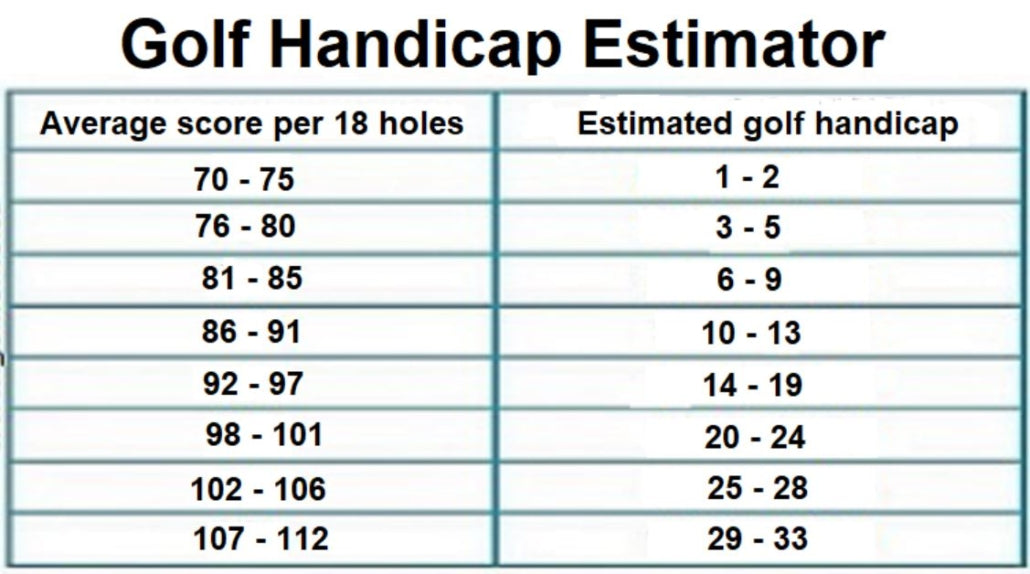
Image Source: www.carvergolf.co.uk
The Global Golf System: World Handicap System (WHS)
Golf is a sport played all over the world. Before 2020, different parts of the world used their own ways to figure out handicaps. This made it hard for golfers to play fairly when they traveled. Imagine playing in the US with one system and then in Europe with another! It was confusing.
To fix this, golf’s main groups worked together. They created one, easy-to-use system: the World Handicap System (WHS). This system started in 2020. It makes golf fairer for everyone, everywhere.
What the WHS Handicap Index Is
The WHS handicap index is your main handicap number. It is a single number. This number tells you your skill level. It helps you play fairly against anyone. It is not tied to one course. It is like your golf ID.
Your Handicap Index changes. It goes up if you play worse. It goes down if you play better. This ensures it always shows your true skill. The WHS makes sure your Handicap Index is always fresh and fair.
Getting Your First Golf Handicap
Getting a golf handicap is a smart step for any golfer. It lets you track your progress. It also lets you join fun, fair games. Here is how you can start:
Steps to Begin
- Join a Golf Club or Group: The first step is to be part of a golf club or a golf body. These groups are approved to give you a handicap. They help you meet the rules. You cannot just give yourself a handicap. It must come from an official source.
- Learn the Rules: Take some time to learn basic golf rules. This includes how to score properly. It also includes how to play by the rules of the game.
- Play Golf Rounds: You need to play golf. The WHS needs scores from your rounds. The more scores you have, the better. It helps the system see your true skill.
How to Submit Golf Scores for Handicap
This is a very important step. You must submit golf scores for handicap. Here is how it works:
- Record Every Score: After each round, write down your score. You need to record your gross score. This is the total number of strokes you took.
- Play 18 Holes: Most times, you play 18 holes. You can also play 9 holes. If you play 9 holes, the system will combine two 9-hole scores. It will make them into one 18-hole score.
- Where to Submit: Your golf club or golf group will tell you how to send in scores. Most times, you use an app or a website. You just type in your score.
- Be Honest: Always submit your real score. Do not cheat. An honest handicap makes the game fair for everyone.
- Check Your Handicap: After you submit scores, your handicap will update. You can check it on the app or website.
You need to submit at least 54 holes (three 18-hole rounds or six 9-hole rounds) to get a first handicap. To have a very good, strong handicap, you need more scores. The WHS uses your best 8 scores from your last 20 rounds.
The Golf Handicap Calculation Process
Now, let’s look at the math behind your handicap. It may seem complex. But it is simple when you break it down.
Grasping Golf Handicap Calculation
Your golf handicap calculation starts with each score you submit. For each round, the WHS figures out a “Handicap Differential.” This differential tells you how good your round was. It compares your score to the difficulty of the course.
Handicap Differential Calculation
The handicap differential calculation is the first key step. Here is the formula:
Handicap Differential = (Adjusted Gross Score – Course Rating – Playing Conditions Calculation adjustment) × (113 / Slope Rating)
Let’s break down each part:
- Adjusted Gross Score: This is your score after some small changes. We will talk about this more in the next section.
- Course Rating: This number tells you how hard a course is for a scratch golfer. A scratch golfer is a very skilled player. They usually shoot par or better. The higher the number, the harder the course.
- Slope Rating: This number tells you how hard a course is for a bogey golfer. A bogey golfer is a less skilled player. They usually shoot one over par on most holes. The higher the number, the harder the course is for average players. Slope ratings are from 55 to 155. A course with a slope of 113 is considered standard.
- Playing Conditions Calculation (PCC): This is a small adjustment. It helps if the weather was very bad. Or if the course was set up in a very hard way. This makes sure your score is fair. The WHS does this part automatically.
- 113: This is the standard Slope Rating. It helps make sure all courses are compared fairly.
Example:
Imagine you shot an 85.
Course Rating = 72.0
Slope Rating = 130
PCC adjustment = 0 (for simplicity)
Differential = (85 – 72.0 – 0) × (113 / 130)
Differential = 13 × 0.869
Differential = 11.3
You do this calculation for every score you submit.
Adjusting Golf Scores: Net Score vs Gross Score Golf
When you submit scores for your handicap, they are not always your raw, hole-by-hole scores. The WHS has rules for adjusting golf scores. This makes sure a few bad holes do not ruin your whole handicap. This is called Net Double Bogey.
- Gross Score: This is the total number of strokes you take on a hole or for a round. If you hit the ball 5 times on a par-4 hole, your gross score is 5.
- Net Score: This is your gross score minus any handicap strokes you get on that hole. We will talk about this more later. For handicap calculation, we use an adjusted gross score.
Net Double Bogey (NDB):
This rule stops one very bad hole from making your whole handicap look too high. For handicap purposes, your maximum score on any hole is a net double bogey.
Here is how it works:
1. Find the par of the hole (e.g., Par 4).
2. Add two strokes to it (Par 4 + 2 strokes = 6). This is a double bogey.
3. Add any handicap strokes you get on that hole. These strokes come from your Playing Handicap (more on this soon).
Example:
You play a Par 4 hole.
Your Playing Handicap tells you to get 1 stroke on this hole.
So, your Net Double Bogey for this hole is: Par (4) + 2 + 1 (handicap stroke) = 7.
If you took 8 strokes on that hole, you would only record 7 for handicap purposes.
If you took 6 strokes, you record 6.
This makes the game fairer. It stops one bad shot from throwing off your whole handicap.
Deciphering the Course Handicap Formula
Your Handicap Index is just a number. It is not what you use on the course. You use your Course Handicap. The course handicap formula changes your Handicap Index into a number you use for a specific course and set of tees.
Course Handicap = Handicap Index × (Slope Rating / 113) + (Course Rating – Par)
Let’s look at each part:
- Handicap Index: This is your main handicap number. We just talked about it.
- Slope Rating: This is the difficulty of the tees you are playing from.
- 113: This is the standard Slope Rating.
- Course Rating: This is how hard the course is for a scratch golfer.
- Par: This is the expected number of strokes for a scratch golfer on that course.
Example:
Your Handicap Index = 15.0
You play from tees with a Slope Rating = 125
Course Rating = 71.0
Par = 72
Course Handicap = 15.0 × (125 / 113) + (71.0 – 72)
Course Handicap = 15.0 × 1.106 + (-1.0)
Course Handicap = 16.59 – 1.0
Course Handicap = 15.59
You usually round this to the nearest whole number. So, your Course Handicap would be 16.
Grasping Playing Handicap Definition
The playing handicap definition is simple. It is the number of strokes you get for a specific game or event. It is usually your Course Handicap, but it might be changed a bit. This change is called a “handicap allowance.”
A handicap allowance makes sure all players have an equal chance. For example, in a match play game (where you play against one other person), you might use 100% of your Course Handicap. But in a four-ball game (two teams of two playing their best ball), you might only use 90%.
The goal is to make all forms of golf fair. The playing handicap is the number you actually use during your round. It tells you how many strokes you get.
Example:
Your Course Handicap is 16.
You are playing in a stroke play game. Many golfers play for the lowest score.
The club says to use 100% of your Course Handicap.
Your Playing Handicap is 16.
This means you get 16 strokes off your gross score. If you shot 90, your net score would be 90 – 16 = 74.
Handicap Stroke Allocation
Once you have your Playing Handicap, you need to know where to use your strokes. This is called handicap stroke allocation. Most golf courses have a “stroke index” on their scorecards.
The stroke index ranks each hole from hardest to easiest.
* Hole 1 is the hardest hole. You get your first handicap stroke on this hole.
* Hole 18 is the easiest hole. You get your last handicap stroke on this hole.
How it works:
If your Playing Handicap is 16:
* You get one stroke on each of the 16 hardest holes. These are the holes marked 1 through 16 on the stroke index.
* If you play a Par 4 hole with a stroke index of 5, you get one stroke on it. If you make a 5, your net score for that hole is 4.
* If you play a Par 3 hole with a stroke index of 17, you do not get a stroke. If you make a 4, your net score for that hole is 4.
If your Playing Handicap is higher than 18:
* Say your Playing Handicap is 20.
* You get one stroke on each of the 18 holes.
* Then you get an extra stroke on the two hardest holes (stroke index 1 and 2).
* So, on the hardest hole (stroke index 1), you would get two strokes.
This system makes sure handicaps are used fairly across the whole course. It helps players compete hole-by-hole.
Keeping Your Handicap Fresh
Your handicap is not a set number. It changes. It needs to reflect your current skill.
Play Often
The more you play, the better. The WHS looks at your last 20 scores. It picks the 8 best ones to figure out your Handicap Index. If you do not play much, your handicap might not be as good a picture of your skill.
Submit All Scores
It is very important to submit scores from all your rounds. Even if you play badly, you should submit your score. The system is designed to handle bad rounds. It will not hurt your handicap as much as you think. Only submitting good scores is not honest. It also makes your handicap less useful for fair play.
What About Bad Rounds?
The WHS has ways to deal with bad rounds:
- Net Double Bogey: As we talked about, very high scores on one hole are cut down.
- Cap Rules: There are “Soft Cap” and “Hard Cap” rules. These stop your Handicap Index from going up too fast. It means your handicap will not jump up by too much if you have a few very bad rounds. It keeps your handicap stable.
- Memory of Good Scores: Your WHS Handicap Index keeps an eye on your past good scores. If you used to play well, but have a few bad rounds, your handicap will not go too high. It remembers your potential.
Golf Handicap Rules Explained
The WHS has clear rules. These golf handicap rules explained help everyone play fair.
Net Double Bogey: A Closer Look
We touched on this before. But it is very important. For handicap use, you cannot score more than a Net Double Bogey on any hole.
- Par 3 hole, you get 0 strokes: Max score is 3 + 2 = 5.
- Par 4 hole, you get 1 stroke: Max score is 4 + 2 + 1 = 7.
- Par 5 hole, you get 2 strokes: Max score is 5 + 2 + 2 = 9.
This rule makes sure one very bad hole does not make your whole round score too high. It is like a safety net.
Maximum Handicap
The highest Handicap Index you can have is 54.0. This means that new players or those who are just starting can still get a handicap. It helps everyone enjoy the game. It also helps them play fairly with others.
Handicap Revisions and Updates
Your Handicap Index updates daily. This happens when you submit a score. The system looks at your new score. It then re-calculates your best 8 scores from your last 20. This means your handicap is always fresh. It shows your current skill.
Also, there are yearly checks. This makes sure the system is working well. It helps make sure everyone’s handicap is fair.
Benefits of Having a Golf Handicap
Having a handicap is not just about a number. It makes golf more fun and fair.
Fair Competition
This is the main benefit. A handicap lets you play fairly with anyone. It does not matter if they are much better or much worse than you. The handicap levels the field. A player with a handicap of 20 can beat a scratch golfer on a net score. This makes every game exciting.
Tracking Progress
Your handicap is a great way to see how you are doing.
* If your handicap goes down, you are getting better!
* If it goes up, you might need to practice more.
It gives you a goal. It helps you work on your game.
Access to Events
Many golf clubs and groups hold tournaments. To play in these events, you often need an official handicap. It lets you join in fun, social games. It also lets you play in more serious competitions. A handicap opens up more golf chances.
Practical Examples of Handicap Calculations
Let’s put all this together with some simple examples.
Example 1: Submitting Scores and Differentials
Let’s say you play 5 rounds of golf. Here are your Adjusted Gross Scores and the course details:
| Round | Adjusted Gross Score | Course Rating | Slope Rating | PCC Adjustment | Handicap Differential Calculation |
|---|---|---|---|---|---|
| 1 | 95 | 72.5 | 135 | 0 | (95 – 72.5 – 0) * (113 / 135) = 22.5 * 0.837 = 18.83 |
| 2 | 88 | 71.0 | 128 | 0 | (88 – 71.0 – 0) * (113 / 128) = 17.0 * 0.883 = 15.01 |
| 3 | 90 | 70.0 | 120 | 0 | (90 – 70.0 – 0) * (113 / 120) = 20.0 * 0.942 = 18.84 |
| 4 | 86 | 72.0 | 130 | 0 | (86 – 72.0 – 0) * (113 / 130) = 14.0 * 0.869 = 12.17 |
| 5 | 92 | 71.5 | 122 | 0 | (92 – 71.5 – 0) * (113 / 122) = 20.5 * 0.926 = 18.98 |
To get your first Handicap Index, the WHS needs at least 54 holes (3 x 18-hole rounds). For 5 rounds, it uses the best 1 of your 5 differentials. If you had 20 rounds, it would use the best 8.
Let’s assume these 5 rounds are your only ones. The best differential is 12.17.
Your initial Handicap Index would be based on this.
Actual WHS rule: To get your first Handicap Index, you need at least three 18-hole scores (54 holes). The WHS takes the average of your best 1 differential out of 3, 2 out of 4, 3 out of 5, etc. up to 8 out of 20.
For 5 scores, it takes the best 3.
Best 3 differentials: 12.17, 15.01, 18.83
Average = (12.17 + 15.01 + 18.83) / 3 = 46.01 / 3 = 15.34
Your Handicap Index would be around 15.3.
Example 2: Calculating Course Handicap
You have a Handicap Index of 15.3. You are playing at a new course.
Tees: White
Slope Rating for White Tees: 130
Course Rating for White Tees: 70.5
Par for Course: 72
Course Handicap = Handicap Index × (Slope Rating / 113) + (Course Rating – Par)
Course Handicap = 15.3 × (130 / 113) + (70.5 – 72)
Course Handicap = 15.3 × 1.150 + (-1.5)
Course Handicap = 17.595 – 1.5
Course Handicap = 16.095
Rounded to the nearest whole number, your Course Handicap is 16.
Example 3: Playing Handicap and Stroke Allocation
Your Course Handicap is 16.
You are playing in a regular stroke play game. The allowance is 100%.
Your Playing Handicap is 16.
Now, you look at the scorecard. Here is a small part of it:
| Hole No. | Par | Stroke Index | Your Gross Score | Handicap Strokes Used | Your Net Score |
|---|---|---|---|---|---|
| 1 | 4 | 5 | 6 | 1 | 5 |
| 2 | 5 | 1 | 8 | 1 | 7 |
| 3 | 3 | 12 | 4 | 1 | 3 |
| 4 | 4 | 18 | 5 | 0 | 5 |
- On Hole 1 (Stroke Index 5), you get 1 stroke because 5 is less than or equal to your handicap of 16. Your 6 becomes a net 5.
- On Hole 2 (Stroke Index 1), you get 1 stroke. Your 8 becomes a net 7.
- On Hole 3 (Stroke Index 12), you get 1 stroke. Your 4 becomes a net 3.
- On Hole 4 (Stroke Index 18), you get 0 strokes because 18 is greater than your handicap of 16. Your 5 stays a net 5.
This shows how your handicap strokes are used around the course to make play fair.
Frequently Asked Questions (FAQ)
Q: How often does my golf handicap change?
A: Your Handicap Index changes daily. This happens every time you submit a new score. The WHS takes your most recent scores into account.
Q: What is the difference between Handicap Index and Course Handicap?
A: Your Handicap Index is your main skill number. It is not linked to any course. Your Course Handicap is the number of strokes you get on a specific course and set of tees. You use your Course Handicap to play.
Q: Do I need to be a good golfer to get a handicap?
A: No! Any golfer, no matter their skill level, can get a handicap. The highest Handicap Index is 54.0. This means beginners can also get one.
Q: What if I have a very bad round? Will it ruin my handicap?
A: No. The WHS has rules like Net Double Bogey and caps. These rules stop your Handicap Index from going up too much because of a few bad holes or rounds. The system looks at your overall trend.
Q: Can I submit scores from a golf simulator?
A: Yes, many golf bodies allow scores from approved golf simulators. Check with your local golf club or group first. They will tell you the specific rules.
Q: How many scores do I need to get a handicap?
A: You need to submit scores from at least 54 holes. This means three 18-hole rounds or six 9-hole rounds. More scores give a better picture of your skill.
Summing It Up
Getting and using a golf handicap is key to enjoying the game fully. It lets you play fairly with anyone. It does not matter their skill level. The World Handicap System makes this process simple and global.
By learning about the WHS handicap index, the golf handicap calculation, and how to submit golf scores for handicap, you can join in the fun. You will know how your course handicap formula works. You will also know your playing handicap definition. Plus, you will know how to use handicap stroke allocation. These things make the game fair.
Remember to always submit golf scores for handicap honestly. This is important. Also, understand the golf handicap rules explained, like adjusting golf scores for Net Double Bogey. Your handicap will help you track your progress. It will also open up new ways to enjoy the game. Get your handicap, and step onto the course with confidence!