
Mastering How To Measure A Golf Shaft: Your Comprehensive Guide
You can measure a golf shaft using a few simple tools. This helps you get the right fit for your swing. It means using a tape measure for length and a scale for weight. You might also use special tools like a frequency analyzer for flex. This guide shows you how to measure key parts of a golf shaft. It covers length, weight, flex, kick point, and torque. Knowing these numbers helps you pick the best shaft for your game. This can lead to straighter shots and more distance.
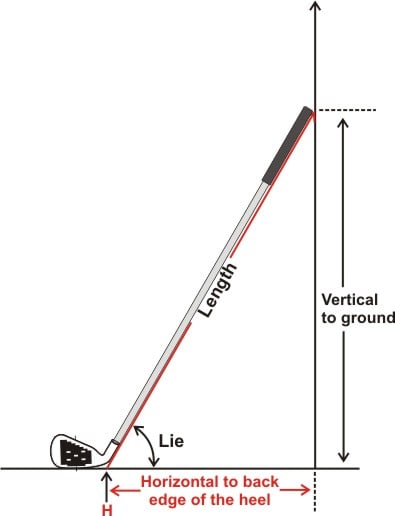
Image Source: www.hirekogolf.com
Why Measuring Your Golf Shaft Matters
Measuring your golf shaft is very important. It is not just about making a club longer or shorter. It helps you play better golf. The right shaft makes a big difference. It helps you hit the ball farther and straighter. It also makes the club feel good in your hands.
Think of it this way. Your golf swing is unique. A shaft that works for one golfer might not work for you. Measuring the shaft helps match it to your swing speed. It also matches your tempo and release. This leads to more consistent shots. It can even help prevent bad habits. Knowing your shaft’s true numbers is the first step. This knowledge helps you find the perfect shaft.
Grasping Key Golf Shaft Measurements
Many parts make up a golf shaft. Each part affects how the ball flies. Measuring them helps you pick the right shaft. Let’s look at the main parts you need to measure.
Ascertaining Golf Shaft Length
The length of your golf shaft is key. It impacts your posture and how far you stand from the ball. It also affects your swing plane. The right length helps you hit the ball in the sweet spot. This means more solid contact.
How to determine golf shaft length:
* Place the club on a flat surface.
* Set the club in its normal playing position. The sole of the club should be flat on the ground.
* Put a measuring tape on the ground next to the shaft.
* Measure from the ground to the very end of the grip. This is the shaft’s length.
* Measure each club in your bag. They will have different lengths. Drivers are the longest. Wedges are the shortest.
Table: Typical Club Lengths (Approximate)
| Club Type | Men’s Standard (Inches) | Women’s Standard (Inches) |
|---|---|---|
| Driver | 45 – 45.75 | 44 – 44.5 |
| 3-Wood | 43 | 42 |
| 5-Iron | 38 | 37 |
| Pitching Wedge | 35.75 | 35.25 |
Note: These are general guides. Your ideal length may vary.
Ascertaining Golf Shaft Weight in Grams
The weight of a golf shaft greatly affects your swing. A heavier shaft can slow your swing down. A lighter shaft can speed it up. The right weight helps you control the club. It helps you swing with good balance.
How to measure golf shaft weight in grams:
* You need a digital scale. A kitchen scale or postal scale works well.
* Remove the grip and club head from the shaft. You want to weigh only the bare shaft.
* Place the shaft on the scale.
* The scale will show its weight in grams.
* Most shafts weigh between 40 grams (very light) and 130 grams (very heavy).
Table: Common Shaft Weight Ranges
| Golfer Type | Shaft Weight (Grams) |
|---|---|
| Faster Swing Speeds | 70-130 |
| Moderate Swing Speeds | 60-90 |
| Slower Swing Speeds | 40-70 |
Note: Weight also affects feel and swing weight.
How to Check Shaft Flex
Shaft flex is how much a shaft bends during your swing. It is one of the most important measurements. The right flex helps you hit the ball with power and control. The wrong flex can cause slices or hooks.
How to check shaft flex:
* You can’t easily measure flex with a tape measure.
* Many shafts have a label. It says “L” (Ladies), “A” (Senior/Amateur), “R” (Regular), “S” (Stiff), or “X” (Extra Stiff).
* This label is a general guide. True flex can vary between brands.
* The best way to check flex is with a golf shaft frequency analyzer.
* This is a special machine.
* It clamps the shaft at the butt end.
* It then vibrates the shaft.
* The machine measures how fast the shaft vibrates. This is its frequency.
* Frequency is measured in cycles per minute (CPM).
* Higher CPM means a stiffer shaft. Lower CPM means a softer shaft.
Table: General Flex Ranges (CPM)
| Flex Label | Approximate CPM Range |
|---|---|
| Ladies (L) | 180-210 |
| Senior (A) | 210-230 |
| Regular (R) | 230-250 |
| Stiff (S) | 250-270 |
| X-Stiff (X) | 270-300+ |
Note: These ranges can vary. A good fitter uses actual CPM numbers.
Ascertaining Shaft Kick Point
The kick point, also called the bend point, is where the shaft bends the most. This point affects the ball’s launch angle. It also affects the spin rate.
- High Kick Point: The shaft bends closer to the grip. This often means a lower ball flight. It can also mean less spin. Good for strong hitters who want a penetrating ball flight.
- Mid Kick Point: The shaft bends in the middle. This gives a middle-of-the-road ball flight and spin. It suits most golfers.
- Low Kick Point: The shaft bends closer to the club head. This helps launch the ball higher. It can also add more spin. Good for golfers who need help getting the ball in the air.
Measuring shaft kick point:
* You cannot measure kick point with simple tools.
* It is a design feature of the shaft. Shaft makers specify this.
* A golf shaft bend profile tool can map this out. This tool applies force along the shaft. It measures how much the shaft bends at different points. This gives a picture of the shaft’s bending characteristics. This is a very advanced measurement. Club fitters use it often.
Decoding Golf Shaft Torque Values
Torque is how much a shaft twists during the swing. It is measured in degrees. This twisting happens during the downswing and at impact.
- High Torque: The shaft twists more (e.g., 5-7 degrees). This can feel softer. It might lead to more dispersion if you have a fast swing. It can also feel very smooth.
- Low Torque: The shaft twists less (e.g., 2-4 degrees). This feels firmer. It often gives more control. It might be less forgiving on off-center hits.
Golf shaft torque values are set by the shaft maker. They print it on the shaft or list it in specs. You cannot measure it at home. It is a key part of the shaft’s design.
Table: General Torque Ranges
| Torque Level | Degrees (Approx.) | Feel | Control | Golfer Type (General) |
|---|---|---|---|---|
| High | 5-7+ | Softer | Less | Slower swing, smooth tempo |
| Mid | 3.5-5 | Balanced | Good | Average swing, moderate tempo |
| Low | 2-3.5 | Firmer | More | Faster swing, aggressive tempo |
Scrutinizing Club Shaft Diameter Specs
Shaft diameter refers to the thickness of the shaft. There are two main points to measure:
* Butt Diameter: This is the diameter at the top (grip end) of the shaft. It affects grip size. Most shafts have a butt diameter around 0.600 inches.
* Tip Diameter: This is the diameter at the bottom (club head end) of the shaft. It must match the bore size of the club head. Common tip diameters are 0.335 inches (drivers, woods) and 0.355 inches or 0.370 inches (irons).
How to measure club shaft diameter specs:
* Use a digital caliper.
* Measure the shaft at the butt end.
* Measure the shaft at the tip end.
* Make sure your measurements are accurate. Even small differences matter for fitting.
Crafting the Shaft Stiffness Profile
The shaft stiffness profile is not one single measurement. It is a full picture. It combines all the measurements we just talked about. It looks at how the shaft bends along its whole length. This includes:
* Overall flex (CPM).
* Where the shaft bends most (kick point).
* How much it twists (torque).
* Its weight.
A complete stiffness profile tells you how a shaft will perform. It shows if it matches your swing. A professional fitter can use a device to map out a shaft’s full bend profile. This helps them find the very best shaft for you.
Equipment and Processes for Measurement
Having the right tools helps you get accurate numbers. For basic checks, you can do it yourself. For advanced measurements, you need special gear.
Essential Tools for Basic Checks
- Measuring Tape: A standard, flexible measuring tape is perfect for shaft length. Make sure it is stiff enough to hold a straight line.
- Digital Scale: A good digital scale that measures in grams is vital for shaft weight. Look for one that can handle at least 200 grams.
- Digital Caliper: This tool measures small distances very precisely. It is needed for butt and tip diameters.
Advanced Tools for Detailed Analysis
- Golf Shaft Frequency Analyzer: This is a key tool. It measures the true flex (CPM) of a shaft. It helps you see beyond a simple “S” or “R” label. This is very important for proper fitting.
- Shaft Bend Profile Device: This high-tech tool measures how a shaft bends at many points. It creates a detailed picture of its stiffness. This helps fitters match shafts to specific swing types.
- Swing Weight Scale: While not directly measuring the shaft, this scale helps calculate swing weight calculation golf. Swing weight measures the balance of the club. It makes sure all your clubs feel the same in your swing. It uses the shaft weight, head weight, and grip weight. A good fitter will use this to fine-tune your clubs.
The Role of a Professional Club Fitter
You can do some basic shaft measurements yourself. But a professional club fitter offers much more. They have the special tools. They also have the knowledge to use them well.
Benefits of Professional Fitting
- Accurate Data: Fitters use high-tech gear. This includes launch monitors and frequency analyzers. They get very precise numbers.
- Personalized Match: They do not just measure the shaft. They measure your swing. They look at your swing speed, tempo, and how you hit the ball. They then match a shaft to your unique swing.
- Full Picture: A fitter considers all aspects of the shaft. They look at length, weight, flex, kick point, and torque. They also consider the club head and grip.
- Optimized Performance: The goal is to maximize your distance and accuracy. They help you get the best ball flight. They also help you hit the ball more consistently.
- Swing Weight Calculation Golf: A fitter will calculate the swing weight of your whole club. This is a balance point. It ensures all your clubs feel similar. This consistency helps your swing.
What a Fitter Does
- Gathers Your Data: They use a launch monitor. You hit balls. The monitor records ball speed, launch angle, spin rate, and club head speed.
- Measures Your Current Clubs: They put your current clubs on their special machines. They measure the exact flex, weight, and swing weight.
- Tests Different Shafts: Based on your data, they try different shafts. They watch how each shaft affects your ball flight. They use their golf shaft frequency analyzer to confirm flex.
- Fine-Tunes: They may adjust length, add weight, or change grips. This process helps find your perfect club setup.
How Correct Shaft Measurement Boosts Your Play
Getting your shaft measurements right is not just technical. It has a real impact on your golf game.
Boosted Accuracy
- Better Control: A shaft that fits your swing helps you control the club face. This means fewer slices and hooks. You hit the ball straighter.
- Consistent Contact: The right length and flex help you find the sweet spot more often. This leads to more solid shots.
Increased Distance
- Optimized Energy Transfer: A well-matched shaft helps you transfer energy from your swing to the ball. This means more ball speed. More ball speed means more distance.
- Ideal Launch and Spin: The right kick point and torque help you launch the ball at the perfect angle. They also help create the right amount of spin. This leads to longer, higher flights.
Improved Feel and Consistency
- Comfortable Swing: A shaft that matches your swing feels good. It feels smooth and stable. This makes it easier to repeat your swing.
- Less Fatigue: When a shaft is too heavy or too stiff, it can make you tired. The right shaft helps you swing freely. This means you can play longer without getting tired.
- Confidence: Knowing your clubs are perfectly fit gives you confidence. This can lower your scores.
Mistakes to Keep Away From When Measuring
Even with good intentions, some common mistakes can happen. Avoiding them ensures better results.
- Guessing Flex Based on Swing Speed Only: Swing speed is important. But it does not tell the whole story. Your tempo and how you release the club also matter. A golf shaft frequency analyzer gives a true picture of flex. Do not rely only on printed labels.
- Ignoring Shaft Weight: Many golfers focus only on flex. But shaft weight is just as critical. Too heavy or too light can throw off your swing.
- Forgetting Torque: Torque is a hidden player. It affects how the club feels. It also impacts shot dispersion. It is not something you measure yourself. But you should be aware of its value when choosing a shaft.
- Not Considering the Whole Club: The shaft works with the club head and grip. Changing one part affects the others. Remember the swing weight calculation golf. This helps ensure all parts work together.
- Using Bad Tools: A simple tape measure is fine for length. But for precise measurements, you need proper tools. Cheap scales or calipers can give wrong numbers.
- Assuming One Size Fits All: Your golf clubs are personal. What works for a friend might not work for you. Every golfer has a unique swing.
Further Considerations: Advanced Topics
While measuring the basics is a great start, there are deeper topics in shaft fitting.
- Spining and Puring: This is an advanced technique. It finds the most stable bending plane of a shaft. Shafts are not perfectly round. They have a spine. Spining aligns this spine in the club head. This makes the shaft more consistent. It helps it bend in the same way every time. This can lead to tighter shot dispersion.
- MOI Matching vs. Swing Weight:
- Swing weight is a traditional measure. It tells you the club’s balance. It ensures clubs in a set feel somewhat similar.
- MOI (Moment of Inertia) matching is a newer idea. It makes sure each club in a set has the same resistance to swinging. This makes every club feel the same effort to swing. It is a more precise way to match clubs.
These advanced methods are usually done by very skilled club fitters. They use special machines to achieve these results.
Frequently Asked Questions (FAQ)
Q1: Can I measure golf shaft flex at home without special tools?
A1: Not accurately. You can read the flex label on the shaft. But this is just a general guide. For a true measure of flex, you need a golf shaft frequency analyzer. This tool measures how stiff the shaft truly is.
Q2: What is the most important shaft measurement for distance?
A2: Length, weight, and flex all play a role. A shaft that is too long or too heavy can slow you down. A flex that does not match your swing can cause you to lose energy. The best fit of all these gives you the most distance.
Q3: How often should I check my golf shaft measurements?
A3: If your swing changes, or if you feel your clubs are not performing well, it is a good idea to check. If you buy new clubs, always get them measured or fitted. Your body changes over time, so your shaft needs might too.
Q4: Does shaft material (graphite vs. steel) affect measurements?
A4: Yes. Graphite shafts are usually lighter than steel shafts. They can also have different bend profiles and torque values. The measurement methods are the same. But the numbers will differ due to the material.
Q5: Is a lighter shaft always better for more speed?
A5: Not always. A lighter shaft can help increase swing speed. But if it is too light, you might lose control. It is about finding the right balance. This balance helps you swing fast while keeping control.
Q6: What is the average golf shaft weight in grams for a driver?
A6: Driver shafts typically weigh between 50 and 70 grams for most amateur golfers. Stronger, faster-swinging golfers might use shafts from 70 to 90 grams or more.
Conclusion
Measuring your golf shaft is a vital step toward better golf. It goes beyond just picking a brand. It is about matching the shaft to your unique swing. Knowing how to determine golf shaft length, check golf shaft weight in grams, and how to check shaft flex is very helpful. Grasping measuring shaft kick point and golf shaft torque values rounds out your knowledge.
Remember that all these features combine to form the shaft stiffness profile. This complete picture helps you hit the ball with more power, accuracy, and consistency. While you can do some measurements at home, a professional club fitter has the tools and expertise. They can give you the most precise fit. Investing time in measuring your shafts can lead to lower scores and more enjoyment on the course. Take the first step. Measure your current clubs. See how they stack up. Then, consider a professional fitting to unlock your best game.