
Do you need a permit to drive a golf cart? Can you drive a golf cart on public roads with a special permit? The answer is not always simple. It depends on where you live and the type of golf cart you have. Most places do not ask for a special “golf cart permit.” Instead, they want your golf cart to meet certain safety rules. They also want you to have a valid driver’s license, just like for a car. Rules for golf carts vary a lot. Some states treat them like cars if they are “street legal.” Other places have very strict rules. This guide will help you learn about these rules. You will know what you need to do to drive your golf cart safely and legally.
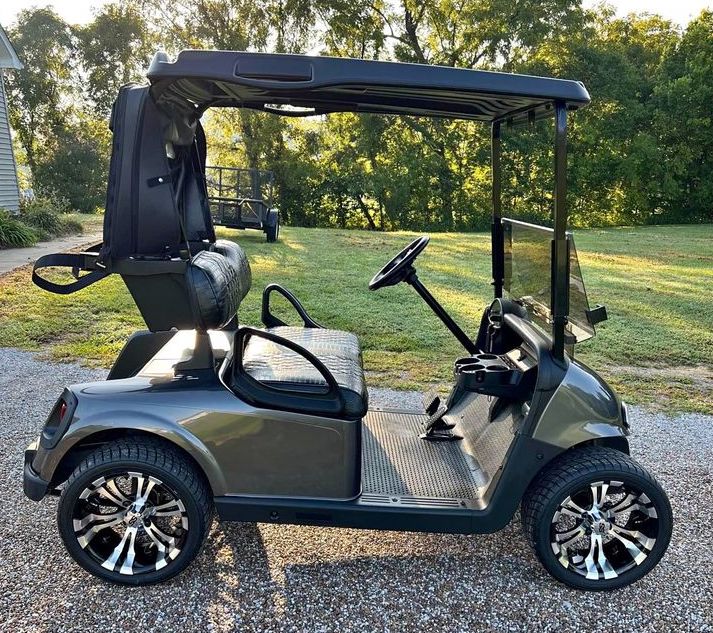
Image Source: maisonlaw.com
Deciphering Golf Cart Types for Street Use
Before you drive a golf cart on any road, it is good to know what kind of golf cart you have. Not all golf carts are the same. A standard golf cart is for golf courses. It is not made for public roads. But some golf carts are changed. They become “street legal.” Other vehicles are built to be driven on roads. They are called Low-Speed Vehicles, or LSVs.
Standard Golf Carts
A standard golf cart is made for golf courses. It has a top speed of about 15-20 mph. These carts usually do not have many safety features. They might not have headlights or turn signals. You cannot drive a standard golf cart on most public roads. They are not safe enough for traffic. They do not meet street legal needs.
Low-Speed Vehicle (LSV) Regulations
A Low-Speed Vehicle (LSV) is different. It is a vehicle that looks like a golf cart. But it is built to be driven on public roads. It must meet federal safety rules. LSVs have a top speed of 20 to 25 mph. They cannot go faster than 25 mph. If they go faster, they are not an LSV. An LSV also must have certain safety parts. This is key for “Golf cart vehicle classification street use.”
These parts include:
* Headlights
* Taillights
* Stop lights
* Turn signals
* Reflectors
* A parking brake
* A rearview mirror
* A windshield
* Seatbelts for all seats
* A Vehicle Identification Number (VIN)
LSVs are made to be safe on local roads. They are often used in planned communities or small towns. They are not meant for big highways. Most states allow LSVs on roads with speed limits of 35 mph or less.
Golf Cart Street Legal Requirements
To drive a golf cart on the street, it must be “street legal.” This means it has all the safety features needed by law. These features make the golf cart safer to drive with cars. The rules for street legal golf carts can change. They vary by state. They can even vary by city or county.
Here is a common list of “Golf cart street legal requirements”:
- Headlights: Needed for driving at night or when it is dark.
- Taillights and Stop Lights: Show others when you are slowing down or stopping.
- Turn Signals: Let others know when you are turning.
- Windshield: Protects the driver and riders from wind and bugs.
- Seatbelts: For everyone in the golf cart. This is a big safety item.
- Mirrors: A rearview mirror is a must. Side mirrors are also good.
- Horn: To warn others if needed.
- Reflectors: To make the golf cart easier to see, especially at night.
- Parking Brake: To keep the cart still when parked.
- Tires: Must be suitable for road use.
- Vehicle Identification Number (VIN): Many street legal golf carts or LSVs have a VIN. This is like a car’s unique ID.
- Slow Moving Vehicle (SMV) Sign: Some states need this triangle sign on the back. It tells others the cart is slow.
If your golf cart does not have these features, you cannot drive it on public roads. You might get a ticket. You might also cause an accident. Many companies sell kits to make a regular golf cart street legal. But even with a kit, your cart must meet your state’s rules.
Do You Need a Driver’s License for a Golf Cart?
This is a common question. For most street legal golf carts and LSVs, yes, you do need a driver’s license. This license must be valid. It is the same kind of license you use to drive a car. This rule applies in almost all states when you drive on public roads.
Why do you need a driver’s license? Because driving a golf cart on a street is like driving any other vehicle. You are sharing the road with cars. You need to know traffic laws. You need to be able to drive safely. A driver’s license proves you have learned these things.
There are some exceptions:
* Private Property: If you drive a golf cart only on private property, like a golf course or a private farm, you usually do not need a license.
* Some Gated Communities: Some private communities might have their own rules. They might let people drive golf carts without a state license on private roads within the community. But this is rare for public roads.
* Under Supervised Driving: In very few, very specific cases, a young driver might be allowed to drive a golf cart on a very short stretch of public road with an adult. This is highly unusual and needs local verification.
Always check your local laws. It is the best way to know for sure.
Age Limit to Drive Golf Cart on Public Roads
Just like needing a driver’s license, there is also an “Age limit to drive golf cart on public roads.” For most states, this age limit is 16 years old. This is the same age needed to get a regular driver’s license.
Some states might have different rules:
* Younger Drivers: A few states might allow younger drivers (like 14 or 15) to drive a golf cart on public roads. But this is only if they have a learner’s permit or a special local permit. These cases are rare. They usually come with strict rules. For example, a licensed adult must be with them.
* Private Property: On private land, there is often no age limit. A child can drive a golf cart on a golf course or family land. But safety is still very important.
It is very important to check your state’s DMV (Department of Motor Vehicles) website. You should also check your local city or county laws. Rules can change quickly.
Golf Cart Laws by State: A Diverse Landscape
“Golf cart laws by state” vary greatly. What is allowed in Florida might be against the law in California. It is vital to know the rules where you live or where you plan to drive. Here is a look at how some states handle golf carts and LSVs. This is not a full list. It shows how different rules can be.
Example State Regulations:
| State | Common Rule for Public Roads (General) | Driver’s License Required? | Age Limit (General) | LSV Speed Limit | Notes |
|---|---|---|---|---|---|
| Arizona | Allows LSVs on roads 35 mph or less. Standard golf carts may be allowed locally. | Yes | 16 | 25 mph | Local cities/counties can have stricter rules. |
| California | LSVs allowed on roads 35 mph or less. Golf carts on specific roads. | Yes | 16 | 25 mph | Golf cart crossing roads permitted in some areas. |
| Florida | Golf carts can cross roads. LSVs on roads 35 mph or less. | Yes | 14 (with permit) or 16 | 20 mph (golf cart) / 25 mph (LSV) | Florida is more open to golf carts, but specific rules apply. Check local ordinances. |
| Georgia | LSVs allowed on roads 35 mph or less. Golf carts restricted. | Yes | 16 | 25 mph | Many golf cart communities have specific ordinances. |
| Michigan | LSVs allowed on roads 35 mph or less. Golf carts often limited to certain areas. | Yes | 16 | 25 mph | Local rules are very important here. |
| New York | LSVs allowed on roads 35 mph or less. Golf carts generally not allowed. | Yes | 16 | 25 mph | Very strict on golf cart use outside of golf courses. |
| South Carolina | Golf carts allowed on roads 35 mph or less. Specific permit needed. | Yes | 16 | 20 mph | Requires registration with DMV and specific permit. |
| Texas | LSVs allowed on roads 35 mph or less. Golf carts on specific roads/local rules. | Yes | 16 | 25 mph | Many cities have specific ordinances. |
Important Note: This table offers a general idea. Always check the specific laws for your state and even your local city or county. These laws can change. They can be very detailed. Your local police department or DMV is the best source for current rules.
Operating Golf Cart on Street Rules
When you drive a golf cart or LSV on public roads, you must follow rules. These rules are for safety. They also help keep traffic flowing smoothly. “Operating golf cart on street rules” are often similar to car rules.
Here are general rules for driving golf carts on streets:
- Road Speed Limits: Most golf carts and LSVs can only be driven on roads with speed limits of 35 mph or less. You cannot drive them on highways or major roads.
- Stay Right: Drive on the far right side of the road. This lets faster traffic pass you easily.
- Follow Traffic Laws: All traffic signs, signals, and laws apply to golf carts. This means stopping at stop signs. It means obeying traffic lights. It means yielding to pedestrians.
- No Impaired Driving: Do not drive a golf cart if you have been drinking alcohol or using drugs. The same DUI/DWI laws apply as for cars.
- Number of Passengers: Do not carry more people than your golf cart is made for. Everyone should have a seat and a seatbelt if available.
- No Open Containers: In many places, open alcohol containers are not allowed in golf carts on public roads.
- Insurance: Most states require insurance for street legal golf carts or LSVs. This is covered in more detail below.
- Maintenance: Keep your golf cart in good working order. Check lights, brakes, and tires often.
- Night Driving: If driving at night, make sure all your lights work. Drive slowly and carefully. Be extra visible.
Ignoring these rules can lead to tickets. It can also cause accidents. Always put safety first.
Golf Cart Permit Requirements Residential Community
Many people use golf carts in residential areas. Especially in large planned communities or retirement villages. Sometimes, these communities have their own rules. These are “Golf cart permit requirements residential community.”
These rules are often separate from state laws. They are set by the community’s homeowners association (HOA) or management. They can include:
- Community-Specific Permits: Some HOAs might ask you to get a special permit. This permit proves your golf cart is registered with them. It shows you have read and agreed to their rules.
- Age Limits: The community might have age limits for driving on their private roads. These might be different from state laws.
- Designated Paths: Many communities have special paths for golf carts. You must use these paths.
- Speed Limits: There are often strict speed limits within the community.
- Noise Rules: Some communities have rules about loud golf carts.
- Insurance: The HOA might ask for proof of insurance to cover accidents within the community.
- Parking Rules: Rules for where you can park your golf cart.
Key Point: Even if your community allows golf carts easily, state laws still apply if you drive outside the community. If you take your golf cart onto a public road, it must meet state rules.
Always get a copy of your community’s golf cart rules. Read them carefully.
Do You Need Insurance for a Golf Cart?
“Do you need insurance for a golf cart?” For golf carts driven on public roads, yes, you almost always need insurance. This is true for LSVs and any golf cart that is street legal.
Why is insurance needed?
* Accident Protection: If you get into an accident, insurance helps pay for damages. This can be damage to your golf cart. It can be damage to another car or property.
* Medical Costs: If someone gets hurt in an accident, insurance can help pay for medical bills.
* Legal Protection: If you are sued after an accident, insurance can help with legal costs.
* State Law: Many states require basic liability insurance for any vehicle driven on public roads. This includes LSVs and street legal golf carts.
Types of Insurance:
* Liability Insurance: This is the most common type. It covers damages or injuries you cause to others.
* Collision Coverage: This covers damage to your own golf cart if you hit another vehicle or object.
* Comprehensive Coverage: This covers damage to your golf cart from things like theft, fire, or vandalism.
* Personal Injury Protection (PIP): In some states, this covers medical costs for you and your passengers, no matter who caused the accident.
You might be able to add your golf cart to your existing car insurance policy. Or you might need a separate policy. Check with your insurance agent. Make sure you have enough coverage. Driving without required insurance can lead to big fines. It can also mean your golf cart is impounded.
Driving Golf Cart Without License Penalty
“Driving golf cart without license penalty” can be serious. If you drive a golf cart on public roads without a valid driver’s license (where one is needed), you can face legal trouble. The penalties are often similar to driving a car without a license.
What can happen?
* Fines: You will likely get a ticket. The fine amount can be high.
* Impoundment: Your golf cart might be taken away by the police. You would have to pay fees to get it back.
* Court Appearance: You might have to go to court.
* Criminal Charges: In some cases, especially if you have been caught before or if there is an accident, you could face more serious charges.
* No Insurance Coverage: If you cause an accident and you were driving without a license, your insurance company might not pay for damages. This means you would have to pay everything yourself. This could be thousands of dollars.
It is never worth the risk. Always make sure you have the right license before driving a golf cart on a public road.
Golf Cart Vehicle Classification Street Use: A Review
We have talked a lot about “Golf cart vehicle classification street use.” Let’s review the key points.
- Standard Golf Cart: Made for off-road use (golf courses). Not meant for public streets. Usually no street legal features.
- Street Legal Golf Cart: A standard golf cart that has been changed. It has added features like lights, signals, mirrors, and seatbelts. It meets state and local safety rules.
- Low-Speed Vehicle (LSV): A vehicle built from the start to meet federal safety standards. It is designed for speeds up to 25 mph. It comes with all the required safety features already installed. LSVs have a VIN and are registered like cars in most states.
The main difference is how the vehicle is built and what laws it follows. LSVs are clearly defined by federal rules. Street legal golf carts are more about meeting state and local requirements through modifications.
If you plan to drive on public roads, your golf cart should be an LSV or a properly modified street legal golf cart. It must meet all local rules.
More Rules for Street Use
Beyond the main requirements, there are often other rules to follow when driving a golf cart or LSV on public roads:
Speed Limits for Golf Carts
Even if an LSV can go up to 25 mph, you must follow the posted speed limits. Never drive faster than the speed limit. Also, an LSV cannot be driven on roads where the speed limit is over 35 mph. Some places might have even lower limits for golf carts. For example, a city might say golf carts can only drive on roads 25 mph or less.
Places Where Golf Carts Cannot Go
- Highways and Interstates: Never drive a golf cart or LSV on these roads. They are too fast and dangerous.
- Main Arterial Roads: These are busy roads that connect major parts of a city. Even if the speed limit is 35 mph or less, some local rules might ban golf carts from these roads.
- Sidewalks and Bike Paths: In most places, golf carts are not allowed on sidewalks or bike paths. These are for pedestrians and bicycles.
- Unpaved Roads: Some rules might ban golf carts on dirt or gravel roads, even if they are public.
Rules for Passing and Yielding
When driving a golf cart, you must follow the same rules as cars:
* Yield to pedestrians.
* Yield to other vehicles when required.
* Do not pass in no-passing zones.
* Use your turn signals for every turn.
Carrying Cargo
Be careful how you load your golf cart. Do not carry too much weight. Do not let items hang off the cart. Make sure nothing blocks your view.
Local Ordinances Matter
It is worth saying again: “Golf cart laws by state” are important, but “local ordinances” are just as key. A city or county can add more rules. They might have specific zones where golf carts are allowed or banned. They might require specific local permits. Always check with your city hall or local police for their specific rules. This is especially true for “Golf cart permit requirements residential community” rules.
Safety Tips for Driving Golf Carts
Following the law is step one. Being safe is just as important. Here are some key safety tips:
- Drive Defensively: Assume other drivers do not see you. Be ready to react.
- Stay Alert: Do not use your phone while driving. Pay attention to the road and other vehicles.
- Use Seatbelts: Always wear your seatbelt. Make sure all passengers wear theirs.
- No Standing: No one should stand in the golf cart while it is moving.
- Keep Arms/Legs Inside: Make sure everyone keeps their arms, legs, and heads inside the cart.
- Avoid Bad Weather: Do not drive in heavy rain, fog, or icy conditions. Golf carts offer little protection.
- Slow Down on Turns: Golf carts can be unstable. Slow down a lot before turning.
- Night Visibility: If driving at night, wear bright clothes. Add extra reflectors to your golf cart if possible.
- Teach Passengers: Tell your passengers about safe riding rules.
By following these tips, you help keep yourself and others safe.
Final Thoughts on Golf Cart Permits and Driving
The question, “Do I need a permit to drive a golf cart?” is often met with a nuanced answer. While a specific “golf cart permit” is rare, you certainly need to meet a range of requirements. These include having a valid driver’s license, ensuring your golf cart is street legal (often as an LSV), and having proper insurance. The “Age limit to drive golf cart on public roads” is typically 16. “Golf cart laws by state” are very different, so checking local rules is a must. “Operating golf cart on street rules” mean following traffic laws just like a car. Ignoring these rules, resulting in “Driving golf cart without license penalty” or other violations, can lead to fines and other serious outcomes.
Driving a golf cart can be fun and useful. But it must be done safely and legally. Always do your research. Check with your state’s DMV and your local city office. Make sure your golf cart is ready for the road. Make sure you are ready, too.
Frequently Asked Questions (FAQs)
Q1: Can a 15-year-old drive a golf cart on public roads?
A1: Generally, no. Most states require a valid driver’s license, which means the driver must be at least 16 years old. Some very few states might have exceptions with a learner’s permit and adult supervision. Always check your specific state and local laws.
Q2: What is the main difference between a golf cart and an LSV?
A2: An LSV (Low-Speed Vehicle) is built to meet federal safety standards for road use. It has specific features like seatbelts, turn signals, and a VIN. A standard golf cart is for off-road use and does not meet these federal safety rules unless it is modified to be “street legal.”
Q3: Do I need a special license to drive an LSV?
A3: No, you usually do not need a “special” license. If you have a valid driver’s license for a car, it is typically sufficient to drive an LSV on public roads where they are allowed.
Q4: Are golf carts allowed on all roads with a 35 mph speed limit?
A4: Not always. While many states allow LSVs on roads with speed limits of 35 mph or less, individual cities or counties might have stricter rules. They can ban golf carts from certain roads, even if the speed limit is low. Always check local ordinances.
Q5: Can I get a DUI if I drive a golf cart after drinking alcohol?
A5: Yes. Driving a golf cart or LSV on public roads while under the influence of alcohol or drugs is treated the same as driving a car. You can be charged with a DUI/DWI.
Q6: What if my golf cart is only used in a private community? Do I still need a license or insurance?
A6: If your golf cart is only driven on private property or within a private, gated community, state driver’s license and insurance laws may not apply. However, the community (HOA) might have its own rules. These often include needing registration or insurance for use within their private roads. Always check the community’s specific guidelines.
Q7: What are the consequences of driving a golf cart that isn’t street legal on public roads?
A7: You could face fines, have your golf cart impounded, and potentially receive points on your driver’s license. If an accident occurs, your insurance might not cover damages, leaving you responsible for all costs.