
Image Source: golfdigest.sports.sndimg.com
Unlock Your Swing: How To Stop The Hook In Golf Forever!
A golf hook is a shot that curves sharply to the left for a right-handed golfer. For a left-handed golfer, it curves sharply to the right. This shot often starts right of the target before bending hard left, or it can start left and curve even more left. The main cause of a hook is a clubface that is very closed compared to the swing path at impact. Often, a golf swing path correction is needed along with controlling the clubface. Yes, you can fix this frustrating shot. Many golfers learn to prevent golf hook shots for good.
Grasping the Golf Hook
A golf hook ruins many good rounds. It sends your ball off target, often deep into the trees or out of bounds. This shot is a golfer’s nightmare. It takes away your confidence. It also makes you wonder what went wrong. To fix golf hook shots, you must know what causes them.
A hook happens when the clubface is closed relative to the swing path. Imagine your club swings on a path. If your clubface points left of that path at impact, you get a hook. This is different from a slice. A slice happens when the face is open to the path.
Here is a simple look at golf ball flight laws:
- Starting Direction: This comes mostly from the clubface angle at impact. If your face points left, the ball starts left. If it points right, the ball starts right.
- Curve: This comes from the difference between the clubface angle and the swing path. If the face is closed to the path, the ball hooks. If it’s open to the path, the ball slices.
So, for a hook, your clubface is pointing left of your swing path at impact. This is key. The ball starts where the face points and then curves away from the path.
Deciphering the Common Culprits of the Hook
Many things can cause a golf hook. It is often not just one thing. It is a mix of factors that make your clubface too closed or your swing path too inside-out. Let’s look at the main reasons.
H4: The Clubface and Swing Path Mismatch
This is the most common reason for a hook. It’s about how your clubface looks when it hits the ball compared to the path it takes.
- Closed Clubface Golf: Your clubface points too far left of the target at impact. This is the main cause. A closed clubface golf shot means the face is rotated left. This makes the ball start left or straight, then curve hard left.
- Inside-Out Swing Path: Your club swings from inside the target line, then out to the target. This path itself is not always bad. Many good players use it for draws. But combine this path with a very closed clubface, and you get a hook. The ball launches right and hooks back hard left.
When you have an inside-out path and a clubface that is even more closed than that path, you get a strong hook. The ball goes right, then turns hard left.
H4: Strong Grip Golf Hook
Your grip is the first and most important link to the club. A strong grip golf hook is a very common cause.
- What is a Strong Grip? For a right-handed golfer, a strong grip means your left hand is turned too far to the right on the club. You can see three or more knuckles on your left hand. Your right hand might be too far under the club.
- How it Causes a Hook: A strong grip makes it easier for your hands to rotate the clubface shut during the downswing. Your hands become “overactive” and turn the face over too much. This leads to a closed clubface golf at impact. It is a main reason for a hook.
H4: Overactive Hands Golf Swing
This ties into the grip often. Overactive hands golf swing means your hands and wrists are too busy in the downswing. They flip or roll the club too much.
- Too Much Hand Roll: During the downswing and through impact, your hands might roll over too quickly. This shuts the clubface. It often happens when the body does not turn enough.
- Flipping at the Ball: Some golfers try to “help” the ball up. They flip their wrists at impact. This adds loft but also closes the face. It often leads to a scoop or a hook.
H4: Pull Hook Causes
A pull hook is a bit different. It starts left and curves even further left.
- Out-to-In Path with a Closed Face: This is the usual reason. Your club swings outside the target line, then cuts across it (out-to-in). But your clubface is even more closed than this already “left” path. The ball starts left because the face points left. It then hooks further left because the face is closed to the path.
- Severe Over-the-Top: This often goes with an out-to-in path. You start your downswing with your shoulders and arms moving steeply outside the target line. This can make you swing outside-in. If your hands then quickly close the face, you get a pull hook.
H4: Improper Ball Position
Where you place the ball in your stance matters a lot.
- Ball Too Far Back: If the ball is too far back in your stance (especially with a driver or fairway wood), you might hit it on the downswing when the clubface is still closing. This can cause a hook. The clubface is still rotating shut as it hits the ball.
H4: Equipment Problems
Sometimes, your clubs themselves can make you hook the ball.
- Too Much Loft: A driver with too much loft can make a hook worse. The ball spins more, and the spin axis can tilt, leading to a hook.
- Shaft Flex: A shaft that is too soft or flexible for your swing speed can cause problems. It can make the clubhead lag behind, then release too fast. This often leads to a closed clubface golf at impact.
- Lie Angle: If your irons have a lie angle that is too upright, the toe of the club will be up at impact. This causes the heel to dig, closing the face and sending the ball left.
Diagnosing Your Hook: A Detective’s Guide
Before you can fix golf hook issues, you must know what causes your hook. This takes some detective work.
H5: Ball Flight Analysis
Watch your ball flight carefully.
- Starts Right, Hooks Left: This often points to an inside-out swing path with a clubface closed relative to that path. This is the classic hook.
- Starts Left, Hooks Further Left: This is a pull hook. It means your swing path is out-to-in, and your clubface is very closed to that path (and the target).
H5: Review Your Grip
- Look at Your Hands: When you hold the club, how many knuckles can you see on your left hand (for right-handed golfers)? If you see three or more, your grip is strong.
- Feel Your Grip: Does the club feel loose or tight? Is there tension in your forearms?
H5: Check Your Setup
- Ball Position: Is the ball in the right spot for each club? For a driver, it should be off your lead heel. For irons, closer to the middle.
- Alignment: Are your feet, hips, and shoulders aimed at the target, or are they aimed too far right (closed stance)? A closed stance can lead to an inside-out path.
H5: Video Your Swing
Using a phone camera to record your swing is a great way to see what you are doing.
- Swing Path: Draw a line on the screen down your target line. See if your club comes too far from the inside or cuts across from the outside.
- Clubface at Top and Impact: Watch how the clubface looks at the top of your backswing and just before impact. Is it square, open, or closed?
- Hand Action: Are your hands rolling over too much? Are they flipping?
Cure Golf Hook: Your Step-by-Step Solutions
Now that you know the causes, let’s learn how to cure golf hook shots. These steps focus on golf swing path correction and fixing your clubface control.
H3: Reforming Your Grip for Control
This is often the quickest way to prevent golf hook problems.
- Neutralize Your Grip:
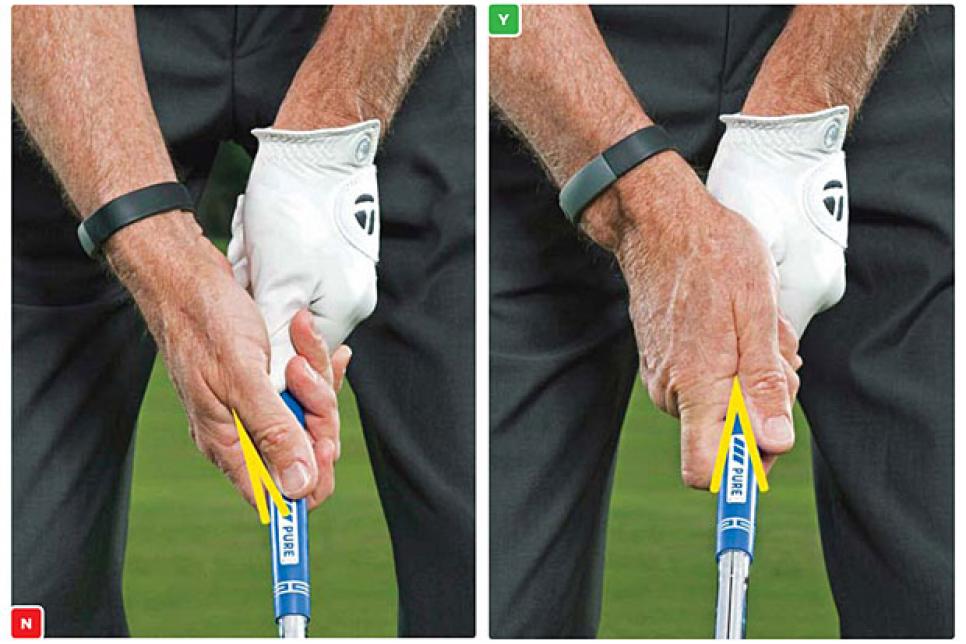
- For a right-handed golfer, place your left hand on top of the grip. You should see only about two knuckles. The ‘V’ formed by your thumb and forefinger should point between your right shoulder and right ear.
- For your right hand, place it so the palm faces the target more. The ‘V’ should point to your right shoulder.
- Hold the club more in your fingers, not your palm. This allows for better clubface control.
- Practice Pressure: Hold the club lightly. Imagine holding a tube of toothpaste without squeezing it. This stops you from having overactive hands golf swing.
H3: Setup Adjustments to Eliminate the Hook
Your setup affects your swing path and clubface at impact.
- Square Your Stance: Make sure your feet, hips, and shoulders are all aimed at the target. Do not aim right (closed stance). This helps you make a neutral swing path.
- Correct Ball Position:
- Driver: Ball off the lead heel.
- Fairway Woods: Ball just inside the lead heel.
- Irons: Ball closer to the middle of your stance, moving slightly forward for longer irons.
- Hitting the ball in the right spot ensures you meet the clubface at the correct point in its arc.
- Shaft Lean: For irons, have a slight forward shaft lean at address. This means the club handle is slightly ahead of the ball. This promotes hitting down on the ball, which helps control the clubface.
H3: Golf Swing Path Correction Drills
These drills help you get your club swinging on a better path. This is vital to fix golf hook tendencies.
H4: The Gate Drill
- Purpose: To make you swing down the target line or slightly outside-in.
- How to Do It:
- Place two headcovers or alignment sticks on the ground. Put one just outside and slightly ahead of the ball. Put the other just inside and slightly behind the ball. They create a narrow gate for your clubhead to swing through.
- Hit balls, making sure your club goes through the gate without touching either object.
- Benefit: This drill forces a more neutral or slightly outside-in path, helping to stop the inside-out path that often causes a hook.
H4: The Right Elbow Tuck (for Right-Handed Golfers)
- Purpose: To keep your club on plane and prevent it from dropping too far inside.
- How to Do It:
- During your downswing, focus on keeping your right elbow “tucked” closer to your side. Imagine it staying in front of your right hip.
- This prevents your arms from getting too far behind your body on the downswing.
- Benefit: Promotes a more “on plane” downswing, reducing the deep inside-out path often linked to a hook.
H4: The “Swing to the Target” Drill
- Purpose: To encourage a swing that extends down the target line.
- How to Do It:
- Imagine a second ball about 10-12 inches ahead of your actual ball, right on the target line.
- Swing through your real ball and try to hit that imaginary second ball.
- Benefit: Promotes an extension through impact and a swing that goes down the target line, helping to fix an overly inside-out path.
H3: Clubface Control: Stopping the Closed Clubface Golf
This is perhaps the most important part of how to cure golf hook shots.
H4: Mirror Drill for Clubface Awareness
- Purpose: To see how your clubface moves.
- How to Do It:
- Stand in front of a mirror or record yourself.
- Make slow practice swings. Watch your clubface at the top of the backswing, halfway down, and at impact.
- At the top, the clubface should be roughly parallel to your lead forearm.
- At impact, the face should be square to your target line.
- Benefit: Helps you see and feel what a square clubface looks like throughout the swing. This stops the closed clubface golf tendency.
H4: Anti Hook Golf Drills for Less Hand Roll
- The “Hold the Face Open” Drill:
- Make slow practice swings. Focus on keeping the clubface pointed at the target for as long as possible after impact.
- Do not let your hands roll over quickly. Feel your left wrist staying flat (for right-handers).
- The Towel Under Arm Drill:
- Place a small towel under your lead armpit (left armpit for right-handers). Keep it there during the swing.
- This promotes body rotation and prevents your arms from disconnecting. When the body turns more, the hands do not need to be so active.
- Benefit: These anti hook golf drills train your body to turn more. They reduce the need for overactive hands golf swing, which shuts the clubface.
H4: Impact Bag Drill for Solid Contact
- Purpose: To feel a firm, square impact without over-rotating the clubface.
- How to Do It:
- Set up to an impact bag as if it were a golf ball.
- Swing down and hit the bag. Hold your position at impact.
- Check your clubface. Is it square? Is your body rotating through the hit?
- Benefit: Teaches you to deliver the clubface squarely and firmly at impact without excessive hand action.
H3: Overcoming Overactive Hands Golf Swing
This is a specific issue that often leads to a strong hook.
- Focus on Body Rotation: Instead of thinking “hit the ball with your hands,” think “turn your body through the ball.” Your body rotation should lead the downswing, pulling your arms and club through.
- Lag, Not Flip: Try to keep the angle in your wrists (lag) for longer in the downswing. Do not release it too early. This saves the clubface squaring until the last moment.
- Finish High and Balanced: A full, balanced finish, with your belt buckle facing the target, shows good body rotation. If you collapse or fall off balance, your hands might be overcompensating.
Tackling the Snap Hook Golf
The snap hook golf is a particularly severe form of the hook. It usually starts low and goes very hard left, often with little to no curve to the right first. It is often caused by an extreme combination of a very inside-out path and an extremely closed clubface at impact. This can also happen when the club is delivered with too much shaft lean, delofting the club and closing the face.
- Common Causes for Snap Hook Golf:
- Extreme strong grip.
- Massive over-rotation of the hands.
- Excessive body turn coupled with the club getting too far behind.
- Trying to “kill” the ball, leading to loss of control.
- How to Fix It:
- Slow Down: Often, the snap hook golf happens when you swing too hard. Slowing down your tempo can help regain control.
- Exaggerate the Fade: Try to hit a fade (ball curves right). This sounds odd but forces you to keep the clubface slightly open to your path.
- Feel the Clubface: Throughout the swing, try to feel the clubface. Imagine it is pointed to the sky during your backswing and then down the target line at impact.
- Focus on a Full Turn, Not a Fast Turn: Make a complete backswing turn. This allows for a smoother, more controlled downswing.
Anti Hook Golf Drills: A Summary Table
Here is a quick overview of common hook causes and the anti hook golf drills to fix them.
| Hook Cause | Problem Description | Anti Hook Golf Drill / Fix | Benefit |
|---|---|---|---|
| Strong Grip Golf Hook | Left hand turned too far right; hands too active. | Neutralize Grip (2 knuckles visible). | Prevents automatic clubface closing. |
| Closed Clubface Golf | Clubface points too left at impact. | Mirror Drill, “Hold the Face Open” Drill. | Trains square clubface at impact. |
| Inside-Out Swing Path | Club swings too much from inside. | Gate Drill, Right Elbow Tuck. | Creates a more neutral or outside-in path. |
| Overactive Hands Golf Swing | Hands roll over or flip too much. | Towel Under Lead Arm, Focus on Body Rotation, Impact Bag. | Reduces hand action, promotes body-led swing. |
| Pull Hook Causes | Out-to-in path with very closed face. | Square Stance, Gate Drill (focus on slight outside-in). | Corrects path, prevents extreme face closure. |
| Ball Too Far Back | Hitting ball when club is still closing. | Correct Ball Position (driver off lead heel, irons middle-forward). | Ensures proper club-ball contact point. |
| Snap Hook Golf | Extreme path/face mismatch, often low and hard left. | Slow Down Tempo, Exaggerate Hitting a Fade. | Regains control, opens face relative to path. |
Practice Makes Perfect: Applying the Fixes
Fixing a hook takes time and effort. It will not happen overnight. Be patient and persistent.
H4: Range Work Strategy
- Isolate and Focus: Pick one thing to work on at a time. Do not try to fix your grip, path, and clubface all at once. Start with your grip. Once that feels better, move to path drills.
- Slow Motion Swings: Practice new movements in slow motion. This helps your muscles learn the new actions.
- Drill, Then Hit: Do the anti hook golf drills without a ball first. Get the feel. Then hit a few balls, trying to keep that feel.
- Vary Your Clubs: Practice with different clubs. The hook can show up with any club, but often drivers are the worst.
- Track Progress: Use a notebook or phone to record your progress. Note what worked and what did not.
H4: On-Course Application
- Trust Your Drills: When on the course, trust the feels from your practice. Do not go back to old habits.
- Aim Smart: If you still have a slight hook tendency, aim a little right of your target. This gives you room for error.
- Play Smart: If a hook is likely, choose a safer shot. Maybe hit an iron off the tee instead of a driver.
- Focus on Process, Not Outcome: During your round, focus on the swing thoughts you worked on (e.g., “neutral grip,” “body turn”). Do not just focus on where the ball goes.
When to Seek Professional Help
Sometimes, a hook is tough to cure on your own. A golf pro can be a great help.
- Personalized Diagnosis: A pro can use tools like launch monitors and high-speed cameras. They can pinpoint exactly what is causing your hook. They see things you cannot.
- Customized Drills: A pro can give you specific anti hook golf drills. These drills are tailored to your swing and body.
- Instant Feedback: They can give you feedback on the spot. This helps you make faster changes.
- Swing Thoughts: A pro can give you one or two simple swing thoughts to use on the course. This helps you avoid getting overwhelmed.
Investing in a few lessons can save you hours of frustration. It can help you cure golf hook problems for good.
Summing It Up: Your Hook-Free Future
Getting rid of the golf hook is possible. It means looking at your grip, setup, and swing path. It means learning to control your clubface. Remember the main points:
- A hook is a closed clubface golf shot relative to your swing path.
- A strong grip golf hook is a frequent culprit.
- Overactive hands golf swing often lead to a closed face.
- Golf swing path correction is often needed to fix the hook.
- Practice anti hook golf drills slowly and with purpose.
- Patience and regular practice are key.
By working on these areas, you will unlock a straighter, more powerful swing. You will replace those frustrating hooks with shots that fly true. Get ready to enjoy golf more than ever before!
Frequently Asked Questions (FAQ)
H3: Q1: Is a golf hook always bad?
A golf hook, or more accurately, a controlled “draw,” can be a good shot. Many pro golfers aim for a slight draw. This shot starts right and gently curves back to the target. It often goes further than a straight shot. A draw happens when the clubface is only slightly closed to the swing path. A “hook” is when this curve is too much and out of control. So, the hook we want to stop is the uncontrolled, wild shot.
H3: Q2: How long does it take to fix a hook?
It varies for everyone. Some golfers see results in a few practice sessions by fixing their grip. For others, who need major golf swing path correction, it might take weeks or months of regular practice. Patience is important. Do not expect instant results. Focus on small improvements each time you practice.
H3: Q3: Can my golf clubs cause a hook?
Yes, they can. Equipment can play a role. A driver with a shaft that is too flexible for your swing speed can cause the clubface to close too much. Irons with a lie angle that is too upright can also lead to hooks. It is a good idea to get your clubs checked by a pro or a club fitter if you suspect equipment is part of your pull hook causes.
H3: Q4: What is the main difference between a hook and a slice?
The main difference is how the clubface is angled compared to the swing path.
* Hook: The clubface is closed relative to the swing path. This makes the ball curve sharply to the left (for right-handers).
* Slice: The clubface is open relative to the swing path. This makes the ball curve sharply to the right (for right-handers).
Both are often caused by a mismatch between the clubface and the swing path, but in opposite ways.