
Imagine a world where you can instantly know if a wire is live without ever touching it. That’s the magic of a Non-Contact Voltage Detector! These handy tools are like your personal electrical guardian, keeping you safe from unexpected shocks. But with so many different types and brands out there, how do you pick the one that’s actually going to work for you? It can feel like trying to find a needle in a haystack, and the wrong choice could leave you guessing or, worse, in danger.
This is why understanding these detectors is so important. Whether you’re a DIY enthusiast, a homeowner tackling a quick fix, or even a seasoned professional, having the right detector can save you time, frustration, and prevent serious accidents. In this post, we’re going to break down exactly what you need to know. We’ll help you understand how they work, what features really matter, and how to choose the best one for your specific needs.
Get ready to become a voltage-detecting pro! By the time you finish reading, you’ll have the confidence to select a Non-Contact Voltage Detector that fits your budget and your tasks perfectly. Let’s dive in and make your electrical work safer and smarter.
Top Non Contact Voltage Detector Recommendations

- NON-CONTACT DETECTION of AC voltage in cables, cords, circuit breakers, lighting fixtures, switches, non-tamper-resistant outlets, and wires
- CLEAR INDICATION: Bright LED illuminates green to indicate tester is operational and flashes red and emits a beeping alert when voltage is detected
- BROAD APPLICATION with a 50 to 1000V AC power detection range
- CONSERVE BATTERIES with auto power-off function
- LIGHTWEIGHT AND DURABLE compact design with a convenient clip fits securely in pocket; 6.6-Foot (2 m) drop protection

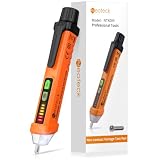
- 【Non-contact Voltage Tester】 Ranging 12-1000V AC, You can easily distinguish the live and null wire through different level of alarm sound and LED indicator. ( Note Please:Not Suitable for Christmas Light Testing)
- 【Safe and Convenient】 The Voltage Pen Tester Detectes Voltage in a Non-Contact Way, So Do Not Worry about There Could be any Possibility of being Shocked by the Electricity
- 【High Efficiency】 As Long As Voltage is Detected, the Led in the Tester Pen will Shine
- 【Multifunction, Easy to Use】 It Also Acts as an Emergency Flashlight which can Illuminate the Working Area, You can Use the Non Contact Voltage Detector in Circuit Breakers, Lighting Fixtures, Switches, Outlets, Wires and Anywhere You Need it
- 【CE CAT III600V RoHS Certificate】 A Professional Tester, It is Perfectly Suitable also for DIY'ers, Hobbyists and Home Owners, It Helps You Make the First and the Most Important Safety Check

- Be aware of voltage easily - the tip glows red and a beeper sounds when voltage is detected
- Continuous self-test so you always know it’s working
- Voltage detection range for wide application use - 90 V to 1000 V AC or 200 V to 1000 V AC
- Audible/Silent mode for added convenience

- SAFETY FIRST: It will send out multiple alarms through sound and light. When the voltage is detected, the tip will send out red light and beep. When the higher the sensed voltage is, or the closer it is to the voltage source, it beeps at a higher frequency and the percentage value will be larger. At the same time, the screen will be red or green, red means high voltage and live wire are detected, green means low voltage and null wire are detected
- NON-CONTACT: With NCV inductive probe for AC voltage; Just place the tip near a terminal strip, outlet, or supply cord. When the tip glows red and the pen beeps, you know there's voltage present. The live wire detector can automatically detect the live or neutral wire. Ideal for breakpoint Test. Handy circuit tester for electricians, homeowners
- DUAL RANGE: Detects standard and low voltage (12-1000V AC / 70-1000V AC) for more sensitive and flexible measurements. Press the S button to adjust sensitivity and adapt low range for doorbells, thermostats, irrigation wiring etc.; The NCV sensor automatically recognizes the voltage and displays it on the bar graph, and the percentage value can display the voltage signal intensity more intuitively
- SECURITY LEVEL: IEC rated CAT III 1000V CAT IV 600V, Meets CE requirements; The electrical tester is safely double insulated. High Voltage Alert to warn you of voltage above 90V, the screen turn red and the safety symbol on the screen shines
- COMPACT DESIGN: Bright LED flashlight for work in dim ares; Low-Power-Indicator when battery voltage is below 2.5V; Automatic Power Off after 5 minutes without operation or signal detection; Pocket-sized, pen hook allows you to carry it in your shirt pocket. We provide 36-Month after sale service, Please feel free to contact us if you have any concerns

- VERSATILE VOLTAGE DETECTION: This Voltage Tester offers non-contact detection of low voltage in security, entertainment, communications, environmental control, and irrigation systems
- CLEAR INDICATION: Bright LED illuminates green to indicate tester is operational and flashes red and emits a beeping alert when voltage is detected
- BRIGHT FLASHLIGHT: Equipped with a bright flashlight, this tester illuminates the work area, allowing for enhanced visibility. The flashlight can also be used independently of the voltage detection function
- DUAL-RANGE DETECTION: Select voltage range of 12-1000V, or 70-1000V for targeted voltage detection
- LIGHTWEIGHT AND COMPACT: With its lightweight and compact design, this tester is easy to carry and features a pocket clip for convenient storage and quick access

- Non Contact Voltage Detector: The default AC voltage tester measurement range is 48-1000V, it can also measure 12-1000V by adjusting the sensitivity. Practical and convenient way to test electrical lines
- High & Low Sensitivity Electric Pen Tester: Ideal voltage tester allows automatic selection of 3 kinds of sensitivity (High,Medium,low). Live/Neutral wire distinguish at close range
- Visible & Audible Alarm for Contactless Voltage Tester: Audible and visual alarm always guard your safety. Using the ABS and PVC material, the Voltage Tester can stand wear and tear, and its pocket clip allows easy handling
- Easy Electric Pen Tester: Auto power-off feature conserves energy. While the LED torch allows operation even on dark corners. The shining prompt of low voltage LED can warn you to replace the battery in time
- Multi-Function Voltage Tester: Using the ABS and PVC material, the Voltage Tester can stand wear and tear, and its pocket clip allows easy handling; We provide a 18-Month after-sale service, Please feel free to contact us if you have any concern

- NCV: The Non-Contact Voltage Tester is equipped with NCV sensing probe, which provides you with the easiest and safest way to check the voltage in a wire, outlet, or switch. When it is close to an outlet or power cord, the voltage detector will emit different levels of alarm sounds and signal indicator lights to indicate the presence and strength of voltage
- 3 Sensitivity Modes: The live wire tester suits different voltage detection ranges. After powering on, it is in low sensitivity mode by default (buzzer 1 time), press "S" once to enter medium sensitivity mode (buzzer 2 times), and press "S" again to enter high sensitivity mode (buzzer 3 times)
- Detection Light and Flashlight: Built-in detection light and tail flashlight bring you convenience when working in the dark, and can be used as an emergency light in emergencies. The tail flashlight can only be turned on when the tester is off
- Compact Design: The pocket-sized electrical tester pen comes with a convenient pen hook that makes it easy to carry in your shirt pocket. When the battery voltage is lower than 2.5V, the power indicator flashes 3 times, and the buzzer buzzes and then automatically shuts off, please replace the battery in time. Automatic Power Off after 3 minutes without operation or signal detection
- Widely Applicable: The circuit tester is suitable for checking circuit breakers, lighting fixtures, switches, and outlets, which is the safest way to check for electrical leakage. The electrical tester is perfect for professional testers, DIY users, hobbyists, and homeowners

- SMART BUY: A complete, high-performance kit that offers convenience and value
- COMPLETE OUTLET TESTER TOOL KIT: Includes GFCI Tester (Cat. No. RT210) and Non-Contact Voltage Tester Pen (Cat. No. NCVT1P)
- DETECT COMMON WIRING PROBLEMS: Quickly identifies wiring issues in standard and GFCI receptacles
- GFCI OUTLET COMPATIBLE: Confirms the proper operation of ground fault protective devices in GFCI outlets
- VOLTAGE TESTER PEN: Non-contact detection of voltage in cables, circuit breakers, lighting fixtures, switches, and more
Your Guide to Choosing a Non-Contact Voltage Detector
A non-contact voltage detector is a handy tool. It helps you find out if electricity is flowing through a wire without touching it. This makes electrical work much safer. You can use it for simple home repairs or more complex jobs.
Key Features to Look For
When you shop for a non-contact voltage detector, check for these important features:
- Sensitivity Adjustment: Some detectors let you change how sensitive they are. This helps you find live wires in different situations. A more sensitive setting can detect voltage from further away. A less sensitive setting helps you pinpoint a specific wire in a bundle.
- LED and Audible Alarms: Good detectors have both a flashing light (LED) and a sound (beep). This gives you two ways to know if voltage is present. The light is helpful in noisy places. The sound is useful when you can’t see the light clearly.
- Auto Shut-Off: This feature saves battery power. The detector turns itself off after a period of inactivity. This is good because you won’t forget to turn it off and drain the battery.
- Durability: Look for a sturdy design. The detector should feel solid and able to withstand some bumps. It will likely be used around rougher environments.
- Battery Indicator: A low battery indicator tells you when it’s time to replace the batteries. This prevents surprises when you need the tool most.
Important Materials
Most non-contact voltage detectors use durable plastics for their casings. This plastic protects the internal electronics. Some might have rubber grips for better handling. The tip of the detector, where it senses voltage, is usually made of a special material that helps it pick up electrical fields.
Factors That Improve or Reduce Quality
- Sensitivity and Accuracy: A detector that accurately senses voltage at the advertised range is high quality. Cheaper models might be less reliable. They might give false readings or miss live wires.
- Build Quality: A well-built detector feels good in your hand. Its buttons work smoothly. The battery cover is secure. Poorly made detectors can feel flimsy. Their parts might break easily.
- Brand Reputation: Well-known brands often make better products. They stand behind their tools with warranties. Smaller, unknown brands might offer lower prices but less reliable performance.
User Experience and Use Cases
Using a non-contact voltage detector is usually very simple. You just bring the tip close to a wire or outlet. If it detects voltage, it will beep and flash.
Here are some common ways people use them:
- Checking Outlets: Before working on an outlet, you can use the detector to make sure the power is off.
- Finding Breakers: If you need to turn off power to a specific circuit, a detector can help you identify which breaker controls it.
- Home Improvement Projects: When you’re painting, drilling, or doing any DIY work, you can use the detector to avoid accidentally hitting a live wire inside a wall.
- Troubleshooting: If a light or appliance isn’t working, you can use the detector to see if power is reaching it.
- Safety Checks: It’s a good idea to use one regularly to ensure electrical safety in your home.
Frequently Asked Questions (FAQ)
Q: How do I know if a non-contact voltage detector is working?
A: You can test it on a known live source, like a working outlet. If it beeps and flashes, it is working.
Q: Can these detectors detect voltage through insulation?
A: Yes, most non-contact voltage detectors can detect voltage through the plastic or rubber insulation around wires.
Q: Are non-contact voltage detectors safe to use?
A: Yes, they are designed to be safe. You don’t touch any electrical parts, which reduces the risk of shock.
Q: What is the typical voltage range for these detectors?
A: Most detectors can sense voltages from around 50 volts AC up to several hundred volts AC.
Q: Do I need to touch the wire with the detector?
A: No, you do not need to touch the wire. You just need to bring the tip of the detector close to it.
Q: How often should I replace the batteries?
A: Replace the batteries when the low battery indicator comes on, or if the detector seems less sensitive.
Q: Can these detectors find DC voltage?
A: Most non-contact voltage detectors are designed for AC voltage only. Check the product specifications for DC capabilities.
Q: What happens if the detector doesn’t beep or flash?
A: This means there is no voltage present, or the detector is not close enough, or the batteries are dead.
Q: Are there different types of non-contact voltage detectors?
A: Yes, some are basic and only detect voltage. Others have more features like sensitivity adjustment or magnetic field detection.
Q: Where is the best place to buy a non-contact voltage detector?
A: You can find them at hardware stores, home improvement stores, and online retailers.