
Demystifying How To Calculate Golf Score: Full Tutorial
Do you want to know how to calculate golf score? It is simple once you learn a few key ideas. We will show you how to count strokes, use a scorecard, and learn about terms like par, birdie, and bogey. This guide will also explain what a golf handicap is and why it matters. You will learn about golf gross vs net score and official golf scoring methods. We will even cover golf penalty strokes and offer golf score tracking tips.
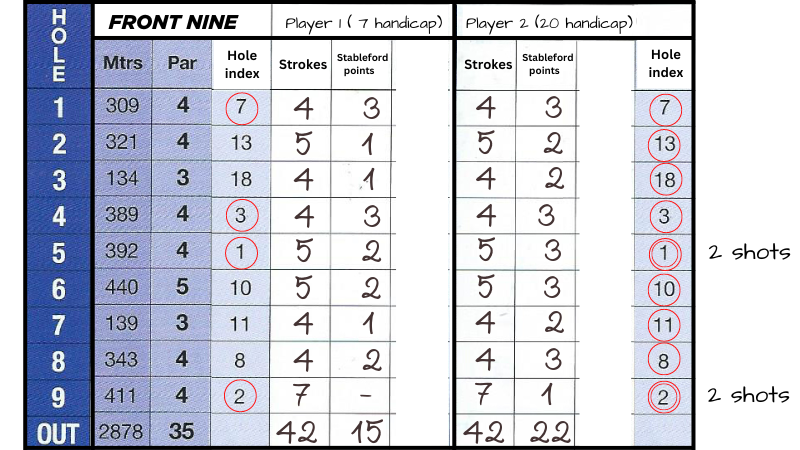
Image Source: socialgolfaustralia.com.au
Grasping Golf Score Basics
Golf is a game of strokes. Your score is how many times you hit the ball. The goal is to hit the ball into each hole using the fewest strokes possible. Every swing you take counts as one stroke. This includes practice swings that hit the ball. It also includes air swings. An air swing is when you try to hit the ball but miss it. You must count every stroke. This is the main way of counting golf strokes.
A golf course has 18 holes. Each hole has a “par.” Par is the expected number of strokes a good player should take to finish a hole. It sets the standard. Most holes are a par-3, par-4, or par-5.
- Par-3 hole: You should finish it in three strokes.
- Par-4 hole: You should finish it in four strokes.
- Par-5 hole: You should finish it in five strokes.
The total par for an 18-hole course is usually around 72. This is because a typical course has a mix of par-3s, par-4s, and par-5s. For example, a course might have four par-3s, ten par-4s, and four par-5s. (4×3) + (10×4) + (4×5) = 12 + 40 + 20 = 72.
Interpreting Golf Par Bogey Birdie Meaning
Let’s look at common golf terms related to par. These terms describe how well you played a hole compared to its par.
- Par: You took the exact number of strokes for the hole’s par.
- Example: You hit the ball 4 times on a par-4 hole. Your score is par.
- Birdie: You took one stroke less than par. This is very good.
- Example: You hit the ball 3 times on a par-4 hole. You made a birdie.
- Eagle: You took two strokes less than par. This is excellent.
- Example: You hit the ball 3 times on a par-5 hole. You made an eagle.
- Albatross (Double Eagle): You took three strokes less than par. This is extremely rare.
- Example: You hit the ball 2 times on a par-5 hole. You made an albatross.
- Bogey: You took one stroke more than par.
- Example: You hit the ball 5 times on a par-4 hole. You made a bogey.
- Double Bogey: You took two strokes more than par.
- Example: You hit the ball 6 times on a par-4 hole. You made a double bogey.
- Triple Bogey: You took three strokes more than par.
- Example: You hit the ball 7 times on a par-4 hole. You made a triple bogey.
- Ace (Hole-in-One): You hit the ball into the hole in just one stroke. This usually happens on a par-3 hole. It is a very exciting shot.
Knowing these terms helps you talk about your golf game. It also helps you measure your play.
Fathoming How To Keep Golf Score
Keeping score is easy once you know how. You need a golf scorecard and a pencil. Many golf carts have these ready for you. You can also use a phone app. Learning how to keep golf score is a core skill.
Every golf scorecard has a clear layout. It lists each hole from 1 to 18. It also shows the par for each hole. There are spaces to write your score for each hole.
Here is a common layout for a golf scorecard:
| Hole No. | Par | Yards (White Tees) | Player 1 | Player 2 | Player 3 | Player 4 |
|---|---|---|---|---|---|---|
| 1 | 4 | 380 | ||||
| 2 | 5 | 510 | ||||
| 3 | 3 | 160 | ||||
| … | … | … | ||||
| 9 (Out) | XX | XXXX | ||||
| 10 | 4 | 390 | ||||
| … | … | … | ||||
| 18 (In) | XX | XXXX | ||||
| Total | XX | XXXX |
A typical golf scorecard explanation involves several steps.
- Write your name: Put your name in the “Player” column.
- Count strokes: After each hole, count every stroke you took. Remember to include penalty strokes.
- Write score: Write your total strokes for that hole in your column.
- Check with others: It is common for one person to keep score for the group. They check each other’s scores. This helps avoid mistakes. It also ensures fair play.
- Add up totals: After 9 holes (the “Out” total) and 18 holes (the “In” total), add up your scores. This gives you your total gross score.
Always double-check your numbers. A small mistake early on can change your final score a lot.
Grasping Golf Scoring Rules
Golf has specific golf scoring rules to make sure everyone plays fair. These rules are set by bodies like the USGA and The R&A. Knowing these rules is important. They help you avoid penalty strokes. They also help you play the game properly.
Key rules for scoring:
- Accuracy: You must record your score for each hole accurately. Do not cheat.
- Recording: Your score must be recorded after each hole. It should be confirmed by a fellow player.
- No changing: Once you turn in your scorecard in a competition, you cannot change it.
- Signature: In official play, you must sign your scorecard. Your marker (the person who kept your score) must also sign it. This confirms the score is correct.
These rules ensure the game stays fair for everyone. They are part of the official golf scoring methods.
Examining Official Golf Scoring Methods
Beyond just counting strokes, there are different ways to play and score golf. These official golf scoring methods are used in competitions. They also make friendly games more fun.
Stroke Play
Stroke play is the most common way to score. It is the core of how to calculate golf score. In stroke play, you add up all your strokes for all 18 holes. The player with the lowest total score wins. This is also called medal play. Most professional tournaments use stroke play. Your golf gross vs net score is based on stroke play.
Match Play
In match play, you do not add up your total strokes. Instead, players compete hole by hole. The player who takes fewer strokes on a hole wins that hole. If players tie, the hole is “halved.” It means no one wins it. The game ends when one player wins more holes than the number remaining.
Example: If you are up by 3 holes with 2 holes left to play, you win.
Match play is often quicker. It is also good for head-to-head competition. It relies on hole-by-hole wins, not total score.
Stableford
Stableford scoring is different. You get points based on your score for each hole. The goal is to get the most points. This system makes high scores on one hole less damaging. A very bad hole does not ruin your whole round. This is because you just get zero points for a very bad hole. You do not get a very high stroke count.
Here is a common Stableford point system:
| Score Relative to Par | Points |
|---|---|
| Albatross (-3) | 5 |
| Eagle (-2) | 4 |
| Birdie (-1) | 3 |
| Par (0) | 2 |
| Bogey (+1) | 1 |
| Double Bogey or Worse | 0 |
After the round, you add up your points. The player with the highest total points wins.
Scramble
A scramble is a team game. It usually involves two, three, or four players. Each player hits a tee shot. The team picks the best shot. All players then hit their next shot from that spot. This continues until the ball is in the hole. This format often leads to lower scores. It is very social. It is also good for players of different skill levels.
These methods offer variety. They make golf fun for all.
Interpreting Golf Penalty Strokes
Sometimes, you do things in golf that break a rule. When this happens, you get a penalty. A penalty adds strokes to your score. These are golf penalty strokes. They are part of counting golf strokes. Knowing about them helps you avoid them.
Common reasons for penalty strokes:
- Lost Ball: If you hit your ball and cannot find it within three minutes, it is a lost ball. You must drop a new ball near where the old one was thought to be lost. You add one penalty stroke. This is a common rule.
- Out of Bounds (OB): If your ball goes outside the playing area, it is out of bounds. You must drop a new ball near where the old one crossed the line. You add one penalty stroke.
- Water Hazard: If your ball goes into a water hazard (like a pond or stream), you have choices. You can drop a new ball near where it entered the hazard. You add one penalty stroke. Or, you can play from where you last hit the ball with one penalty stroke.
- Unplayable Lie: Sometimes your ball is in a bad spot. Maybe it is under a bush or against a tree. You can declare it an unplayable lie. You add one penalty stroke. Then you drop the ball in a better spot, often within two club lengths.
- Touching the Ground in a Bunker: You cannot touch the sand in a bunker with your club before your downswing. This rule is very strict. If you do, it is a penalty.
- Hitting the Wrong Ball: If you accidentally hit someone else’s ball, you get a two-stroke penalty. You must then play your own ball.
- Moving Your Ball: Unless a rule allows it, you cannot move your ball. If you do, you get a one-stroke penalty. This is true even if it is an accident.
- Taking Too Long: In some competitions, players get penalties for playing too slowly. This is less common in casual games.
Always check the official golf scoring rules if you are unsure. Penalties are part of the game. They ensure fairness.
Discerning Golf Gross vs Net Score
When you play golf, you will hear about “gross” and “net” scores. What is the difference? It is simple.
-
Gross Score: Your gross score is the total number of strokes you took for the entire round. You simply add up all your scores for each hole. This is your raw score. It does not consider your skill level.
- Example: You hit the ball 90 times in 18 holes. Your gross score is 90.
-
Net Score: Your net score is your gross score minus your golf handicap. This score shows how well you played compared to your skill level. It makes the game fair for players of different abilities.
- Example: You have a gross score of 90. Your handicap is 18. Your net score is 90 – 18 = 72.
The net score is very important in most amateur golf competitions. It allows everyone to compete fairly. A beginner with a high handicap can win against a skilled player with a low handicap. This is if the beginner plays better than their expected skill level. Understanding golf gross vs net score is vital for competitive play.
Deciphering Golf Handicap Calculation
A golf handicap helps players of different skill levels play together. It makes the game fair. It is a number that shows how good a golfer is. A lower handicap means a better golfer. A higher handicap means a less experienced golfer. This is a key part of understanding golf handicap.
How is a handicap calculated? It is a complex process. It uses your past scores. The system looks at your best recent rounds. It also considers the difficulty of the courses you played. Course difficulty is measured by “Course Rating” and “Slope Rating.”
- Course Rating: This number shows how hard a course is for a scratch golfer. A scratch golfer is a very good player. They hit par or better.
- Slope Rating: This number shows how hard a course is for a bogey golfer. A bogey golfer typically scores about one stroke over par on each hole.
The handicap system is designed to give you a true measure of your skill. It changes as you play more rounds. If you play better, your handicap goes down. If you struggle, it might go up a bit.
To get an official handicap, you usually need to:
- Join a golf club or association: They help manage handicaps.
- Submit scores: You need to play several rounds of golf. You submit your scores for these rounds. Many systems require at least 5 to 20 scores.
- Use an official system: The World Handicap System (WHS) is now used globally. It provides a consistent way to calculate handicaps.
How to Use Your Handicap
Once you have a handicap, you can use it to get your net score. Before a round, you find your “Course Handicap.” Your Course Handicap is based on your overall handicap and the specific course’s Slope Rating.
Here’s a simplified idea:
- Your Handicap Index: This is your core handicap number. It does not change with each course.
- Course Handicap: This is the number of strokes you get for a specific course. It is based on your Handicap Index and the course’s Slope Rating. You look this up on a chart at the golf course.
Example: If your Handicap Index is 15.0, and you are playing a course with a Slope Rating of 120, your Course Handicap might be 16. This means you subtract 16 strokes from your gross score.
Using handicaps:
- Fair Play: It lets golfers of different skill levels play together fairly.
- Competitions: Most amateur tournaments use net scores.
- Tracking Progress: Your handicap is a great way to see how you improve over time. A lower handicap means you are getting better.
The handicap system is a vital part of golf. It promotes fairness and fun.
Enhancing Golf Score Tracking Tips
Keeping a good score is important. Here are some golf score tracking tips to help you.
- Designate a Scorer: In a group, one person should be the main scorekeeper. This person writes down everyone’s scores. It is good practice for the marker to write down their own score. They also write down the score of their playing partner.
- Confirm After Each Hole: Before you leave the green, confirm scores. “I had a 5, you had a 6, Sarah had a 4, and Tom had a 7.” This prevents mistakes later.
- Track Putts and Fairways (Optional): Many golfers track extra stats.
- Putts: How many putts you took on each hole.
- Fairways Hit: Did your tee shot land on the fairway?
- Greens in Regulation (GIR): Did you reach the green in (Par – 2) strokes? For a par-4, did you get to the green in 2 strokes? These stats help you see where you can improve your game.
- Use a Pencil and Eraser: If you write on a physical scorecard, use a pencil. This allows you to correct errors easily.
- Use a Golf App: Many smartphone apps can track your score. They can also track stats. Some even calculate your handicap. They often offer GPS to show yardages. These apps are very handy.
- Review Before Signing: If you are playing in a competition, review your scorecard carefully. Do this before you sign it and turn it in. Once signed, it is official.
- Keep it Clean: A neat scorecard is easier to read. Avoid scribbles.
Good score tracking makes the game more fun. It also helps you improve your play. It is part of golf scoring rules.
Frequently Asked Questions (FAQ)
Q1: How many strokes do I get if my ball goes into a water hazard?
A1: If your ball goes into a water hazard, you usually get a one-stroke penalty. You then drop a new ball in a safe spot near where it entered the hazard. You can also play from where you hit your last shot, with one penalty stroke.
Q2: What is the lowest possible score in golf?
A2: The lowest possible score on a single hole is an Ace (hole-in-one). This is usually on a par-3. For a full round, it depends on the course par. The lowest recorded score for 18 holes is 55. This was on a par-72 course. This is extremely rare.
Q3: Can I change my score on the scorecard after I sign it?
A3: No, in official competitions, you cannot change your score after you sign and submit your scorecard. This is a strict golf scoring rule. Always check your score carefully before signing.
Q4: What if I accidentally hit the wrong ball?
A4: If you hit the wrong ball, you get a two-stroke penalty. You must then go back and play your own ball. This rule applies to both stroke play and match play.
Q5: Is it okay to touch the sand in a bunker with my club before I hit the ball?
A5: No, you cannot touch the sand in a bunker with your club before your downswing. This includes grounding your club. If you do, you will get a penalty. This rule is in place to keep the challenge of bunker shots.
Q6: How many strokes over par is a triple bogey?
A6: A triple bogey is three strokes over par for a hole. For example, if it is a par-4 hole and you take 7 strokes, that is a triple bogey.
Q7: How often does my golf handicap change?
A7: Your golf handicap changes as you submit new scores. Most handicap systems update quickly. This makes sure your handicap reflects your current playing ability. It adjusts based on your best recent rounds.
Q8: What is the difference between a provisional ball and dropping a ball?
A8: You play a provisional ball if you think your original ball might be lost or out of bounds. You state “provisional” before hitting it. If you find your original ball, you play it. If not, you play the provisional ball, adding a penalty stroke. Dropping a ball is when you replace a lost or unplayable ball, usually with a penalty. You do this if you know your original ball is lost or unplayable.
Q9: Do practice swings count as strokes?
A9: A practice swing only counts as a stroke if you accidentally hit the ball. If you do not touch the ball, it is just a practice swing and does not count.
Learning how to calculate golf score is your first step to enjoying the game more. You now know the terms, the rules, and how to track your play. Whether you aim for birdies or just enjoy the walk, counting your strokes is a key part of golf. Keep practicing, keep tracking, and have fun on the course!